Table of Contents
- The Dawn of a Revolutionary Moment: Mainz, 1440
- Johannes Gutenberg: The Man Behind the Machine
- Europe on the Verge: The Social and Intellectual Climate of the 15th Century
- The Birth of Movable Type: A Technological Breakthrough
- Crafting the Press: Materials, Mechanisms, and Mastery
- The Bible That Changed the World: The Gutenberg Bible
- Challenges and Controversies: Financial Struggles and Legal Battles
- The Spread of the Printing Press Across Europe
- Printing and the Rise of Literacy: A New Era of Knowledge
- The Press and Religion: Fueling the Reformation
- Changing Politics: Monarchs, Ideas, and Power in Print
- Economic Ripples: The Printing Industry’s Growth and Impact
- The Human Dimension: Printers, Scribes, and Readers
- Print Culture and the Birth of Public Opinion
- From Scrolls to Codices: Transforming the Book Market
- The Global Legacy: Printing Presses Beyond Europe
- Modern Reflections: How Gutenberg’s Invention Shapes Today’s Media
- Myths and Legends Surrounding Gutenberg and His Press
- The Press Through Conflicts and Revolutions
- Technological Innovations Inspired by Gutenberg’s Legacy
- Museums, Memorials, and Celebrations of Gutenberg’s Genius
- Conclusion: The Enduring Echo of Gutenberg’s Press
- FAQs
- External Resource
- Internal Link
The Dawn of a Revolutionary Moment: Mainz, 1440
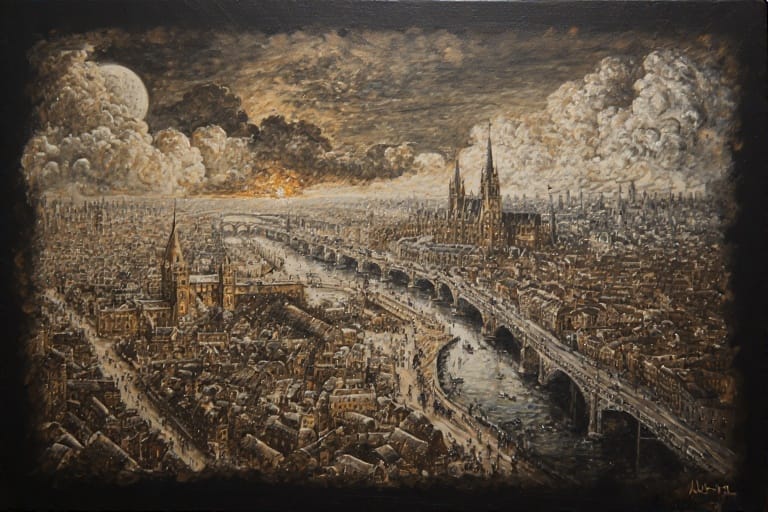
Imagine the city of Mainz in the mid-15th century—a bustling mercantile hub perched on the banks of the Rhine River. The air heavy with the scent of ink, tanned parchment, and woodsmoke, the streets are alive with merchants, scholars, and clerics. Among them, a man laboriously toils in his workshop, seeking to harness a power unseen before: the ability to reproduce the written word rapidly and accurately, no longer dependent on the slow hand of scribes. In 1440, Johannes Gutenberg’s printing press was born here, a device that would shatter the boundaries of communication, knowledge, and culture.
This moment, fertile with innovation and daring, did not unfold with pomp but with quiet revolution. The wooden press – a fusion of ingenuity and craftsmanship – would soon send ripples through Europe, igniting waves of intellectual, religious, and social upheaval that echo profoundly even today. Understanding this moment requires us not only to examine the machine itself but to trace the manifold forces that gave rise to it—forces of restless curiosity, economic change, and an insatiable hunger for knowledge.
Johannes Gutenberg: The Man Behind the Machine
Johannes Gutenberg, born around 1400 in Mainz, remains a figure shrouded in a blend of fact, myth, and legend. The son of a patrician family, his early life is largely undocumented. What emerges from historical fragments is the story of a restless inventor and entrepreneur, whose recklessness in business contrasted with meticulous craftsmanship.
Gutenberg’s genius lay not only in inventing the press but in combining existing technologies — the wine press, the screw press, and techniques of metalworking — into a novel system that democratized the written word. Despite scant personal records, his personality can be glimpsed through legal disputes and correspondence: fiercely ambitious, often in debt, yet uncompromising in his vision.
He was deeply influenced by his upbringing in Mainz, a city with a longstanding tradition of book trade and manuscript production. This milieu, steeped in the ecclesiastical and scholarly tradition, provided both motivation and resources.
Europe on the Verge: The Social and Intellectual Climate of the 15th Century
The 15th century was a period of transformation and precarity. Europe was emerging from the shadows of the Middle Ages, gripped by the tumult of the Hundred Years’ War, outbreaks of plague, and shifting political alliances. Despite hardship, this era harbored the glimmer of Renaissance humanism, with renewed interest in classical knowledge and the spread of universities.
Yet, the transmission of knowledge remained hindered by the laborious process of copying texts by hand. Manuscripts were rare, expensive, and fragile. Literacy was confined largely to clergy, nobility, and a few scholars. Books were symbols of status, not tools of mass education.
In parallel, the Church held unchallenged dominion over spiritual and intellectual life. Information dissemination was tightly controlled, making the possibility of rapid, widespread access to written ideas revolutionary—and threatening.
The Birth of Movable Type: A Technological Breakthrough
Central to Gutenberg’s innovation was the invention of movable type—individual letters cast in metal that could be arranged, reused, and reordered to form words and lines. This concept was not entirely unprecedented; earlier examples of block printing appeared in East Asia. However, the technical challenges of adapting this to the Latin alphabet were formidable.
Gutenberg’s breakthrough was an alloy of lead, tin, and antimony that was durable and could be cast precisely in hand molds. This allowed massive replication of texts at an unprecedented scale. His process of typecasting, combined with oil-based inks that adhered properly to the metal letters and the paper, completed the trifecta of printing essentials.
This innovation was not merely mechanical; it was a revolution in workflow, enabling printers to mass-produce identical copies without retracing entire pages.
Crafting the Press: Materials, Mechanisms, and Mastery
The pressing mechanism borrowed much from the wine and olive oil presses—exerting firm, uniform pressure to imprint inked letters on paper or vellum. While the construction was deceptively simple—a wooden frame, a screw, and a platen—the precision required to align type and produce legible text demanded skill and tacit knowledge.
In workshops suffused with the noise of hammering iron and casting molten metal, Gutenberg and his collaborators honed their craft. The selection of paper, initially imported from Italy, complemented the process, while ink recipes evolved beyond traditional water-based versions to the robust oil-based varieties better suited for press printing.
This synthesis of mechanical, chemical, and artisanal expertise underscores the collaborative and experimental nature of early printing.
The Bible That Changed the World: The Gutenberg Bible
By the early 1450s, Gutenberg’s project culminated in the production of the celebrated 42-line Bible, commonly known as the Gutenberg Bible. Approximately 180 copies were printed, each painstakingly hand-colored and decorated, blending the mechanical with the artisanal.
Often cited as a masterpiece, this Bible was the first major book printed with movable type in the West. Its sheer aesthetic elegance, clarity of type, and textual fidelity captured attention across Europe. For many, standing before one of these voluminous folios was a breathtaking encounter with the new age of print.
But this was not just a religious artifact; it was a symbol of intellectual possibility. The Gutenberg Bible set a standard for all printed books to come.
Challenges and Controversies: Financial Struggles and Legal Battles
Gutenberg’s path was anything but smooth. The enormous costs of materials, workshops, and labor led him into deep financial woes. Notably, he entered a partnership with Johann Fust, a wealthy Mainz financier, whose subsequent legal suits resulted in Gutenberg losing control of his press and type in the late 1450s.
This legal drama illustrates the fragile intersection of innovation, commerce, and personal ambition. Gutenberg died in relative obscurity and poverty, but his invention survived.
These struggles remind us that historical revolutions often involve painful human compromises.
The Spread of the Printing Press Across Europe
Once the pressing power of movable type was unleashed, the technology spread with astonishing rapidity. By 1500, printing shops existed in over 200 European cities, from Venice to Paris, London to Krakow.
Printers built on Gutenberg’s prototype, refining presses and customizing typesets in diverse languages and scripts. Books became more diverse—scientific treatises, classical texts, maps, and broadsheets filled the presses.
Information flowed more freely, weaving a new European intellectual network that transcended previous boundaries.
Printing and the Rise of Literacy: A New Era of Knowledge
The printing revolution democratized access to texts, contributing fundamentally to the rise in literacy rates over subsequent centuries. Affordable books soon reached a wider audience, from merchants to artisans.
The dissemination of pamphlets and pamphleteering created novel forms of public discourse. The seeds of modern education and the modern university system are tightly linked to this widening printed culture.
The written word was no longer the privilege of elites but a collective cultural asset.
The Press and Religion: Fueling the Reformation
One of the most profound socio-political impacts of Gutenberg’s press was its role in the Protestant Reformation. Martin Luther’s 95 Theses, printed and distributed widely, would have been impossible without mass printing.
Scriptures in vernacular languages multiplied, breaking the stranglehold of Latin and enabling believers to engage personally with religious texts. This fostered a shift from institutional mediation to individual interpretation, transforming religious landscapes across Europe.
The printing press hence became an unwitting participant in a tectonic shift of belief and authority.
Changing Politics: Monarchs, Ideas, and Power in Print
Printers quickly realized the press as a tool beyond religion—it was a vehicle for political ideas, statecraft, and propaganda. Monarchs and statesmen commissioned works to legitimize power, record laws, and persuade publics.
Pamphlets and newsletters became early newspapers, shaping opinions and informing citizenries. The political implications of printed communication sowed both empowerment and fear among rulers, many of whom soon attempted censorship.
The intersection of technology and governance was irrevocably altered.
Economic Ripples: The Printing Industry’s Growth and Impact
By the late 15th century, printing had become a vibrant industry, employing a range of artisans: typesetters, compositors, paper makers, bookbinders, and distributors.
Cities like Venice rose as print capitals, attracting talent and capital. The book trade stimulated related industries—papermaking in Italy and Holland, ink production, and even education.
Printers became entrepreneurial actors in a rapidly expanding media ecosystem, their presses the engines of early modern capitalism in culture.
The Human Dimension: Printers, Scribes, and Readers
Despite initial fears, printing did not entirely erase the scribe’s role overnight. Manuscript culture coexisted with print, sometimes interlaced in hybrid book forms.
Printers cultivated a new profession—“men of the press”—who balanced mechanical skill with literacy and editorial judgment.
Readers adapted, testing new ways of interacting with texts—skimming, annotating, and debating—increasingly public intellectual engagement.
Print Culture and the Birth of Public Opinion
The new public availability of printed materials nurtured what we now recognize as “public opinion.” Coffeehouses, salons, and universities became centers for reading and discussing printed works.
Ideas circulated more widely and rapidly, transcending local confines. The press can be seen as an early engine of civil society, empowering citizens with knowledge and platforms to challenge authority.
This cultural shift laid foundational stones for modern democracy.
From Scrolls to Codices: Transforming the Book Market
Printing precipitated the decline of older manuscript forms—scrolls gave way to codices, enhancing portability and storage.
Books evolved in format and design, adapting to new aesthetic and functional ideals. The mass production standardized typography, page layout, and organization, streamlining the reading experience.
This transformation reshaped the entire ecosystem of writing, reading, and bookmaking.
The Global Legacy: Printing Presses Beyond Europe
By the 16th century, printing technology had traveled to other continents— the Ottoman Empire, Asia, and later the Americas.
Each region adapted print technology in culturally specific ways; the press became a bridge rather than a simple exporter of European ways.
Gutenberg’s invention, while rooted in Mainz, truly seeded a global communication revolution.
Modern Reflections: How Gutenberg’s Invention Shapes Today’s Media
In the digital age, the symbolic weight of Gutenberg’s press remains profound. The Internet, social media, and digital publishing echo the democratizing logic initiated by movable type.
Yet, new challenges of accuracy, volume, and authority echo earlier print dilemmas. Gutenberg’s legacy invites us to reflect on technology’s role in shaping human discourse and knowledge.
Myths and Legends Surrounding Gutenberg and His Press
Over centuries, stories accumulated about Gutenberg—portraying him alternately as a solitary genius, a martyr of innovation, or a shadowy figure.
These myths reveal modern desires to claim or contest the origins of modernity. Separating fact from willing embellishment remains a challenge but enriches our appreciation of this historic figure.
The Press Through Conflicts and Revolutions
Printed materials have accompanied wars, revolutions, and upheavals, from religious wars of the 16th century to the Enlightenment and beyond.
The press proved both a tool of state propaganda and popular resistance. Gutenberg’s invention became inseparable from the story of modern political struggle.
Technological Innovations Inspired by Gutenberg’s Legacy
Gutenberg’s movable type laid the groundwork for numerous technological evolutions—the typewriter, the linotype, and ultimately digital printing.
Each iteration addressed earlier limitations, striving for faster, clearer, and more accessible print media, continuing the thread of innovation.
Museums, Memorials, and Celebrations of Gutenberg’s Genius
Today, Mainz honors its son with museums, statues, and the Gutenberg Museum, preserving original presses and printed copies.
Annual commemorations remind us of the press’s monumental impact. His name adorns prizes, academic chairs, and institutions worldwide.
The celebration of Gutenberg’s invention continues to inspire creativity and inquiry.
Conclusion: The Enduring Echo of Gutenberg’s Press
The printing press, conceived in a modest Mainz workshop, did more than reproduce texts; it unleashed waves of transformation that reshaped humanity’s relationship with knowledge, power, and culture. Johannes Gutenberg’s invention is a testament to how technology, driven by vision and perseverance amidst hardship, can recalibrate the currents of history.
In every printed page of that inaugural Bible, and in the myriad works that followed, lies the spirit of an age awakening to itself—seeking empowerment through words. This machine did not just print books; it printed the very conditions for modernity.
As we scroll and click in the digital era, let's not forget the wooden press that began it all—reminding us that revolutions often come in quiet, imperfect presses, wielded by human hands.
FAQs
Q1: Why was Gutenberg’s printing press such a revolutionary invention?
A1: It introduced movable metal type and a press mechanism that allowed mass production of books, drastically reducing costs and increasing accessibility to knowledge, which transformed education, religion, and politics.
Q2: How did the Gutenberg Bible influence the spread of printed books?
A2: It proved the feasibility of high-quality mass printing and demonstrated that religious texts could be reproduced with accuracy and beauty, inspiring printers across Europe to adopt the technology.
Q3: What challenges did Gutenberg face in developing his press?
A3: Besides technical hurdles, he struggled financially, losing control over his press in legal disputes and dying in relative obscurity despite his groundbreaking invention.
Q4: How did the printing press contribute to the Protestant Reformation?
A4: It enabled rapid dissemination of reformist texts, including Luther’s Theses, and allowed scriptures in vernacular languages to circulate widely, challenging Church authority.
Q5: What impact did printing have on literacy and education?
A5: Printing made books more affordable and accessible, promoting literacy among broader social groups and supporting the growth of educational institutions.
Q6: How did the printing press affect political power in Europe?
A6: It facilitated the spread of political ideas, propaganda, and laws, shaping emergent public opinion and challenging traditional power structures.
Q7: Is the Gutenberg press still relevant in today’s digital age?
A7: Absolutely. It laid the foundation for mass communication, the dissemination of ideas, and the democratization of information, themes central to digital media.
Q8: Where can one see original examples of Gutenberg’s work today?
A8: The Gutenberg Museum in Mainz houses original presses and printed works. Some original Gutenberg Bibles are preserved in libraries and museums worldwide.