Table of Contents
- On a Quiet April Morning: The Prelude to Catastrophe
- Iceland in the 19th Century: A Nation on the Edge
- Geological Forces at Work: Understanding the Húsavík–Flatey Fault
- Dawn of Disaster: April 24, 1872
- The Earth Shakes: The Tremors and Their Reach
- Voices from the Aftershock: Eyewitness Accounts
- The Immediate Human Toll: Damage and Displacement
- The Silent Seas: Tsunami Fears and Reality
- Response and Relief: Iceland's Struggle to Rebuild
- Scientific Ramifications: Cataloguing a Landmark Event
- The Role of Seismology in Iceland’s Future
- Sociopolitical Ripples: How the Earthquake Altered Icelandic Society
- The Earthquake in Cultural Memory: Songs, Stories, and Monuments
- Comparative Catastrophes: Placing 1872’s Earthquake in a Nordic Context
- Modern Reflections: Lessons for Today’s Iceland
- Conclusion: The Enduring Legacy of the 1872 Húsavík–Flatey Fault Earthquake
- FAQs: Understanding the 1872 Icelandic Earthquake
- External Resource
- Internal Link
On a quiet April morning in 1872, as the pale light crept over the jagged Icelandic horizons, a restless land beneath the North Atlantic began to stir. The earth's surface, usually calm and unyielding, suddenly heaved and cracked along the Húsavík–Flatey Fault, unleashing one of the most significant seismic events in Icelandic history. To the inhabitants of the island, whose lives had long been intertwined with the whims of nature—volcanoes, glaciers, and the fierce sea—nothing quite prepared them for the immense power this fault would unleash in the early hours of April 24.
The date is marked not only on geological maps but also deep in the cultural consciousness of Iceland. Waves of trembling earth echoed through fjords and settlements, disrupting fragile communities and forever altering the landscape. But beyond the physical devastation, this earthquake quietly reshaped Iceland’s understanding of its place atop the restless boundary between Earth’s tectonic plates.
Iceland in the 19th Century: A Nation on the Edge
Iceland, in the late 19th century, was a land of simple resilience. Under the Danish crown yet fiercely proud of its Viking heritage and ancient sagas, the population was scattered across isolated farms, small fishing villages, and coastal settlements. The economy was fragile, dependent on fishing, modest farming, and trade with Denmark and Europe. Life was shaped by cycles of harsh winters, volcanic eruptions, and the ever-present risk of storms from the Atlantic.
Yet beneath this stoic existence, scientific curiosity and national awakening blossomed. Icelandic scholars began piecing together the country's geological puzzles, haunted by frequent earth tremors and the volatile volcanic soil that shaped their homeland. The presence of the Mid-Atlantic Ridge running directly beneath Iceland was known, though its full tectonic significance would only be understood decades later.
Into this simmering social and geological backdrop entered the Húsavík–Flatey Fault—a rarely noticed fissure stretching across the northern coast, from the town of Húsavík through Flatey Island. For centuries, the fault slumbered.
Geological Forces at Work: Understanding the Húsavík–Flatey Fault
The Húsavík–Flatey Fault is part of the broader tectonic interaction along the Mid-Atlantic Ridge, where the North American and Eurasian plates diverge at a slow but constant pace. Iceland, sitting astride this ridge, is essentially a land-born manifestation of deep Earth dynamics rarely visible on continental plates.
The fault delineates a fracture where these two plates slide apart, causing frequent fissures, volcanic activity, and occasional yet often modest earthquakes. But the fault’s potential for larger seismic events was underestimated. The earth beneath swelled with pent-up strain during the decades before 1872, silently building to a crescendo beneath the sleepy northern coasts.
Understanding this fault in 1872 meant mainly observation—recording shaking, fissures, land displacement—but without the modern tools of seismographs or GPS. The knowledge was thus woven from stories, minor tremors, and geological fieldwork—an incomplete but critical mosaic.
Dawn of Disaster: April 24, 1872
When the early morning dawn broke on April 24, few Icelanders had heard a siren or warning. Instead, the land told its story with sudden, terrifying clarity. The tremors began sharply—lasting seconds that felt like eternity. A deep rumble, growing in intensity, shook wooden homes free from their fragile moorings, rattled livestock pens, and sent people scrambling into the open air.
Some accounts speak of the sky itself seeming to pulse as the ground wracked, splitting rocks and opening deep chasms in fields. The quake was felt from north to south, north of the Arctic Circle to more temperate southern fjords—a rare, large magnitude shattering of earth. It was the strongest known earthquake in Iceland in recorded history, estimated in modern terms at magnitude 6.7 to 7.0.
"The mountains spoke, and the earth groaned," one witness recalled decades later, capturing the elemental terror of that moment.
The Earth Shakes: The Tremors and Their Reach
Iceland’s usual tremors are often confined or moderate; but this earthquake rolled across the island like a giant’s fist, impacting lives thousands of square kilometers away. The mainshock was accompanied by a series of aftershocks, some of which were nearly as powerful and lasted into early May.
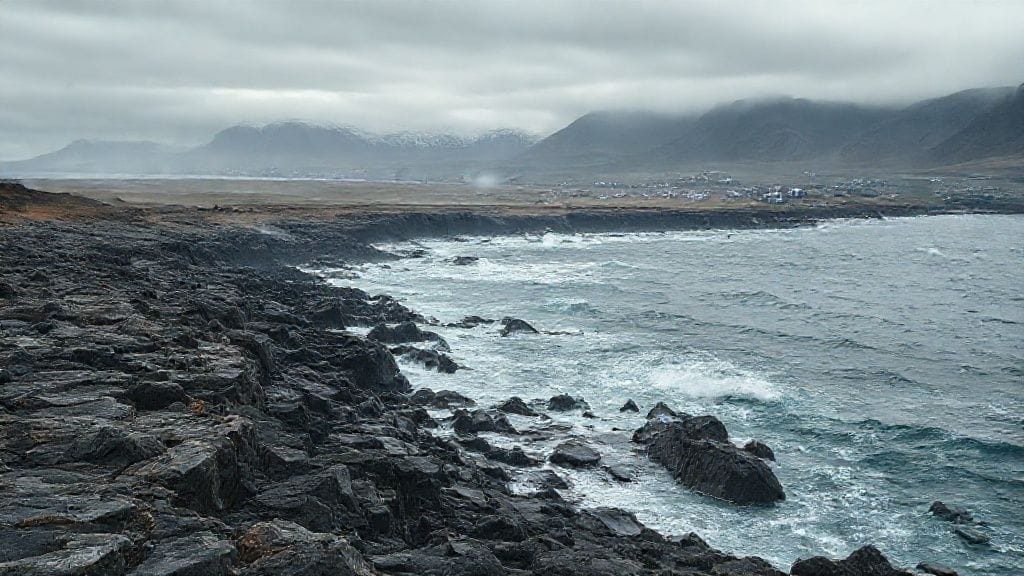
In the town of Húsavík, buildings cracked under the stress, the church steeple swayed, and wells ran murky. Flatey Island, with its tight-knit fishing community, saw docks twisted near the coastline. Earth fissures opened across farmlands, swallowing fields and scattering fertile soil.
Maps drawn soon after showed scarp lines—places where land had shifted markedly along the fault. In some places, vertical shifts of up to one meter were reported, a testament to the quake's immense subterranean force.
Voices from the Aftershock: Eyewitness Accounts
"I was standing when the earth moved beneath my feet," said Jón Þórsson, a farmer near Húsavík, decades later in a recorded interview. "The trees bent as if in a storm yet no wind blew. Then the ground crept and split. I ran to my children."
Such memories are precious fragments, humanizing an often abstract event. The disturbance fractured not just soil and rock but the rhythms of everyday life. Churches held emergency services; elders prayed fervently; children wept from confusion and fear.
An old diary entry from an anonymous woman in Flatey reports: "I thought the end had come, a second Ragnarok. Hours later, silence fell, broken only by the cries of the animals."
The Immediate Human Toll: Damage and Displacement
Remarkably, losses of human life were minimal—a fortunate contrast to more devastating earthquakes worldwide. The population density and rural nature of the area likely mitigated casualties, with most people outdoors or in sturdy farmhouses by the time of the quake.
However, the material damage was severe. Many farms suffered damaged homes, broken fences, and unusable wells. Fishing vessels near Flatey were tossed ashore or damaged in harbors. Food stores were lost in destroyed barns, and the communal psyche bore the weight of uncertainty.
Displacement followed, with families forced to relocate temporarily to safer areas while repairs were made. The economic impact touched the fragile Icelandic economy, already balancing on a knife-edge. Community solidarity meant shared rebuilding efforts, but the trauma left an indelible mark.
The Silent Seas: Tsunami Fears and Reality
Following an earthquake of such magnitude, the specter of tsunami loomed large. Iceland’s violent interaction with the ocean made these fears more than mere speculation.
Fortunately, the earthquake, though powerful, did not trigger the kind of underwater landslides or seismic displacements necessary to create a destructive tsunami. Nonetheless, minor sea disturbances were observed—a small rise and fall in coastal waters—enough to stir alarm and prompt caution among fishing communities.
The absence of a major tsunami was a reprieve, but it underscored the tenuous balance Icelanders lived with—on a volatile land edge, where water and earth constantly negotiated power.
Response and Relief: Iceland’s Struggle to Rebuild
In the days and weeks that followed, Icelanders responded with a mixture of resilience and resourcefulness. Without modern emergency services or government aid structures, relief was largely local and communal.
Villagers pooled resources, repaired homes, and shared food stocks to help displaced families. Traditional knowledge of weather patterns and land behavior aided this grassroots relief effort, even as official Danish authorities sent some supplies.
Reports from 1872 describe meetings in town halls where leaders discussed strategies to strengthen buildings and improve preparedness—a lesson hard learned. Yet, these efforts also revealed Iceland’s isolation and limited infrastructure, challenges that would shape its modernization in the decades ahead.
Scientific Ramifications: Cataloguing a Landmark Event
The 1872 earthquake became a cornerstone in Icelandic geological study. Scientists began more systematic recording of seismicity and land movement. Observations of surface ruptures and aftershock sequences improved understanding of how the Mid-Atlantic Ridge manifested on land.
Early geologists and naturalists documented fissure systems and measured displacement, contributing essential data to the nascent field of seismology. The event also accelerated Iceland’s interest in mapping fault lines and better predicting future seismic risks.
Over time, data from 1872 became a reference point for Iceland’s seismic hazard assessments, linking the earth’s deep movements with everyday survival.
The Role of Seismology in Iceland’s Future
Though rudimentary at the time, the 1872 event was a catalyst for the formal application of seismology in Iceland. By the early 20th century, a network of seismometers was established, and Iceland became a key location for studying mid-ocean ridge earthquakes.
The Húsavík–Flatey Fault’s tremors helped refine models of plate tectonics well before the theory’s global acceptance. Icelandese scientists contributed critical insights into how divergent plate boundaries generate seismic activity.
Today, monitoring networks trace these fault movements with precision, using lessons first learned in the shadow of the 1872 earthquake to save lives and understand Earth’s restless heart.
Sociopolitical Ripples: How the Earthquake Altered Icelandic Society
Seismic disasters rarely leave societies unchanged. The 1872 earthquake, arriving amid Iceland’s national awakening and movements for greater autonomy from Denmark, fed into larger narratives of resilience and identity.
The event exposed infrastructural weaknesses, highlighting the need for improved building practices and infrastructure development. It energized political advocacy for Icelandic self-governance, tying physical survival to political renewal.
Moreover, communal responses reinforced a sense of national solidarity. The memory of shared suffering and recovery entered public discourse and helped cultivate a collective pride often invoked in Icelandic culture.
The Earthquake in Cultural Memory: Songs, Stories, and Monuments
For a people steeped in oral tradition, the 1872 earthquake entered song and saga. Poets and storytellers immortalized the tremors as metaphors for upheaval and endurance, embedding them in Iceland’s rich tapestry of folklore.
Folk songs composed in the years following spoke of the “Day the Earth Roared,” blending ancient myth with modern experience. Stories of miraculous survival and heroic neighborliness became part of communal celebrations.
Monuments marking affected areas, erected decades later, act as tangible reminders of nature’s power and humanity’s fragile place within it.
Comparative Catastrophes: Placing 1872’s Earthquake in a Nordic Context
When compared to other 19th-century Nordic seismic events, the Húsavík–Flatey earthquake stands as uniquely significant in the northern Atlantic.
It was larger and more disruptive than common Scandinavian quakes but less deadly than some Mediterranean counterparts. Its occurrence in a sparsely populated region mitigated casualties but magnified its geological importance.
Studying this event alongside others reveals how tectonic settings shape not only the magnitude but the human impact of earthquakes, enriching broader understanding of natural hazard vulnerability in the region.
Modern Reflections: Lessons for Today’s Iceland
Today, Iceland is a global leader in volcanic and seismic research, with sophisticated surveillance systems and disaster preparedness plans.
The 1872 Húsavík–Flatey Fault earthquake remains a cornerstone example invoked in educational programs and hazard mitigation strategies. It reminds Icelanders and scientists alike that beneath their beautiful land lies a dynamic, often dangerous system not to be underestimated.
The memory of past tremors strengthens resolve, guiding a society that embraces both its geological identity and its responsibilities toward safety and sustainability.
Conclusion
The earthquake along the Húsavík–Flatey Fault on April 24, 1872, was more than a geological event: it was a human drama inscribed in rock and memory, a sudden reminder of the deep, sometimes violent forces shaping Iceland’s destiny. It shook the land and the people, but it also knit communities tighter and seeded a scientific revolution that elevated Iceland’s place in earth sciences.
This moment of rupture became a narrative of resilience, knowledge, and identity—capturing the delicate dance between humanity and nature on this restless island. Today, the echoes of that April morning remind us to respect the earth’s power while cherishing the fragile beauty of life upon it.
FAQs
1. What caused the Húsavík–Flatey Fault earthquake of 1872?
The earthquake was caused by tectonic movements along the Mid-Atlantic Ridge, where the North American and Eurasian plates diverge. These plates create stresses along faults such as the Húsavík–Flatey Fault, triggering earthquakes when built-up strain is released.
2. How strong was the earthquake?
Modern estimates place the quake’s magnitude between 6.7 and 7.0, making it the largest recorded seismic event in Iceland’s history.
3. Were there any casualties?
Human casualties were reportedly low or nonexistent due to the sparse population and the timing of the quake, but significant structural and economic damage affected communities.
4. Did the earthquake trigger a tsunami?
No major tsunami was generated by the earthquake, though minor sea disturbances were observed. The underwater conditions did not lead to significant water displacement.
5. How did Iceland respond to the earthquake?
Relief efforts were primarily community-driven, with neighbors helping rebuild damaged homes. The event also spurred greater attention to seismic hazards and infrastructure improvements.
6. What role did the earthquake play in the development of seismology in Iceland?
It marked a turning point toward systematic study and monitoring of earthquakes in Iceland, inspiring the establishment of seismometer networks and contributing to global understanding of mid-ocean ridge seismicity.
7. How is the event remembered in Icelandic culture?
The 1872 earthquake inspired songs, stories, poems, and monuments, becoming embedded in the country’s rich cultural heritage.
8. What lessons does the 1872 earthquake provide for modern Iceland?
It reinforces the importance of disaster preparedness and scientific monitoring, underscoring Iceland's ongoing relationship with the volatile earth beneath it.