Table of Contents
- The Final Sunset of an Emperor: Hadrian at Baiae
- The Man Behind the Imperial Mantle: Hadrian’s Journey to Power
- The Empire Under His Rule: Peace, Architecture, and Controversy
- Baiae: The Imperial Retreat and Last Haven
- July 10th, 138 CE: The Day Hadrian Breathed His Last
- The Emperor’s Illness: Suffering in Silence
- Philosophical Reflections and Final Wishes
- The Spread of the News: Rome Reacts to a Dying Emperor
- A Passing of the Torch: The Succession of Antoninus Pius
- Hadrian’s Death as a Turning Point in Roman History
- The Architect of Empire: How Hadrian Shaped Rome’s Legacy
- Baiae’s Role in Imperial Mythos and Memory
- The Funeral and Deification of Hadrian
- Hadrian in Later Historiography: From Hero to Enigma
- The Archaeological Rediscovery of Baiae and Hadrian’s Last Days
- Cultural and Political Ripples Across the Empire
- The End of an Era: Transition from Hadrian to Antoninus Pius
- Hadrian’s Death in the Context of Roman Mortality and Leadership
- Eternal Echoes: How Hadrian’s Life and Death Inspire Today
- Conclusion: The Last Breath of an Emperor
The Final Sunset of an Emperor: Hadrian at Baiae
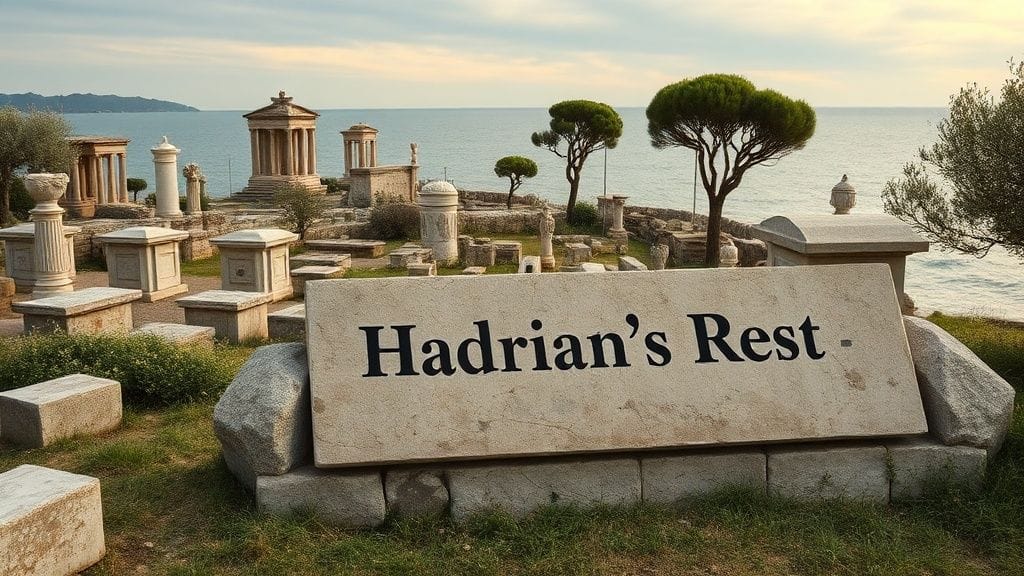
The summer sun of July 10th, 138 CE, cast its golden hues over the famed coastal town of Baiae, an ethereal resort bespeckled with opulent villas and whispering cypresses, where the blue expanse of the Tyrrhenian Sea shimmered like a mirror reflecting the dying light of one of Rome’s greatest emperors. Hadrian, aged and worn by the toils of power and the ravages of illness, lay in his private chambers, surrounded by a select few attendants. The air was heavy with a silence too profound for the bustling grandeur that had once defined his reign. This was not merely the end of a man’s life, but the waning of an age, a final page closing on the annals of the Roman Empire’s golden century.
Hadrian’s breath grew shallow; with each labored inhale, the story of an empire and its shepherd seemed to ebb. His death in Baiae did not arrive as a sudden storm, but rather like a slow dusk inviting night — deliberate, poignant, and deeply human. But to understand the weight of that final day, one must traverse the path of his life, his rule, and the empire he tirelessly sought to sculpt.
The Man Behind the Imperial Mantle: Hadrian’s Journey to Power
Born Publius Aelius Hadrianus in the villa suburbia of Italica in Spain, Hadrian’s life was steeped in privilege but also defined by exceptional intellect and a restless spirit. A nephew and chosen heir of Emperor Trajan, Hadrian’s ascension was a testament not only to blood ties but to political acumen amid Rome’s intricate web of patronage and intrigue.
Hadrian was no ordinary successor. He embodied the complexities of Roman leadership: scholar and soldier, lover of Greek philosophy and patron of the arts, yet also a pragmatic, sometimes ruthless ruler. His youth was spent under the tutelage of the finest rhetoricians and strategists, preparing him for a command that would stretch across continents. The mantle of emperor was not simply inherited, but earned through years of careful maneuvering and display of competence in military and administrative matters.
The Empire Under His Rule: Peace, Architecture, and Controversy
When Hadrian assumed power in 117 CE, the Roman Empire was at its territorial zenith. Yet, unlike his predecessor Trajan’s ceaseless expansionism, Hadrian sought consolidation and cultural enrichment. His vision was of an empire stable and enduring, bounded not only by military might but by the harmonies of law, architecture, and shared identity.
Hadrian is perhaps most famously remembered for his architectural patronage: the rebuilding of the Pantheon, the construction of his vast villa at Tivoli, and his engineering masterpiece—the wall that bears his name in the wild northern frontiers of Britain. These works signified a Rome confident in its legacy and enduring power.
Yet, controversy accompanied his reign. Hadrian’s travels to the provinces, unprecedented among emperors, were driven by suspicion of unrest and a desire to personally assert imperial presence. His policies, at times harsh—such as the suppression of Jewish revolts—revealed an emperor hardened by the necessity of maintaining order.
Baiae: The Imperial Retreat and Last Haven
Baiae, nestled on the northern shore of the Bay of Naples, had long been the playground of Rome’s elite. Its thermal springs, lush scenery, and intoxicating blend of leisure and decadence made it a favored imperial retreat. For Hadrian, Baiae was not merely a resort but a sanctuary—a place to seek respite from the ceaseless demands of rule and a theater to craft moments of reflection.
By the time of his death, Hadrian’s choice to spend his final days here was laden with symbolic meaning. The place whispered of luxury but also of mortality, a beautiful yet fragile stage upon which the drama of his life concluded.
July 10th, 138 CE: The Day Hadrian Breathed His Last
The exact hour of Hadrian’s death remains a matter of historical discussion, but the consensus places it on July 10th, 138 CE. Historical sources recount a scene both solemn and intimate. The emperor, gravely ill, was attended by his closest confidants, including his adopted heirs and loyal servants.
Despite suffering from chronic ailments—possibly heart failure or tuberculosis—Hadrian remained lucid, laying out his final wishes, not just for the succession of the empire but for the care of his memory. His last breath was drawn amid the warm scent of Baiae’s gardens, marking the end of an imperial chapter that had shaped the very contours of Roman civilization.
The Emperor’s Illness: Suffering in Silence
Hadrian’s health had deteriorated steadily over years, shadowed by a mysterious and debilitating illness that historians have sought to diagnose: chronic heart disease, tuberculosis, or even complications from his intensive travels and hard life under the harsh Roman sun.
Yet despite his suffering, the emperor rarely showed weakness. Writings and letters from the period suggest a man burdened by pain and frustration but resolute in his duties. His demise was not a sudden collapse but a gradual fading, allowing for presence and dignity in death.
Philosophical Reflections and Final Wishes
Known also for his philosophical bent, influenced deeply by Greek Stoicism and Epicureanism, Hadrian’s later years were marked by contemplations on mortality, legacy, and the universe’s impermanence. His poetry and correspondence reveal an emperor wrestling not just with governance but with the existential questions of his time.
On his deathbed, Hadrian made specific requests: that his body be cremated and his ashes interred at his beloved villa in Tibur (modern Tivoli). He entrusted the empire to Antoninus Pius but demanded that his successor adopt Marcus Aurelius and Lucius Verus, setting the stage for a dynasty that would extend Rome’s golden age.
The Spread of the News: Rome Reacts to a Dying Emperor
News of Hadrian’s death traveled swiftly, causing ripples of grief and uncertainty throughout Rome and the provinces. The Senate mourned deeply, holding solemn ceremonies and echoing praises of an emperor who combined strength with culture.
For the common people, reaction was complex—respect mingled with apprehension, as the future of the empire balanced on a knife edge. Letters and inscriptions from the period reflect a mix of personal loss and political contemplation.
A Passing of the Torch: The Succession of Antoninus Pius
Hadrian’s death was not merely an ending but a carefully orchestrated handover. Antoninus Pius, firmly backed by Hadrian before his demise, assumed power with an uncommon degree of stability. The new emperor would govern in ways that echoed Hadrian’s vision yet sought to avoid the latter’s controversies.
This smooth transition manifested Hadrian's political shrewdness: by securing succession and grooming the next generation of emperors, he helped guarantee the empire’s continued prosperity.
Hadrian’s Death as a Turning Point in Roman History
The passing of Hadrian symbolized the close of an imperial chapter distinguished by cultural flourishing and relative peace. Yet it also marked the beginning of subtle shifts—the beginning of slow transformations in political structure, military policy, and provincial relations.
Scholars often see Hadrian’s death as pivotal, concluding the “Five Good Emperors” epoch. His legacy stands as a bridge between Rome’s expansionist past and the more consolidation-oriented future.
The Architect of Empire: How Hadrian Shaped Rome’s Legacy
Hadrian’s imprint on Rome transcended his lifetime. His emphasis on infrastructure, border security (epitomized by Hadrian’s Wall in Britannia), and cultural patronage evidenced an emperor who understood that empire was as much an idea as geography.
Hadrian reshaped the imperial image from warlord to philosopher-king, paving the way for successors to invoke ideals rather than mere conquest. His villa at Tivoli, with its labyrinthine complexity and artistic mastery, remains a symbol of this vision.
Baiae’s Role in Imperial Mythos and Memory
Baiae, the place of Hadrian’s death, became enshrined in Roman collective memory as more than a resort. It was the stage of transience, the curtain closing on the human story of an emperor who had once traversed the vast expanse of the Roman world.
In later periods, Baiae was romanticized in poetry and art, representing the mingling of grandeur and mortality—a fitting monument to Hadrian’s final days.
The Funeral and Deification of Hadrian
Following Roman tradition, Hadrian was granted deification by the Senate, immortalized as Divus Hadrianus. His funeral rites involved a lavish procession, not only memorializing his political achievements but sanctifying his role as a guardian spirit of the empire.
This act was politically significant, ensuring the continued veneration and legitimization of his dynasty.
Hadrian in Later Historiography: From Hero to Enigma
Subsequent historians have often wrestled with Hadrian’s complexity. Some portrayed him as enlightened, a visionary ruler; others criticized him for autocratic tendencies and harsh measures.
The layering of myth, history, and political needs transformed him into an enigmatic figure—both admired and contested, a symbol of empire’s grandeur and human frailty.
The Archaeological Rediscovery of Baiae and Hadrian’s Last Days
Centuries later, archaeologists and historians uncovered the submerged ruins of Baiae, revealing glimpses of absolute luxury and imperial presence in the ancient world.
These rediscoveries added tangible context to Hadrian’s final days, providing material culture that illuminated this historic moment where man and empire met their destiny.
Cultural and Political Ripples Across the Empire
Hadrian’s death sent shockwaves through Rome’s provinces. From Britannia to Egypt, governors and soldiers adjusted to new leadership. Artistic commissions, cultural initiatives, and even local governance bore the imprint of transition from Hadrian’s methodical rule to Antoninus’s steady hand.
In many ways, the death triggered reflections on loyalty, duty, and the ephemeral nature of power itself.
The End of an Era: Transition from Hadrian to Antoninus Pius
While Antoninus Pius’s rule was marked by peace and relative quiet, it was built on the foundations laid by Hadrian’s reforms and vision. The end of Hadrian’s life was thus not a rupture but a relay—one emperor handing the baton to another in the long race of empire.
This continuity embodied the Roman ideal of leadership as stewardship rather than domination.
Hadrian’s Death in the Context of Roman Mortality and Leadership
Hadrian’s final moments resonate as a powerful meditation on leadership and mortality. Here was a man who had wielded immense power, faced personal suffering, and confronted the inevitability of death with dignity and resolve.
His passing highlights how mortality shapes even the mightiest rulers and how the human element remains at the core of history’s grand narratives.
Eternal Echoes: How Hadrian’s Life and Death Inspire Today
Modern readers and historians find in Hadrian’s life and death a compelling story of ambition, humanity, and legacy. His final moments at Baiae remind us that history is not merely the march of armies or decrees but the intimate convergence of personal fate and political destiny.
Hadrian’s journey continues to inspire reflections on power, culture, and the fleeting nature of human glory.
Conclusion
Hadrian’s death on that July day in 138 CE was the quiet but profound end to a reign that forever altered Rome’s destiny. Amid the scenic beauty of Baiae, an emperor who had transcended the mere wielding of power embraced mortality with the grace forged through years of wisdom and adversity. His passing did not spell collapse but transition—a handing over of an empire’s soul to a new steward, and a lasting testament to the complexities of leadership.
To glimpse the moment of Hadrian’s final breath is to glimpse the heartbeat of Rome itself—a civilization magnificently alive, aware of its fragility, and eternally reaching for immortality both in stone and story.
FAQs
Q1: Who was Hadrian before he became emperor?
Hadrian was born in Italica, Spain, into a wealthy Roman family. He was a close relative and adopted son of Emperor Trajan, trained as a soldier and scholar, who rose through political ranks before ascending to the throne in 117 CE.
Q2: What illness led to Hadrian’s death?
The precise illness remains uncertain, but historical sources suggest chronic heart disease, tuberculosis, or complications from his strenuous travels as possible causes.
Q3: Why did Hadrian spend his last days in Baiae?
Baiae was a luxurious resort favored by Roman elites, known for its healing thermal springs. Hadrian chose it for rest and reflection away from political turmoil in his final years.
Q4: How was the succession after Hadrian’s death managed?
Hadrian adopted Antoninus Pius as his successor, with the condition that Antoninus adopt Marcus Aurelius and Lucius Verus as heirs, securing a stable dynastic transition.
Q5: What is Hadrian’s legacy in Roman history?
Hadrian is remembered for consolidating the empire’s borders, architectural masterpieces like Hadrian’s Wall and the Pantheon, and promoting cultural integration throughout the provinces.
Q6: How was Hadrian deified after his death?
The Roman Senate approved Hadrian’s deification, bestowing divine honors and a cultic status that enhanced the legitimacy of his successors.
Q7: Why is Baiae significant in the context of Hadrian’s death?
Baiae represents the mingling of imperial luxury and human mortality, symbolizing Hadrian’s final retreat from the world and the impermanence even of emperors.
Q8: How do modern historians interpret Hadrian’s death and reign?
They view Hadrian as a complex figure—both enlightened and authoritarian—whose policies shaped a critical period of imperial stability and cultural flourishing in Rome.