Table of Contents
- Introduction
- Early Life and Royal Lineage
- Rise to Power in the Ethiopian Empire
- Reforms and Vision for Modernization
- The Invasion by Fascist Italy
- Exile and Global Advocacy
- Return to the Throne After WWII
- Role in the United Nations and African Unity
- The Rastafarian Movement and Deification
- Domestic Challenges and Criticism
- The 1973 Famine and Political Unrest
- Deposition and Final Years
- Haile Selassie’s Death and Mystery
- Historical Legacy and Symbolism
- Influence on African Politics
- Representation in Culture and Media
- Restoration of Memory and Historical Debates
- Conclusion
- External Resource
- Internal Link
1. Introduction
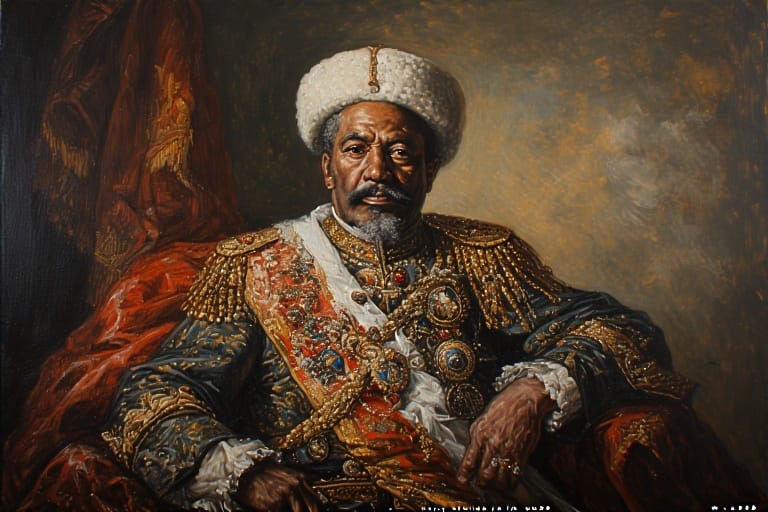
Born July 23, 1892, in Ejersa Goro, Ethiopia, Haile Selassie would rise to become one of the most significant political and spiritual figures in modern African history. Revered by some as a god and respected globally for his diplomatic poise and progressive reforms, Selassie’s reign spanned monumental shifts in Ethiopian and international affairs.
2. Early Life and Royal Lineage
Originally named Tafari Makonnen, he hailed from noble bloodlines. His father, Ras Makonnen, was a trusted general and adviser to Emperor Menelik II. Tafari’s lineage was rooted in the Solomonic dynasty, tracing descent from the union of King Solomon and the Queen of Sheba — a source of spiritual and political legitimacy.
3. Rise to Power in the Ethiopian Empire
After serving in administrative roles, Tafari was appointed Regent Plenipotentiary in 1916, following the deposition of Empress Zewditu. By 1930, he was crowned Emperor Haile Selassie I, adopting the titles “King of Kings,” “Lord of Lords,” and “Conquering Lion of the Tribe of Judah.” His coronation was attended by global dignitaries, symbolizing Ethiopia’s sovereign stature.
4. Reforms and Vision for Modernization
Selassie pushed for sweeping reforms to modernize Ethiopia. He introduced a written constitution in 1931, reorganized the judicial system, and sought to centralize administrative power. Though his changes challenged entrenched aristocracy, they laid the groundwork for Ethiopia’s modernization.
5. The Invasion by Fascist Italy
In 1935, Mussolini’s Italy invaded Ethiopia, seeking imperial expansion. Despite fierce resistance, Addis Ababa fell in 1936. Haile Selassie fled to exile in Britain. Before the League of Nations, he delivered a powerful plea against fascist aggression, earning international admiration.
6. Exile and Global Advocacy
During exile, Selassie lobbied tirelessly for support. He lived modestly in Bath, England, yet remained politically active. His speech at the League of Nations became iconic: “It is us today. It will be you tomorrow.” His advocacy is often cited as a precursor to collective security efforts later pursued by the United Nations.
7. Return to the Throne After WWII
With British military assistance, Selassie returned to Ethiopia in 1941 after Italian forces were defeated. He reasserted his rule and accelerated his reformist agenda. He emphasized education, infrastructure, and international diplomacy, positioning Ethiopia as a pan-African leader.
8. Role in the United Nations and African Unity
Ethiopia was a founding member of the United Nations. Selassie was instrumental in the formation of the Organization of African Unity (OAU) in 1963. Headquartered in Addis Ababa, the OAU symbolized Selassie’s dream of continental solidarity and decolonization.
9. The Rastafarian Movement and Deification
Selassie unexpectedly became a messianic figure in the emerging Rastafarian movement in Jamaica. Followers viewed him as the living God and a black liberator. Though Selassie never claimed divinity, he visited Jamaica in 1966, an event still celebrated in Rastafari culture.
10. Domestic Challenges and Criticism
While admired abroad, domestically, criticisms mounted. Aristocratic privilege persisted, and the rural peasantry remained impoverished. The centralized power he maintained also bred frustration, especially among students and intellectuals pushing for faster reforms.
11. The 1973 Famine and Political Unrest
A devastating famine in Wollo province in 1973 exposed systemic failures in governance and aid distribution. Discontent intensified, leading to mass protests and a deteriorating reputation. The media further fueled popular outrage, portraying the Emperor as indifferent.
12. Deposition and Final Years
In 1974, the Marxist-Leninist military junta known as the Derg overthrew Haile Selassie. He was placed under house arrest in Addis Ababa. His imperial regime, which had lasted over four decades, had come to a quiet and undignified end.
13. Haile Selassie’s Death and Mystery
Haile Selassie died under suspicious circumstances in 1975. Official reports claimed natural causes, but many suspect assassination by the Derg. His remains were buried secretly and only discovered decades later. In 2000, he was given a ceremonial reburial in Addis Ababa’s Holy Trinity Cathedral.
14. Historical Legacy and Symbolism
Selassie remains a symbol of resistance against imperialism, a champion of African identity, and a deeply complex ruler. His speeches, charisma, and image have endured far beyond Ethiopia’s borders.
15. Influence on African Politics
His vision for a united Africa laid foundational ideals for institutions like the African Union. His leadership inspired liberation movements and influenced post-colonial political structures across the continent.
16. Representation in Culture and Media
From Bob Marley’s music to academic texts, Selassie is immortalized in global culture. His image as the Lion of Judah and “Emperor of Emperors” has inspired artists, historians, and revolutionaries alike.
17. Restoration of Memory and Historical Debates
Modern scholars reassess Selassie with nuance—balancing his international contributions with domestic shortcomings. Ethiopia continues to debate his role in national history, particularly his governance methods and imperial legacy.
18. Conclusion
Haile Selassie’s life was marked by contradiction and complexity: a monarch and reformer, a global symbol and controversial ruler, a man perceived as divine by millions. His influence on Ethiopia and Africa’s political evolution remains profound and indelible.