Table of Contents
- The Morning That Shook a Nation: January 12, 2010
- Haiti before the Quake: A Fragile Past and Present
- The Tectonic Prelude: Understanding the Earthquake’s Origins
- The 7.0 Magnitude Catastrophe: A Timeline of Destruction
- The Epicenter of Horror: Port-au-Prince in Ruins
- Human Stories Amidst the Rubble: Witnesses and Survivors
- In the Eyes of the World: Immediate Global Reactions
- Search and Rescue: Hope in the Darkness
- The Collapse of Infrastructure: Hospitals, Government Buildings, and Homes
- Death Toll and Casualties: The Grim Statistics
- International Aid and Relief Efforts: Mobilizing a Response
- Challenges on the Ground: Logistics, Coordination, and Corruption
- The Haitian Government: Leadership in Crisis
- Aftershocks and Psychological Trauma: Unseen Reverberations
- Long-term Impact: Economy, Society, and Health
- Reconstruction Dreams: Rebuilding amid Chaos
- The Role of NGOs and Foreign Governments: Partners or Patrons?
- Haiti’s Resilience: Stories of Courage and Community
- Controversies and Criticism: What Went Wrong?
- Remembering the Earthquake: Memorials and Memory
- Lessons Learned and Future Preparedness
- Conclusion: From Rubble to Hope
- FAQs about the Haiti Earthquake of 2010
- External Resources
- Internal Link
1. The Morning That Shook a Nation: January 12, 2010
As dawn cracked over the Caribbean Sea on January 12, 2010, the people of Haiti were greeted by an ordinary, sunlit Tuesday – bustling streets, children preparing for school, markets opening. But beneath this serene facade lurked a deadly force, waiting to unleash devastation. At 4:53 p.m. local time, the earth beneath Haiti’s already fragile capital, Port-au-Prince, trembled violently. A 7.0 magnitude earthquake – a sudden rupture of tectonic plates – struck with an intensity no one could have imagined. Buildings crumbled into heaps of dust, roads fractured like cracked glass, and millions found their lives irrevocably shattered in mere seconds.
This was not just a natural disaster; it was a human catastrophe of profound proportions, tearing at the fabric of a nation already worn thin by poverty, political instability, and decades of neglect. The ground beneath Haiti's feet seemed to collapse alongside the hopes of its people. Yet, amid the rubble, stories of survival, solidarity, and humanity emerged, casting faint but vital sparks of hope.
2. Haiti before the Quake: A Fragile Past and Present
To understand why the earthquake’s impact was so catastrophic, one must first appreciate Haiti’s troubled history. The first Black republic, born from a slave revolt that toppled colonial rule in 1804, Haiti’s independence was hard-fought, but its birth was marred by international isolation, economic embargoes, and crippling debt payments imposed by France. Over centuries, political instability, dictatorships, and foreign meddling hardened the nation’s wounds.
By 2010, 10 million Haitians grappled with extreme poverty: nearly 80% lived under the poverty line, and infrastructure was grossly inadequate. The capital, Port-au-Prince, was a sprawling urban jumble, with inadequate building codes and little public investment. Overcrowding, poor sanitation, and lack of resources were common. The government struggled to provide basic services, let alone prepare for a disaster.
3. The Tectonic Prelude: Understanding the Earthquake’s Origins
The geological scene was set by Haiti’s position atop the boundary of two massive tectonic plates—the North American and Caribbean plates—locked in a slow but powerful dance of movement. This pressure buildup occurs along the Enriquillo-Plantain Garden fault zone, a major strike-slip fault system.
Seismologists had long warned that a major quake was overdue along this fault. Yet, Haiti had no system for earthquake preparedness, no early warning system, no building regulations to protect against a tremor. The 7.0 magnitude shock that struck was relatively moderate by global standards, but its shallow depth—just 13 kilometers below the surface—multiplied its destructive power.
4. The 7.0 Magnitude Catastrophe: A Timeline of Destruction
At precisely 4:53 p.m., a sudden jolt threw Port-au-Prince into chaos. Within 45 seconds, buildings groaned, twisted, and collapsed. The shaking was violent enough to be felt hundreds of miles away, stopping life in its tracks.
In the epicenter’s vicinity, entire neighborhoods were leveled. The National Palace, a symbol of Haitian sovereignty, buckled and crumbled. The Presidential Guard barracks collapsed, killing many soldiers. Critical government ministries—defense, public works, finance—were destroyed. Roads fractured, bridges collapsed, cutting off rescue routes.
5. The Epicenter of Horror: Port-au-Prince in Ruins
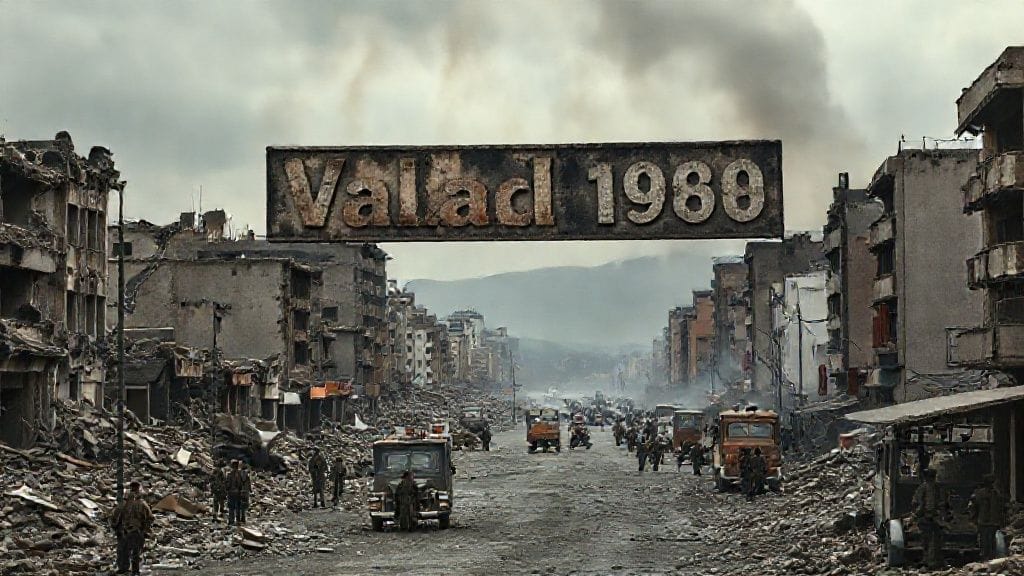
The capital was a mosaic of ruin. Structures ranging from grand colonial buildings to makeshift shanties crumbled indiscriminately. Hospitals—already struggling—were destroyed or forced to operate amidst chaos. Schools collapsed, killing children. Marketplaces turned into gravesites.
The damage covered around 8,000 square kilometers, encompassing Port-au-Prince and surrounding communes. The homes of an estimated 1.5 million people were damaged or destroyed. The country’s leading hospital, Hôpital de l’Université d’État d’Haïti, was in ruins, along with its morgue—turning the crisis into a sanitation nightmare.
6. Human Stories Amidst the Rubble: Witnesses and Survivors
Eyewitness accounts tell of desperate moments: families clinging to one another, trapped under beams, dust choking the air, screams piercing the chaos. Some survived days under the debris, others carried loved ones to safety. One survivor, Jean-Baptiste, recounted, “It was like the earth was angry… the walls around us fell like paper. I felt the shaking take the breath from my chest.”
Amid the horror, acts of extraordinary courage appeared. Strangers became rescuers. Mothers shielded children. Communities pulled together to sift rubble, find water, and share what little food remained.
7. In the Eyes of the World: Immediate Global Reactions
The calamity did not go unnoticed. From Washington to Paris, the United Nations to grassroots organizations, the world reacted with shock and resolve. News outlets broadcast heart-wrenching images of destruction; calls for aid flooded social media and governments.
President Barack Obama ordered a swift mobilization of US military and humanitarian support. The United Nations Stabilization Mission in Haiti (MINUSTAH) shifted focus to disaster relief. Aid agencies began deploying personnel, while global citizens launched donations and relief campaigns.
8. Search and Rescue: Hope in the Darkness
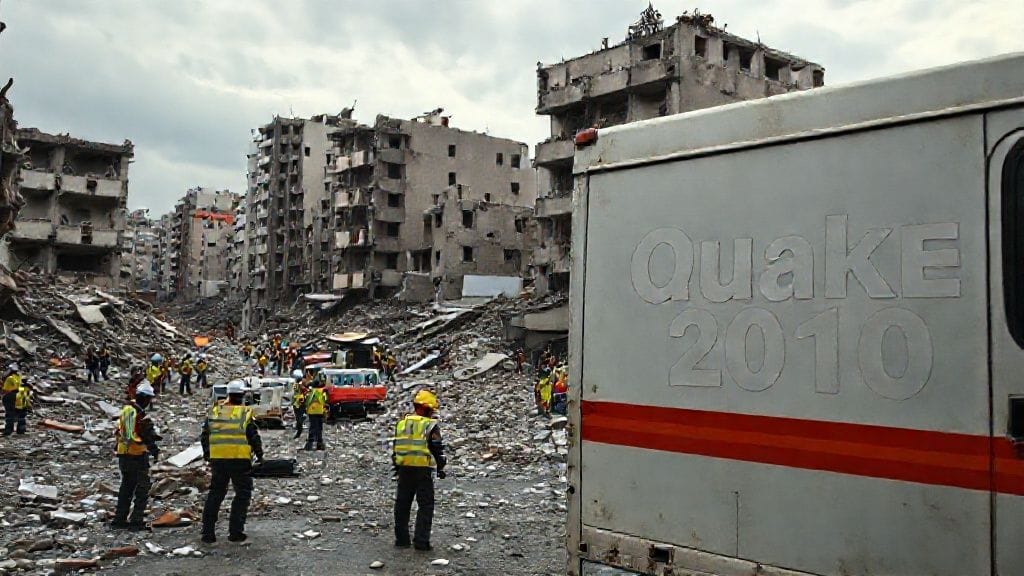
Rescue teams arrived amid treacherous conditions. The US military brought airlift and heavy equipment, while specialized urban search and rescue teams used sniffer dogs and listening devices. Yet, the scale was overwhelming.
Countless survivors remained trapped beneath unstable rubble; attempts to reach them became race-against-death efforts. Days passed, and as aftershocks continued, fear and despair deepened—yet so did determination. Volunteer rescue teams from Haiti and abroad worked hand-in-hand, embodying the human spirit’s refusal to surrender.
9. The Collapse of Infrastructure: Hospitals, Government Buildings, and Homes
Perhaps the earthquake’s most devastating legacy was the collapse of Haiti’s already fragile infrastructure. Virtually the entire public health system was compromised just as medical needs surged. The destruction of government buildings dissolved the state's ability to coordinate a response or offer immediate aid.
Temporary shelters sprang up, but with scant organization. Water systems failed, leading to outbreaks of diseases such as cholera. Roads remained impassable, complicating aid deliveries. The quake revealed the grave vulnerability rooted in decades of neglect.
10. Death Toll and Casualties: The Grim Statistics
The human cost was staggering—an estimated 230,000 people lost their lives. Over 300,000 were injured, many requiring urgent, intensive medical care that simply could not be provided. More than a million people were displaced, forced into bleak tent cities under the scorching Haitian sun.
Yet, numbers only hint at the magnitude. Entire families were wiped out. Children orphaned overnight. Communities fractured forever. The psychological toll was immeasurable.
11. International Aid and Relief Efforts: Mobilizing a Response
In the quake’s immediate aftermath, aid flowed like a flood. Countries around the world pledged billions of dollars. Food, water, tents, medicine, and personnel arrived by sea and air.
Organizations such as Doctors Without Borders, the Red Cross, and UNICEF coordinated massive relief efforts. The US agency USAID led logistics on the ground. Yet the challenge was gargantuan: how to distribute this aid to people scattered and isolated amid the rubble?
12. Challenges on the Ground: Logistics, Coordination, and Corruption
Despite goodwill, many obstacles slowed relief. Port facilities were damaged, making delivery cumbersome. Haiti’s government had limited capacity to manage aid. Fragmentation among NGOs sometimes led to duplication or neglect of areas.
Corruption rumors circulated, eroding trust. Some aid never reached those in need. Security concerns arose, with theft and violence reported in some camps. The disaster unveiled the complex layers of social, political, and logistical fragility in Haiti.
13. The Haitian Government: Leadership in Crisis
President René Préval’s government was left decimated—several officials perished, government offices destroyed. Re-establishing governance was critical yet deeply challenging.
The administration struggled to coordinate with international partners while maintaining sovereignty. Yet, amid immense pressure, they strove to communicate with citizens, mobilize resources, and plan for recovery, often with limited means and international oversight breathing down their necks.
14. Aftershocks and Psychological Trauma: Unseen Reverberations
The earthquake’s first shock was followed by over 50 aftershocks of varying magnitude, keeping survivors in perpetual fear. Every tremor reignited trauma, hampering recovery and displacing tens of thousands further.
Mental health became an urgent but overlooked priority. Survivors battled grief, anxiety, PTSD, while children struggled to comprehend the loss of normalcy. Psychological scars of such a disaster extend long after physical structures are rebuilt.
15. Long-term Impact: Economy, Society, and Health
The earthquake destroyed an estimated 120,000 homes, paralyzing Haiti’s already fragile economy. Sectors like agriculture, commerce, and industry took heavy blows. Millions lost livelihoods overnight.
Health systems grappled with injury aftereffect, disease outbreaks, and malnutrition. Education suffered as schools were destroyed. Social fissures deepened—poverty deepened, inequality persisted, and mass displacement triggered internal migration crises.
Yet Haiti’s history also revealed an enduring spirit—people adapted, rebuilt, and resisted despair.
16. Reconstruction Dreams: Rebuilding amid Chaos
Reconstruction efforts soon began, but were at best uneven. Massive international pledges promised to rebuild Haiti “better and safer”—but implementation lagged. High costs, bureaucratic hurdles, political instability, and corruption slowed progress.
Efforts to build earthquake-resistant structures remained limited. Tent cities became semi-permanent settlements, symbolizing gaps between aid and outcomes. For Haitians, everyday survival often overshadowed long-term planning, revealing deep structural challenges.
17. The Role of NGOs and Foreign Governments: Partners or Patrons?
Post-quake Haiti saw an influx of NGOs and foreign actors. While many delivered critical services, suspects of “aid dependency” and undermining local agency emerged.
Some criticized international actors for sidelining Haitian voices, imposing solutions without consulting communities. This “humanitarian power imbalance” stirred debates about the ethics of intervention, sovereignty, and sustainable development.
The earthquake was as much a political event as a natural one.
18. Haiti’s Resilience: Stories of Courage and Community
Despite adversity, Haitian resilience shone. Grassroots movements organized to distribute food, build shelters, and clean debris. Art and music re-emerged as forms of healing and resistance.
One harrowing survivor reflected, “We lost much, but not our heart.” Small communities reassembled, proving that recovery was as much about human will as international aid.
19. Controversies and Criticism: What Went Wrong?
Years later, critiques continue. Why was Haiti so vulnerable? Was disaster response too slow or mismanaged? Why did cholera, introduced by UN troops, cause a deadly outbreak?
Many argue that decades of structural neglect, foreign exploitation, and poor governance laid the groundwork for such enormous suffering. The earthquake ripped open these wounds starkly, sparking global and Haitian reflection.
20. Remembering the Earthquake: Memorials and Memory
January 12 remains etched in collective memory. Memorials dot Port-au-Prince, honoring victims and survivors. Annual ceremonies and public art commemorate the lives lost and resilience shown.
Yet, the act of remembrance is complex: it carries grief, pride, and lessons for future generations. For Haiti, memory is inseparable from identity and hope.
21. Lessons Learned and Future Preparedness
The Haiti earthquake highlighted urgent need for disaster preparedness in vulnerable regions. Early warning systems, better building codes, community education, and governance reforms became central themes.
While progress has been uneven, the event has contributed to reshaping humanitarian approaches globally—emphasizing local empowerment, sustainability, and accountability.
22. Conclusion: From Rubble to Hope
The Haiti earthquake of 2010 was a tragedy of colossal dimensions—nature’s force colliding with human fragility. It exposed the intersection of geology, history, politics, and human will in a way few events have.
Yet, amid the ruins, moments of humanity glimmered: survivors refusing to give up, communities pulling together, a world moved to action. Haiti’s story is not just one of devastation, but of a people’s struggle to rebuild, to heal, and ultimately, to hope.
Conclusion
January 12, 2010, was a day when the earth beneath Haiti’s feet betrayed its people, tumbling bricks and bones into dust. But the real earthquake—the one shaking Haiti’s future—was the collision of natural disaster with human vulnerability. In those first terrible moments, hope seemed crushed alongside buildings. Yet, Haiti’s resilience surfaced in every helping hand, every shared meal, every tear and prayer.
The earthquake revealed not only the fragility of structures but the strength of communities, sparks of courage amidst unbearable loss. It laid bare systemic failures, but also illuminated paths for solidarity, reform, and renewal.
As Haiti continues stitching itself from the wounds inflicted, the story of that day remains a testament to the intertwined fates of humanity and nature—a call to remember, rebuild, and respect the fragile earth beneath us all.
FAQs
Q1: What caused the 2010 Haiti earthquake?
A1: The earthquake was caused by the sudden release of stress along the Enriquillo-Plantain Garden fault, a strike-slip fault between the North American and Caribbean tectonic plates. A 7.0 magnitude shock struck at a shallow depth near Port-au-Prince.
Q2: Why was the earthquake so devastating?
A2: The devastation was largely due to Haiti’s weak infrastructure, dense urban population, lack of building codes, inadequate emergency preparedness, and shallow earthquake depth, which amplified surface shaking.
Q3: How many people died in the earthquake?
A3: Estimates generally cite around 230,000 deaths, with over 300,000 injured and about 1.5 million displaced at the disaster peak.
Q4: What role did international aid play after the earthquake?
A4: International aid was critical for immediate relief and prolonged recovery. Many countries, NGOs, and UN agencies mobilized funds, supplies, and personnel. However, coordination challenges and political issues affected the outcome.
Q5: How did the Haitian government respond?
A5: The government was hampered by the loss of key officials and infrastructure but sought to coordinate aid and plan reconstruction despite limited resources and sovereignty challenges.
Q6: What were the long-term effects of the earthquake?
A6: Beyond loss of life, the quake severely damaged Haiti’s economy, health systems, education, and housing. Cholera outbreaks and psychological trauma persisted. Reconstruction remained slow, facing political and logistical hurdles.
Q7: How has Haiti worked to prepare for future earthquakes?
A7: Efforts have included improving building codes, disaster risk education, community preparedness, and international partnerships focused on resilience and early warning systems, though many gaps remain.
Q8: How is the earthquake remembered today?
A8: Through memorials, anniversaries, survivor testimonies, and cultural expressions, Haiti keeps the memory alive as a tribute to victims and a reminder of resilience and the need for preparedness.