Table of Contents
- The Final Chapter of a Legendary Life: Hannibal’s Last Days
- The Shadows of Carthage: From Great General to Exile
- The Geopolitical Chessboard of the Early 2nd Century BCE
- Into the East: Hannibal’s Flight to the Kingdom of Bithynia
- The Libyan Mountains and the Birthplace of a Legacy
- Political Intrigue at the Court of Prusias I
- The Siege of Peace: Hannibal’s Struggle for Safety
- The Poisoned Chalice: Hannibal Chooses Death over Capture
- Echoes of a Warrior: Immediate Reactions to Hannibal’s Death
- Hannibal in the Roman Imagination: From Enemy to Legend
- The Burial at Libyssa: A Sacred Site Lost to Time
- Historical Accounts: Polybius, Livy, and Plutarch Unravel the Myth
- The Legacy of Hannibal’s Death in Bithynia and Beyond
- Cultural Reverberations in Mediterranean and Later European Thought
- Revisiting Hannibal’s End: Archaeological and Historiographical Debates
- Hannibal’s Death as a Symbol of Resistance and Defeat
- The Modern Memory of Hannibal in Turkey and the West
- Lessons from Hannibal’s Final Act: Leadership, Exile, and Defiance
- Conclusion: The End That Became a Beginning
- FAQs about Hannibal’s Death and Legacy
- External Resource
- Internal Link
1. The Final Chapter of a Legendary Life: Hannibal’s Last Days
The sun hung low over the hills of Libyssa, casting long shadows on the land that was to become the silent witness of an extraordinary moment. Far from the dusty battlefields of Italy where he had once unleashed terror upon Roman legions, Hannibal Barca—one of history’s most formidable generals—faced his final chapter in exile. Stripped of armies, fortunes, and homeland, the great Carthaginian warrior’s breath grew shallow as the specter of Rome’s relentless pursuit closed in. This was no typical battlefield. The enemy was not soldiers brandishing swords, but the political machinations that traded lives for power and the inexorable fate decreed by history itself.
Hannibal’s death around 183–181 BCE in Libyssa (modern Gebze, Turkey) marked the quiet, almost tragic, end of a life that once threatened to redraw the map of the ancient Mediterranean. His final act—choosing poison over capture—completed an arc of ambition, resistance, and exile that had captivated and terrified Rome and the wider world for decades.
2. The Shadows of Carthage: From Great General to Exile
To understand the profound significance of Hannibal’s death, one must first revisit his tumultuous career. Born in 247 BCE into the esteemed Barcid family of Carthage, Hannibal was the son of Hamilcar Barca, a man who etched the animosity between Rome and Carthage deep into the Mediterranean psyche. Raised by war, Hannibal was sworn at a young age to an eternal vendetta against Rome—the rising power threatening Carthage’s supremacy.
His audacious campaign during the Second Punic War—most famously crossing the Alps with elephants—catapulted him to the pinnacle of military genius. Battles such as Cannae (216 BCE) showcased his tactical brilliance and the near-collapse of Roman power. Yet, despite his staggering successes, Hannibal could never fully extinguish Rome’s resolve. Defeated strategically and relentlessly pursued diplomatically, he found himself eventually banished, forced into the uncertain embrace of distant Eastern courts.
The death in exile highlights more than the fall of a man: it illustrates how an empire’s shadow can linger long after the battlefield grows cold.
3. The Geopolitical Chessboard of the Early 2nd Century BCE
Following the end of the Second Punic War in 201 BCE with Carthage's defeat, the Mediterranean entered a new era of Roman supremacy and diplomatic complexity. Hannibal’s exile to the courts of Hellenistic rulers such as Antiochus III of the Seleucid Empire—Rome’s adversaries at this time—reveals a continent divided by old rivalries and emerging empires.
Following Antiochus’ defeat by Rome at the Battle of Magnesia in 190 BCE, Hannibal sought refuge elsewhere, ultimately turning to the Kingdom of Bithynia in Asia Minor. The region, ruled by King Prusias I, was a tapestry of shifting alliances and precarious loyalties, where a strategic mind like Hannibal’s could still find purpose, or peril.
This geopolitical stage was set for a final confrontation—not of armies, but of will, survival, and the persistent march of Roman expansion.
4. Into the East: Hannibal’s Flight to the Kingdom of Bithynia
After the waning fortunes of the Seleucids, Hannibal turned east to Bithynia, a kingdom perched on the coast of the Black Sea, modern-day Turkey’s northwestern region. Historical accounts place him at the court of Prusias I, a monarch known for his delicate balancing act between Rome and the newer eastern powers.
Far from the Mediterranean heartlands he once knew, Hannibal attempted to rekindle his influence. It’s believed he served as an adviser and military strategist, yet the weight of Rome’s long arm made Bithynia a dangerous refuge. The Roman Republic, ever mindful of Hannibal’s potential to inspire rebellion, pursued diplomatic pressure on Prusias to surrender the fugitive general.
5. The Libyan Mountains and the Birthplace of a Legacy
Libyssa—where Hannibal met his end—is a name enshrined in ancient maps but lost to modern memory. Situated in Bithynia near the Sea of Marmara, the landscape was rugged and fertile, a fitting locale for a final act that embodied both resistance and resignation.
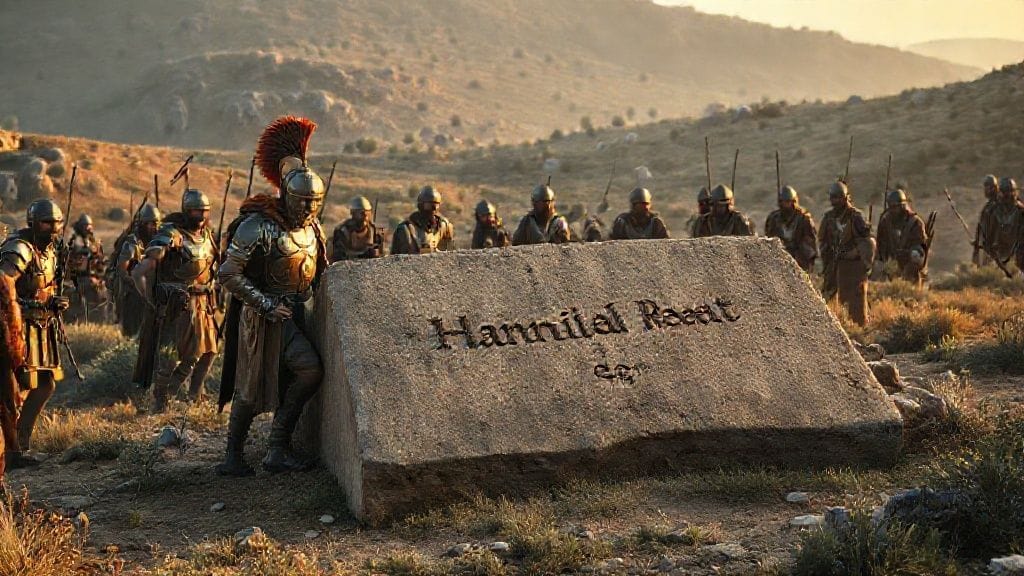
This terrain, steeped in history and political tension, became a silent participant in Hannibal’s last defiant gesture. According to sources, his grave atop a hill in Libyssa was marked by a monumental stone inscribed with poignant words warning potential violators not to disturb his resting place. The very geography of Libyssa mirrors the general’s journey—from vibrant victories to reclusion, and ultimately to death embraced on his own terms.
6. Political Intrigue at the Court of Prusias I
Prusias I was a shrewd ruler, walking a thin line between Rome’s demands and maintaining his kingdom's independence. Hosting Hannibal, a man Rome relentlessly cast as its nemesis, was a political gamble. Hannibal’s presence was a thorn in Roman-Bithynian relations, as Rome saw the exiled commander as a rallying point for potential adversaries.
The Romans exerted diplomatic pressure—likely accompanied by political threats and promises—on Prusias to neutralize the threat Hannibal represented. It is well documented that Hannibal was aware of impending betrayal, underscoring the precariousness of his final haven.
The court's intrigue and espionage bring to life the dangers faced by even the most legendary figures once the tides of empire turn unfavorably.
7. The Siege of Peace: Hannibal’s Struggle for Safety
History paints Hannibal’s final years as a desperate quest for sanctuary. He was a man who had once marched armies across treacherous terrains and faced Roman legions; now, his greatest fight was for survival under the shadow of diplomatic manipulation and betrayal.
Encircled by enemies within and without, Hannibal was deprived of the liberty and power he once wielded so effortlessly. The warmth of the eastern courts was not enough to shelter a man who carried within him the wrath he had once unleashed on the Roman Republic.
Instead of surrendering, Hannibal grasped control of his destiny in the ultimate, tragic act.
8. The Poisoned Chalice: Hannibal Chooses Death over Capture
Facing inevitable capture by Roman agents, Hannibal took his own life by poison, an act reported by Polybius and later by Plutarch. This final defiance was more than a personal choice; it was a statement—refusal to be paraded in Rome as a trophy, refusal to be humiliated after a lifetime of resistance.
There is a heartrending dignity in this moment—a man who had survived war, exile, and political machinations, choosing his own exit rather than the humiliation of chains. The image of Hannibal drinking poison as Rome’s soldiers approached is eternal, a symbol of ultimate resistance against overwhelming force.
9. Echoes of a Warrior: Immediate Reactions to Hannibal’s Death
News of Hannibal’s death rippled through the ancient world. For Rome, the enemy’s demise was both a relief and a vindication. The man who had haunted Roman nightmares was gone, freeing the Republic from the shadow he cast for over two decades.
For contemporaries outside Rome—especially those who had seen Hannibal not only as a foe but a brilliant general—his death inspired a complex mixture of respect, regret, and reflection on the relentless costs of empire-building.
10. Hannibal in the Roman Imagination: From Enemy to Legend
Rome’s attitude towards Hannibal evolved significantly over time. Initially demonized as the ultimate foe, he became a figure of begrudging admiration as later historians and politicians recognized his brilliance. Cicero, Livy, and others described Hannibal’s genius in terms that transcended mere enemy combatant.
The transformation of Hannibal into a symbol—both of Roman triumph and of the noble adversary—reveals much about Roman cultural identity and memory.
11. The Burial at Libyssa: A Sacred Site Lost to Time
Hannibal’s tomb reportedly stood on a hill in Libyssa, marked by an inscription warning intruders of dire consequences for disturbing his remains. Strabo, the ancient geographer, describes this epitaph, underscoring the importance attributed to his burial.
For centuries, Libyssa was a place of homage, pilgrimage, and mourning—yet today, little remains of the site, swallowed by time and the shifting political and geographic realities of Anatolia.
12. Historical Accounts: Polybius, Livy, and Plutarch Unravel the Myth
Our knowledge of Hannibal’s death mainly comes from historians like Polybius, who personally interviewed eyewitnesses, Livy’s grand narratives, and Plutarch’s moral biographies. Each offers a slightly different shade of the story, blending fact and literary flourish.
These accounts collectively immortalize Hannibal not only as a military genius but as a deeply human figure, battling fate and history until the very end.
13. The Legacy of Hannibal’s Death in Bithynia and Beyond
Hannibal’s death sealed the end of one chapter in Mediterranean history but opened another on how empires dealt with legendary adversaries. In Bithynia, his presence and death influenced local politics, and his grave became a potent symbol.
More broadly, his death illustrated the realities of exile in ancient times—a fate as brutal and final as death on the battlefield.
14. Cultural Reverberations in Mediterranean and Later European Thought
Hannibal’s story inspired countless works—poems, plays, art—throughout antiquity and well into modernity. His death, in particular, became a motif in reflecting on honor, loyalty, and resistance to domination.
European intellectuals from Machiavelli to modern historians have debated the meaning of Hannibal’s life and death, cementing his place as a mythic figure transcending history.
15. Revisiting Hannibal’s End: Archaeological and Historiographical Debates
Archaeology in the Gebze region has yet to conclusively locate Hannibal’s tomb, fueling ongoing scholarly debate. Historians continue to scrutinize ancient texts while interpreting the broader diplomatic and military context of his death.
This quest speaks to our enduring fascination—not only with Hannibal but with how history remembers those who shape it.
16. Hannibal’s Death as a Symbol of Resistance and Defeat
Hannibal’s end personifies the paradox of history’s great leaders—immortal in memory yet mortal in fate. His death highlights the thin line between heroism and tragedy, between resistance and submission.
In many ways, it parallels the wider story of Carthage itself—a civilization brilliant and defiant, ultimately overwhelmed by an unyielding rival.
17. The Modern Memory of Hannibal in Turkey and the West
In Turkey, the legacy of Hannibal’s death is a niche aspect of ancient history but one that intersects with the cultural memory of Bithynia and Roman expansion. Western European narratives have traditionally emphasized his role as Rome’s enemy, but modern scholarship seeks a more nuanced view.
Today, Hannibal embodies the complex interplay of identity, power, and historical narrative.
18. Lessons from Hannibal’s Final Act: Leadership, Exile, and Defiance
Hannibal’s decision to end his own life rather than submit to Roman captivity offers timeless lessons on agency, dignity, and resistance. For leaders, his life is a case study in strategic brilliance combined with the human vulnerabilities of exile and political betrayal.
This narrative encourages reflection on how history judges its heroes and villains.
19. Conclusion: The End That Became a Beginning
From the blood-soaked fields of the Second Punic War to the quiet hills of Libyssa, Hannibal’s life tells a story of ambition, resilience, and tragic inevitability. His death, though silent and remote, echoed through time—not as the defeat of a single man, but as the closing of a grand saga of resistance against overwhelming power.
Hannibal’s legacy challenges us to reconsider what it means to confront the forces of empire—and how history remembers those who dare to defy it.
Conclusion
Hannibal’s death at Libyssa around 183–181 BCE marked more than the passing of a formidable general; it symbolized the final act in the grand drama between Carthage and Rome. His choice to die on his own terms encapsulates a profound human story of courage, loss, and dignity. Far beyond the military genius, Hannibal remains a timeless symbol of defiance against oppression and the complex interplay of power, exile, and legacy. In reflecting on his life and death, we confront not only the ancient past but enduring questions about fate, honor, and memory.
FAQs
1. Why did Hannibal flee to Bithynia?
After Rome’s victory in the Second Punic War and the defeat of his allies in the East, Hannibal sought refuge far from Rome’s reach. Bithynia, under King Prusias I, offered a temporary haven amid complex geopolitical tensions.
2. How did Hannibal die?
Historical sources state Hannibal took poison to avoid capture by Roman agents, choosing death over humiliation. This act is widely seen as a final assertion of agency and resistance.
3. What was the significance of Libyssa?
Libyssa (modern Gebze, Turkey) was the place of Hannibal’s death and burial. It became a symbolic site of remembrance, marked by a monument warning against disturbing his grave.
4. How did Rome view Hannibal after his death?
Initially seen as a mortal enemy, Hannibal was later admired by Roman historians and politicians for his military genius, transforming into a complex symbol of honor even within Rome.
5. Are there archaeological remains of Hannibal’s tomb?
Despite historical references, no definitive archaeological evidence of Hannibal’s grave at Libyssa has been found, making it a subject of ongoing research and debate.
6. How has Hannibal’s death influenced later historical thought?
His death inspired reflections on leadership, resistance, and exile. European thinkers and historians have used his life and death to explore themes of power, defiance, and historical memory.
7. What does Hannibal’s final act teach us about historical legacy?
It highlights the power of choice and narrative in history—how even in defeat, leaders can shape how they are remembered by confronting fate on their own terms.
8. Did Hannibal have any role in Bithynian politics?
While details remain sparse, Hannibal likely served as a military advisor to Prusias I, leveraging his experience even in exile.