Table of Contents
- The night the earth ruptured: August 17, 1959
- The Hebgen Lake region: A land shaped by fire and ice
- Geological whispers: Understanding the seismic tension beneath Montana
- A peaceful summer evening shattered: The first tremors
- The massive quake: Forces unleashed from the Needle Mountains
- The aftermath: A sudden landscape of ruin and resilience
- Mad earth and cold waters: The landslide that plunged into Quake Lake
- The human toll: Lives forever altered by nature’s fury
- Rescue amid chaos: Harrowing tales of survival and loss
- Scientific awakening: What Hebgen taught seismologists worldwide
- Geological scars that tell a story: The enduring mark on Montana's landscape
- Cultural ripples: Local communities and the quake’s shadow
- Media and memory: How news shaped public perception in 1959
- Comparing the Hebgen quake to other historic shocks
- Quake science’s leap forward: From Hebgen to modern monitoring
- The ecological aftermath: Nature’s slow reclaiming of destruction
- Quake Lake as a living monument
- Lessons learned and overlooked: Emergency preparedness then and now
- Contemporary remembrance: Monuments, museums, and annual commemorations
- A seismic legacy: How Hebgen deepened understanding of the Rocky Mountains
- Personal stories: Voices from those who lived through the night
- The quake’s role in Montana’s tourism and geology education
- Looking forward: Modern seismic risk in the western United States
The night the earth ruptured: August 17, 1959
It was a moonlit night in late summer, the kind of serene evening that blankets the Montana wilderness with a profound stillness. Nearly a thousand feet above Hebgen Lake’s shimmering surface, families were settling down after a day immersed in fishing, hiking, and the kind of outdoor splendor this region promises. But just as the clock struck 10:37 PM, the earth convulsed violently beneath them. In an instant, nature unleashed raw power so immense it fractured mountainsides, ripped open the ground, and forever altered this peaceful stretch of the Rocky Mountains.
The Hebgen Lake Earthquake of August 17, 1959, remains one of the most powerful and consequential seismic events in the interior United States. It was not just a physical rupture; it was a rupture in the imagined safety of America's westward expansion, a stark reminder that the majestic mountains harbored ancient fires and restless plates beneath their grandeur. The ground shook with a force estimated at magnitude 7.3, setting loose devastating landslides and transforming the landscape irrevocably.
This story is one of natural wonder turned sudden catastrophe, of scientific discovery sparked by tragedy, and of human spirit tested amid chaos. Step by step, let us journey back to that transformative night in Montana – to understand its origins, experience its brutal unfolding, and appreciate the legacy it carved deep into American geology and culture.
The Hebgen Lake region: A land shaped by fire and ice
Before the earth trembled in 1959, the Hebgen Lake area was known primarily for its breathtaking scenery and abundant outdoor recreation. Nestled in the southwestern corner of Montana, near the borders of Idaho and Wyoming, this region lies at the heart of the Greater Yellowstone Ecosystem — a vast wilderness shaped over millennia by volcanic eruptions, glacial sculpting, and tectonic movement.
Hebgen Lake itself is a large reservoir, created in the early 1900s for irrigation and hydroelectric purposes. Surrounded by steep mountain slopes, dense pine forests, and crystal-clear waters, it became a summer haven for locals and tourists alike. The nearby Madison River, feeding into the lake, offered some of the best trout fishing in the region. Hiking trails traced ancient paths once tread by native Shoshone and Bannock peoples, who had long revered these lands as sacred.
Yet beneath this calm, geological forces churned quietly. The region lies near the Yellowstone Caldera — the massive volcanic "supervolcano" that remains restless and volatile beneath its iconic national park. The Rocky Mountains themselves, born of tectonic upheaval over the last 70 million years, contained countless faults and fractures, subtle cracks where the earth’s crust strained against the immense pressures of the shifting North American Plate.
These tensions, often imperceptible, were nothing new, but they stood poised to remind the world that Montana’s wilderness holds both beauty and danger in equal measure.
Geological whispers: Understanding the seismic tension beneath Montana
The Hebgen Lake Earthquake was no random flare of earth’s fury. It was the culminating release of decades, perhaps centuries, of tectonic strain concentrated along faults hidden among the forested mountain slopes. The principal culprit was the Hebgen Fault Zone — a complex network of fractures within the Rocky Mountain Front.
Unlike California’s famous San Andreas Fault, the Hebgen fault was less known, less studied. It was classified as an intraplate fault — an active fracture within the interior of a tectonic plate rather than at the edge where plates collide or pull apart. Because these faults aren’t as familiar or as continuously active, their devastating potential was underestimated.
Scientists now know that the Hebgen Fault zones store and release strain via moderately strong earthquakes. The 1959 event is the largest recorded quake within the intermountain west portion of the United States at that time. Stress accumulates slowly in this region due to subtle westward compression across the Rocky Mountains as the Pacific Plate grinds northwestward.
Seismologists in the 1950s were just beginning to decipher how such intraplate zones could produce significant seismic hazards. Yellowstone’s subsurface magma chambers, fault lines hundreds of miles beneath the surface, and related volcanic activity added complexity to predictions.
And yet, despite mounting clues, the scale of the impending disaster remained concealed until that fateful night.
A peaceful summer evening shattered: The first tremors
August 17, 1959 began like any summer day in Montana, warm sunshine and a gentle breeze rustling through the pines. Visitors and locals enjoyed fishing, boating, and gathering by campfires near the lake shore. But as the evening deepened, an ominous vibration subtly teased beneath the surface — a foreshock perhaps, a warning unnoticed by most.
Then, at exactly 10:37 PM, the earth exploded.
The ground heaved with terrifying force. A 7.3 magnitude shock, the seismic waves traveled swiftly through rock and soil, shaking cabins, twisting trees, and causing the earth to lurch as if seized by a giant’s raw hand. The quake lasted roughly 30 to 40 seconds — an eternity in such circumstances.
Windows shattered, ceilings cracked, and mountain slopes groaned ominously. But the disaster had only just begun.
The massive quake: Forces unleashed from the Needle Mountains
The Hebgen Lake Earthquake originated deep beneath the Needle Mountains, where stresses along the fault ruptured suddenly. Seismographs later recorded the quake’s strength as comparable to major earthquakes felt around the world — a powerful reminder that seismic risks span beyond the well-known fault zones.
The shaking triggered colossal landslides, with huge slabs of rock and earth breaking loose and bulldozing downhill. Entire hillsides collapsed, some sliding into the lake itself, while others dammed rivers and transformed local drainage patterns. The ground ruptured, spanning nearly 30 miles of fault breakage.
In many places, deep fissures opened in the earth like gaping wounds, swallowing roads and trails. The landscape seemed suddenly alien — raw, chaotic, reshaped by force, a place where life had to begin anew.
The aftermath: A sudden landscape of ruin and resilience
Within minutes after the initial quake, the full devastation became apparent. The hardy forests stood twisted or uprooted. Roads led to dead ends where the earth had caved in. Campsites were buried or flooded.
Perhaps the most dramatic feature was the creation of a tsunami-like wave on Hebgen Lake, caused by massive landslides crashing into the water. Waves surged over beaches and campgrounds, sweeping away equipment and injuring some.
At lower elevations, the town of West Yellowstone felt tremors, and rescuers began to mobilize even as aftershocks rattled nerves and structures. The magnitude of destruction tested the mettle of emergency teams and local residents.
Mad earth and cold waters: The landslide that plunged into Quake Lake
A single landslide stands as the most enduring geological signature of the Hebgen earthquake: the massive chunk of earth that sheared off cliffs above the Madison River, near the southern tip of Hebgen Lake. This natural dam, more than 200 feet high and stretching nearly a mile wide, blocked water flow and created what is now known as Quake Lake.
The lake began filling rapidly behind this earth dam, flooding valleys and forests once accessible by foot. The slide contained tens of millions of cubic meters of earth and rock — a mountain reborn into a barrier.
Engineers and geologists raced against time to assess the stability of this barrier, fearful it could burst catastrophically. In response, controlled spillways were constructed to relieve pressure, preventing further disaster.
Today, Quake Lake remains a haunting monument to that night’s might, a somber reminder of nature’s capacity to rebuild and also to imprison.
The human toll: Lives forever altered by nature’s fury
Though the quake struck in a remote area, the human cost was tragic. Official estimates list 28 fatalities, many of them campers crushed within collapsing cabins or caught in landslides. Dozens more sustained injuries of varying severity.
One of the hardest-hit spots was the Madison Canyon campgrounds, where families had gathered, unaware of the lurking threat. Entire families were caught off-guard; tents ripped apart and crushed by falling trees, earthquake-induced landslide debris, or surging waters.
The shock was felt far beyond Montana: reports came from Idaho and as far as Salt Lake City. Yet for most in the region, it was an unthinkable trauma that would stay alive in memory for generations.
Rescue amid chaos: Harrowing tales of survival and loss
Rescue efforts began almost immediately, despite the difficult terrain and ongoing aftershocks. Helicopters were summoned, and volunteers braved unstable slopes and fractured roads. Some survivors were found trapped under debris for hours; others heroic escape stories emerged.
One survivor vividly recalled, “The ground moved like a wave beneath me… I crawled out just before the hillside collapsed.” Another recounts how neighbors banded together, sharing scarce supplies amidst the night’s chaos.
Medical teams rushed to the scene, working by lantern light to treat injuries ranging from broken bones to severe contusions.
Yet the rescue efforts were hampered by damaged infrastructure and the sheer scale of the disaster – a humbling ordeal that drew national attention.
Scientific awakening: What Hebgen taught seismologists worldwide
Prior to Hebgen, the interior western United States was considered moderately at risk for earthquakes. The 1959 event challenged this assumption, spurring a wave of seismic research focused on intraplate zones.
Geologists and seismologists studied fault mechanics, seismic wave propagation, and landslide triggers related to earthquakes. The quake offered a rich case for understanding the interplay between tectonics and surface processes.
Additionally, Hebgen contributed to the development of better building codes, emergency response protocols, and regional monitoring networks.
Notably, it highlighted how seismic hazards extended beyond obvious plate boundaries — urging increased vigilance in similar geologically complex areas.
Geological scars that tell a story: The enduring mark on Montana's landscape
Today, visitors to Hebgen Lake and surrounding parks can witness still-visible scarps — the fractured rock faces created by the earthquake rupture. Trails show cracks, offsets, and boulders displaced decades ago.
In some areas, ancient lodgepole pines remain tilted or uprooted, their twisted forms frozen in time, testifying to the quake’s immense power.
Quake Lake itself continues to grow, framed by conifer forests reclaiming slopes disturbed by the slide.
Despite nature’s slow healing, the landscape forever carries the signature of that violent night: a reminder that beneath beauty often lies restless earth.
Cultural ripples: Local communities and the quake’s shadow
The quake became part of Montana’s cultural fabric, influencing local art, folklore, and identity. Survivors’ stories passed through generations in oral history.
Communities learned to live more attuned to the possibility of seismic shocks. Annual commemorations ensure remembrance of the disaster’s human and geological imprint.
Additionally, the event fostered regional tourism centered on natural history, attracting visitors eager to see the remnants and learn from history.
Media and memory: How news shaped public perception in 1959
News outlets covered the quake extensively, highlighting dramatic footage of landslides, narration of rescue efforts, and expert analyses. Radio broadcasts brought immediate updates, while newspapers ran photographs of shattered cabins and swollen rivers.
The vivid reporting brought national awareness to seismic risks in places previously viewed as quiet. Public reaction mixed awe with anxiety.
Yet coverage also shaped a narrative celebrating bravery and scientific inquiry, reinforcing resilience amid catastrophe.
Comparing the Hebgen quake to other historic shocks
The 1959 Hebgen event occupies a unique place among U.S. earthquakes — smaller than the giant 1906 San Francisco quake but larger than many regional events. It prompted comparison to similar intraplate quakes in the New Madrid Seismic Zone and other Western mountain faults.
Unlike coastal quakes, Hebgen’s location in a rugged wilderness complicated both human impact and scientific study. Still, its lessons reverberate in earthquake preparedness across the country.
Quake science’s leap forward: From Hebgen to modern monitoring
Post-Hebgen, the science community accelerated efforts to install seismometers and monitor fault activity. Networks expanded to cover the Rocky Mountain region, enabling earlier warnings and refined hazard maps.
The event helped spur advances in understanding landslide triggers, ground shaking effects, and fault rupture processes, underpinning modern seismic engineering.
The ecological aftermath: Nature’s slow reclaiming of destruction
Ecologists have studied how the earthquake and landslides reset ecological succession in the affected zones. Dead trees and altered soil led to pioneer species colonizing new areas, changing wildlife patterns.
While traumatic initially, this natural disturbance fostered biodiversity hotspots over time — a testament to nature’s resilience.
Quake Lake as a living monument
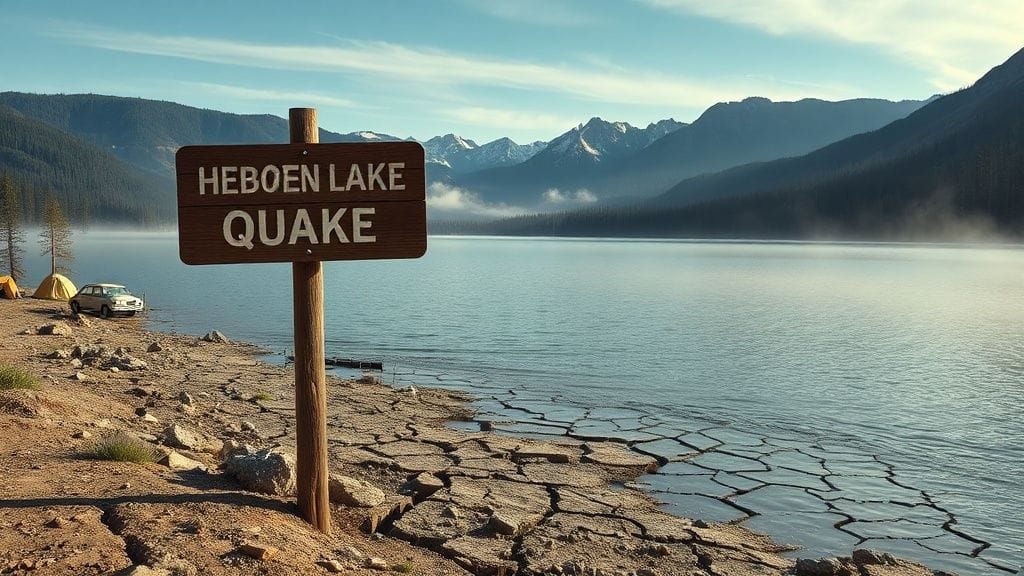
Quake Lake remains a stark monument to the 1959 event. Visitors flock to its shores to witness the dramatic earth dam, interpretive signs, and museum exhibits nearby.
Boating and fishing continue — but always under the watchful shadow of the earth’s power. The lake embodies a complex legacy blending natural beauty and force.
Lessons learned and overlooked: Emergency preparedness then and now
Hebgen exposed gaps in early warning and emergency response. Infrastructure vulnerabilities and lack of comprehensive seismic codes showed the need for improvement.
Today, many of those lessons inform regional drills and preparedness strategies — yet risks remain, reminding us nature's might demands respect and readiness.
Contemporary remembrance: Monuments, museums, and annual commemorations
Montana’s communities honor the 1959 tragedy through memorial plaques, museum exhibits, and annual events recalling the earthquake’s impact.
These remembrances serve not only as tribute but as education, instilling awareness in new generations who never felt the quake but live with its aftermath.
A seismic legacy: How Hebgen deepened understanding of the Rocky Mountains
From geology to emergency planning, the Hebgen Lake Earthquake redefined how the Rocky Mountain region understood itself. The event highlighted the active forces still shaping these ancient peaks and valleys, reinforcing that mountains are living landscapes.
Personal stories: Voices from those who lived through the night
Accounts of survivors convey the earthquake’s terror and humanity: a father shielding his children, neighbors helping the injured, a hiker caught on a landslide’s edge. These stories humanize a natural disaster, turning statistics into living memory.
The quake’s role in Montana’s tourism and geology education
The event spurred geological tourism — drawing enthusiasts eager to walk fault scarps and see quake-induced formations. Local parks incorporated educational programs explaining seismic risks and geology.
Hebgen’s story enriches Montana’s identity, blending science and history.
Looking forward: Modern seismic risk in the western United States
Though decades have passed, the shadows of Hebgen persist in contemporary seismic risk assessments. With populations growing across the West, scientists and planners continue to study faults like Hebgen’s — aiming to mitigate future disasters through vigilance, innovation, and respect for earth’s restless energy.
Conclusion
The Hebgen Lake Earthquake of August 17, 1959, remains etched in time as a moment when earth and humanity collided, forcing the wilderness and its people to confront the fragile boundary between calm and catastrophe. It was a night that shattered tranquility with rumbling power, forever changing Montana’s landscape and consciousness.
But more than destruction, the quake gifted science with insights, local communities with resilience, and future generations with stories of survival and strength. In the trembling earth and the quiet waters of Quake Lake, we hear a reminder of nature’s awe-inspiring force — a call to humility and preparedness.
For all its scars and losses, the Hebgen earthquake renewed our understanding that beneath the majestic mountains lie secrets and powers we must never take for granted. Its legacy endures, inviting us to listen, learn, and respect the restless earth beneath our feet.
FAQs
What caused the Hebgen Lake Earthquake in 1959?
The earthquake was caused by a sudden rupture along the Hebgen Fault Zone, an intraplate fault within the Rocky Mountains. Stress from tectonic plate movements accumulated over time, releasing energy in the magnitude 7.3 quake.
How strong was the Hebgen Lake Earthquake?
The earthquake measured approximately magnitude 7.3, making it one of the most powerful seismic events recorded in the Rocky Mountain region and the interior Western U.S.
What was the human impact of the earthquake?
The quake claimed 28 lives, destroyed cabins and campsites, caused landslides and flooding, and injured dozens more. The Madison Canyon campgrounds were particularly hard hit.
What is Quake Lake and how did it form?
Quake Lake is a natural reservoir formed when a massive landslide caused by the earthquake dammed the Madison River. The lake created behind the blocked river remains today as a geological monument.
How did the Hebgen Earthquake influence scientific understanding?
It highlighted the significance of intraplate faults and the seismic risk beyond well-known fault lines, prompting advances in earthquake monitoring, geology, and emergency preparedness in the region.
Are there still risks of earthquakes in Montana?
Yes, the Rocky Mountain region remains seismically active with faults capable of producing earthquakes, making continued monitoring and preparedness essential.
How is the earthquake commemorated today?
The event is remembered through memorials, educational programs, museum exhibits near Quake Lake, and annual community commemorations that honor victims and promote seismic awareness.
What lessons did the Hebgen Earthquake leave for emergency management?
The quake exposed gaps in infrastructure resilience and response readiness, leading to improved seismic building codes, warning systems, and emergency procedures in Montana and similar regions.