Table of Contents
- The Awakening of Hekla: A Fiery Prelude to 1104
- The Geology of Iceland: Land of Fire and Ice
- Iceland in the Early 12th Century: Society on the Edge
- The Legend and Lore of Hekla Before 1104
- The Silent Build-up: Signs of an Impending Cataclysm
- April 1104: The Day the Earth Roared
- The First Tremors: How Hekla Began to Speak
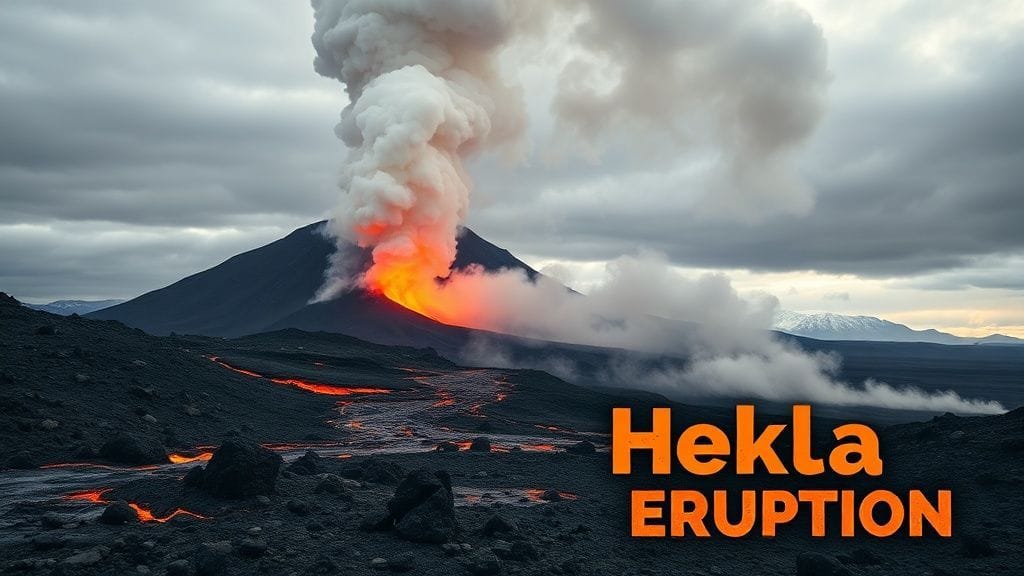
- Eruption Unleashed: Rivers of Fire and Sea of Ash
- Tales from the Villages: Eyewitness Accounts and Oral History
- The Ash Cloud Spreads: Impact on Weather and Crops
- The Human Toll: Displacement, Fear, and Faith
- After the Flames: Landscape Transformed
- Geopolitical Repercussions: Iceland and the Norse World
- The Eruption’s Place in Medieval Chronicles
- Scientific Insights: Modern Understanding of Hekla’s 1104 Event
- Cultural Resonance: Art, Myth, and Icelandic Identity
- Comparing Hekla 1104: Other Notable Eruptions in Icelandic History
- The Modern Legacy: How 1104 Shaped Volcanology
- Lessons from Hekla: Human Adaptation to Volcanic Fury
- Reflection: The Awe and Terror of Living with Fire
- Conclusion: The Timeless Voice of Hekla
- FAQs: Unveiling the Mysteries of the 1104 Eruption
- External Resource for Further Study
- Internal Link: Explore More on History Sphere
1. The Awakening of Hekla: A Fiery Prelude to 1104
The spring of 1104 dawned uneasily over the Far North. Iceland, a land carved by ice yet forged in fire, stood on the brink of a transformation that the stories would travel through centuries. Far beneath the rugged surface, the giant stirrings of Hekla volcano began — a slow, simmering prelude to one of the most violent eruptions recorded in medieval Europe. The sky above those waiting villages darkened inexplicably; distant rumblings rolled across the hills. There was a tension in the air, an ancient warning whispered through the moss and stone. The earth was preparing to roar.
2. The Geology of Iceland: Land of Fire and Ice
To understand Hekla's eruption in 1104, one must first grasp Iceland’s geologic identity. This island, perched atop the Mid-Atlantic Ridge, is a battlefield between tectonic plates—the North American and Eurasian plates pulling apart, creating fissures through which molten rock escapes. The volcanic forces are relentless, sculpting the land and defining life itself. Hekla, often dubbed the "Gateway to Hell" by medieval Christians for its fiery destruction, stands as one of Iceland’s most active and feared volcanoes. It is a stratovolcano, a layered beast built from past eruptions, prone to violent outbursts.
3. Iceland in the Early 12th Century: Society on the Edge
The 12th century Iceland was a society at the crossroads of pagan traditions and Christian conversion. Its people, hardy settlers of Norse descent, lived dispersed in small farming communities. They depended heavily on the earth—its soil for grazing, its seas for sustenance—and were tied deeply to the land’s fortunes and wrath. Political structures were fragmented: chieftains governed with influence rather than monarchic power, and law was upheld by assemblies like the Althing. Yet nature’s unpredictability overshadowed human affairs, reminding everyone of their fragile existence.
4. The Legend and Lore of Hekla Before 1104
Long before the eruption of 1104, Hekla had a dark reputation. Medieval Icelandic sagas and ecclesiastical writings described it as a pit of damnation. The eruption wasn’t merely a natural disaster but a cosmic event—in the popular imagination, fire was equated with hell and divine wrath. These beliefs shaped how communities prepared for and responded to Hekla’s signs. The mountain’s mythic status was as much a psychological shield as it was a source of terror, a symbol intertwining faith and fear.
5. The Silent Build-up: Signs of an Impending Cataclysm
Unlike modern volcanoes monitored by seismic instruments, the signs of Hekla’s 1104 eruption were perceptible only through natural omens: increased earthquakes, unusual animal behavior, and a sudden change in weather. Oral traditions recorded how villagers noticed days of trembling earth, smells of sulfur thickening the air, and even the strange behavior of livestock and birds. Such patterns spanned weeks and months, cultivating a growing dread in the hearts of those who depended on the land’s stability.
6. April 1104: The Day the Earth Roared
When Hekla finally erupted, it did so with an intensity that shattered the fragile peace of Iceland’s spring. The sky turned an unnatural hue; flames and smoke spewed upward in colossal plumes. Molten lava tore down the mountain’s sides, crossing valleys and engulfing fields. Witnesses later described the ground shaking so violently it seemed the world itself was cracking apart. Entire settlements were blanketed by volcanic ash, and the throaty roar of the eruption echoed across a land still fragile after winter’s grasp.
7. The First Tremors: How Hekla Began to Speak
This eruption was preceded by a series of ground-shaking tremors, a geological voice trembling with menace. Villagers recalled ground vibrations like the march of giants beneath their homes. This seismic warning was their first glimpse of Hekla’s returning fury. In some areas, fissures appeared, emanating heat and noxious gases. Yet these were just whispers compared to the volcanic explosion that followed, devastating yet strangely captivating.
8. Eruption Unleashed: Rivers of Fire and Sea of Ash
Hekla’s eruption was a classic example of stratovolcanic violence. Plunging fountains of lava ascended tens of meters before cascading like incandescent waterfalls. Ash darkened the sky, turning day into night. The volcanic plume spread across Iceland and beyond, blotting out skies in neighboring lands. It’s estimated that the eruption ejected millions of cubic meters of tephra—a mixture of ash, pumice, and volcanic bombs. This pyroclastic fury reshaped landscapes, seared forests, and obliterated habitats.
9. Tales from the Villages: Eyewitness Accounts and Oral History
The real human stories of 1104 live in the oral histories passed down through generations. Saga fragments recount terrified farmers fleeing their homes, carrying children through ash-covered wastelands, and priests blessing the earth in desperate prayers. One chilling tale speaks of a shepherd whose flock vanished under a blanket of ash, and a family who barely escaped as lava swallowed their homestead. These accounts give numbers and dates a pulse—reminding us that history is not just event but experience.
10. The Ash Cloud Spreads: Impact on Weather and Crops
The eruption’s effects rippled far beyond immediate destruction. The vast ash cloud caused a climatic disturbance, cooling the air and blocking sunlight. This "volcanic winter" led to crop failures, threatening food supplies in a society already vulnerable to nature’s whims. Contemporary chronicles note poor harvests following the explosion, triggering famine and social hardship. Such environmental fallout underlined the interconnectedness of geology and human survival.
11. The Human Toll: Displacement, Fear, and Faith
Fear spread faster than lava in those weeks. Communities were uprooted; farmland rendered barren. Some sought refuge in Iceland’s sparse towns, others migrated briefly abroad. Mental and spiritual impacts were profound. Hekla’s eruption was interpreted as divine punishment or a sign of apocalypse for some, intensifying religious fervor. The eruption also forged a shared experience that permeated Icelandic identity—resilience in the face of incomprehensible natural force.
12. After the Flames: Landscape Transformed
Post-eruption, the land bore scars both visible and invisible. Lava fields expanded, rivers rerouted, and fertile valleys buried beneath thick ash layers. It would take decades for nature to reclaim these zones, and even longer for human activity to resume full strength. This harsh makeover was a stark reminder of the power of Earth's internal forces — a reset button on geography and ecosystems alike.
13. Geopolitical Repercussions: Iceland and the Norse World
Though isolated, Iceland’s position within the Norse world linked it to wider political currents. News of Hekla’s eruption traveled through trade and ecclesiastical networks, evoking awe and sometimes fear on mainland Scandinavia and beyond. Local chieftains faced challenges maintaining authority amid the crisis, as communities debated interpretations of the disaster and responses to scarcity. It reinforced Iceland’s precarious place between nature’s wrath and human governance.
14. The Eruption’s Place in Medieval Chronicles
Medieval annals and monastic records, though sparse, mention the 1104 eruption with reverent horror. Latin chroniclers described the event as a portent, while Icelandic sagas integrated it into the oral and manuscript traditions. These texts, part history and part mythology, reveal the eruption’s profound imprint on contemporary consciousness, bridging secular and sacred perspectives on catastrophe.
15. Scientific Insights: Modern Understanding of Hekla’s 1104 Event
Only through modern volcanology and geological science have we begun to fully comprehend the 1104 eruption. Layers of tephra sampled across Iceland provide a geological fingerprint linking ash deposits to the eruption. Radiometric dating confirms the timeline, while volcanologists analyze eruption styles, magma composition, and post-event seismic activity to reconstruct the event’s dynamics. Today’s monitoring stations around Hekla harness this knowledge to protect communities, a direct legacy of past destruction.
16. Cultural Resonance: Art, Myth, and Icelandic Identity
The 1104 eruption transcended its immediate devastation to become a symbol woven into Icelandic culture. Poems and songs remember the fiery mountain, while painters and storytellers revisit the image of Hekla’s wrath. It shaped a collective identity rooted in respect for nature’s overwhelming power. Hekla’s fire was not only a destroyer but also a galvanizing force, a muse for resilience and rebirth.
17. Comparing Hekla 1104: Other Notable Eruptions in Icelandic History
Hekla has erupted repeatedly, notably in 1947-48, 1980, and 2000. Comparing 1104 to these modern events highlights both the constancy of volcanic activity and evolving human responses. Medieval communities suffered greater loss with fewer resources, whereas contemporary Iceland combines scientific foresight with emergency planning. This contrast reveals how history and technology shape survival strategies.
18. The Modern Legacy: How 1104 Shaped Volcanology
The detailed study of historical eruptions like 1104 informs today's predictive capabilities. By understanding eruption patterns, tephra dispersal, and environmental impact from past events, scientists build better models. Iceland itself has become a natural laboratory where ancient eruptions guide hazard mitigation and civil defense—a human triumph forged through painful lessons.
19. Lessons from Hekla: Human Adaptation to Volcanic Fury
The 1104 eruption teaches that humanity’s relationship with volcanoes is complex: at once adversarial and adaptive. Early Icelanders learned to read subtle signs of volcanic unrest and developed coping mechanisms blending faith, community solidarity, and practical ingenuity. This interplay of respect and resilience remains critical in volcanic regions worldwide.
20. Reflection: The Awe and Terror of Living with Fire
Standing before a volcano like Hekla is a confrontation with elemental forces that dwarf human ambition. The 1104 eruption evokes profound awe: the raw energy of the Earth unleashed, reshaping what was familiar. It summons a primal mix of terror and fascination—emotions that have echoed through time in art, literature, and memory.
Conclusion
The eruption of Hekla in 1104 was far more than a geological event; it was a moment that rippled through the fabric of Icelandic life, culture, and consciousness. It serves as a reminder of the delicate balance between humanity and nature’s most potent powers. Through the lens of history, we see not only destruction but endurance, a community shaped by fire and ash into a symbol of resilience. The fiery voice of Hekla continues to speak, a timeless warning and a testament to the enduring spirit of those who live in its shadow.
FAQs
Q1: What caused the Hekla eruption of 1104?
A1: The eruption was triggered by tectonic activity along the Mid-Atlantic Ridge, where the North American and Eurasian plates diverge, allowing magma to reach the surface and create volcanic eruptions.
Q2: How did the eruption affect Iceland’s population?
A2: Many communities were disrupted by ash fallout and lava flows, displacing populations and leading to crop failures, famine, and social upheaval. The disaster also strengthened religious and cultural responses to natural calamities.
Q3: Were there any recorded eyewitness accounts?
A3: While no direct written eyewitness accounts survive, oral traditions and later saga writings preserve vivid recollections of the eruption’s terror and its aftermath.
Q4: How has the 1104 eruption shaped Icelandic identity?
A4: It embedded a deep respect for natural forces into Icelandic culture, shaping narratives of resilience that continue to influence art, literature, and national consciousness.
Q5: How does the 1104 eruption compare to modern eruptions of Hekla?
A5: The 1104 eruption was notably powerful, with more widespread devastation than recent events. Modern eruptions benefit from scientific monitoring and emergency responses that mitigate human impact.
Q6: What scientific techniques help us study the eruption today?
A6: Techniques include tephrochronology (studying layers of volcanic ash), radiometric dating, geological mapping, and seismic analysis, helping reconstruct the eruption’s timeline and effects.
Q7: Did the eruption have any impact beyond Iceland?
A7: The ash cloud likely affected weather patterns over the North Atlantic and possibly contributed to climatic fluctuations impacting agriculture in surrounding regions.
Q8: Is Hekla still active today?
A8: Yes, Hekla remains one of Iceland’s most active volcanoes, continuously monitored for signs of unrest to safeguard nearby populations.

