Table of Contents
- The Fateful Night: When Hekla Awoke in 2000
- Iceland’s Fiery Giant: The Legend of Hekla
- Geological Prelude: Tectonic Stresses Beneath Iceland
- Signs of Stirring: Weeks Before the Eruption
- The First Tremors: Earthquakes and Rising Magma
- Darkness Descends: The Initial Burst of Lava and Ash
- Faces of Fear: How Locals Reacted to the Awakening Volcano
- Scientific Vigilance: Monitoring a Volcanic Titanic
- Ash Clouds and Flight Delays: Global Impacts of the 2000 Eruption
- The Lava Flows: Mapping Nature’s Molten Rivers
- The Eruption’s Phases: A Story in Fire and Fury
- Myth and Science Intertwined: Hekla’s Place in Icelandic Culture
- Containment and Safety: Authorities Mobilize
- Ecological Aftershocks: Impact on Iceland’s Fragile Landscape
- The Human Element: Stories of Survival and Community
- Aftermath: When the Fires Died Down
- Lessons Learned: Advances in Volcanology Since 2000
- The Global Perspective: How Hekla’s 2000 Eruption Changed Volcanic Monitoring
- Echoes in Time: Comparing Hekla’s Historic Eruptions
- The Volcano Today: Dormant or Restless?
- Conclusion: The Eternal Dance of Fire and Ice
- FAQs: Your Questions on Hekla’s 2000 Eruption Answered
- External Resource
- Internal Link
1. The Fateful Night: When Hekla Awoke in 2000
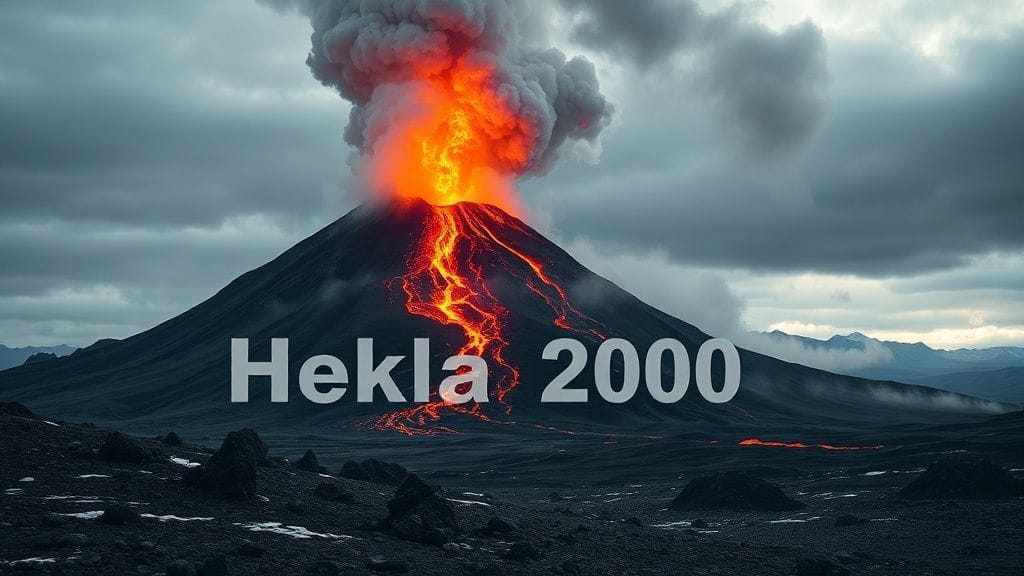
In the suffocating darkness of an Icelandic spring evening, the earth began to murmur beneath a sleepy landscape. The air, crisp with the smell of wet moss and melting snow, turned sharp as ground tremors rolled unseen, like the deep growls of a restless beast. Suddenly, a piercing light shattered the night—a fiery geyser erupted from a jagged ridge. Rivers of molten rock spilled eagerly from the earth’s cracked lungs, painting flashes of orange and red against the blackened sky. This was no ordinary night. On February 26, 2000, the long-dormant volcano of Hekla roared back to life.
Eyewitnesses recounted the scene with a mixture of awe and dread. A fierce, glowing tongue stretched down the mountain’s flank. Ash began to bloom in the cold air, veiling nearby settlements in a choking, gray haze. It was nature’s raw power, unpredictable and humbling, reminding all Icelanders that beneath their serene island lay a volatile heart, ready to reshape the world in an instant.
This eruption was not just a geological event; it was a moment steeped in history, mythology, and the sheer force of nature—a chapter etched into Iceland’s identity anew.
2. Iceland’s Fiery Giant: The Legend of Hekla
Hekla is no ordinary volcano. Often called the “Gateway to Hell” in medieval times, it has haunted the imaginations of Icelanders for centuries. Tales from the Middle Ages depict it as the fiery mouth of the underworld, from which demons and spirits emerged to terrorize the land. Such mythic fears were not unfounded. Geologically, Hekla’s eruptions have been frequent and sometimes devastating over recorded history.
Situated on the eastern side of the Icelandic highlands, about 120 kilometers east of Reykjavik, Hekla towers at nearly 1500 meters. Its eruptions have characterized Iceland’s vulcanism for over a millennium, and many of them were marked by suddenness and intensity, with little warning.
The 20th century had seen Hekla awaken several times—the last major eruption before 2000 occurred in 1947-48 and again in 1970—each time reminding Icelanders of their country’s precarious relationship with fire and ice. But the legend never died; each awakening compounded Hekla’s fearsome reputation, making the 2000 eruption a deeply charged event for the nation’s psyche.
3. Geological Prelude: Tectonic Stresses Beneath Iceland
Iceland sits astride the Mid-Atlantic Ridge, where the Eurasian and North American tectonic plates inexorably drift apart. This rift zone is a hotspot of volcanic and seismic activity, and Hekla is one of its most active volcanic sentinels. Beneath the volcanic mountain, the crust is fractured, riddled with fissures allowing magma to rise from the mantle.
But what causes Hekla to erupt with such sudden force? Studies have shown a complex relationship between tectonic strain, magma chamber pressure, and the movement of molten rock deep underground. Long periods of calm often end abruptly as subterranean forces breach the surface.
Before 2000, Icelandic geologists monitored seismic vibrations and ground deformations, signs that the earth’s crust was under increasing stress. Yet Hekla’s notorious reputation for rapid eruptions meant that even the most sophisticated detection systems faced enormous challenges.
4. Signs of Stirring: Weeks Before the Eruption
In early February 2000, a subtle but persistent increase in small earthquakes under and around Hekla raised eyebrows in the scientific community. Though tremors had been common in Iceland’s volcanic regions, this pattern suggested magma was moving upward, squeezing through rock channels.
Local residents near mountain farms noticed oddly behaving livestock—cows appeared restless, and sheep huddled uneasily. Farmers spoke of a strange silence replaced by distant rumbles, a nature’s warning the island’s folklore has long emphasized—animals sensing the earth’s unease.
Iceland's Meteorological Office ramped up monitoring, installing additional sensors and satellite surveillance. The tension was palpable. Yet, as always with Hekla, the build-up seemed deceptively faint and fragile.
5. The First Tremors: Earthquakes and Rising Magma
The weekend of February 26 marked a crescendo in seismic activity. Tremors intensified, pounding through the bedrock like the beat of a colossal drum. At 21:18 local time, the ground cracked open near the summit.
Scientists watching real-time data observed sharp spikes in tremors, signifying the rapid intrusion of magma into the shallow magma chamber. This sudden escalation was the unmistakable precursor to eruption.
Around the same time, fissures began to open as molten rock forced its way upward, breaking through centuries of solidified layers. The volcano’s rumbling swelled into a roar, a voice from the depths echoing across Iceland’s highlands.
6. Darkness Descends: The Initial Burst of Lava and Ash
Then, as if the mountain exhaled its fiery breath, a towering plume of ash exploded skyward. The eruption violated the night, illuminating the snow-covered peaks with keening flames.
The volcanic column shot meters into the air, carrying with it pulverized rock and volcanic glass fragments that rained down over a vast radius. Ash choked the air, making every breath a challenge for those downwind.
The lava fountains carved glowing streams, incandescent and unstoppable, spilling over the mountain’s slopes. This initial phase was violent yet mesmerizing—a deadly spectacle.
Icelanders living in the shadow of Hekla watched in stunned silence, the eruption unfolding like a fable come to life.
7. Faces of Fear: How Locals Reacted to the Awakening Volcano
In rural communities, families gathered near radios and televisions, hungry for updates in a night thick with ash and anxiety. Older generations recalled ancestors' stories of fleeing lava flows, while children hid wide-eyed under tables.
Farmers faced bittersweet realities: their animals could be threatened by toxic ash or forced evacuation, and their livelihoods imperiled. Yet amidst the fear, a resilient spirit endemic to Iceland prevailed.
Local authorities coordinated evacuations, prioritizing safety without succumbing to panic. News spread rapidly, aided by Iceland’s tight-knit social fabric.
8. Scientific Vigilance: Monitoring a Volcanic Titanic
The eruption’s intensity demanded an unprecedented level of scientific attention. Teams of volcanologists, seismologists, and geologists flooded into the area, establishing observation posts despite hazardous conditions.
With instruments humming in the freezing air, every tremor and ash plume was recorded and analyzed. Satellite imagery provided real-time views of lava advancement, while gas emissions were measured to assess eruption scale and potential hazards.
The 2000 Hekla eruption became a live laboratory—pushing forward human understanding of volcanic dynamics and emergency response strategies.
9. Ash Clouds and Flight Delays: Global Impacts of the 2000 Eruption
Though geographically isolated, Hekla’s eruption in 2000 sent ripples far beyond Iceland’s borders. The towering ash cloud, driven by strong winds, drifted over the North Atlantic, disrupting air traffic routes.
Several transatlantic flights were delayed or rerouted to avoid encounters with potentially engine-damaging ash particles. Airlines issued warnings, and air traffic control centers heightened their alert levels.
This ash, light yet pervasive, also affected shipping by reducing visibility. It was a stark reminder that local volcanic activity can have immediate and far-reaching consequences in an interconnected world.
10. The Lava Flows: Mapping Nature’s Molten Rivers
Over the next few weeks, fiery rivers of lava continued to pour down Hekla’s slopes in dramatic but contained flows. The molten rock solidified into rough, jagged black basalt, reshaping the landscape with every cascading wave.
Using aerial surveys and GPS, scientists meticulously mapped these flows to predict future paths and risks. Fortunately, populated areas remained largely untouched, though the questions of ecological shifts and land use became pressing.
The lava also trapped some minor ice caps and snowfields, triggering vapor explosions and brief surges of steam and ash.
11. The Eruption’s Phases: A Story in Fire and Fury
The eruption did not proceed in a uniform blast but in stages. An intense initial phase gave way to more intermittent violent bursts and quieter effusive lava flows.
Each phase offered insights into the volcano’s plumbing system—how magma chambers filled and drained, and how gases influenced explosivity.
Combined, these phases created a nuanced narrative of geological forces interacting at immense scales, reminding us that a volcano is more than a singular event but rather a saga of shifting dynamics.
12. Myth and Science Intertwined: Hekla’s Place in Icelandic Culture
Between ancient sagas and modern volcanology, Hekla occupies a unique space in Icelandic identity. The 2000 eruption revived old stories of fire and brimstone, while scientists decoded the physics behind the spectacular flames.
Cultural reflections surfaced in literature, music, and art—capturing the tension between fascination and fear. Poets described “Hekla’s fiery breath” as both a destroyer and creator, a force that “cleansed the earth in its molten baptism.”
This event reinforced the deep bond Icelanders have with nature’s extremes, where myth and empirical study coexist.
13. Containment and Safety: Authorities Mobilize
While nature’s power is ultimately uncontrollable, human preparedness made a critical difference. The Icelandic Civil Protection agency coordinated emergency responses, focusing on timely evacuations, hazard communication, and resource distribution.
Strategies developed from prior eruptions helped minimize casualties and property damage. Roads were monitored, shelters prepped, and information disseminated tirelessly.
Community drills prior to the eruption proved invaluable, emphasizing Iceland’s culture of resilience rooted in practical knowledge.
14. Ecological Aftershocks: Impact on Iceland’s Fragile Landscape
The lingering effects extended beyond ash covers and fresh lava plains. The eruption altered soil composition, affecting vegetation regrowth and wildlife habitats.
Certain bird species altered migratory patterns temporarily, and fish populations in nearby rivers faced challenges from ash runoff. Scientists began long-term ecological studies, noting how volcanic disturbances create cycles of destruction and renewal.
This fragile dance testifies to nature’s regenerative powers, but also to vulnerabilities in Iceland’s delicate ecosystems.
15. The Human Element: Stories of Survival and Community
Amidst the geological drama, personal stories abound. A farmer who refused to abandon his land, fearing loss beyond measure; a scientist who documented every nuance despite freezing temperatures; children who marveled at the burning mountain with a mixture of fear and wonder.
Neighbors helped one another, sharing resources and shelter. Emergency workers braved hazardous conditions, motivated by duty and solidarity.
These human threads intertwine with volcanic fury, framing the eruption as much a story of people as of natural forces.
16. Aftermath: When the Fires Died Down
By late March, the eruption waned, the violent outbursts giving way to smoke plumes and steady cooling. Ash layers settled, and molten rivers crusted over.
Reconstruction began—farmers tending to ash-covered fields, scientists cataloging new geological formations, communities reflecting on collective trauma and endurance.
Though scars remained on the landscape, Icelanders swiftly resumed their lives, enriched by newfound respect for their land’s volatility.
17. Lessons Learned: Advances in Volcanology Since 2000
The Hekla eruption spurred technological and methodological advances. Improved seismic networks, satellite imaging, and gas analysis refined eruption prediction models.
Iceland became a benchmark in volcanic monitoring, with lessons shared globally. The event underscored the need for rapid data acquisition and community communication in disaster scenarios.
As a result, preparedness measures now integrate more sophisticated alerts and contingency plans, enhancing safety for future eruptions.
18. The Global Perspective: How Hekla’s 2000 Eruption Changed Volcanic Monitoring
Internationally, Hekla’s 2000 episode exemplified the interconnectedness of natural hazards and modern society. Air traffic disruptions highlighted vulnerabilities in aviation to volcanic ash.
Networks like the Volcanic Ash Advisory Centers strengthened cooperation and information exchange. Meanwhile, satellite technology became pivotal in tracking volcanic phenomena in real time.
Hekla’s eruption reinforced awareness that volcanoes are global concerns demanding collaborative vigilance.
19. Echoes in Time: Comparing Hekla’s Historic Eruptions
Looking back, Hekla’s 2000 eruption echoed previous explosive events, such as that of 1947-48 and 1970, all marked by sudden onset and powerful output.
Yet each eruption bore its own signature—variability in duration, lava volume, and ash dispersal—illuminating changes in subterranean magma composition and tectonic conditions.
This historical continuum offers invaluable insights into long-term volcanic behavior and risk assessment.
20. The Volcano Today: Dormant or Restless?
Since 2000, Hekla has remained quiet but vigilant. Scientists continue monitoring for subtle signs of change—tremors, ground deformation, and gas emissions.
Icelanders live in cautious coexistence, accepting the volcano’s potential to wake again unpredictably. The eternal cycle of dormancy and eruption remains a defining feature of their landscape.
Yet, this quiet also fuels speculation and anticipation, aspects intrinsic to human engagement with nature’s wildest creations.
21. Conclusion: The Eternal Dance of Fire and Ice
The 2000 eruption of Hekla was not merely a geological event but a dramatic chapter of human resilience, cultural identity, and scientific endeavor. It illuminated the profound forces shaping Iceland’s environment and the intricate relationship between people and their volatile world.
Through fire and ash, communities found strength; through scientific inquiry, knowledge deepened; through myth and memory, heritage was enriched. Hekla’s awakening was a reminder that beneath calm surfaces lies a restless power—a dance of fire and ice that continues to shape our planet’s destiny.
FAQs: Your Questions on Hekla’s 2000 Eruption Answered
Q1: Why is Hekla known as the “Gateway to Hell”?
A1: Medieval Europeans called Hekla “Gateway to Hell” because of its frequent violent eruptions and ominous appearance. Icelandic folklore also features tales of demons emerging from its fiery depths, cementing its fearsome reputation.
Q2: What caused the 2000 eruption to occur suddenly?
A2: The eruption followed a rapid intrusion of magma from deep underground into shallow chambers, triggering earthquakes and fissures. Hekla’s plumbing system and tectonic setting make its eruptions notoriously sudden and intense.
Q3: How did the eruption impact local populations?
A3: While there were no fatalities, residents faced ashfall, evacuations, and threats to agriculture. Community preparedness and efficient response limited damage and ensured safety.
Q4: Did the eruption affect air travel?
A4: Yes. The ash cloud disrupted North Atlantic flights by reducing visibility and risking engine damage, leading to delays and rerouting.
Q5: What scientific advances came from studying this eruption?
A5: Enhanced seismic networks, satellite monitoring, and improved gas analysis techniques helped refine eruption prediction and emergency response.
Q6: How does the 2000 eruption compare to past Hekla eruptions?
A6: It shared characteristics such as rapid onset and explosive phases but differed in duration and lava volume. Each eruption provides unique insights into Hekla’s behavior.
Q7: Is Hekla likely to erupt again soon?
A7: While dormant since 2000, Hekla remains active in geological terms. Continuous monitoring seeks early signs of unrest, but eruption timing remains unpredictable.
Q8: How is Hekla significant culturally?
A8: Hekla embodies Iceland’s connection to natural forces, inspiring myths, stories, and art that deepen national identity and respect for the land.

