Table of Contents
- The Dawn Before the Deluge: Hilo, April 1, 1946
- The Unseen Ripples in the Pacific Ocean
- Post-War Hawaii: A Vulnerable Paradise
- The Aleutian Earthquake: An Invisible Trigger
- The Pacific Awakens: The Birth of the Tsunami
- Waves of Terror: The Tsunami Strikes Hilo
- Human Stories in the Eye of the Storm
- Immediate Chaos: Rescue Efforts and First Responses
- Comparing Calamities: The Scale of the 1946 Hilo Tsunami
- Scientific Mysteries: Early Tsunami Knowledge and Misconceptions
- The Establishment of the Pacific Tsunami Warning Center
- Government and Community Reactions: Learning the Hard Way
- Economic Aftershocks: Rebuilding Lives and Infrastructure
- Cultural Reverberations: How the Tsunami Shaped Hawaiian Identity
- A Legacy of Vigilance: Modern Tsunami Preparedness and Education
- Personal Testimonies: Voices from Survivors
- Environmental Impact: Altered Coastlines and Ecosystems
- The Changing Face of Disaster Management in Hawaii
- Tsunami Myths and Realities: Bridging Science and Tradition
- Commemoration and Memory: Honoring the 1946 Tragedy
- Lessons for Today: Global Implications of the Hilo Tsunami
- Conclusion: The Enduring Spirit of Hilo
- FAQs: Understanding the 1946 Hilo Tsunami
- External Resource: Wikipedia Entry
- Internal Link: Visit History Sphere
The Dawn Before the Deluge: Hilo, April 1, 1946
On the morning of April 1, 1946, the town of Hilo on the Big Island of Hawaii awoke under calm skies and gentle trade winds. The sun rose on a peaceful Sunday, as families prepared for church, fishermen ventured out towards the shimmering ocean, and children played near the shores. Yet, beneath the tranquil surface of the Pacific lay an invisible harbinger of disaster. In a matter of minutes, this serene paradise would be transformed into a surreal nightmare—the day when one of the deadliest tsunamis in United States history upended lives and forever changed the face of Hawaiian disaster preparedness.
The sense of normalcy, the warmth of community life, was shattered abruptly by a distant tremor, followed hours later by towering waves that surged relentlessly against Hilo’s coastline. This catastrophe was not just a natural disaster; it was a pivotal moment that exposed vulnerabilities, inspired scientific breakthroughs, and forged a new culture of resilience in the islands. As the tsunami unleashed its wrath, the stories of courage, loss, and transformation were just beginning to unfold.
The Unseen Ripples in the Pacific Ocean
The vast Pacific Ocean, often celebrated for its breathtaking beauty and life-giving bounty, has also hidden a more ominous character beneath its waves. The seismic dance of the ocean floor, largely imperceptible to the casual observer, carries the power to stir monumental forces. In the days leading to April 1, subtle shifts were occurring thousands of miles away in the Aleutian Islands, an archipelago known more for its remoteness than its ability to influence Hawaiian shores.
Seismologists now understand these islands as one corner of the “Ring of Fire,” a notorious stretch of volcanic and seismic activity circling the Pacific. Buried within this belt is the lethal secret of tsunamis—giant waves born from underwater disturbances that can traverse entire ocean basins with terrifying speed. The 1946 tsunami was a stark reminder of these hidden forces, as a colossal earthquake off Alaska’s coast sent ripples crashing onto distant Hawaiian shores.
Post-War Hawaii: A Vulnerable Paradise
Hawaii in the mid-1940s was a territory in transformation. The Second World War had recently ended, and the islands were still adjusting to their emerging geopolitical significance in the Pacific arena. Military bases dotted the landscape, and the local economy, largely dependent on agriculture and tourism, was striving to rebuild amid the flux.
Yet, despite its strategic importance, Hawaii had relatively little experience with the infrastructure and systems needed to contend with large-scale natural disasters like tsunamis. Public awareness of tsunami risks was limited; many residents saw the ocean primarily as a source of sustenance and beauty, not as a potential agent of destruction. This pervasive sense of security would soon be brutally shattered.
The Aleutian Earthquake: An Invisible Trigger
Shortly before dawn on April 1, 1946, at approximately 3:29 AM local time, a tremendous earthquake measuring 7.8 on the Richter scale struck off the western coast of the Aleutian Islands. The shaking lasted several minutes, rupturing the ocean floor and displacing vast amounts of water.
Though seismic instrumentation was still in its developmental stages, this event was immediately recognized by geologists and military observers as significant. Yet, away from the Aleutians, no immediate cause for alarm reached Hawaii. Communications were limited, and the understanding of how such distant tremors could translate into real danger was not yet widespread.
The Pacific Awakens: The Birth of the Tsunami
This violent earthquake set in motion a series of devastating events beneath the ocean's surface. As the seabed abruptly shifted, the displaced water began a series of waves that would grow as they crossed the Pacific. These were no ordinary ripples but monstrous swells that carried immense energy, traveling at speeds up to 500 miles per hour.
Over the course of hours, these waves traced an invisible path, heading relentlessly towards the Hawaiian archipelago, particularly the eastern shores of the Big Island. Unbeknownst to those on land, the ocean’s quiet facade masked the approach of something deadly.
Waves of Terror: The Tsunami Strikes Hilo
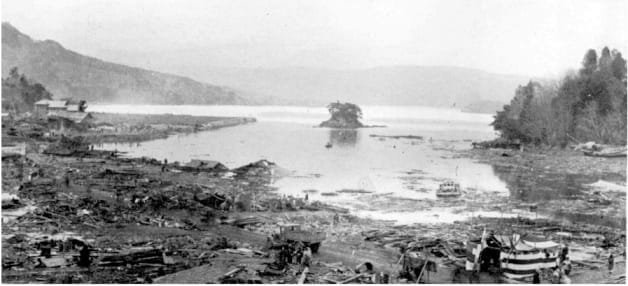
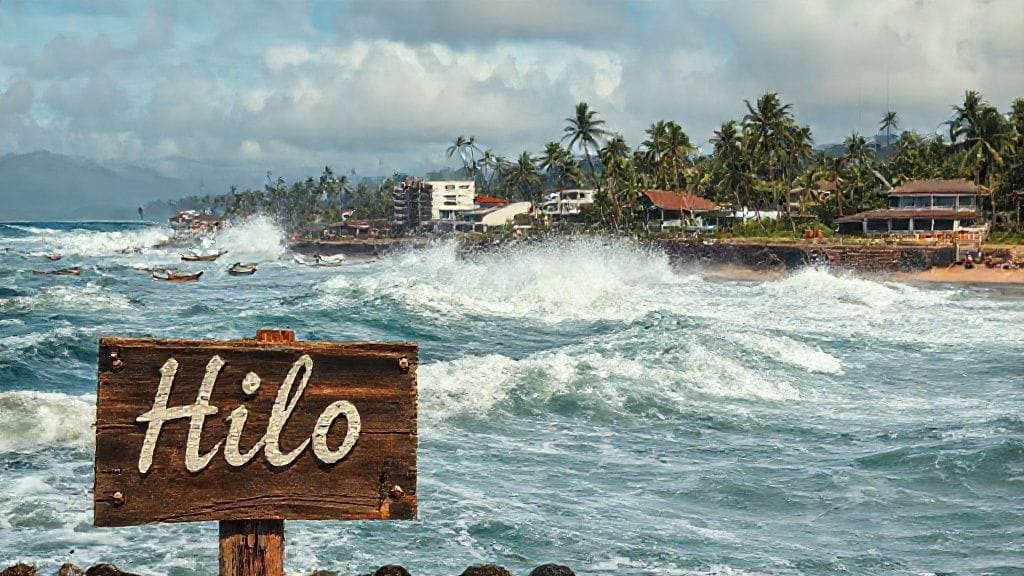
At approximately 3:45 PM local time, nearly 10 hours after the Aleutian earthquake, the first enormous wave crashed into Hilo Bay. It was not a single wave but a series of surges—some as high as 55 feet—that swept inland with horrific force.
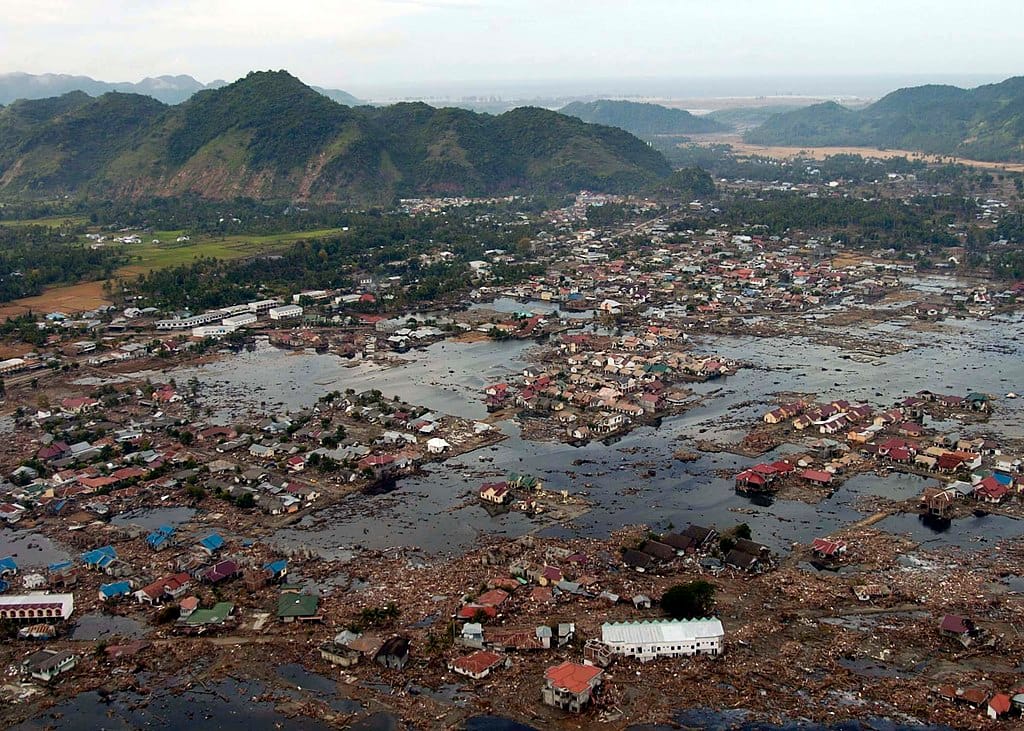
Buildings were uprooted, fishing boats smashed against piers, and entire communities overwhelmed. Streets became rivers; debris floated past shattered homes. The water’s power was indiscriminate—children, elders, fishermen, and tourists alike found themselves caught in a swirling torrent that would kill 159 people and devastate the town.
Human Stories in the Eye of the Storm
While statistics quantify the catastrophe, the human stories reveal the true heart of the tragedy. Among the victims was the family of Mary Kawena Pukui, a respected Hawaiian scholar, who narrowly escaped the floodwaters thanks to a neighbor’s warning—unheard by many. Others recount acts of bravery: fishermen who risked their lives to save neighbors, strangers opening their homes to the displaced, and young children who clung to their parents through the roaring chaos.
One survivor, Thomas Kanemoto, recalled decades later, “The water came like a mountain. I ran, but I saw my house swept away. Our whole life, just gone in minutes.” Such testimonies capture the raw emotional impact, the sudden rupture of safety and the urgent fight for survival.
Immediate Chaos: Rescue Efforts and First Responses
In the aftermath, the community was plunged into disarray. With roads damaged and communication lines severed, first responders faced enormous challenges. Local police, firefighting units, and townspeople banded together, organizing improvised triage centers and shelters.
Aid arrived from military bases and neighboring islands, bringing food, medicines, and manpower. Despite limited resources, the response was swift, born from a collective determination to contain the calamity’s toll. However, the sheer scale of destruction and number of injured soon overwhelmed even the most coordinated efforts.
Comparing Calamities: The Scale of the 1946 Hilo Tsunami
The 1946 tsunami ranks among the deadliest natural disasters in Hawaiian history and stands as one of the most severe tsunamis ever to strike the United States mainland or territories. The destruction was stark—hundreds of homes destroyed or damaged, over 1,000 injured, and essential infrastructure crippled.
In comparison to other tsunamis worldwide, it represented a pivotal moment in emergency management history. The event revealed how seemingly distant geological shifts could ignite catastrophic local impacts, a lesson that echoed in disaster studies for decades to come.
Scientific Mysteries: Early Tsunami Knowledge and Misconceptions
Before 1946, tsunamis were poorly understood by much of the American public and even many scientists. Often called “tidal waves”—a misnomer linked to tides rather than seismic origins—tsunamis were seen as rare, unpredictable, and enigmatic.
The Hilo disaster shocked researchers into acknowledging that early warning systems were utterly inadequate. Questions abounded: How fast did tsunamis travel? Could their approach be detected? What signs could people watch for? The disaster spurred urgent scientific investigation into seismic warning, wave behavior, and coastal vulnerability assessments.
The Establishment of the Pacific Tsunami Warning Center
Perhaps the most enduring legacy of the 1946 tsunami was the creation of the Pacific Tsunami Warning Center (PTWC) in 1949, headquartered in Honolulu. This institution was designed to monitor distant seismic activity and alert vulnerable communities across the Pacific of approaching tsunamis before destruction could occur.
This breakthrough marked a new era in disaster preparedness. The PTWC’s technology and protocols have since saved countless lives, evolving continuously with advances in seismology, oceanography, and communications. Hawaii’s painful lesson birthed a beacon of hope and prevention for the entire region.
Government and Community Reactions: Learning the Hard Way
The territorial government of Hawaii, along with federal authorities, faced intense scrutiny following the disaster. Criticism centered on the lack of preparation and timely communication. Reports emphasized the need for better public education about tsunami risks and improved emergency response capabilities.
Simultaneously, local populations demanded increased investment in infrastructure—sea walls, evacuation routes, and community drills. Public awareness campaigns launched quickly, embedding tsunami knowledge into the collective consciousness of Hawaiians, who resolved not to be caught unprepared again.
Economic Aftershocks: Rebuilding Lives and Infrastructure
The immediate economic impact was severe. Fishing fleets—critical for local food supply and employment—were decimated. Businesses that depended on coastal tourism suffered greatly, and many residents lost not just homes but livelihoods.
Reconstruction involved significant federal aid, local resource mobilization, and community solidarity. Roads were rebuilt, homes restored, and ports repaired. The disaster catalyzed shifts in urban planning and construction regulations designed to enhance resilience to future events.
Cultural Reverberations: How the Tsunami Shaped Hawaiian Identity
The 1946 tsunami left an indelible imprint on Hawaiian culture and identity. Oral histories, chants, and community narratives immortalized the disaster, framing it as both a somber reminder and a call to respect nature’s power.
Tsunamis entered local folklore not merely as tragedies but as spiritual events intertwined with Hawaiian cosmology. The disaster reinforced values of care, cooperation, and vigilance. It also inspired art, music, and literature reflecting resilience and renewal.
A Legacy of Vigilance: Modern Tsunami Preparedness and Education
Today, Hawaii stands as one of the world’s most prepared places for tsunami hazards. Extensive public education programs, evacuation drills, siren systems, and emergency communication channels ensure that millions now understand the risks and how to respond.
Schools incorporate tsunami lessons in curricula; communities hold annual awareness events. The memory of 1946 fuels this vigilance, transforming past trauma into preparedness and hope.
Personal Testimonies: Voices from Survivors
Decades after the waves subsided, survivors’ voices continue to bring the 1946 tsunami’s story to life. Many speak of the fear, confusion, and incredible luck that defined those moments.
One elderly resident shared, “I was just a boy. The ocean roared louder than anything I had ever heard. My mother grabbed me, and we ran up the hill. When we looked back, Hilo was disappearing under waves.” These personal memories bridge history with emotion, ensuring that the tsunami’s human dimension endures.
Environmental Impact: Altered Coastlines and Ecosystems
The tsunami wrought profound changes to the physical environment. Beaches eroded, coral reefs damaged, and coastal forest areas flooded with saltwater, affecting local flora and fauna.
In some areas, the coastline was permanently reshaped, with new inlets and altered tidal pools. These changes influenced both traditional fishing practices and modern conservation efforts, demonstrating nature’s dynamic interplay with disaster.
The Changing Face of Disaster Management in Hawaii
Since 1946, Hawaii has evolved from a vulnerable territory into a globally recognized model of disaster management. Innovations in early warning technology, cross-agency coordination, and community engagement exemplify lessons learned.
Today’s emergency protocols owe much to the foundational work begun in response to the tsunami. The islands regularly conduct evacuation exercises, maintain technological upgrades, and cultivate international partnerships to address natural hazards effectively.
Tsunami Myths and Realities: Bridging Science and Tradition
Despite scientific advances, traditional Hawaiian beliefs about the ocean and natural disasters persist, sometimes intersecting with modern knowledge. Stories about ‘mo‘o (water spirits) and the sacredness of the sea coexist alongside tsunami preparedness.
Community leaders and educators work to harmonize these perspectives, fostering respect for indigenous knowledge while promoting science-based safety measures. This dialogue enriches Hawaii’s cultural fabric and strengthens disaster resilience.
Commemoration and Memory: Honoring the 1946 Tragedy
Each year, Hilo holds memorial ceremonies honoring the lives lost in the 1946 tsunami. Monuments and plaques stand as silent witnesses to that fateful day, inviting reflection and gratitude.
These acts of remembrance unify residents, underscore shared history, and reinforce the commitment to preparedness. Museums and educational centers include exhibits dedicated to the disaster’s history, ensuring that generations to come understand and remember.
Lessons for Today: Global Implications of the Hilo Tsunami
Beyond Hawaii, the 1946 tsunami’s legacy informs global disaster science and policy. It underscored the necessity of international cooperation in tsunami monitoring, warning dissemination, and post-disaster recovery.
The event shaped the formation of the Pacific Tsunami Warning System, a network that now spans multiple nations. It also illustrated the profound importance of public education, infrastructure investment, and cultural awareness in mitigating natural disasters.
Conclusion: The Enduring Spirit of Hilo
The morning of April 1, 1946, forever changed Hilo, stitching tragedy into the town’s collective soul but also forging resilience of remarkable strength. From the ruins and despair arose a community united, aware, and determined never to face such devastation unprepared again.
The 1946 tsunami serves not only as a historical event remembered for its destruction but as a powerful testament to human endurance, scientific progress, and the bond between people and nature. Hilo’s story continues to inspire—a vivid reminder that in the darkest moments, hope can rise like the tide.
FAQs
Q1: What caused the 1946 Hilo tsunami?
A1: The tsunami was triggered by a massive 7.8 magnitude earthquake off the Aleutian Islands, Alaska, which displaced large volumes of seawater and sent destructive waves towards Hawaii.
Q2: How many people died in the 1946 Hilo tsunami?
A2: Approximately 159 people lost their lives, with many others injured and thousands displaced.
Q3: Was Hawaii prepared for such an event in 1946?
A3: No, there was no formal tsunami warning system in place, and public awareness was minimal, leading to delayed evacuations and higher casualties.
Q4: What was the response to the tsunami in terms of scientific and governmental actions?
A4: The disaster led to the creation of the Pacific Tsunami Warning Center in 1949 and motivated improvements in emergency preparedness and public education.
Q5: How has the 1946 tsunami impacted Hawaiian culture?
A5: It became a significant chapter in Hawaiian history, influencing oral traditions, community resilience, and the integration of disaster awareness into cultural identity.
Q6: Are tsunamis still a threat to Hawaii today?
A6: Yes, Hawaii remains vulnerable due to its location, but advanced monitoring and preparedness efforts greatly reduce risk.
Q7: How did the tsunami affect the environment around Hilo?
A7: It caused coastal erosion, changes in marine ecosystems, and damage to coral reefs and vegetation, with some long-lasting effects.
Q8: What lessons does the 1946 tsunami offer for global disaster management?
A8: It highlights the importance of early warning systems, community education, international cooperation, and blending scientific and traditional knowledge in risk mitigation.