Table of Contents
- A Night of Earth and Sea: The Prelude to Disaster
- The Birth of a Giant: Unveiling the 1960 Great Chilean Earthquake
- Across the Pacific: The Tsunami’s Relentless Journey
- The Calm Before the Wave: Hilo’s Evening Under the Stars
- First Signs: The Ocean’s Unnatural Retreat
- The Arrival: A Towering Wall of Water
- Chaos in Hilo: Screams, Floods, and the Race for Safety
- The Human Toll: Lives Lost and Stories Etched in Memory
- Emergency Response: Struggle Amidst the Ruins
- Coastal Destruction: The Physical Rebuilding of Hilo
- Scientific Revelations: Understanding the Tsunami’s Mechanics
- Warning Systems Born from Tragedy
- Cultural Shifts: How the Tsunami Transformed Hawaiian Communities
- Global Impact: Influencing Tsunami Preparedness Worldwide
- Personal Testimonies: Face to Face with the Wave
- Remembering Hilo 1960: Memorials and Annual Commemorations
- Nature’s Warning: Lessons Passed to Future Generations
- Resilience in the Aftermath: The Spirit of Hilo’s People
- Media and Memory: The Event in Films and Literature
- Revisiting the Waves: Hilo’s Modern-Day Preparedness
- Conclusion: Between Earth and Sea, A Testament to Survival
- FAQs: Exploring the 1960 Hilo Tsunami
- External Resource
- Internal Link
1. A Night of Earth and Sea: The Prelude to Disaster
On the late evening of May 22, 1960, most of the world lay asleep under serene skies. Yet, beneath the ocean’s surface near the west coast of South America, a colossal shift had begun—one so powerful that it would echo across the Pacific, reaching thousands of miles away. While people in Hawaii were quietly winding down, unaware of the distant turmoil, the stage was set for one of the deadliest natural disasters in American history: the Hilo tsunami.
The Pacific's vastness hid the initial convulsions that would later unleash waves towering higher than buildings on the shores of Hilo, turning a peaceful island city into a battleground between human fragility and nature’s overwhelming force. The story of the 1960 Hilo tsunami is one not just of destruction, but of resilience, awakening, and the dawning of a new era in disaster preparedness.
2. The Birth of a Giant: Unveiling the 1960 Great Chilean Earthquake
To understand the tsunami that struck Hilo, one must first travel in time and space to the west coast of Chile. On May 22, 1960, at 3:11 p.m. local time, the world witnessed the most powerful earthquake ever recorded: the Great Chilean Earthquake, registering an estimated magnitude of 9.5. This seismic event ruptured over 1,000 kilometers of the Earth's crust, displacing massive amounts of seawater.
Chile’s southern regions were devastated, but the earthquake’s consequences extended far beyond national borders. The abrupt vertical displacement of the ocean floor sparked a series of tsunami waves radiating outward in all directions across the Pacific Basin. It was an event of geophysical magnitude so immense that it transformed how humanity perceived the vulnerabilities of coastal civilizations.
3. Across the Pacific: The Tsunami’s Relentless Journey
After the quake’s violent shaking subsided, the enormous tsunami waves embarked on their transoceanic voyage. Traveling at speeds matching a cruising jetliner—around 500 miles per hour—these waves raced across 8,000 kilometers of the Pacific Ocean.
As they crossed the vast expanse, the waves retained devastating energy, compressing and stretching as they approached various coastlines. Along their path, they hit Hawaii approximately 15 hours after the initial earthquake. Despite this interval providing a precious window for alert and evacuation, communication challenges and insufficient warning systems rendered many islands vulnerable.
4. The Calm Before the Wave: Hilo’s Evening Under the Stars
Meanwhile in Hilo, Hawaii’s largest city on the Big Island, evening life proceeded undisturbed. Streets bustled gently, families gathered for dinner, and students prepared for the next day. The ocean, a quiet neighbor, lapped the shores with the usual soft rhythm.
Local fishermen and residents, accustomed to the Pacific's moods, failed to notice any immediate signs of danger. The sky was clear, and the temperature mild. Unbeknownst to them, the earthquake’s seismic whisper had traveled half the world and now whispered back through the sea toward their shores, signaling an ominous arrival.
5. First Signs: The Ocean’s Unnatural Retreat
Just before midnight on May 22, something peculiar caught the attention of those near the coast: the ocean began to recede unusually far, exposing sandbars and coral reefs that were never visible before.
This dramatic retreat—known by locals as "drawback"—is a characteristic prelude to a tsunami. Yet, many failed to interpret it as a crisis. Curiosity rather than fear drew onlookers closer to the suddenly exposed sea floor, unknowingly placing themselves in harm’s way. The ocean, the great giver of life here, turned into a harbinger of death.
6. The Arrival: A Towering Wall of Water
Then, without warning, the ocean surged back with monstrous force. The first tsunami wave slammed into Hilo’s shores, reaching heights estimated between 10 and 15 meters (33-50 feet), towering over buildings and trees alike.
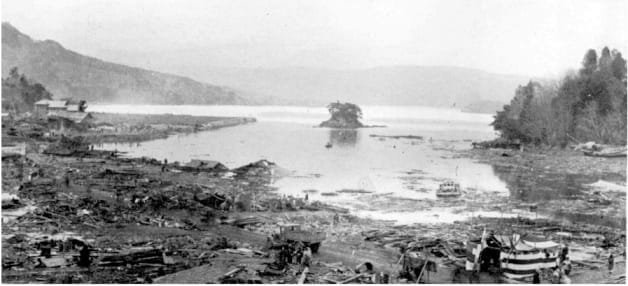
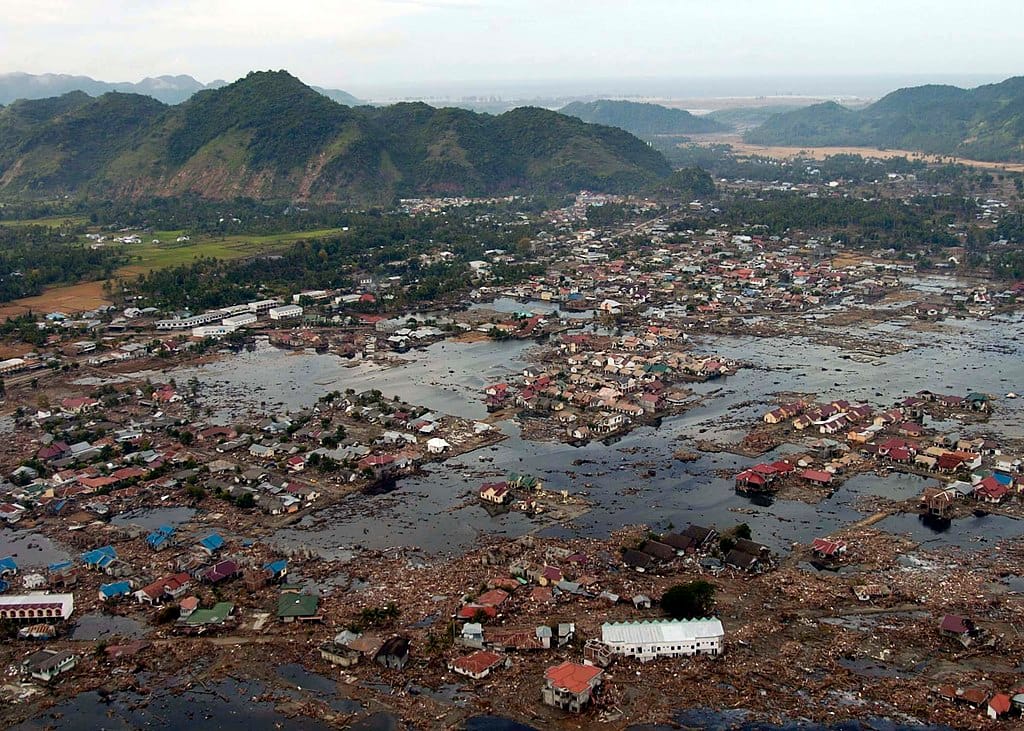
Wave after wave inundated the city, each one leaving behind destruction more severe than the last. Streets transformed into rivers, homes turned into debris fields, and the relentless pounding reshaped the entire coastline. The terrifying roar of water was punctuated by the cries of those fleeing for their lives.
7. Chaos in Hilo: Screams, Floods, and the Race for Safety
Panic erupted as residents scrambled to escape the flooding. The city’s infrastructure was overwhelmed; telephone lines failed, electricity flickered and died, and emergency services were stretched beyond capacity.
People sought refuge on higher ground, racing against the ceaseless waves that devoured homes, stores, and schools. The tsunami’s unpredictability intensified the chaos—intervals between waves were short, often under 15 minutes, leaving barely time to breathe or regroup.
Eyewitnesses recounted scenes of harrowing escapes, with some clinging to trees and others swept away in the violent current. It was, in many ways, a night etched in both terror and heroism.
8. The Human Toll: Lives Lost and Stories Etched in Memory
The death toll in Hawaii from the 1960 tsunami reached 61, with hundreds injured. While the numbers might appear limited compared to other disasters, each life lost represented a profound tragedy for a close-knit island community.
Among the victims were entire families caught unaware by the waves during their nightly routines. Survivors spoke of neighbors who turned back to save children, of strangers pulled from the inundated streets, and of a shared grief that would bind the community forever.
The event exposed vulnerabilities, but also an indomitable human spirit willing to rebuild and remember.
9. Emergency Response: Struggle Amidst the Ruins
In the immediate aftermath, local authorities mobilized to aid survivors, launch search and rescue operations, and maintain order. However, Hilo’s emergency infrastructure proved ill-prepared for a disaster of this scale.
Hospitals rapidly reached capacity, shelters overflowed, and relief supplies were scarce. Yet, the community’s cohesion shone through as volunteer groups, the military, and international aid collaborated to bring order to chaos.
This crisis underscored the critical need for better preparedness, communication, and disaster response mechanisms—a challenge Hawaii embraced with determination.
10. Coastal Destruction: The Physical Rebuilding of Hilo
The tsunami’s fury reshaped not only human lives but the very landscape of Hilo’s shoreline. Entire blocks vanished, waterfront piers were destroyed, and the harbor was clogged with debris.
Reconstruction efforts demanded innovative engineering solutions and strict building codes designed to mitigate future disaster risks. Parks and memorials replaced some destroyed structures, embodying both remembrance and the city’s commitment to renewal.
The physical scars gradually healed, but the memory of that night remained engraved in Hilo’s identity.
11. Scientific Revelations: Understanding the Tsunami’s Mechanics
The 1960 Hilo tsunami became a pivotal case study in oceanography and seismology. Researchers delved into the wave’s behavior, the impact of ocean floor displacement, and how energy traversed thousands of miles of ocean.
One discovery was that tsunami waves, though often low and slow in the deep sea, transform into devastating walls of water upon reaching shallow coastal waters—a phenomenon known as wave shoaling.
These studies spurred advances in early detection and modeling, aiming to minimize the catastrophic potential of future tsunamis worldwide.
12. Warning Systems Born from Tragedy
Tragically, the 1960 event revealed glaring deficiencies in tsunami warning and communication. The Hawaiian Islands had no formal tsunami warning system, and information from Chile traveled too slowly or failed to reach the public in time.
In response, the United States and international bodies instituted the Pacific Tsunami Warning Center (PTWC) in 1949 but expanded and improved its operations markedly after 1960. The Hilo tsunami spurred better coordination, faster communication, and public education programs, transforming how communities prepare for such threats.
13. Cultural Shifts: How the Tsunami Transformed Hawaiian Communities
Beyond infrastructure and science lay profound cultural shifts. The tsunami was a collective trauma experienced by a people deeply connected to the ocean. It challenged traditional relationships with nature and underscored the fragile balance Hawaiians maintain with the elements.
Communities revisited oral histories, reinterpreted ancient legends warning of giant waves, and integrated new knowledge into local customs. The event became a cultural touchstone, reminding Hawaiians of their ancestors’ wisdom and the urgency of modern vigilance.
14. Global Impact: Influencing Tsunami Preparedness Worldwide
While the human tragedy played out in Hilo and Chile, the tsunami’s reach and lessons rippled globally. Countries around the Pacific Rim intensified commitments to monitoring seismic activity and establishing warning networks.
The 1960 tsunami became an impetus for international cooperation, leading to the establishment of regional tsunami warning centers and cross-border scientific exchanges. It marked a turning point, illustrating how interconnected and vulnerable humanity is to oceanic and geological forces.
15. Personal Testimonies: Face to Face with the Wave
Individual narratives from the 1960 tsunami bring a deeply human dimension to the disaster. Take, for example, the account of Ruth Hoffman, who recalled watching the ocean draw back and then rushing to higher ground with her children, narrowly escaping destruction.
Or the story of Samuel Kaimi, a fisherman whose boat was destroyed but who dedicated his life afterward to educating locals about tsunami risks. These voices, among many, epitomize courage, loss, and hope, transforming historical facts into living memory.
16. Remembering Hilo 1960: Memorials and Annual Commemorations
Today, Hilo commemorates the tsunami through various memorials and ceremonies, especially on or around May 23. These gatherings blend Hawaiian spirituality, Christian services, and civic remembrance.
Memorial parks, plaques, and museums display artifacts, photographs, and personal accounts. The commemorations serve as powerful rituals of collective memory, honoring the lives lost and reaffirming community resilience.
17. Nature’s Warning: Lessons Passed to Future Generations
The tsunami left lasting lessons about respecting nature’s power and listening to subtle signs. Schools incorporate tsunami drills, and public education highlights the importance of recognizing natural warnings like the “drawback.”
Survivors’ children inherited tales and cautions, embedding these lessons into the fabric of community consciousness—ensuring that awareness is alive long after the waters recede.
18. Resilience in the Aftermath: The Spirit of Hilo’s People
What sets the Hilo tsunami apart is not only the scale of destruction but how the city rebounded. Hilo’s residents rebuilt homes, revived local industries, and restored their city with determination reflective of deep cultural pride.
The disaster forged bonds of solidarity, creating a community ready to face future adversities. This resilience is a tribute to human tenacity and the enduring connection between people and the sea.
19. Media and Memory: The Event in Films and Literature
Media coverage shaped the tsunami's historical narrative, with photos and footage broadcast worldwide. Documentaries and books later explored the drama and lessons, sparking public interest well beyond Hawaii.
Literary works have incorporated the event into Hawaiian storytelling, blending fact with evocative reflection. These cultural productions ensure that the Hilo tsunami remains a vivid chapter in collective memory.
20. Revisiting the Waves: Hilo’s Modern-Day Preparedness
Decades after 1960, Hilo stands as a model for tsunami preparedness, equipped with sirens, evacuation routes, and community training programs.
Modern technology, such as deep ocean sensors and satellite communication, supplement human vigilance. The city embodies a living readiness, constantly reminded by history that nature’s forces demand respect and preparedness.
21. Conclusion: Between Earth and Sea, A Testament to Survival
The 1960 Hilo tsunami was more than a natural catastrophe; it was a profound test of humanity’s resilience in the face of nature’s might. Through loss and rebuilding, the event redefined understanding of tsunamis, transformed societies, and strengthened bonds between earth and ocean.
Hilo’s story is a testament to the enduring human spirit, a reminder that in every devastating wave, there lies a surge of hope, memory, and renewal.
Conclusion
In the early hours after the violence of 1960, Hilo was a city forever changed, its streets marked by water’s cruel kiss and its people marked by grief and courage. Yet, from the wreckage, emerged a transformed community—one awakened to the oceans' unpredictable temperament and driven to survive, remember, and educate.
The tsunami brought destruction, yes, but also enlightenment. It sparked scientific advances, forged international collaboration, and planted seeds of cultural remembrance. Today, the waves that once threatened Hilo stand as silent proponents of vigilance and resilience.
The 1960 Hilo tsunami reminds us that disaster is both an end and a beginning—a fragile boundary where human endurance meets the fathomless power of the natural world.
FAQs
Q1: What caused the tsunami that hit Hilo in 1960?
A1: The tsunami was triggered by the Great Chilean Earthquake on May 22, 1960, which was the most powerful earthquake ever recorded, causing massive displacement of the ocean floor and generating waves that traveled across the Pacific.
Q2: How high were the tsunami waves when they reached Hilo?
A2: The waves reached heights estimated between 10 and 15 meters (33 to 50 feet), enough to devastate coastal areas and flood much of Hilo’s shoreline.
Q3: Why was the tsunami so deadly in Hilo?
A3: Hilo lacked an effective tsunami warning system at that time, and many residents were unaware of natural warning signs. The rapid arrival of powerful waves caused significant loss of life and property.
Q4: How did the disaster change tsunami preparedness in Hawaii?
A4: It prompted the establishment and improvement of the Pacific Tsunami Warning Center, better communication protocols, public education efforts, and comprehensive emergency plans for future events.
Q5: What are some personal stories from survivors?
A5: Survivors recounted experiences of near escapes, acts of heroism, and sudden loss. These personal narratives humanize the tragedy beyond statistics and helped shape community memory.
Q6: How is the 1960 tsunami commemorated today in Hilo?
A6: Hilo holds annual memorial services, maintains parks and monuments, and incorporates educational programs to remember victims and reinforce preparedness.
Q7: What scientific advancements resulted from studying this tsunami?
A7: The event advanced understanding of tsunami wave dynamics, detection methods, and hazard modeling, influencing international safety standards and mitigation strategies.
Q8: Can a similar tsunami happen again in Hilo?
A8: While the risk persists due to Hawaii’s location in the Pacific Rim, improved warning systems and evacuation plans significantly enhance community safety and response capabilities.
External Resource
- For detailed information, consult the Wikipedia page on the 1960 Chilean earthquake and its tsunami: