Table of Contents
- Dawn of Ruin: The Morning of May 7, 1842
- Hispaniola’s Turbulent Heart: Haiti and Its Fragile Foundations
- Colonial Legacies and Geological Fault Lines
- Political Instability Meets Natural Disaster
- The Earth Trembles: The Seismic Unfolding of the 1842 Earthquake
- Cap-Haïtien in Ruins: The Epicenter of Catastrophe
- Human Stories Amidst the Rubble: Survivors and Tragedies
- The Response: Local Efforts and International Aid
- Haiti’s Infrastructure Shattered: The Long Road to Recovery
- Economic Fallout: How the Earthquake Shook Haiti’s Fragile Economy
- The Geological Significance: Understanding Hispaniola’s Seismic Past
- The Earthquake’s Political Ramifications: Power Struggles and Social Upheaval
- Religion and Resilience: Spiritual Interpretations of the Disaster
- Lessons Learned: The Earthquake’s Place in Haitian Collective Memory
- Comparisons with Later Disasters: Setting a Historical Context
- The Forgotten Catastrophe: Why 1842 Is Overshadowed in Historical Narratives
- Modern Day Reflections: Haiti’s Continued Vulnerability to Natural Disasters
- The Role of Oral History and Literature in Preserving the 1842 Earthquake Tale
- Conclusion: From Ruins to Resolve – The Enduring Spirit of Cap-Haïtien
- FAQs
- External Resource
- Internal Link
Dawn of Ruin: The Morning of May 7, 1842
The sun had barely risen over the northern coast of Haiti when the ground beneath Cap-Haïtien groaned violently—a shudder so fierce, so unrelenting, that it tore through the fabric of everyday life and sent shockwaves of fear across the city. Houses toppled, the earth cracked wide open, and people fled into the streets amidst screams and dust. This was not merely another tremor in a restless land; May 7, 1842, would become a date etched deep into the memory of Hispaniola’s tumultuous history.
That morning, the first rays of daylight illuminated a city caught between the precariousness of political upheaval and the unstoppable forces of nature. Cap-Haïtien, once a bustling port and colonial jewel, lay vulnerable on the edge of an island forged by intense geological activity. What followed was not just a natural disaster, but a chapter that would reveal the resilience, fragility, and complexity of Haiti itself.
Hispaniola’s Turbulent Heart: Haiti and Its Fragile Foundations
To grasp the scale and significance of the 1842 earthquake, one must first understand the island of Hispaniola itself—a land of stark contrasts where colonial history and geographic vulnerability entwined fatefully. Shared by Haiti and the Dominican Republic, Hispaniola straddles the boundary of tectonic plates, making it a hotspot for seismic activity.
Haiti, holding the western third of the island, was a young republic by 1842, barely a generation removed from its revolutionary origins. The world’s first black republic, born in 1804 after a grueling struggle against French colonial forces, faced the daunting tasks of nation-building amid external isolation, internal discord, and economic hardship. Cap-Haïtien, known as Cap-Français during the colonial era, was a symbol of this legacy—bearing the architectural and cultural imprints of French colonialism but grappling with the scars of revolution and foreign intervention.
Colonial Legacies and Geological Fault Lines
The very ground beneath Haitians’ feet was a silent testament to centuries of upheaval. Hispaniola lies at the cusp of the Caribbean and North American tectonic plates—vast slabs shifting imperceptibly, but with the potential for sudden devastation. The Enriquillo-Plantain Garden fault zone, in particular, is infamous for seismic activity, and it has often awakened with terrifying consequences.
Under French rule, Cap-Haïtien thrived as a sugar and coffee hub, its plantations reliant on enslaved labor. The colonial architecture, precariously perched along fault lines, was ill-prepared for nature's fury. Even after independence, settlers and leaders continued to rebuild atop the same unstable foundations, perhaps unaware or powerless to change the geological destiny that awaited.
Political Instability Meets Natural Disaster
By 1842, Haiti was politically fragmented. Power struggles between factions in the north and south eroded centralized authority. President Jean-Baptiste Riché’s sudden death earlier that year had opened a vacuum quickly filled by the north’s leadership under Faustin Soulouque, a man whose rise foreshadowed authoritarian rule. Amid this fragile political landscape, societal anxieties simmered.
When the earthquake struck, it exposed not just cracks in the earth, but fractures within the Haitian state itself. Emergency responses were delayed, resources scarce, and panic compounded by misinformation. The disaster revealed the limits of a fledgling country struggling under the weight of internal dissent and external pressures.
The Earth Trembles: The Seismic Unfolding of the 1842 Earthquake
The seismic shock of May 7th measured an estimated magnitude of 8.1 — colossal by any standard. Felt across northern Hispaniola, the quake sent a rolling wave of destruction from Cap-Haïtien to the hinterlands. Accounts from survivors describe a terrifying ordeal: buildings swaying like reeds, the earth splitting apart, and a deafening roar that seemed to come from the bowels of the planet itself.
Indeed, the earthquake struck with unusual intensity and duration. Records from that era, though scarce, speak of aftershocks lasting days, each suspense-building tremor a reminder that the land was still angry and unsettled. The geological upheaval was rapid and brutal, marking one of the deadliest natural catastrophes of 19th century Caribbean history.
Cap-Haïtien in Ruins: The Epicenter of Catastrophe
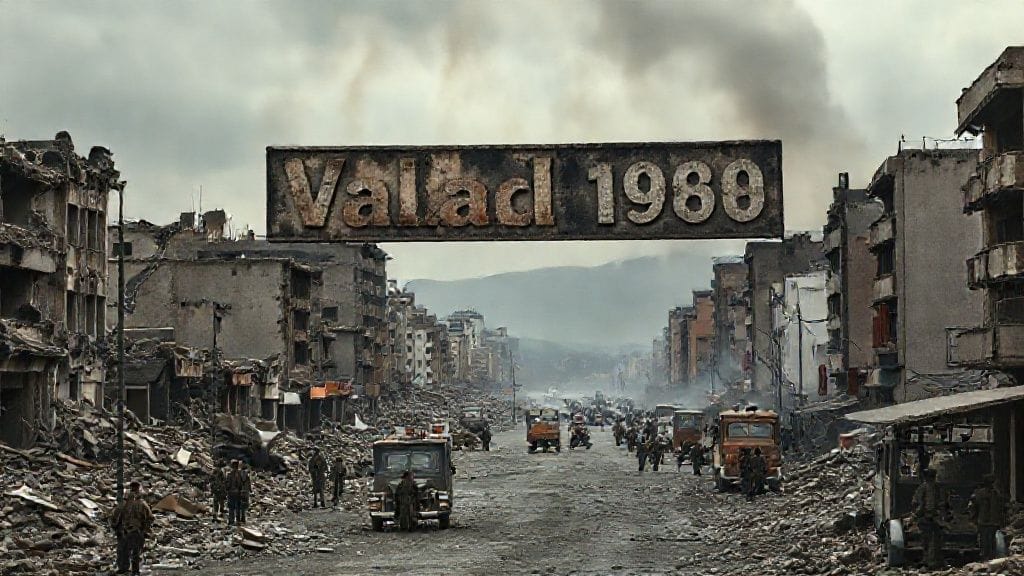
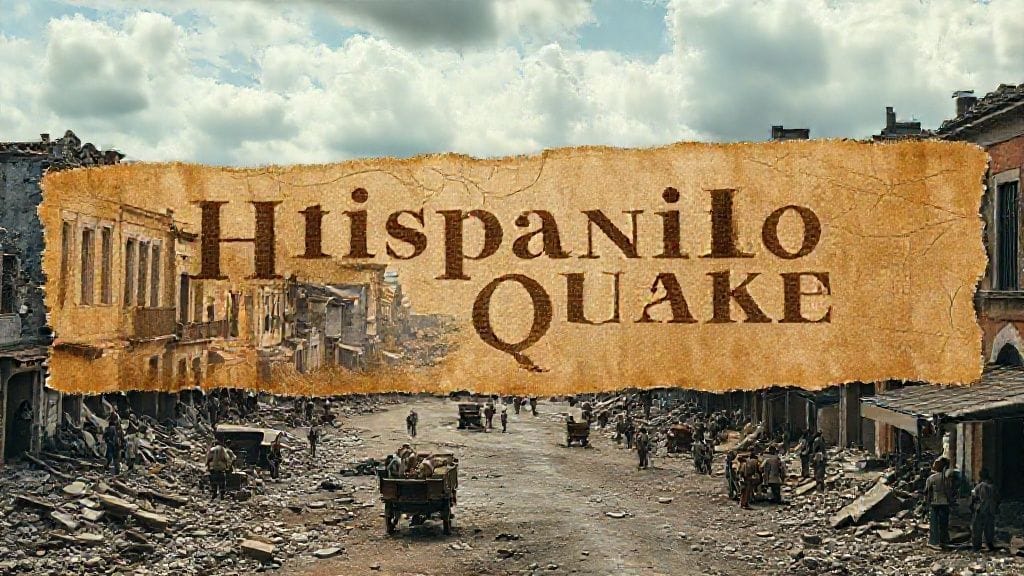
Cap-Haïtien bore the full brunt of the quake. Once referred to as the “Paris of the West Indies,” its cobblestone streets and grand colonial mansions crumbled beneath the seismic assault. The cathedral, government buildings, and wealthier districts suffered near-total destruction, turning the city into an open graveyard of stone and shattered lives.
The human toll was staggering: estimates vary, but thousands perished—the poor and enslaved, often living in flimsy structures, suffered disproportionately. The destruction of infrastructure crippled the city’s ability to function, with markets, ports, and communication lines severed. It was a grim tableau of death, loss, and the sudden erasure of civic pride.
Human Stories Amidst the Rubble: Survivors and Tragedies
Amid the ruins were countless personal tragedies, stories of survival and loss that humanize the cold facts. Maryse Pierre-Baptiste, a young mother, famously recounted saving her children by fleeing collapsing homes, while her husband was lost beneath a wall of rubble. Others spoke of miraculous escapes and acts of heroism—neighbors sheltering orphans, strangers sharing dwindling supplies.
But despair was omnipresent. Orphanages overwhelmed with children who had lost parents; outbreaks of disease in the aftermath; and the psychological trauma of living on fractured earth haunted survivors. Letters, oral histories, and early chronicles convey a community struggling not only with physical destruction but with an existential reckoning.
The Response: Local Efforts and International Aid
In the immediate aftermath, Haiti found itself largely alone. The young republic’s diplomatic isolation and economic fragility meant that external aid was limited. Yet, local leaders and communities rallied. Makeshift hospitals sprang up amidst ruins, religious organizations coordinated relief, and citizens dug through debris to salvage what they could.
International awareness was slow. European powers, embroiled in their own political dramas, offered limited assistance. Nonetheless, merchants and missionaries in nearby ports sent aid sporadically. The Haitian government, constrained but determined, attempted to coordinate a response, albeit hampered by political wrangling and logistical nightmares.
Haiti’s Infrastructure Shattered: The Long Road to Recovery
Rebuilding Cap-Haïtien and the northern region was a monumental task slowed by economic hardship and political instability. Roads, docks, and public buildings had to be reconstructed largely from scratch. Funds were scarce; foreign loans came with heavy strings, while political factions debated priorities and blamed each other for delays.
Nevertheless, this period saw the emergence of architectural innovations seeking greater resilience against future quakes, although progress was uneven. The disaster forced a reckoning with urban planning and construction methods, though limited technological and financial means stymied widespread change.
Economic Fallout: How the Earthquake Shook Haiti’s Fragile Economy
The earthquake devastated Haiti’s economic heartland. The north's plantations, ports, and trade centers were crippled, interrupting export flows of coffee and sugar—the nation’s lifeblood. Losses extended beyond physical destruction; labor forces scattered, markets disrupted, and confidence plummeted.
With the country already reeling from debts imposed after independence, the economic shock deepened fiscal crises. Trade partners were wary, and investment stagnated. The disaster echoed like a financial earthquake in Haiti’s fragile economy, amplifying existing vulnerabilities.
The Geological Significance: Understanding Hispaniola’s Seismic Past
The 1842 earthquake holds an important place in the geological history of the Caribbean. It provided early—and tragic—evidence of the dangers posed by the Enriquillo fault system, helping later scientists map seismic hazards. While the science was primitive at the time, modern geology has contextualized the 1842 event as a major rupture offering lessons still relevant today.
Understanding Hispaniola’s seismic past is crucial for present-day disaster preparedness. The 1842 quake is a grim reminder that geological forces do not honor political borders or historical timelines.
The Earthquake’s Political Ramifications: Power Struggles and Social Upheaval
Natural calamities rarely unfold in political vacuums. In Haiti, the earthquake added fuel to already volatile tensions. Regional leaders leveraged the disaster to advance their agendas, while the government faced criticism over its response.
Faustin Soulouque, soon to claim the presidency, used the crisis to consolidate power, presenting himself as a strong leader in chaotic times. Conversely, opposition factions accused his administration of neglect. The quake thus accelerated political realignments and foreshadowed Soulouque’s eventual turn toward authoritarianism.
Religion and Resilience: Spiritual Interpretations of the Disaster
In a deeply religious society, the earthquake was interpreted through spiritual lenses. Some saw it as divine punishment for moral failings; others found solace in faith, rallying around the church as a source of hope.
Vodou practitioners attributed different meanings, integrating the quake into their complex cosmology. Religious ceremonies and collective prayers became vital acts of resilience, helping communities process trauma and envision recovery.
Lessons Learned: The Earthquake’s Place in Haitian Collective Memory
Though overshadowed by more recent tragedies, the 1842 earthquake persists in Haitian collective memory, especially in Cap-Haïtien. It offered lessons in vulnerability, adaptation, and the limits of human control over nature.
This memory is preserved in local lore, folk songs, and family stories—testaments to how a nation’s history is shaped not just by politics but by the earth beneath it.
Comparisons with Later Disasters: Setting a Historical Context
When Haiti endured the catastrophic 2010 earthquake, echoes of 1842 resurfaced. Though different in scale and context, the 1842 event framed a historical narrative of seismic threat in the Caribbean. Comparisons highlight recurring challenges: inadequate infrastructure, economic vulnerability, and social fragility.
These parallels underline the urgency of long-term disaster preparedness and international solidarity.
The Forgotten Catastrophe: Why 1842 Is Overshadowed in Historical Narratives
Despite its magnitude, the 1842 quake is less remembered internationally than later disasters. Contributing factors include limited contemporary documentation, geopolitical marginalization, and the overshadowing impact of 20th-century events.
Yet, rediscovering this catastrophe offers valuable insights into Haiti’s past and the recurring interplay of nature and society in Caribbean history.
Modern Day Reflections: Haiti’s Continued Vulnerability to Natural Disasters
Haiti remains one of the most disaster-prone countries in the world. The legacy of the 1842 earthquake lingers as a stark warning amid ongoing challenges: deforestation, poverty, unstable governance, and climate change.
The earthquake is a call to action—reminding us that resilience must be built on knowledge, preparedness, and equitable development.
The Role of Oral History and Literature in Preserving the 1842 Earthquake Tale
With sparse official records, oral history has been instrumental in preserving the memory of the 1842 earthquake. From generational storytelling to poetic works, Haitian culture weaves the earthquake into the fabric of identity and historical consciousness.
Such narratives enrich academic understanding and ensure the past speaks to present and future generations.
Conclusion: From Ruins to Resolve – The Enduring Spirit of Cap-Haïtien
The 1842 earthquake of Hispaniola was more than a natural disaster—it was a crucible that tested human endurance, governance, and hope. Cap-Haïtien rose from the ashes not simply in stone and mortar, but in spirit. Its story is one of resilience amid fragility, a reminder of the delicate dance between nature and civilization.
As generations reflect on that morning’s earthquake, they confront the enduring truth that while humans may not command the earth, they can strive to understand and coexist with its deep, sometimes violent rhythms. The legacy of May 7, 1842, is a call to remember, to learn, and above all, to endure.
FAQs
Q1: What caused the 1842 earthquake in Haiti?
The earthquake was caused by the movement along the Enriquillo-Plantain Garden fault zone, which marks the boundary between the Caribbean and North American tectonic plates. This fault has a history of seismic activity due to tectonic stress accumulation.
Q2: How severe was the earthquake and what areas were most affected?
The earthquake had an estimated magnitude of 8.1. The northern city of Cap-Haïtien was the epicenter and suffered the greatest destruction, with widespread damage also reported throughout northern Haiti and parts of the Dominican Republic.
Q3: What were the immediate human consequences of the earthquake?
Thousands of people died, many homes and public buildings were destroyed, and survivors faced displacement, disease outbreaks, and psychological trauma. The disaster overwhelmed local resources and complicated political tensions.
Q4: How did the Haitian government respond to the disaster?
The response was hindered by political instability and limited resources. Though local leaders and communities attempted relief operations, the fragile state lacked sufficient capacity, and international aid was minimal and delayed.
Q5: Did the earthquake have any lasting impact on Haitian politics?
Yes. The disaster intensified political struggles, allowing figures like Faustin Soulouque to consolidate power amid the chaos. It underscored the government’s weaknesses and influenced power dynamics in the years that followed.
Q6: How is the 1842 earthquake remembered today in Haiti?
While overshadowed by more recent events, the earthquake retains a place in Haitian oral history, literature, and local traditions, especially in Cap-Haïtien. It is a symbol of both vulnerability and resilience.
Q7: What geological lessons did the 1842 earthquake provide?
It highlighted the seismic risk posed by the Enriquillo fault zone and contributed to the scientific understanding of tectonic hazards in the Caribbean, informing modern risk assessments and disaster preparedness.
Q8: Why is the 1842 earthquake less known internationally compared to other disasters?
Sparse documentation, the geopolitical marginalization of Haiti, and a focus on more recent or globally impactful disasters have contributed to the limited international recognition of the 1842 event.