Table of Contents
- The Fateful Morning off Cape Trafalgar: The Death of Horatio Nelson
- Europe on the Brink: The Napoleonic Wars and Naval Supremacy
- The Rise of Horatio Nelson: From Humble Beginnings to Naval Legend
- Tensions Mount: The Stakes of the Trafalgar Campaign
- The Allied Fleet’s Strategy: British vs. Franco-Spanish Forces
- The Clash of Titans: The Battle Begins in Earnest
- Nelson’s Signal: “England expects that every man will do his duty”
- The Ferocious Fight: Cannon Fire and Boarding Actions
- The Mortal Wound: When Nelson Was Struck
- The Last Hours: Nelson's Final Moments on HMS Victory
- Aftermath of the Battle: Victory and Mourning
- Nelson’s Death and the British Psyche: From Hero to Martyr
- Naval Warfare Transformed: The Legacy of Trafalgar
- The Strategic Consequences for Europe and the World
- Monuments, Memory, and Myth: How Nelson’s Death Shaped History
- Trafalgar Today: Remembering a Night that Changed the Seas
The Fateful Morning off Cape Trafalgar: The Death of Horatio Nelson
On October 21, 1805, the restless Atlantic waves broke against the jagged rocks near Cape Trafalgar, a promontory on the southwestern coast of Spain. The morning sun struggled against the smoky haze rising from the decks of hundreds of warships, their billowing sails strained by the fierce wind. Amidst this turbulent scene, one figure stood out—not only for his commanding presence but because he carried the weight of an empire’s hopes. Vice Admiral Horatio Nelson, the greatest naval tactician of his age, was about to meet his fate amid cannon fire and shattered timber.
As musket balls whistled and the roar of artillery thundered, Nelson moved through his flagship, HMS Victory, inspiring courage with every word. But then, an enemy sharpshooter’s bullet found its mark—piercing his left shoulder, the lieutenant fatally wounded the man who had become the embodiment of British naval supremacy. What followed was a poignant tableau of heroism, pain, and sacrifice that echo through history.
Europe on the Brink: The Napoleonic Wars and Naval Supremacy
To grasp the significance of Nelson’s death off Cape Trafalgar, one must first delve into the tempestuous era of the early 19th century. Europe was engulfed in a series of seismic upheavals—the Napoleonic Wars—that reshaped borders, ideologies, and warfare itself. Napoleon Bonaparte, having risen from obscure revolutionary officer to Emperor of the French, sought dominion over the continent. Yet, his ambitions were constantly checked by Britain, whose lifeline depended on mastery of the seas.
For Britain, the Royal Navy was the linchpin of survival and expansion, guarding trade routes, colonies, and the very fabric of the empire. Losing naval dominance meant jeopardizing economic power and national security. In this arena, Nelson was not only a commander but a symbol of resistance against the tide of French and Spanish fleets forming a powerful alliance to end British maritime hegemony.
The Rise of Horatio Nelson: From Humble Beginnings to Naval Legend
Horatio Nelson’s story was one of extraordinary rise. Born in 1758 in Norfolk, England, he joined the Royal Navy at an early age, quickly garnering a reputation for bravery, ingenuity, and an almost supernatural intuition for naval battle. Through numerous campaigns—from the Caribbean to the Mediterranean—he built a formidable record, marked by audacious tactics and a deep concern for his men.
Nelson was more than a warrior; he was a charismatic leader whose personal losses—his blindness in one eye, the loss of his right arm—only intensified his legend. He crafted not only victories but a narrative of resilience, inspiring both contemporaries and generations after. By 1805, Nelson was the living embodiment of the Royal Navy’s fighting spirit.
Tensions Mount: The Stakes of the Trafalgar Campaign
By late 1805, a massive Franco-Spanish fleet under Admiral Pierre-Charles Villeneuve was breaking out from Toulon intent on challenging British control. Napoleon’s plan was audacious: secure the seas for a potential invasion of Britain by drawing the Royal Navy into a decisive battle, destroying it, and then clearing the channel for his troops.
Nelson’s assignment was unequivocal but daunting—intercept the enemy and prevent this union of fleets from altering the balance of power. The tension in the British Admiralty was palpable; failure was unthinkable. Across stormy waters, ships bearing thousands of sailors and marines prepared for what was widely predicted to be one of the greatest naval battles in history.
The Allied Fleet’s Strategy: British vs. Franco-Spanish Forces
The French and Spanish fleets sought to combine their numbers, amassing 33 ships of the line against Britain’s 27 under Nelson’s command. The alliance was confident in their ability to outgunn and outmaneuver the British. Yet, the coalition’s leadership was fractured, with differing doctrines and communication styles seriously hindering coordinated maneuvers.
Nelson, in contrast, embraced boldness and innovation. He planned a daring tactic—breaking the enemy’s line to create chaos, destroy their formations, and secure a swift victory. This approach, though risky, suited his aggressive mindset and leveraged the superior training of British crews accustomed to rapid and precise cannon fire.
The Clash of Titans: The Battle Begins in Earnest
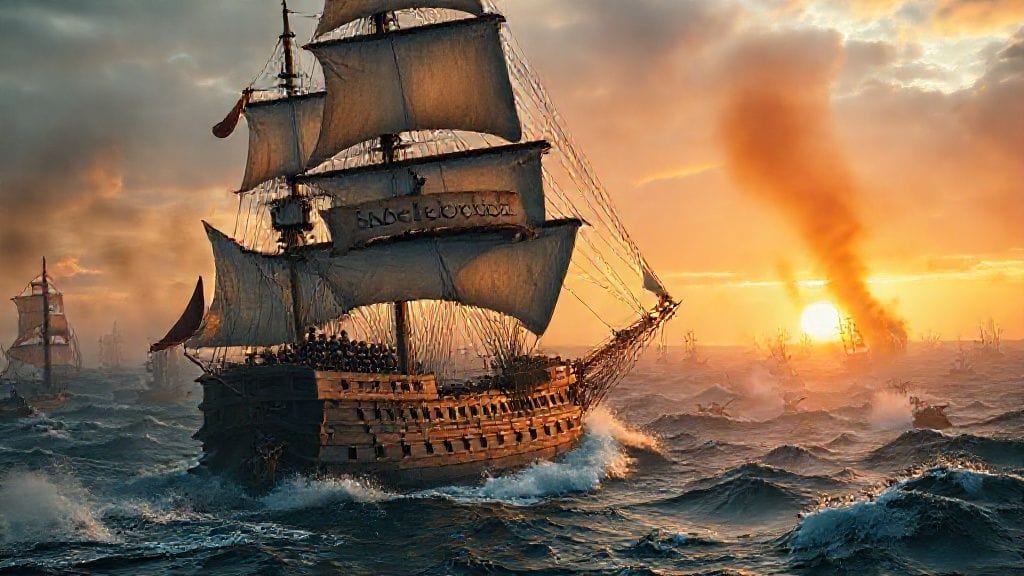
The morning of October 21 broke cold and grey. Visibility was poor, waters choppy, and the air dense with anticipation. Nelson’s flagship, HMS Victory, flew the Union Jack with pride, alongside her sister ships HMS Temeraire and HMS Royal Sovereign. As the fleets closed in, the gap between hope and disaster was no wider than a few cannon shots.
When the first broadside was unleashed, the sea seemed to erupt in fire and smoke. Wooden hulls splintered, sails tore, and sailors shouted through the chaos of deafening explosions. Nelson maneuvered his ship with precision, threading HMS Victory through enemy lines in a move that shocked his adversaries and sealed their fate.
Nelson’s Signal: “England expects that every man will do his duty”
As the battle erupted, Nelson did something unforgettable. He ordered signal flags hoisted with the message that would resonate for centuries: “England expects that every man will do his duty.” This phrase was more than mere motivational rhetoric—it was a call to honor, courage, and loyalty to country.
The signal was a beacon cutting through confusion like a lighthouse in a storm, galvanizing British sailors amid smoke and bloodshed. Each man, from captain to powder monkey, understood the gravity and the history they were making. This moment crystallizes the spirit of Trafalgar—unyielding resolve in the face of overwhelming odds.
The Ferocious Fight: Cannon Fire and Boarding Actions
For hours, the battle raged with relentless ferocity. Cannonballs tore through rigging and hulls, while musket volleys and grenades echoed over the decks. Boarding parties scrambled, grappling hooks in hand, turning the fight into brutal hand-to-hand combat upon creaking planks slick with saltwater and blood.
Despite being outnumbered, British sailors leveraged superior training and morale, disrupting Franco-Spanish formations. The noise was deafening: cannon roars, men’s cries, and the crack of splintering wood created a near-apocalyptic scene. Admiral Villeneuve’s fleet faltered, and one by one, their ships were disabled or captured.
The Mortal Wound: When Nelson Was Struck
Amid the deadly ballet of smoke and fire, tragedy struck. At roughly 1:15 p.m., a musket ball fired from the French Redoutable penetrated the shrouds and slammed into Nelson’s left shoulder. The wound was immediately known to be grave—bones shattered, blood poured, but Nelson remained calm, conscious of the battle still unfolding around him.
Eyewitnesses recounted how he stoically leaned against the mizzenmast, issuing orders and inspiring his crew while pain wracked his body. The man who had nearly single-handedly rewritten naval warfare was now fighting his final battle within himself, embodying sacrifice on the high seas.
The Last Hours: Nelson's Final Moments on HMS Victory
Carried below deck, Nelson was tended by ship surgeons, but the damage was irreversible. Weak and fading, he asked for his captains to be summoned, imparting his final instructions and words of encouragement. “Thank God I have done my duty,” he uttered—words that would echo across ages.
As the sun dipped below the horizon, the battle won but the cost immense, Nelson passed quietly, surrounded by loyal comrades. His death was not just a personal loss but a national trauma, witnessed with hushed reverence by those who served under him and the millions who would later learn of his heroism.
Aftermath of the Battle: Victory and Mourning
The battle was a decisive British victory, crippling the combined Franco-Spanish fleet by capturing or sinking 22 ships without a single British vessel lost. The triumph ensured British naval dominance for over a century and thwarted Napoleon’s plans for invasion.
Yet the jubilation was tempered by grief. Nelson’s body was preserved in a barrel of brandy and transported to England amid a nation plunged into mourning. His funeral was a grand state occasion, attended by royalty, politicians, and ordinary citizens who saw in him the embodiment of national pride and sacrifice.
Nelson’s Death and the British Psyche: From Hero to Martyr
Nelson’s death transformed him from military leader to almost mythical martyr. Portraits, poems, and monuments proliferated, his figure becoming a symbol of selfless duty and courage. Streets, ships, and institutions bore his name; his life was taught in schools, his strategies studied by generations of commanders.
Public sentiment saw in Nelson the ideal British virtues: leadership, bravery, and unyielding will. This cult of personality served to unify a country long beset by war and uncertainty, offering a hero who encapsulated the nation’s resilience.
Naval Warfare Transformed: The Legacy of Trafalgar
The Battle of Trafalgar, and Nelson’s tactics within it, revolutionized naval combat. The once-standard tactic of parallel lines was shattered by Nelson’s bold breaking of the enemy line, emphasizing speed, surprise, and concentrated firepower.
This paradigm shift influenced not only future naval doctrine but also the philosophy of military command—favoring initiative, adaptability, and morale over rigid formality. Nelson’s legacy lived on in naval academies and continued to shape maritime power long after sail gave way to steam.
The Strategic Consequences for Europe and the World
Naval supremacy granted Britain a decisive edge that helped it sustain the long coalition wars against Napoleon. Control of the seas ensured uninterrupted trade and colonial expansion, underpinning the Industrial Revolution and global British influence.
Trafalgar also forced Napoleon to abandon any hope of invading Britain directly, redirecting his efforts to continental campaigns with mixed success. The battle’s aftershocks shaped geopolitics, colonial competition, and the evolution of naval warfare for generations, demonstrating how one day’s fate could alter global history.
Monuments, Memory, and Myth: How Nelson’s Death Shaped History
In London’s Trafalgar Square stands Nelson’s Column, a towering tribute to the admiral’s sacrifice. Its bronze lions and relief panels narrate his victories and immortalize his name. Elsewhere across the British Empire, memorials and museums perpetuate his story.
Yet, over time, historical scrutiny has balanced myth with complexity—examining Nelson’s flaws, controversies, and the brutal reality of naval warfare. Despite that, the narrative of noble sacrifice and ultimate victory remains potent in the collective consciousness, a testament to how history and memory intertwine.
Trafalgar Today: Remembering a Night that Changed the Seas
More than two centuries later, the shadow of October 21, 1805, still looms on the horizon. Annual commemorations, reenactments, and scholarly work keep the memory alive, while new interpretations reveal fresh insights into the battle and its hero.
Trafalgar is a reminder of human courage and tragedy, of strategy and sacrifice—a moment when individual valor shaped history. Nelson’s death off that rocky cape symbolizes not the end, but a transformative turning point—one where the tides of war and empire forever shifted beneath storm-darkened skies.
Conclusion
The death of Horatio Nelson off Cape Trafalgar was more than the fall of a single man—it was the sacrifice of a symbol, a spirit, a nation’s resolve incarnate. Amid the smoke and blood of battle, Nelson’s final moments embodied the paradox of war: glory intertwined with loss, triumph shadowed by sacrifice.
His story resonates not solely as a record of naval prowess but as a human narrative of leadership, courage, and destiny. The waves may have claimed his body, but the legacy of Nelson endures—etched in history, remembered in the heart, guiding those who dare confront the storm.
FAQs
Q1: Why was the Battle of Trafalgar so pivotal in European history?
A1: Trafalgar decisively established British naval supremacy, preventing Napoleon’s planned invasion of Britain and ensuring maritime dominance that sustained the British Empire for over a century.
Q2: What made Nelson’s tactics at Trafalgar innovative?
A2: Nelson broke traditional naval tactics by attacking the enemy’s line perpendicularly, dividing their fleet and creating confusion, which allowed the British to defeat a numerically superior enemy.
Q3: How did Nelson’s personal injuries affect his career?
A3: Despite losing sight in one eye and his right arm, Nelson adapted and continued to lead, increasing his legendary status for resilience and inspiring his men through personal example.
Q4: What was the immediate impact of Nelson’s death on British morale?
A4: His death was deeply mourned but also revered; it galvanized British public sentiment by turning Nelson into a martyr symbolizing national sacrifice and heroism.
Q5: How was Nelson’s body transported back to England?
A5: His body was preserved in a barrel of brandy and transported by ship, receiving a state funeral with elaborate ceremonies reflecting his status as a national hero.
Q6: Did the Battle of Trafalgar end the Napoleonic Wars?
A6: No, but it prevented a French invasion of Britain and secured British control of the seas, which was crucial for the eventual defeat of Napoleon.
Q7: How is Nelson commemorated today?
A7: Through monuments like Nelson’s Column in London, museums, historical sites, and annual ceremonies, he remains a symbol of naval courage and British history.
Q8: Were there controversies surrounding Nelson’s legacy?
A8: Yes, modern historians explore nuances in his leadership style, personal life, and the brutal realities of his campaigns, presenting a more complex picture beyond the heroic myth.