Table of Contents
- A Quiet Morning Before the Wave
- Gisborne and Poverty Bay on the Eve of 1947
- The Earth Shivers Far Away
- The Sea Draws Back: First Signs of Disaster
- The Moment the Tsunami Hit Poverty Bay
- Voices from the Shore: Eyewitness Testimonies
- Māori Communities and the Weight of Older Memories
- Emergency Response in a Country Unprepared
- Measuring the Inexplicable: Science Meets the Sea
- Counting the Cost: Damage, Loss, and Near Misses
- A Second Shock: The March Wave and the May Tsunami
- Politics, Policy, and the New Zealand State Wakes Up
- Changing Maps of Risk: From Poverty Bay to the Pacific
- Memory, Silence, and the Gradual Fading of 1947
- The Return of the Story: Historians, Survivors, and New Research
- Lessons for the Present: Warnings, Education, and Climate Anxiety
- Conclusion
- FAQs
- External Resource
- Internal Link
Article Summary: This article reconstructs the haunting story of the poverty bay tsunami 1947, a New Zealand disaster that arrived on a calm March morning with almost no warning. It follows the coastal community of Gisborne and surrounding settlements as they moved from routine normality to chaos in a matter of minutes. We explore how the distant earthquake that triggered the waves went largely unnoticed by the public, and how the sea’s strange retreat became the only forewarning many people received. The narrative blends eyewitness accounts, official reports, and scientific analysis to show how this tsunami challenged assumptions about safety along New Zealand’s eastern coast. It also traces the political and social aftermath, from emergency responses and policy debates to the more subtle psychological scars left on families and communities. The poverty bay tsunami 1947 is placed within a broader Pacific history of tsunami events, revealing how an ostensibly local disaster is entangled in global tectonic forces and scientific progress. Finally, we consider how the memory of 1947 shapes modern tsunami education and preparedness, speaking directly to contemporary fears about coastal risk and climate-related hazards.
A Quiet Morning Before the Wave
The morning of 26 March 1947 began with a deceptive serenity along New Zealand’s East Coast. In Gisborne, the small city looking out over Poverty Bay, shopkeepers lifted their metal shutters with the easy rhythm of habit, fishermen prepared their gear, schoolchildren dawdled on the way to class, and the sea—always there, always moving—seemed no more threatening than a sheet of slightly rumpled glass. The war had ended less than two years earlier; the great convulsions of the world, people assumed, were finally calming down. Yet beneath that calm, far out in the Pacific, the Earth had already shifted, deforming the seafloor and displacing millions of tonnes of water that were now racing invisibly toward New Zealand’s North Island.
There was no siren, no radio bulletin breaking into the morning news, no hastily scribbled warning pinned to the harbourmaster’s noticeboard. In 1947, the words “tsunami warning system” belonged more to scientific dreams than to any workable reality in New Zealand. Maritime charts showed depth and reef and current, but not the speed at which a wave could cross an ocean. This was the stage on which the poverty bay tsunami 1947 would arrive: a coast that was accustomed to storms and swells, but unprepared for the kind of wave that carries the memory of a distant earthquake.
On the beachfront, the sounds that carried were familiar ones—the cry of gulls, the bleat of a truck backing up at the wharf, the murmur of conversation from people who felt, as many did in the late 1940s, that a more stable era was finally dawning. Some older residents, especially among the local Māori communities, might have felt an unease that could not be easily explained, a faint echo of stories handed down through generations about “the great waves” that sometimes came after the sea withdrew in an eerie hush. But these stories were more often relegated to the margins of memory, overshadowed by the immediate concerns of post-war life: rationing, rebuilding, political debates, and the return of soldiers trying to find their place again.
And so, when people glanced out toward the horizon that morning, they saw nothing to disturb them. The sky was brightening, the air crisp. A few surfers and swimmers, robust in the chill, were already near the shoreline. Boats in the harbour rocked gently, their ropes creaking against wooden piles. No one knew that, in a matter of minutes, the very shape of the shoreline would seem to shift and surge, as if the ocean had decided to step ashore.
But this was only the beginning of the story—a story that would fold together geology and memory, politics and fear, quiet acts of courage and the disorienting recognition that, in the face of certain forces, human beings are overwhelmingly small.
Gisborne and Poverty Bay on the Eve of 1947
To understand the impact of the tsunami, one has to step back into the social and historical fabric of Gisborne and the wider Poverty Bay region in the mid-1940s. Gisborne was—and remains—a regional hub, a town oriented toward the sea and the surrounding agricultural hinterland. Sheep, wool, and horticulture shaped the rhythms of trade. The port was modest but vital, connecting the East Coast to the broader economy of New Zealand and, beyond that, the world. Rail and road threaded out from the town to smaller settlements and Māori communities scattered along the coast and farther inland.
The Second World War had left its imprint here as surely as it had anywhere else in the country. Young men had departed for North Africa, Italy, and the Pacific; some had not returned. Women had taken up new roles in factories, farms, and offices. By 1947, demobilization was largely complete. New houses were rising slowly, in spite of shortages. On quiet evenings, talk drifted toward the future: new technologies, better roads, perhaps even a sense that New Zealand’s geographic isolation could be a kind of shield against the world’s unrest.
Yet the coast itself refused to fit into that narrative of safety. Poverty Bay had its own legacy of danger and memory. Māori histories told of earlier inundations and storms that remade the edges of the land. The story of European arrival in the eighteenth and nineteenth centuries was inseparable from the bay: here, Captain James Cook had anchored in 1769 and, after tragic misunderstandings and violence, named the place “Poverty Bay” because he could not replenish his stores. The name carried, in English at least, a sense of scarcity and misfortune that would be bitterly ironic when the ocean surged over its shores in 1947.
By then, however, many residents felt that their relationship with the sea was reasonably well understood. Storm surges pushed sea levels high along the beaches; gales could batter the coastline and send spray over the roads. Floods came from the rivers after heavy rain. But a tsunami—this strange word from Japanese, which had filtered into New Zealand usage through scientific and maritime networks—remained, for most, an abstraction. It might feature as a curiosity in a magazine article or a passing mention in radio coverage of distant disasters. Not here. Not in their own bay.
If you wandered through Gisborne’s streets on the evening before the event, you would have seen the textures of ordinary life: returned servicemen leaning against lamp posts, chatting, perhaps a little restless in civilian clothes; children weaving through the crowd with that careless elasticity of youth; older couples walking slowly, grateful for peace after years of ration books and casualty lists. In houses lining the shoreline and the low-lying areas just inland, people locked up for the night, hearing the familiar hush of waves as an almost comforting background. No one thought that less than twelve hours later, those waves would rearrange furniture, sweep away sheds, tear at seawalls, and nearly claim lives.
It is astonishing, isn’t it, how disasters tend to arrive when life feels most routine? That contrast between the ordinary and the catastrophic would remain one of the most vivid memories for those who later tried to describe the poverty bay tsunami 1947: the uncanny feeling that the world had shifted from one state to another in the time it took a wave to cross a bay.
The Earth Shivers Far Away
The trigger for the tsunami did not lie in any storm front or local disturbance. It came instead from a sudden rupture deep beneath the ocean surface, far distant from Gisborne’s quiet streets. In the language of seismology, the event remains the subject of study and debate, often described as a “tsunami earthquake”—a type of quake that produces disproportionately large tsunamis compared to the shaking felt on land. For New Zealanders in 1947, however, there was no immediate sense of drama. Some instruments twitched. A few people, especially in certain parts of the North Island, reported a faint tremor, perhaps a rattle of windows or a fleeting sensation that something had passed beneath their feet. But there was nothing like the roaring, building violence usually associated with catastrophic earthquakes.
Scientists would later piece together the evidence: changes in tide-gauge readings, eyewitness accounts of wave arrival times at different points along the coast, marks left on buildings and trees. The picture that emerged suggested a rupture on the Hikurangi subduction margin, the great geological boundary off the East Coast where the Pacific Plate dives beneath the Australian Plate. In 1947, this boundary was poorly understood. Plate tectonics itself would not become an accepted unifying theory in geology until the 1960s and 1970s. But even then, some researchers suspected that something unusual had happened offshore that March morning.
Because the shaking on land was subtle or absent, the tsunami that followed bore no obvious herald. In other events—such as the 1931 Hawke’s Bay earthquake—people had immediately connected ground shaking with the risk of sea disturbance. Here, that vital chain of association broke. Coastal dwellers had no reason, at least in the immediate moment, to look toward the horizon with concern. The ocean, however, had already received its message. A long, low-amplitude wave was radiating outward from the earthquake zone, invisible in the deep ocean but gathering height as it approached the shallower waters along New Zealand’s coast.
Modern numerical models, developed decades after the fact, suggest that the waves that entered Poverty Bay that day may have been anywhere from several to more than ten metres high in places, depending on local bathymetry and shoreline shape. These numbers, while technical, align with what survivors recalled: walls of turbulent water, shockingly fast currents, and a sense of enormous power compressed into just a few minutes of time. But in the hours between the earthquake and the wave’s arrival, there was only quiet. The danger was travelling beneath ships and sea life, indifferent to human ignorance.
Had there been an international tsunami warning system in place—like the Pacific Tsunami Warning Center that would be established in 1949, partly in response to a separate Hawaiian disaster—telegrams or radio messages might have crossed the ocean just as quickly as the waves themselves. In 1947, however, the infrastructure did not exist. The poverty bay tsunami 1947 would be, in effect, a blind test of New Zealand’s coastal resilience, a harsh examination for which no one had revised.
The Sea Draws Back: First Signs of Disaster
People who later spoke about that morning often began their stories not with a wave, but with an absence. The first thing they noticed, they said, was that the sea had gone. In beachfront houses, someone would glance out the window and call another family member, puzzled. On the sand, children might turn and shout for their parents. At the wharves, men at work suddenly found themselves looking down at exposed seabed, rocks and shells and stranded fish where water had been just minutes earlier.
This phenomenon—the rapid withdrawal of water preceding the arrival of a tsunami crest—is now widely explained in educational brochures and school drills. In 1947, for most residents, it was a spectacle. Accounts gathered later described people walking out onto the newly exposed bay floor, picking up fish with bare hands, laughing at the surreal sight. Some older Māori residents, familiar with ancestral stories, interpreted the retreat differently, with alarm rather than amusement. In the oral traditions of many Pacific peoples, a suddenly departing sea can be a dire warning, a breath drawn in before the ocean speaks with more violent force.
Yet those voices of warning struggled to carry weight in the few minutes available. The time between the sea’s retreat and the arrival of the first significant wave was short—often estimated at less than ten minutes in many parts of Poverty Bay, and sometimes just a handful of minutes. Panic and curiosity intertwined. Some people rushed to higher ground almost instinctively, while others moved closer to the shoreline to inspect this unsettling transformation of the landscape.
It is here, in these small decisions made in moments of confusion, that the thin line between survival and tragedy is drawn. One can imagine, with uncomfortable clarity, the family debates: a mother yelling from a veranda for her children to come back, a father insisting there’s no harm in taking a quick look, a teenager torn between the thrill of the strange and the instinct to retreat. In later interviews and letters, several survivors would recall a single, vivid impression: a sound, deep and unfamiliar, like a sustained growl or rumble, growing louder from the direction of the sea.
What people were hearing was the first surge of water tearing across the newly exposed bay floor, picking up debris, sand, and stones. The bay, which only minutes before had seemed emptied and harmless, was now gathering into a moving wall. That wall, when it hit, would carry an entire landscape of objects—boats and fences, logs and pieces of buildings—swept up and wielded like weapons. For some, the sea’s withdrawal was the first and last sign they would see before the wave hit; for others, it was a fleeting, almost unreal image that would replay in memory for the rest of their lives.
The Moment the Tsunami Hit Poverty Bay
When the first wave entered Poverty Bay and surged onto the land, the transition from curiosity to terror was immediate. Witnesses later spoke about it as a single, overwhelming moment, yet the physics behind it was complex: the leading wave, its height amplified as it encountered the shallower seabed, curling and breaking, followed by powerful surges and return flows that dragged debris back toward the open water. To those on the shore, however, it was simply a wall—white and churning, higher than any swell they had seen, moving faster than a person could run.
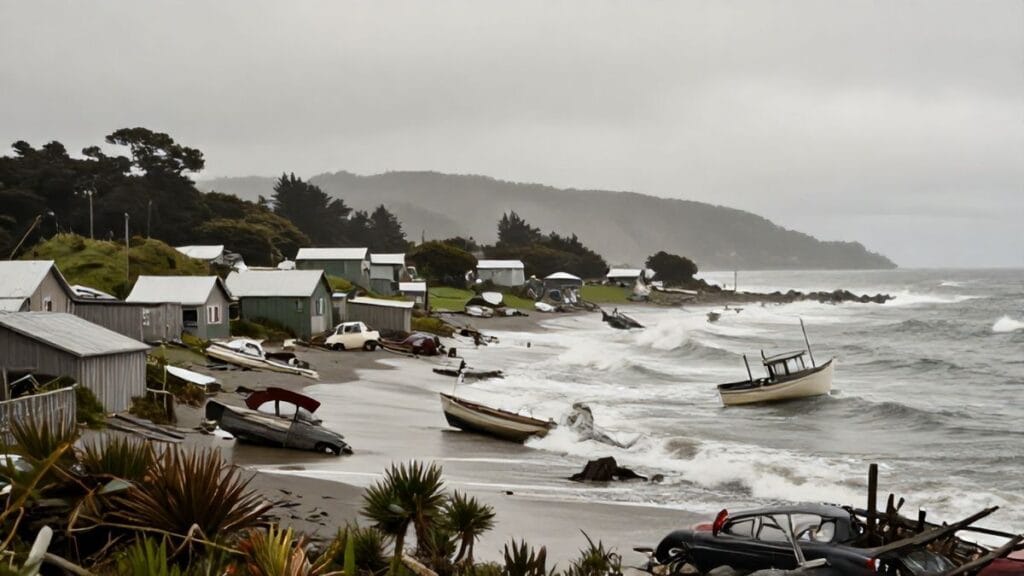
In low-lying parts of Gisborne and along the beaches just outside the town, water roared across roads and into buildings. Beachfront homes were battered; some were lifted partially from their foundations, others filled rapidly with water and mud. People described struggling to stand, even where the water did not reach their heads, because the currents were so strong they knocked them sideways. Cars were shoved together as though they were toys. Boats that had been tied neatly in the harbour collided, ropes snapping, hulls grinding against pilings.
One often-cited account tells of a man who had gone down to the shore to see what had happened to the retreating sea. When he realized the water was coming back in, he ran for his car, only to find that by the time he reached it, the water was already surging around his knees. He tried to drive, but the engine stalled; within moments, the car was pushed sideways by the water’s force, bumping into another vehicle and then being swept partly off the road. He would later recall, with lingering disbelief, how the wave seemed to carry not just water, but a strange, grinding mixture of sand, timber, and fragments of human life—chairs, boxes, tools—everything that the bay could snatch.
Miraculously, there were no confirmed fatalities attributed directly to the poverty bay tsunami 1947, though there were injuries, narrow escapes, and at least a few cases where people were unaccounted for or nearly drowned. The lack of deaths, however, should not erase the severity of what happened. The damage was extensive. Railway lines were bent and undermined. Sections of road vanished under scoured-out cavities. Cows and sheep were drowned or swept inland, their bodies later found tangled in fences and trees. The economic impact on some farms and fishing operations was severe, particularly for families who already felt the fragile constraints of the post-war economy.
Just as striking as the first wave was the pattern that followed. Tsunamis rarely arrive as a single, isolated event. Subsequent waves, sometimes smaller, sometimes nearly as powerful, continued to disturb the bay. Water levels rose and fell erratically. For hours, the sea refused to settle into its normal rhythm. In some parts of the shoreline, the inundation seemed to recede only to surge again, compounding the confusion and making rescue efforts more dangerous.
Yet behind the raw statistics of water height and inundation distance lay another story: that of human reactions. Some people froze, unable to process what they were seeing. Others moved with startling speed, grabbing children, helping neighbours, shouting directions. The tsunami was not just a physical event; it was a revelation of character, of social bonds, of fear and courage unexpectedly placed on display.
Voices from the Shore: Eyewitness Testimonies
History becomes vivid when we listen to the people who were there. Though many decades have passed, fragments of testimony from the poverty bay tsunami 1947 still echo with immediacy. One woman, whose recollections were later recorded by a local historian, remembered standing at her kitchen sink, washing dishes, when she heard a neighbour shouting for everyone to “get up the hill.” At first she thought there must be a fire or perhaps an accident on the road. It was only when she stepped out her back door and felt the cold rush of water under her feet that she understood something else was happening.
“It wasn’t like ordinary flooding,” she recalled. “It came all at once, and it was dirty, with pieces of things in it—bits of fences, branches, even a chicken coop from farther down the road. I grabbed the children and we went as fast as we could. I remember looking back and seeing our garden disappear, as if someone had brushed it away with a giant hand.” That image—a hand sweeping aside the familiar—would recur in many narratives: the sense that the boundary between land and sea, home and hazard, had been suddenly redrawn.
In another account, a teenager who had been playing near the beach described the shock of seeing the sea bottom exposed and then, moments later, the wave coming in. “We thought it was the funniest thing, the fish flapping around on the sand,” he said in an interview conducted fifty years later. “But then my uncle yelled that we had to get out of there. I’ve never seen him look so scared. We started running, and I could hear this roar behind us. We didn’t look back until we were halfway up the hill, and by then all you could see was this brown water where the road used to be.”
Such testimonies not only convey the sensory reality of the tsunami—the sounds, the colours, the strange behaviour of the water—but also the emotional undertow. There was confusion, certainly, and fear, but also disbelief. Several people commented on how, even as the waves crashed through their streets, part of them refused to accept that this was really happening in their own town. The word “tsunami” was used by some, but many simply spoke of “the great wave,” a phrase that carried its own weight of myth and astonishment.
Newspapers at the time captured some of this mood, though often in a more restrained language. A contemporary report from The Gisborne Herald described “a remarkable inundation” that caused “considerable damage” but “no loss of life,” emphasising both the shock and the relief. Later researchers would return to these clippings, examining the careful balancing act between conveying urgency and avoiding public panic. As historian G. McLean later observed in a study of New Zealand disasters, “The way events are framed in print often shapes not only immediate responses but the long-term place of an event in national memory.”
In oral histories, meanwhile, the focus was often more intimate: the child who lost a treasured toy in the floodwater; the horse that somehow survived, swimming across a paddock; the elderly neighbour carried to safety on a makeshift stretcher of doors and blankets. These details, small in scale yet immense in significance to those involved, stitched together the human fabric of the poverty bay tsunami 1947, preventing it from becoming merely a sequence of measurements and dates.
Māori Communities and the Weight of Older Memories
The East Coast of the North Island is home to strong Māori communities, whose connections to the land and sea long predate European settlement. For these communities, the 1947 tsunami did not arrive in a historical vacuum. It intersected with older narratives of environmental upheaval, ancestral voyages, and spiritual relationships to the ocean known as moana. While written records from Māori perspectives on the poverty bay tsunami 1947 are limited, oral traditions and later interviews suggest that the event resonated deeply with cultural memories of “ngaru nui” (great waves).
In some iwi (tribal) traditions, a rapidly retreating sea is explicitly described as a sign of impending danger—a time to flee to higher ground. Elders, familiar with these stories, reportedly urged people to move inland when they saw the bay emptying. In at least a few documented cases, this cultural knowledge directly contributed to lives being saved. The idea that the landscape itself communicates warnings, if one knows how to read them, stands in subtle tension with mid-twentieth-century European faith in technological forecasting and official bulletins.
The tsunami also compounded existing social and material vulnerabilities. Māori settlements along rivers and low-lying coastal areas were often more exposed to flooding. Housing quality, constrained by decades of economic marginalisation and inequitable land policies, sometimes made buildings less resistant to inundation. Recovery from damage, too, could be slower where resources were scarce and state assistance unevenly distributed.
Yet these communities also drew on robust networks of kinship and collective responsibility. When the waters receded, marae became centres of gathering, assessment, and support. Stories were shared, food was distributed, and practical help offered to those whose homes had been worst affected. The tsunami, in this sense, exposed not only physical risk but also the strengths and weaknesses of social structures along the coast.
In the years that followed, some Māori leaders would invoke the memory of the 1947 waves in arguments for better housing, infrastructure, and recognition of traditional knowledge in civil defence planning. These arguments did not always find swift traction in government corridors. However, the idea that indigenous knowledge could complement scientific assessment—particularly in the domain of natural hazards—was planted, even if it would take decades before it was fully acknowledged in official policy.
Within families, stories of the tsunami were woven into broader genealogies and histories. Children growing up in the 1950s and 1960s might hear elders speak of “that time when the sea ran away and came roaring back,” the tale sitting alongside others of storms, wars, and migrations. In this way, the poverty bay tsunami 1947 became part of a lineage of environmental events that helped shape a collective sense of place and vulnerability—and resilience—on the East Coast.
Emergency Response in a Country Unprepared
On the institutional level, New Zealand in 1947 was poorly equipped for a tsunami of this nature. Civil defence arrangements were still rudimentary, shaped more by wartime air-raid precautions than by a systematic approach to natural hazards. Local councils had plans for floods and fires; police and volunteers could be mobilised in a crisis. But there was no national framework for tsunami warning, evacuation, or post-disaster coordination.
When the waves struck Poverty Bay, the first responses were intensely local and improvisational. Neighbours banged on doors, teachers shepherded children to higher ground, farmers hurried animals away from inundated paddocks. The police, alerted quickly to the scale of the event, worked to block off dangerous roads and assist those stranded. Doctors and nurses at Gisborne Hospital prepared for casualties that, thankfully, never reached the numbers they feared.
Communication beyond the immediate region was, by today’s standards, slow. Telephone exchanges became bottlenecks, with lines jammed by anxious calls. Radio stations, once they received confirmed reports, began broadcasting updates, but the tsunami’s main destructive phase had already passed. Railway and road authorities scrambled to assess damage to infrastructure, aware that any break in transport links could isolate communities dependent on regular supplies.
There were also moments of quiet heroism that never made it into official reports. A railway worker who stayed by a compromised bridge to warn oncoming trains; a group of young men who took a small boat out in churning water to retrieve someone trapped on a stranded vessel; a nun who refused to leave the low-lying convent until all the children in her care were accounted for. These stories, preserved in local memory and sometimes in parish or community records, reveal how disaster response is as much about ordinary courage as institutional capability.
In the aftermath, the gaps in preparedness became glaring. Local officials and national politicians alike asked difficult questions: Why had there been no warning? Could anything have been done differently? How should resources be allocated to repair damaged harbour structures, roads, and public buildings? In some ways, the lack of fatalities allowed the state to treat the event as a near-miss—a chance to study and reflect without the crushing grief that accompanies many disasters. Yet for those who lost homes, possessions, or livelihoods, the tsunami was no mere rehearsal. It was a blunt reminder that the country’s sense of safety, particularly along the East Coast, rested on fragile foundations.
Measuring the Inexplicable: Science Meets the Sea
As the muddy water drained away and the people of Gisborne and Poverty Bay began to clean and rebuild, another kind of work was quietly unfolding. Scientists—geologists, oceanographers, and a handful of specialist engineers—arrived to inspect the damage. They came armed with measuring tapes, notebooks, cameras, and, crucially, questions. How high had the water reached? How far inland had it travelled? What did the pattern of debris and erosion say about the direction and force of the waves?
In 1947, tsunami science was still developing. New Zealand researchers, however, were not starting from zero. Earlier events around the Pacific, including the 1946 tsunami that devastated parts of Hawaii, had spurred interest and provided comparative data. Investigators in Poverty Bay could therefore situate what they saw within a wider context. Their reports, later cited in academic journals, spoke of “exceptionally strong run-up” in some inlets, wave heights of several metres along sections of coast, and a complex sequence of wave arrivals inconsistent with a single, simple pulse.
One particularly important line of inquiry concerned the nature of the earthquake that had generated the tsunami. Because shaking onshore was minimal, some scientists speculated early on that a submarine landslide might have been the primary cause. Over time, as more data was assembled and as the conceptual framework of plate tectonics matured, the dominant view shifted toward a “slow” or tsunami earthquake on the subduction interface—an event that releases energy efficiently into the overlying water rather than into high-frequency ground shaking.
This conclusion had far-reaching implications. If the Hikurangi margin was capable of producing such earthquakes, then large tsunamis could occur with little warning across a wide stretch of New Zealand’s East Coast, from the Wairarapa to the Bay of Plenty. The poverty bay tsunami 1947 thus became a case study in a new understanding of seismic risk, one that would inform hazard assessments and civil defence planning well into the late twentieth and early twenty-first centuries. As a later review by seismologist K. Berryman and colleagues observed, “The 1947 tsunami provided early, if underappreciated, evidence of the Hikurangi subduction zone’s capacity for hazardous, tsunami-generating earthquakes.”
The very act of translating the chaos of the tsunami into numbers and diagrams did not erase the suffering it caused, but it did offer a way to learn from it. Scientists noted where natural features such as dunes or headlands had deflected or reduced wave impacts, and where human alterations to the coastline—seawalls, reclaimed land, poorly sited buildings—had increased vulnerability. They sketched run-up lines on maps, gradually building a new cartography of risk where the contour that mattered most was not elevation above sea level in calm weather, but the reach of water during rare, violent events.
Even as these technical studies proceeded, there was an awareness that memory fades and physical traces are quickly altered by rebuilding. Researchers interviewed residents, understanding that their recollections could help reconstruct the height and timing of the waves more accurately than any tide gauge alone. In this way, science and oral testimony became partners in making sense of the poverty bay tsunami 1947: each recognising that the other held pieces of a puzzle about how the Earth and ocean sometimes conspire to redraw the boundaries of the known world.
Counting the Cost: Damage, Loss, and Near Misses
In purely financial terms, the damage from the tsunami ran into many thousands of pounds—a significant sum in post-war New Zealand. Insurance claims spiked. Local authorities submitted detailed reports to Wellington, seeking assistance to repair wharves, roads, and public facilities. Farmers applied for relief grants to replace drowned stock and rebuild fences. For a region already navigating the complexities of recovery from the war’s economic disruptions, the tsunami was a heavy and unexpected blow.
Yet there was another, less tangible ledger being drawn up in the weeks that followed: an accounting of what might have been. The absence of confirmed fatalities loomed large in public discussion. Newspapers emphasised the “miracle” that no lives were lost, given the power of the waves and the degree of inundation. This framing was not simply journalistic optimism; it reflected a genuine sense among many residents that they had come perilously close to a tragedy on a much larger scale.
Take, for example, the schools. Had the tsunami arrived at a slightly different time—when children were walking to or from class in greater numbers—it is easy to imagine a higher toll. Similarly, the harbour area, busy with workers and shipping at certain hours, happened to be less crowded at the precise moment the strongest surges struck. Luck, in other words, played a role that could not be denied. But reliance on luck is no strategy for the future. The poverty bay tsunami 1947 forced communities and officials alike to grapple with the uncomfortable fact that, in some scenarios, minutes or even seconds can make the difference between a dramatic story and a roll call of the dead.
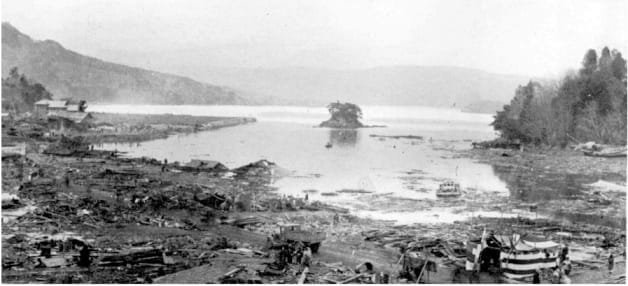
The physical scars on the landscape were easier to tally. Photographs from the time show battered buildings, mangled railway tracks, and piles of driftwood and debris stacked against fences and bridge pilings. In some low-lying neighbourhoods, silt covered floors and lawns, a thin reminder of the sea’s incursion that would take days to clean and months to fully forget. Garden plots were ruined, wells contaminated, and in some areas, salinity lingered in the soil, affecting crops and vegetation.
Psychological costs, meanwhile, were harder to measure but profound. Some residents, especially children, developed a lasting fear of the sea. Others reported recurring dreams of waves or sudden, inexplicable anxiety during ordinary high tides. In a time and place where mental health struggles were rarely discussed in public, such reactions often remained private burdens. Families coped in their own ways: through humour, minimisation, or, conversely, through sober remembrance. In some houses, the story of 1947 became a cautionary tale repeated every time a child wandered too close to the surf.
Out of this mix of material loss and narrow escape emerged a complicated sense of gratitude and vulnerability. People were thankful to be alive, but shaken in their confidence that they understood the land they lived on. The tsunami, in this respect, was not just a natural disaster but a cognitive one: it disrupted assumptions about what was possible in Poverty Bay and along the Gisborne coast.
A Second Shock: The March Wave and the May Tsunami
As if to underscore the lesson that the East Coast was entering a more seismically expressive phase, the March 26 tsunami was not the only significant event that year. On 17 May 1947, less than two months later, another tsunami struck the region, again generated by a tsunami earthquake on the offshore Hikurangi subduction margin. This second event, often discussed in tandem with the first in scientific literature, reinforced the sense that something fundamental had to change in how New Zealand thought about and prepared for such hazards.
For local residents, the May tsunami provoked a more immediate and anxious response. Memories of March were still fresh; people had not yet fully rebuilt or emotionally recovered. When the sea again behaved strangely—rising and falling with unusual speed, surging farther inland than normal—many reacted with swift self-evacuation. Stories from this period describe people grabbing blankets, important papers, and children, and heading for higher ground with a determination sharpened by recent experience.
From a historical perspective, the pairing of these two tsunamis is crucial. The poverty bay tsunami 1947 in March might, in isolation, have been dismissed by some as a freak occurrence, a once-in-a-lifetime anomaly. The May event stripped away that comforting narrative. It became evident that the offshore plate boundary was capable not only of producing tsunamis, but of doing so in clusters, perhaps as part of a complex sequence of stress adjustments. The pattern disturbed any illusion of regularity or safety through elapsed time alone.
Newspapers and government officials began to speak more explicitly about “tsunami risk” as a recurring concern rather than a one-off headline. The language of probability, mapping, and structural resilience crept into public discourse. The March and May events, seen together, formed a kind of hinge in the history of New Zealand’s approach to coastal hazards, turning attention sharply toward the East Coast and its tectonic underpinnings.
For individuals and families, however, the second tsunami had a more personal meaning. It confirmed fears that the first event had awakened. For some, it may even have validated the stories and warnings of elders, especially in Māori communities, that the sea could not be taken for granted. The year 1947 thus became etched into the region’s collective memory not as the year of a single freak wave, but as a season when the sea twice reminded people of its long, slow power, rising from depths they could neither see nor easily comprehend.
Politics, Policy, and the New Zealand State Wakes Up
Disasters are never just local experiences; they are also catalysts for political debate and administrative change. In the months and years following the poverty bay tsunami 1947 and its May counterpart, officials in Wellington confronted an uncomfortable question: What responsibility did the state have to anticipate and mitigate such coastal hazards? The answer was not straightforward. Resources were limited in the immediate post-war era, and New Zealand faced a long list of pressing needs: housing, healthcare, education, and economic development.
Nevertheless, the twin tsunamis added weight to the argument for a more coherent civil defence infrastructure. Parliamentary discussions, while often couched in cautious bureaucratic language, revealed a dawning appreciation that tsunamis could no longer be treated as exotic curiosities. Committees were formed to review the events, drawing on reports from local authorities, scientific advisers, and international developments, particularly in the Pacific.
One of the key outcomes over subsequent years was the gradual integration of tsunami scenarios into broader emergency planning. Harbour boards and coastal councils were encouraged to consider tsunami heights when designing or upgrading wharves, seawalls, and other infrastructure. Recommendations emerged for signage in certain vulnerable areas, though full implementation would lag behind the urgency some experts felt. The establishment of the Pacific Tsunami Warning Center in 1949, following the devastating 1946 Hawaiian tsunami, also created a new avenue for receiving international alerts, though integrating this information into local practice took time.
Political attention, moreover, had to contend with the episodic nature of hazard memory. As one contemporary commentator in a New Zealand engineering journal noted wryly, “The urgency of safety measures tends to recede with the waters that first supplied it.” Without a sustained push from scientists, local advocates, and occasionally the media, the impetus to act could easily have faded. Fortunately, a small but determined group of experts continued to reference the 1947 events in reports and recommendations.
Over the decades, as New Zealand’s understanding of its seismic environment deepened, the poverty bay tsunami 1947 increasingly appeared in official documents as an early warning sign, a historical marker that policy-makers and scientists could point to when justifying investments in hazard research and public education. It served as a reminder that the country’s seemingly calm eastern horizon concealed a dynamic geological frontier, one that would require both political will and public awareness to navigate safely.
Changing Maps of Risk: From Poverty Bay to the Pacific
While the immediate focus after 1947 was understandably on the East Coast, the lessons from Poverty Bay rippled outward into a broader reassessment of tsunami risk around New Zealand and across the Pacific. By the late twentieth century, hazard maps no longer treated the country’s coasts as relatively uniform lines of low concern, punctuated only by obvious dangers such as river mouths and known storm surge zones. Instead, scientists and planners began to overlay multiple layers of risk: subduction zones, fault lines, underwater landslide-prone slopes, and historical records of anomalous waves.
In this emerging cartography, the poverty bay tsunami 1947 stood alongside other significant events—from the 1868 Arica tsunami that sent waves racing across the Pacific to New Zealand’s shores, to more recent disasters such as the 1960 Chilean tsunami, which also impacted New Zealand coasts. Each event provided another data point, another line on a complex graph of how the world’s oceans translate seismic energy into local shocks.
As computing power grew and geophysical models became more sophisticated, researchers used the 1947 tsunami as a calibration point. If their simulations could reproduce the observed wave heights and run-up distances in Poverty Bay and along nearby coasts, confidence in their models of the Hikurangi subduction interface increased. These models, in turn, helped inform modern evacuation zones for places like Gisborne, where maps now show clearly marked areas that could be at risk from future tsunamis of varying sizes.
Internationally, too, the event drew interest, particularly among scientists studying tsunami earthquakes. The peculiar combination of low felt shaking and high tsunami amplitudes in 1947 mirrored patterns observed in other parts of the world, such as off the coast of Japan. Comparative studies highlighted the need for warning systems that did not rely solely on the intensity of ground shaking as reported by the public. Instead, real-time analysis of sea-level data and distant seismic readings became central to the Pacific’s shared safety infrastructure.
For residents of Gisborne and Poverty Bay, these evolving maps and models gradually translated into more tangible forms: new signage pointing toward safe routes uphill, school drills that framed the sea’s sudden withdrawal as an immediate call to move, and public information campaigns that invoked “remember 1947” as a way to anchor abstract risk in lived experience. The poverty bay tsunami 1947 thus continued to shape how people read their landscape, even decades after the mud had been cleaned from the streets.
Memory, Silence, and the Gradual Fading of 1947
Over time, even the most dramatic events can slip from the forefront of collective consciousness. The poverty bay tsunami 1947, despite its power and its impact on science and policy, was no exception. In the 1950s and 1960s, as New Zealand entered a period of relative prosperity, many communities turned their attention toward growth, modernisation, and the promise of new technologies. The war, too, remained a dominant reference point for national memory, with ANZAC commemorations and veterans’ narratives occupying a central place in public life.
Within families directly affected by the tsunami, the story remained vivid, told at dinner tables and family gatherings, sometimes as a dramatic anecdote, sometimes as a sober lesson. But for newcomers to the region or younger generations with no personal link to the event, 1947 increasingly became a date in local lore, overshadowed by more recent storms, floods, or, later, earthquakes in other parts of the country. Coastal development crept forward. Holiday homes appeared in sites that, had the owners seen photographs from 1947, might have prompted second thoughts.
Silence played its part as well. Many survivors were reluctant to dwell publicly on the fear and vulnerability they had experienced. The cultural norms of mid-century New Zealand, especially among Pākehā (European-descended) communities, tended to value stoicism and understatement. “We got through it” could be both a badge of honour and a way of shutting down deeper emotional exploration. Official records, focused largely on physical damage and technical lessons, rarely captured the psychological complexities of living with the memory of a landscape suddenly transformed.
Natural hazards, too, compete with one another for attention. The devastating 1968 Inangahua earthquake on the South Island’s West Coast, and later the 2010–2011 Canterbury earthquakes, shifted nationwide awareness toward seismic shaking and its consequences for urban structures. Tsunamis formed part of the hazard picture, but they were only one strand in a web of risks that planners and the public had to consider.
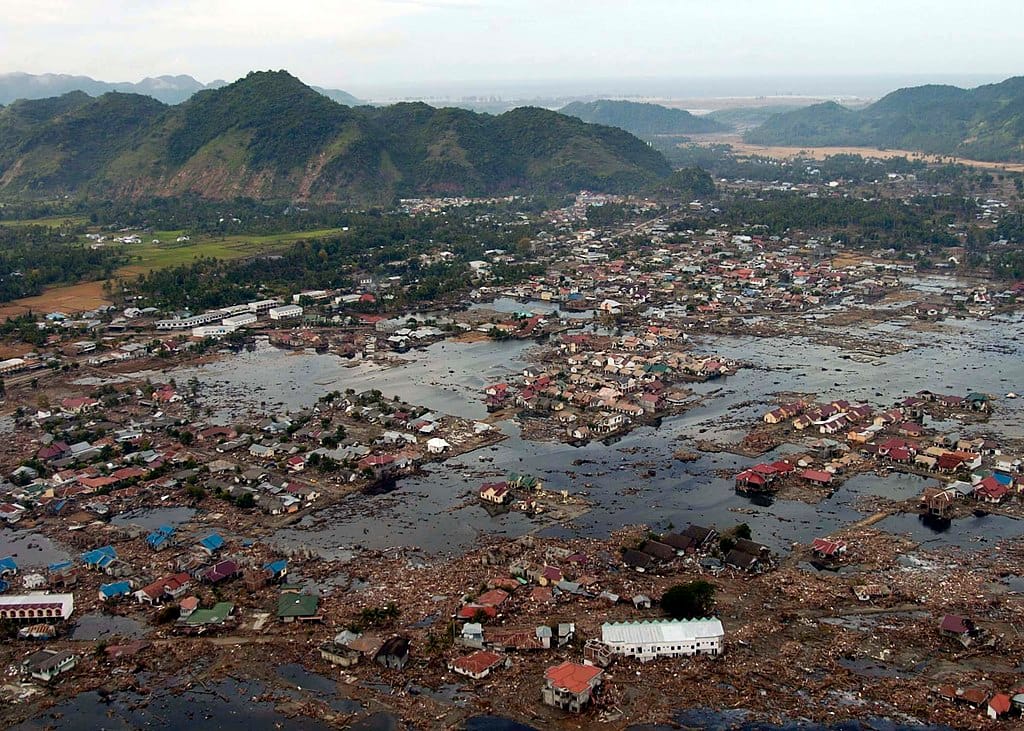
Yet the memory of 1947 never vanished entirely. It lingered in archives, in fading newspaper clippings, in the recollections of ageing residents, and in the subtle ways coastal communities related to the sea—with a mixture of affection, respect, and unease. It would take a new generation of researchers and a global reawakening to tsunami threats, especially after the catastrophic Indian Ocean tsunami of 2004, to bring the events of Poverty Bay back into sharper historical focus.
The Return of the Story: Historians, Survivors, and New Research
The early twenty-first century saw a resurgence of interest in past tsunamis around the world, including those that had long been considered minor or local. For New Zealand, this meant a renewed examination of archival sources, scientific reports, and oral histories relating to the poverty bay tsunami 1947 and other events. Historians, geologists, and social scientists began to collaborate more closely, recognising that a full understanding of tsunami risk required both technical data and rich narrative context.
One important thread in this renewed attention was the recovery of survivor voices. As those who had been children or teenagers in 1947 reached their seventies and eighties, some were approached by researchers interested in capturing their memories before they were lost. Interviews, often conducted in living rooms with family members listening nearby, brought to light details that had never appeared in official reports: the smell of the silt left behind, the way certain sounds still triggered unease, the small acts of kindness that had made the difference between coping and despair.
These personal testimonies were woven into academic and popular works alike. Local museums in Gisborne and surrounding areas curated exhibits that included photographs, maps, and recorded reminiscences. School projects encouraged students to talk with grandparents or older neighbours about “the big waves” of 1947, reconnecting younger generations to a history that had been at risk of fading into abstraction.
Parallel to this, advances in paleotsunami research—using sediment cores and geological markers to identify evidence of prehistoric tsunamis—cast the 1947 events in a deeper temporal frame. Scientists found layers of sand and marine debris in coastal lakes and wetlands that pointed to earlier, sometimes much larger inundations stretching back centuries or millennia. Against this backdrop, the poverty bay tsunami 1947 could be seen both as a significant modern event and as just one entry in a much longer record of the Hikurangi margin’s restless behaviour.
Scholars also revisited contemporary newspaper coverage, government files, and correspondence. They traced how information about the tsunami travelled through bureaucratic and media channels, how it was framed, and what was emphasised or omitted. In one article, historian J. King observed that “the 1947 Poverty Bay tsunami offers a revealing lens on mid-century New Zealand: a society poised between local knowledge and global science, between stoic endurance and emergent expectations of state protection.” This kind of analysis placed the tsunami not only in environmental history, but also in the broader narrative of New Zealand’s social and political development.
Through these efforts, the story of 1947 returned to public consciousness not merely as a cautionary tale, but as a multi-layered episode that spoke to questions of identity, resilience, and the entangled relationship between humans and the forces that shape their coasts.
Lessons for the Present: Warnings, Education, and Climate Anxiety
Today, when sirens wail in coastal towns during tsunami drills and schoolchildren practise “long or strong, get gone” responses to earthquakes, the shadow of past events like the poverty bay tsunami 1947 falls across the exercise. Modern New Zealand has invested heavily in civil defence systems: text alerts, radio broadcasts, publicly displayed evacuation maps, and coordinated emergency management plans. The assumption that tsunamis can and will occur is now baked into planning and public education, especially in regions like Gisborne that sit close to active subduction zones.
And yet the core challenge remains similar to that faced in 1947: how to convert knowledge into timely action. Even with sophisticated warning systems, many tsunamis generated by nearby earthquakes will offer only minutes of lead time. In such cases, natural signs—strong or prolonged shaking, a rapidly retreating or suddenly surging sea—remain critical cues. The difference now is that public campaigns explicitly teach people to interpret those signs as signals to move immediately to higher ground, without waiting for official confirmation.
The legacy of the poverty bay tsunami 1947 thus lives in the slogans on posters, the arrows painted on roads pointing inland, and the routine evacuation drills that sometimes feel, to those participating, like over-cautious interruptions. But history shows how easily “over-cautious” can turn into “not cautious enough.” Referencing 1947 in educational materials grounds the abstract concept of tsunami hazard in a concrete, local example: this has happened here before; it can happen again.
At the same time, new layers of concern have emerged in the public imagination. Climate change and sea-level rise complicate the picture of coastal risk. While tectonic tsunamis are not caused by climate change, higher baseline sea levels can amplify their inundation impacts, pushing waves farther inland than they might otherwise have reached. Communities weigh not only the possibility of sudden disasters, but also the slow encroachment of the sea on properties and infrastructure. Conversations about relocation, resilient building design, and managed retreat carry echoes of earlier debates about where and how to rebuild after 1947.
For younger residents of Gisborne and Poverty Bay, the story of the tsunami is framed by this broader context of environmental anxiety. They grow up knowing that their beautiful, open coastline is also a space of risk. Yet this knowledge can also foster a sense of agency. Schools run student-led evacuation planning projects; local councils involve youth in consultations about hazard signage and community preparedness. In these discussions, the poverty bay tsunami 1947 is invoked not to paralyse with fear, but to empower with understanding.
Ultimately, the enduring lesson of 1947 is not that disaster is inevitable, but that awareness, respect for the environment, and collective organisation can dramatically alter outcomes. Where residents once stood puzzled on a suddenly exposed seabed, unsure of what it meant, people today are taught that such a sight is a moment to run—not out, but up.
Conclusion
The story of the Poverty Bay Tsunami of 26 March 1947 is, at its heart, a story about the collision between everyday life and deep geological time. On that quiet morning, as people in Gisborne and the surrounding region went about their routines, forces set in motion beneath the Pacific Ocean translated into a sudden, violent reshaping of their world. The waves that surged into Poverty Bay left visible scars on roads, houses, and fields, but they also carved new channels through the collective memory of the East Coast.
In the decades since, the poverty bay tsunami 1947 has shifted from lived experience to historical episode, from urgent crisis to case study. Scientists have mined it for data, refining models of the Hikurangi subduction margin and calibrating tsunami simulations. Historians have explored it as a window into mid-twentieth-century New Zealand, a moment when local knowledge, Māori oral traditions, and emergent global science intersected in the face of an unexpected threat. Policy-makers have cited it in reports that justify investments in warning systems, evacuation planning, and resilient infrastructure.
But beyond these institutional and academic uses, the tsunami remains a human story: of neighbours who banged on each other’s doors as the water rose, of children who watched their gardens vanish under churning waves, of elders whose warnings were suddenly, tragically vindicated. It is a story of narrow escapes and second chances, of a community that was forced to recognise both its vulnerability and its capacity for rapid solidarity.
In remembering 1947, we are reminded that the boundaries we draw—between land and sea, safety and danger, past and present—are more permeable than we often like to admit. The ocean that frames Gisborne’s horizon is beautiful and sustaining, but it is also dynamic, connected to distant plate boundaries and histories far beyond human lifespans. To live on such a coast is to accept this duality, to weave respect for hazard into the fabric of daily life without surrendering to fear.
As coastal communities around the world confront rising seas and evolving risks, the experience of Poverty Bay offers both a warning and a source of hope. Disasters will come, but they need not always become tragedies on their worst possible scale. By listening to the stories of those who have faced the waves before us, by embracing both scientific insight and local knowledge, we can chart a path that honours the past while preparing, as best we can, for whatever the ocean may yet bring.
FAQs
- What caused the Poverty Bay tsunami in 1947?
The 1947 Poverty Bay tsunami was caused by a so-called “tsunami earthquake” on the offshore Hikurangi subduction margin, where the Pacific Plate dives beneath the Australian Plate. This type of earthquake releases energy in a way that produces large tsunamis despite relatively weak shaking felt on land, which is why many people in the region reported little or no ground motion before the waves arrived. - How large were the waves during the 1947 Poverty Bay tsunami?
Wave heights varied along the coast, but in parts of Poverty Bay and nearby inlets, run-up heights of several metres were recorded, with some local estimates and later scientific reconstructions suggesting peaks that could exceed 8–10 metres in certain confined areas. The waves were powerful enough to inundate low-lying farmland, damage harbour infrastructure, and sweep debris far inland. - Were there any deaths from the Poverty Bay tsunami 1947?
Remarkably, there were no confirmed fatalities directly attributed to the Poverty Bay tsunami of 26 March 1947, though there were injuries and numerous close calls. Many observers have described the lack of loss of life as a near-miracle, given the force of the waves and the absence of any formal warning system at the time. - Did the sea really retreat before the waves came in?
Yes. Numerous eyewitnesses reported that the sea in Poverty Bay and along the surrounding coast retreated rapidly, exposing the bay floor and leaving fish flapping on the sand. This sudden withdrawal is a classic warning sign of an approaching tsunami, caused when the trough of the tsunami wave reaches shore before the crest. In 1947, many people did not recognise this as a danger signal and approached the exposed seabed out of curiosity. - How did Māori communities experience and interpret the 1947 tsunami?
Māori communities on the East Coast brought to the event a deep historical relationship with the sea and oral traditions that included stories of “great waves.” In some cases, elders recognised the retreating sea as a sign of danger and urged people to move to higher ground, which likely helped save lives. At the same time, existing social and economic inequalities meant that Māori settlements in low-lying areas could be especially vulnerable to inundation and slower to recover materially. - What changes did the 1947 events prompt in New Zealand’s tsunami preparedness?
The 1947 Poverty Bay tsunami, along with a second tsunami in May that year, highlighted New Zealand’s lack of tsunami-specific planning and helped spur gradual development of civil defence policies that included tsunami risk. Over time, this contributed to the integration of international tsunami warnings, the creation of evacuation maps and signage, school education programmes, and the inclusion of tsunami scenarios in coastal infrastructure design and planning. - How is the 1947 tsunami remembered today?
Today the poverty bay tsunami 1947 is remembered through a combination of local oral histories, museum exhibits, school projects, and scientific studies. While it faded from national consciousness for a period, renewed attention to tsunami hazards—especially after global events like the 2004 Indian Ocean tsunami—has brought the 1947 waves back into focus as an important part of New Zealand’s hazard history and a key example used in public education. - Could a similar tsunami happen again on the East Coast of New Zealand?
Yes. The Hikurangi subduction margin remains active, and scientists recognise that it is capable of generating future tsunamis, possibly larger than the 1947 events. Hazard maps and preparedness plans for Gisborne and other East Coast communities explicitly account for this possibility. While it is impossible to predict exactly when such an event might occur, the combination of monitoring systems and public awareness aims to reduce the risk to life when it does.
External Resource
Internal Link
Other Resources
- Encyclopaedia Britannica – general search for the exact subject
- Google Scholar – academic search for the exact subject
- Internet Archive – digital library search for the exact subject