Table of Contents
- The Quiet Before the Fury: A Calm Aysén
- The Sleeping Giant of Southern Chile: Hudson Volcano’s Legacy
- August 8, 1991: The First Tremors of Catastrophe
- Awakening the Volcano: Initial Eruptions and Their Shock
- Ash and Fire: The Sky Turns Dark Over Aysén
- Panic and Heroism: The Human Response to the Eruption
- Nature’s Wrath Unleashed: Pyroclastic Flows and Lahars
- Scientific Eyes on the Mountain: Monitoring the Unfolding Crisis
- The Evacuation Race: Saving Lives amid Chaos
- The Impact on the Local Communities: Lives Forever Changed
- Environmental Devastation: Forests, Rivers, and Wildlife in Peril
- The Chilean Government’s Role: Emergency Response and Recovery
- Media Coverage and Global Attention: Voices from Aysén
- The Economic Toll: A Region Held Hostage by the Volcano
- Lessons Learned: Volcanic Preparedness and Risk Management
- The Aftermath: Rebuilding and Resilience in Southern Chile
- Scientific Legacy: The 1991 Hudson Eruption in Volcanology
- Cultural Memory: How Aysén Remembers the Volcano’s Fury
- Comparisons: Hudson’s Eruption and Other Major South American Volcanoes
- The Volcano Today: Dormant or Watching?
- Conclusion: The Human Spirit Amid the Ashes
- FAQs: Demystifying the Hudson Eruption
- External Resources
- Internal Link
The Quiet Before the Fury: A Calm Aysén
In the lush and remote reaches of Chile’s Aysén Region, summer of 1991 bore the deceptive calm of still waters before a storm. The dense forests, sparkling rivers, and isolated villages painted a serene picture of nature’s quiet mastery. Locals carried on their lives, tending livestock or fishing in the fjords, unaware that just beneath their feet, an ancient titan was stirring—an immense volcanic force that would soon crack the silence with devastating fury.
This was not a sudden awakening from centuries of dormancy, but rather the swelling crescendo of restless tectonic plates and simmering magma. The Hudson Volcano, largely a shadow figure in the public eye compared to Chile’s more famous peaks, was about to etch its name into history with one of the most explosive eruptions South America had witnessed in decades.
The Sleeping Giant of Southern Chile: Hudson Volcano’s Legacy
Nestled in the Patagonia region, Hudson is known for its imposing height and volcanic potency. Before 1991, its last major eruption dated back to 1990, a smaller event that had already alerted volcanologists to heightened activity. The volcano sits within the Andean volcanic belt, a hotbed of geological turbulence caused by the Nazca plate subducting beneath the South American plate.
Hudson hadn’t enjoyed much public spotlight, overshadowed by notorious neighbors like Villarrica or Llaima. Yet, native peoples and scientists knew its past was marked by violent outbursts. Ash layers found in soil and ice cores traced history’s volcanic rhythms—some eruptions dating back thousands of years, characterized by explosive force capable of reshaping landscapes.
The region itself is isolated and rugged. Aysén is known for its sparse population and difficult access, with communities scattered along fjords and rivers. The looming volcano was part of the natural identity of these areas—respected, feared, but distant.
August 8, 1991: The First Tremors of Catastrophe
On the morning of August 8, deep seismic rumblings under Hudson betrayed the volcanic unrest pulsating beneath the surface. At first, the quakes were mild and dismissed as typical volcanic murmurs. But within hours, tremors intensified, felt even by residents many kilometers away.
Local scientists at the Southern Volcanological Observatory monitored their instruments anxiously. The volcano stirred from its shallow slumber. Ash plumes began to rise steadily into the crisp Patagonian sky, first thin and sporadic, then thickening as hours dragged on.
Warnings were issued, but the scale and speed of the upcoming eruption surprised even the experts. Mountaineers and adventurers nearby hurried to evacuate their camps. The fragile balance of nature was tipping towards chaos.
Awakening the Volcano: Initial Eruptions and Their Shock
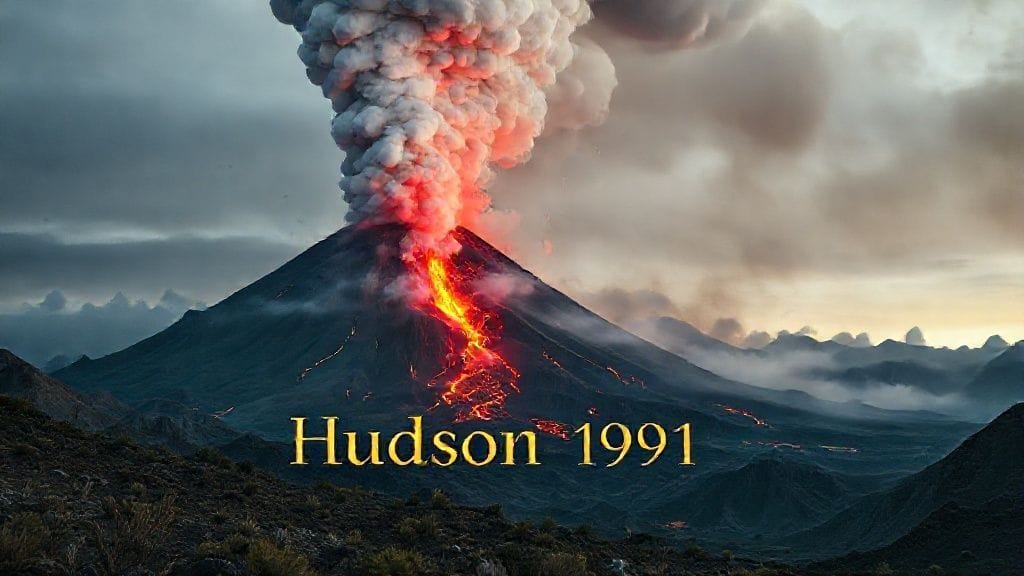
By late afternoon, Hudson unleashed its first violent explosions. Columns of ash shot tens of kilometers skyward, blackening the horizon and turning day into night. The ground shook with terrifying power. Villagers felt the earth heave beneath their feet, windows rattled, and animals fled in panic.
The volcano emitted sharp, thunderous booms—sounds like the rolling of distant artillery. To many onlookers, it was surreal, as though nature itself had decided to vent its ancient fury. The air thickened with sulfurous gases and ash particles that stung eyes and lungs.
Scientists rapidly upgraded the eruption level alert. Satellite images captured the growing ash cloud sprawling across Aysén’s bleak landscape, threatening settlements and ecosystems alike.
Ash and Fire: The Sky Turns Dark Over Aysén
Nightfall brought no relief. The sky, once clear, was now choked with volcanic ash and incandescent rock fragments glowing like embers in a dying fire. Pyroclastic fragments rained down, burning vegetation and igniting wildfires in the dense forest.
Ash blanketed homes and fields, contaminating water supplies and crippling transportation. The fine dust penetrated lungs, triggering emergencies in clinics already limited by the region’s remoteness.
Old-timers compared the eerie glow to historical eruptions of Laki in Iceland or Mount St. Helens decades before. For the residents, it was an apocalyptic vision—a landscape drowned in smoke and shunned by the sun.
Panic and Heroism: The Human Response to the Eruption
Amid swirling clouds of ash and the roar of destruction, stories of courage emerged. Community leaders organized hurried evacuations, guiding elderly, children, and livestock to safer grounds. Volunteers and firefighters braved mudslides and poor visibility to assist those trapped.
Communication lines, mostly reliant on rudimentary radio, crackled with urgent calls for help. There were tales of families reunited, of rescue efforts through treacherous terrain, and of calm amid chaos.
A young teacher in Cochrane took charge of her small village school, turning the schoolyard into a temporary shelter. Under the ash-gray sky, human resilience shone brightly against the volcanic backdrop of desperation.
Nature’s Wrath Unleashed: Pyroclastic Flows and Lahars
As the eruption escalated, it spawned deadly pyroclastic flows—fast-moving avalanches of hot gas and volcanic detritus that bulldozed everything in their path. These searing currents incinerated forests and altered river courses.
Heavy rains mixed with loose volcanic ash triggered lahars—mudflow rivers capable of sweeping away bridges, homes, and entire roads. The South Patagonian terrain, already fragile, was transformed into a molten battlefield.
The destruction wasn’t limited to immediate blast zones. Ash fall reached distant areas, collapsing roofs under its weight and contaminating the air hundreds of kilometers away. The ecological impact resonated deeply.
Scientific Eyes on the Mountain: Monitoring the Unfolding Crisis
Chilean volcanologists teamed up with international experts to monitor Hudson’s behavior. Instruments recorded seismic waves, gas emissions, and changing topography. The eruption became a crucial case study in Andean volcanology.
They deployed drones and helicopters, gathering data in dangerous conditions. Each observation helped predict the volcano’s next moves—information vital to saving lives.
The eruption sharpened scientific understanding of subduction zone volcanism under extreme environmental conditions, benefiting volcanological surveillance worldwide.
The Evacuation Race: Saving Lives amid Chaos
The Chilean government, provincial authorities, and humanitarian organizations launched a massive evacuation campaign. Despite logistical challenges posed by bad weather and rugged terrain, they prioritized moving vulnerable populations.
Temporary shelters were erected in nearby towns like Coyhaique. Medical teams treated respiratory issues and burns. Food and clean water distribution faced hurdles but proved critical.
However, the sudden onset led to panic and disorganization in some areas. Stories poured in of close calls and miraculous escapes. The eruption became as much a human ordeal as a geological one.
The Impact on the Local Communities: Lives Forever Changed
For centuries, the indigenous Mapuche peoples and settlers had regarded Hudson with a mixture of reverence and fear. The eruption deeply scarred the social fabric.
Homes vanished beneath ash or fire. Livelihoods dependent on agriculture, forestry, and fishing were devastated. At least several dozen people suffered injuries, and displaced families faced months or years of hardship.
Psychological trauma lingered. The loss of elders’ ancestral lands was bitter; some villages didn’t fully recover or were abandoned. Yet, communities also forged stronger bonds through collective survival.
Environmental Devastation: Forests, Rivers, and Wildlife in Peril
Hudson’s eruption unleased an environmental catastrophe. Thick layers of ash suffocated ancient forests, and rivers like the Baker and Pascua swelled with sediment-laden waters.
Fish stocks diminished, wildlife fled or perished, and plant regeneration was blocked by the shroud of volcanic debris. The eruption altered ecosystems on a landscape scale, pushing fragile biomes near collapse.
But, science teaches that such devastation also triggers renewal—the volcanic soils enriched by ash would later nourish new growth, symbolizing nature’s enduring cycles.
The Chilean Government’s Role: Emergency Response and Recovery
The central government’s response was swift, albeit tested by the region’s isolation. The military assisted evacuations and infrastructure repairs, while health agencies managed public safety.
Reconstruction plans included rebuilding roads, schools, and utilities. Aid programs addressed lost crops and homes. Still, budget constraints meant recovery stretched over years.
The eruption highlighted gaps in Chile’s disaster preparedness, especially for remote volcanic regions, spurring reforms in risk management policies.
Media Coverage and Global Attention: Voices from Aysén
International press descended on Aysén, dramatizing the ‘volcano apocalypse’ at the end of the world. Local voices struggled to be heard amid sensational headlines.
Yet, through documentaries, interviews, and photographs, the world glimpsed the people behind the disaster—resilient, determined, vulnerable.
Scientists used the spotlight to advocate for more volcanic research funding. The Hudson eruption became emblematic of environmental vulnerability in a changing world.
The Economic Toll: A Region Held Hostage by the Volcano
Economically, the eruption devastated industries central to Aysén’s economy. Timber and farming suffered massive losses. Tourism—already limited—came to a standstill.
Infrastructure damage strained government coffers. Estimates put total costs in the hundreds of millions of dollars, a staggering figure for this remote area.
Yet, recovery generated investment in modernization and infrastructure, slowly restoring economic life over the following decade.
Lessons Learned: Volcanic Preparedness and Risk Management
Hudson’s 1991 eruption underscored the necessity of preparedness for volcanic hazards even in sparsely populated zones.
Chile revamped monitoring systems across the Andean volcanic corridor, investing in better instrumentation and community education.
Emergency plans were revised with local authorities, emphasizing early warning communication and evacuation drills.
These protocols have since saved lives in later volcanic crises.
The Aftermath: Rebuilding and Resilience in Southern Chile
The months and years following the eruption saw Aysén grapple with physical rebuilding and emotional healing.
Villages were reconstructed with better volcanic resilience. New roads connected isolated communities. Environmental restoration projects aimed to revive forests and waterways.
People’s determination to reclaim their land and identity became a defining chapter in Aysén’s history—testament to human determination in the face of nature’s harshest trials.
Scientific Legacy: The 1991 Hudson Eruption in Volcanology
The eruption remains a case study in explosive stratovolcano behavior within subduction zones.
It provided key data on magma composition, eruption triggers, and ash dispersion patterns. Researchers published numerous papers, refining eruption forecasting models.
This event boosted South American volcanology’s profile in global scientific discourse.
Cultural Memory: How Aysén Remembers the Volcano’s Fury
In Aysén, Hudson is not just a mountain but a living memory. Annual commemorations recount the eruption’s dramatic days. Stories are passed through generations, blending fact and folklore.
Artworks, songs, and local literature evoke the ash-clouded skies and human drama. Museums preserve artifacts and testimonies.
The volcano’s shadow remains a symbol of respect, warning, and identity for the region’s people.
Comparisons: Hudson’s Eruption and Other Major South American Volcanoes
While less internationally renowned than 1982’s El Chichón or 1993’s Cerro Hudson eruption’s predecessors, the 1991 event ranks among South America’s most violent in recent times.
It contrasts with persistent activity of Villarrica and the massive scale of Nevados de Chillán, illustrating the continent’s complex volcanic mosaic.
The eruption reinforced the Andes as a hotspot for volcanic hazard awareness.
The Volcano Today: Dormant or Watching?
More than three decades later, Hudson rests again, silent but closely watched.
Seismic networks remain active, tracking subtle ground shifts and gas emissions. Scientists warn that such stratovolcanoes often sleep for decades before reawakening.
The mountain looms as a constant reminder—majestic, potentially deadly, and forever intertwined with the human and natural history of southern Chile.
Conclusion: The Human Spirit Amid the Ashes
The 1991 Hudson eruption was not merely a geological event; it was a crucible of human courage, community, and confrontation with nature’s immense power. In the shadow of a once-slumbering giant, the people of Aysén found strength—to endure ash storms, rebuild shattered homes, and nurture a fragile hope.
Volcanic fury razed forests, disrupted lives, and reshaped a land, yet out of the ashes sprung lessons and resilience that endure. The story of Hudson is a timeless narrative—a call to respect Earth’s breath, cherish fragile ecosystems, and honor those who live at the edge of creation’s fire.
FAQs: Demystifying the Hudson Eruption
Q1: What caused the 1991 Hudson eruption?
The eruption was triggered by magma ascent within a subduction zone where the Nazca plate dives beneath the South American plate, creating intense geological pressures that eventually rupture the earth's surface.
Q2: How many people were affected by the eruption?
Several thousand residents in Aysén were impacted, with dozens injured and many displaced. The sparse population made large-scale casualties less likely, but material and emotional damage was significant.
Q3: What were the primary dangers during the eruption?
Ashfall, pyroclastic flows, lahars (mudflows), and toxic gases posed immediate threats, damaging infrastructure and endangering human and animal health.
Q4: How did the Chilean government respond?
They launched emergency evacuations, medical aid, and relief operations while coordinating scientific monitoring and later reconstruction efforts.
Q5: What is the current status of Hudson volcano?
Hudson is currently dormant but monitored closely for signs of activity. Its past behavior suggests it could erupt again, demanding constant vigilance.
Q6: How has the eruption influenced scientific understanding?
The event enriched knowledge about explosive eruptions in subduction zones, helping improve prediction models and hazard preparedness.
Q7: In what ways did the eruption alter the landscape?
The eruption buried forests, rerouted rivers, and covered soils with ash, drastically transforming local ecosystems and geography.
Q8: How is the 1991 eruption remembered culturally?
It remains a defining moment in Aysén’s history, commemorated through stories, art, and public memory as a symbol of human resilience against natural catastrophe.

