Table of Contents
- The Fateful Day in Karbala: A Prelude to Eternal Memory
- Husayn ibn Ali: The Man Behind the Martyrdom
- The Political Landscape of 7th Century Islam
- The Legacy of Prophet Muhammad and the Formation of the Shi’a-Sunni Divide
- Yazid ibn Mu’awiya: The Controversial Caliph
- The Call to Husayn: Letters from Kufa and the Hope of Justice
- Journey to Karbala: A Path Steeped in Determination and Defiance
- The Encirclement and Siege: The Tension Builds
- The Day of Ashura: The Battle That Shook the Islamic World
- The Martyrdom of Husayn: Courage, Faith, and Sacrifice
- Aftermath: The Fate of the Survivors and the Spoils of War
- The Transformation of Karbala into a Sacred Site
- Political Reverberations Across the Islamic Caliphate
- The Emergence of Shi’ism: Identity Forged in Blood
- Cultural and Religious Impact: Ashura in Contemporary Memory
- Literary and Artistic Tributes: Echoes of Sacrifice
- Modern Interpretations and Political Symbolism
- Husayn ibn Ali in Global Consciousness
- The Role of Karbala in Shaping Muslim Resistance
- Preservation and Pilgrimage: The Shrine of Husayn Today
- Concluding Reflections: The Eternal Flame of Husayn’s Stand
- FAQs: Understanding the Martyrdom of Husayn ibn Ali
- External Resource
- Internal Link
The Fateful Day in Karbala: A Prelude to Eternal Memory
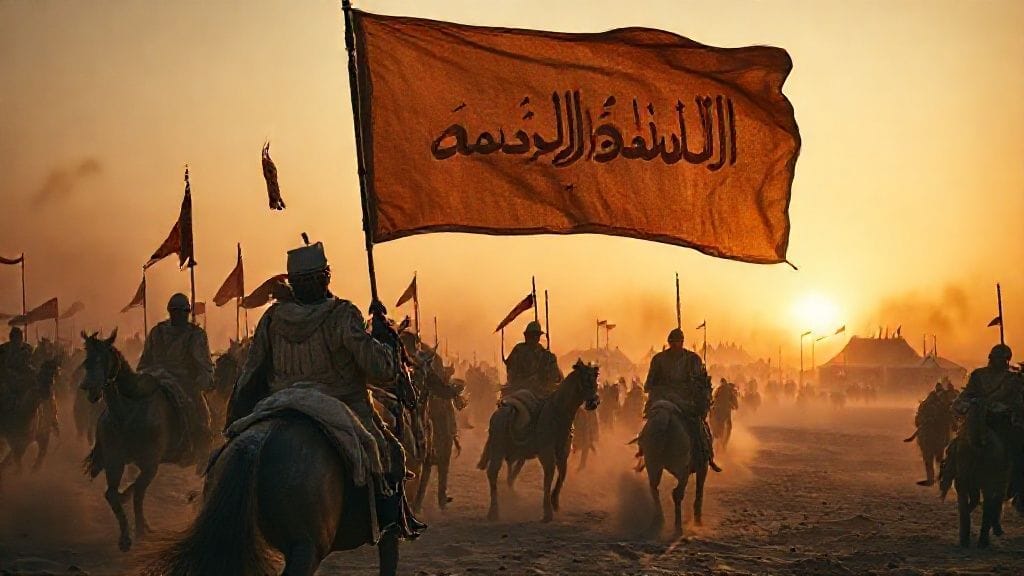
The sun was relentless over the arid plains of Karbala on the 10th of Muharram, 61 AH (October 10, 680 CE). Beneath that merciless heat, a band of nearly seventy men stood encircled by thousands, their resolve as unyielding as the parched earth around them. At their center was Husayn ibn Ali, grandson of the Prophet Muhammad, whose very presence on this battlefield was a testament to courage in a world steeped in political desperation and religious fervor.
This was no ordinary conflict; it was a crucible where faith and power collided. As the dust rose and swords clashed, history etched a sorrowful yet inspiring narrative—the martyrdom of Husayn. It became a turning point that would resonate for fourteen centuries, redefining justice, sacrifice, and resistance in Islam and beyond. But how did this moment arise from ambition and loyalty, faith and defiance? To understand the full magnitude of Karbala, we must dive deep into the life of Husayn, the fractious politics of the time, and the simmering tensions that led to a day that would shape the Muslim world forever.
Husayn ibn Ali: The Man Behind the Martyrdom
Born in 626 CE to Ali ibn Abi Talib and Fatimah, daughter of Prophet Muhammad, Husayn’s lineage was steeped in reverence and responsibility. From an early age, he embodied the virtues of justice, piety, and humility that his family upheld. Husayn was not merely a figure of religious descent; he was a symbol of moral integrity in a world growing ever more complicated.
His youth was spent amid the dramas of the caliphate, witnessing both the promise and perils of leadership after the Prophet's death. Husayn’s refusal to pledge allegiance to every ruler reflected a conscience guided by principles rather than politics. His character would eventually compel him to a momentous stand against the perceived tyranny of the Umayyad caliphate—a stand culminating in Karbala.
The Political Landscape of 7th Century Islam
The early Islamic community was fractured in the decades following the Prophet’s death in 632 CE. The question of rightful leadership between Sunni and Shi’a factions simmered beneath the surface but came to a head with the succession of the Umayyad dynasty. The Umayyads, representing a more autocratic and tribal governance, clashed with those who believed rightful leadership belonged to the Prophet’s family—the Ahl al-Bayt.
Mu’awiya ibn Abi Sufyan, the first Umayyad caliph, established firm control over the empire but chose to have his son Yazid succeed him, challenging Islamic traditions and inflaming political dissent. This dynastic ambition met resistance from many, including Husayn, who refused to legitimize a line that he deemed unjust and illegitimate.
The Legacy of Prophet Muhammad and the Formation of the Shi’a-Sunni Divide
Central to the martyrdom of Husayn is the profound schism between Shi’a and Sunni Muslims. This division runs back to disputes over succession but crystallized around questions of spiritual and political authority. For the Shi’a, Husayn symbolized the rightful Imam, the divinely guided leader descended from the Prophet’s family. For Sunnis, the caliphate was primarily a political institution.
This divide was not merely theological; it bore the weight of identity, legitimacy, and justice. Husayn’s refusal to accept Yazid was a stand not only against political rule but also against the betrayal of what many Shi’a believed was God’s ordained leadership.
Yazid ibn Mu’awiya: The Controversial Caliph
Yazid’s ascension marked a decisive moment. His rule was challenged from its inception, branded by opponents as morally corrupt and oppressive. The demand that Husayn pledge allegiance was less about loyalty and more about validating Yazid’s authority.
Husayn’s refusal was an act of defiance that sealed his fate. Yazid, aware of Husayn’s spiritual influence and the threat he presented, dispatched forces to confront him. The tragic showdown at Karbala followed, embodying the clash of dynasties, ideologies, and visions for Islam’s future.
The Call to Husayn: Letters from Kufa and the Hope of Justice
Before Karbala, Husayn received urgent messages from the people of Kufa, inviting him to stand against Yazid’s tyranny. Kufa, once the capital of Ali’s caliphate, was a stronghold of Shi’a sentiment and opposition to the Umayyads.
These letters promised support on the condition that Husayn would lead them. Encouraged, Husayn and his family set out, a journey marked by hope but shadowed by danger. Yet, this hope was betrayed as the promised support failed to materialize, leaving Husayn isolated.
Journey to Karbala: A Path Steeped in Determination and Defiance
Leaving Medina with a small group of family and companions, Husayn’s caravan set forth on a route that led inevitably toward confrontation. The journey itself was an act of resistance—refusing to legitimize an unjust ruler, embodying a commitment to principle at immense personal risk.
As they advanced, the political forces aligned against Husayn grew. Their path became a corridor of entrapment rather than refuge, setting the stage for the brutal siege awaiting in Karbala.
The Encirclement and Siege: The Tension Builds
Upon arrival near Karbala, Husayn’s caravan was surrounded by Yazid’s largely superior forces, who cut off access to water from the Euphrates. The days leading to Ashura were marked by growing desperation and mounting tension.
The siege tested Husayn’s resolve and humanity. Despite hunger and thirst, he exhorted his followers not to bend their spirits. This period of waiting before the storm underscored the tragic inevitability and heroic endurance that would define Karbala.
The Day of Ashura: The Battle That Shook the Islamic World
Ashura dawned with a chilling silence before erupting into violence. Outnumbered and out-armed, Husayn’s followers fought with fierce loyalty—knowing well the cost. The battle lasted a day but left an indelible mark on history.
One by one, Husayn’s companions fell. Their acts of bravery and sacrifice became legendary, yet the pivotal moment was the death of Husayn himself—martyred in cruel combat, his death symbolizing the ultimate price of standing against tyranny.
The Martyrdom of Husayn: Courage, Faith, and Sacrifice
Husayn’s death transcended the battlefield. His last moments, described with solemn reverence in Islamic chronicles, captured the essence of faith, dignity, and sacrifice. Refusing to compromise on justice, Husayn embraced death not as defeat but as a testament to higher truths.
This martyrdom transformed him into an eternal symbol for oppressed peoples, inspiring resistance and spiritual reflection across centuries.
Aftermath: The Fate of the Survivors and the Spoils of War
Survivors, primarily women and children, were taken captive and paraded through cities as a grim warning. Their suffering opened yet another chapter of tragedy but also strengthened the narrative of resilience.
The spoils and heads of the fallen were sent to Yazid, who sought to consolidate power through fear. Yet, his victory was pyrrhic—Karbala planted seeds of rebellion and moral questioning that would haunt the Umayyad reign.
The Transformation of Karbala into a Sacred Site
In the centuries that followed, Karbala evolved from a battlefield into a shrine symbolizing sacrifice and justice. Pilgrims journey to this desert site to honor Husayn, seeking connection with his spirit of resistance.
The Death of Husayn transformed geography into sacred narrative—a physical space where history, memory, and devotion converge.
Political Reverberations Across the Islamic Caliphate
Karbala ignited waves of political unrest and inspired generations of dissent. Its memory fueled uprisings and shaped the identities of Shi’a communities.
Though Yazid maintained power briefly, the Umayyad dynasty eventually fell, in part due to the moral force embodied by Husayn’s stand. His martyrdom became a rallying cry for justice that transcended the immediate political context.
The Emergence of Shi’ism: Identity Forged in Blood
Shi’ism coalesced more distinctly after Karbala. The narrative of martyrdom forged a communal identity based on devotion to the Ahl al-Bayt and resistance to injustice.
Husayn’s sacrifice provided theological depth and emotional intensity that bound followers into a cohesive religious and political movement.
Cultural and Religious Impact: Ashura in Contemporary Memory
The commemoration of Ashura is one of the most powerful religious observances in Islam, marked by mourning rituals, passion plays, and acts of charity.
This annual remembrance serves not only as a tribute to Husayn’s sacrifice but as a moment for reflection on ethics and resistance in today’s world.
Literary and Artistic Tributes: Echoes of Sacrifice
From prose to poetry, calligraphy to cinema, Karbala’s story has inspired countless artists. Works like the Marsiya and Noha capture the pathos and spiritual grandeur of Husayn’s martyrdom.
The arts keep the memory alive, weaving the historical event into the fabric of cultural identity worldwide.
Modern Interpretations and Political Symbolism
In modern contexts, Husayn’s martyrdom is invoked in struggles for civil rights and political freedom, from Iran’s 1979 revolution to contemporary movements in the Middle East.
His story transcends religious boundaries, embodying universal themes of courage and resistance against oppression.
Husayn ibn Ali in Global Consciousness
More than a regional figure, Husayn ibn Ali has entered the global imagination as a symbol of sacrifice and dignity. His death at Karbala reminds us of the costs of standing up for justice.
International commemorations, academic studies, and intercultural dialogues continue to explore his relevance beyond sectarian lines.
The Role of Karbala in Shaping Muslim Resistance
The legacy of Karbala informs Muslim resistance rhetoric, shaping ideas of martyrdom, leadership, and moral courage. It inspires not only Shi’a but a broader Muslim ethos of justice.
Today’s activists and thinkers often draw courage from Husayn’s example, underscoring the ongoing vitality of this fourteen-century-old event.
Preservation and Pilgrimage: The Shrine of Husayn Today
The shrine of Husayn in Karbala is one of the holiest sites for millions. Pilgrims face political challenges and physical dangers to pay homage, demonstrating the deep spiritual pull of Husayn’s story.
Despite modern turmoil, Karbala remains a beacon—a place where history meets lived faith.
Concluding Reflections: The Eternal Flame of Husayn’s Stand
The martyrdom at Karbala stands not as a mere historical footnote but as a living testament to the human capacity for dignity against crushing odds. Husayn ibn Ali’s choice to face death rather than compromise on justice continues to inspire.
Fourteen centuries on, his legacy burns bright—an eternal flame illuminating paths of conscience, courage, and compassion across the world.
Conclusion
The death of Husayn ibn Ali on the plains of Karbala was a cataclysmic event that transcended time, religion, and geography. It was not simply a battle but the epitome of what it means to stand for principle in the face of overwhelming force. Husayn’s sacrifice was a call to conscience, echoing through history to challenge oppression and injustice wherever they arise.
As we look back on that October day in 680 CE, we see more than a tragic defeat—we witness the birth of a narrative that continues to awaken hearts and minds. In the dust of Karbala, Husayn planted the seeds of hope and resistance; his martyrdom remains a rallying point for human dignity. His story reminds us that courage often demands the ultimate price, but its reward is an immortal legacy.
FAQs
1. Why was Husayn ibn Ali killed at Karbala?
Husayn was killed because he refused to pledge allegiance to Yazid ibn Mu’awiya, whose rule he considered illegitimate and unjust. His stand was a challenge to the Umayyad’s attempt to enforce authoritarian rule under Yazid’s reign.
2. What was the significance of the Battle of Karbala for Islamic history?
The battle deepened the split between Sunni and Shi’a Muslims, catalyzed the Shi’a identity, and became a symbol of resistance against tyranny and injustice.
3. How did Husayn ibn Ali’s death impact the Umayyad Caliphate?
Though Yazid initially consolidated power, the moral outrage and resistance sparked by Husayn’s martyrdom eventually contributed to the weakening and downfall of the Umayyad dynasty.
4. Who were the key figures involved in the events of Karbala besides Husayn?
Key figures include Yazid ibn Mu’awiya, the Umayyad caliph; Husayn’s half-brother Abbas ibn Ali; and survivors such as Husayn’s sister Zaynab, who played vital roles post-battle.
5. How is the martyrdom of Husayn commemorated today?
It is commemorated annually on Ashura with rituals including passion plays (Ta’ziya), mourning gatherings, poetry recitations, and pilgrimages to Karbala, especially among Shi’a communities.
6. What is Karbala’s significance in modern political movements?
Karbala’s legacy inspires resistance against oppression and injustice worldwide, transcending sectarian lines. It has been invoked during political revolutions and civil rights struggles.
7. Why is Husayn ibn Ali a figure of universal significance beyond Islam?
Husayn represents the universal themes of standing up for justice, sacrifice, and moral courage, resonating with people of diverse cultural and religious backgrounds.
8. How does the shrine of Husayn in Karbala contribute to his legacy?
The shrine is a spiritual epicenter drawing millions annually, serving both as a place of worship and a symbol of enduring faith in justice and sacrifice.