Table of Contents
- The Final Sunset: Ibn Battuta’s Last Days in Tangier
- A Journey Ends: The Death of a Legend in Morocco, 1368/69
- The World Before Ibn Battuta’s Farewell
- The Origins of a Wanderer: Ibn Battuta’s Early Life
- From Tangier to the World: The Beginnings of the Greatest Travelogue
- Adventures Across Continents: Mapping Ibn Battuta’s Odyssey
- The Socio-political Climate of 14th-Century Morocco
- Tangier in the Late 1360s: A City at Crossroads
- The Intellectual and Spiritual Context of Ibn Battuta’s Era
- The Final Return: Ibn Battuta’s Homecoming to Morocco
- The Circumstances Surrounding Ibn Battuta’s Death
- The Legacy in Manuscript: "Rihla" and its Enduring Voice
- Political Reverberations in Morocco following Ibn Battuta’s Passing
- The Preservation and Transmission of Ibn Battuta’s Work
- Ibn Battuta’s Influence on Later Explorers and Historians
- Death and Memory: Mourning a Global Traveler in a Local Context
- The World Without Ibn Battuta: How Travel Narratives Evolved
- Modern Rediscoveries and Reinterpretations of Ibn Battuta
- Cultural, Political, and Historical Impacts of His Life and Death
- Tangier Today: A City Reminded by the Footprints of History
- The Eternal Journey: Ibn Battuta’s Enduring Presence in Global Imagination
1. The Final Sunset: Ibn Battuta’s Last Days in Tangier
The air was thick with the scent of salt and distant spices as the sun cast its amber glow over the ancient port city of Tangier in the late 1360s. The bustling streets, alive moments before with merchants, pilgrims, and travelers from countless lands, seemed to pause—almost reverently—as murmurs of the great traveler’s failing health spread like whispers on the wind. Ibn Battuta—the legendary wanderer, whose footsteps spanned continents, deserts, and seas—breathed his last in the very city of his birth, a lifetime after his daring odysseys transformed him into the most celebrated explorer of the medieval world.
This was more than just the death of a man. It was the closing of a chapter in the annals of exploration, the silencing of a voice whose narrative would echo through ages. The final days of Ibn Battuta in Morocco would mark not only the end of his extraordinary life but the beginning of a legend that transcended time and borders.
2. A Journey Ends: The Death of a Legend in Morocco, 1368/69
Ibn Battuta's death in Tangier, estimated around 1368 or 1369, marked the conclusion of a remarkable 30-year journey that had begun in 1325. Returning at last to the city of his youth, he arrived not as a mere traveler, but as a chronicler of civilizations, cultures, and encounters that few could rival in scope or depth.
The exact circumstances of his death are shrouded in the mists of time, recorded with a mixture of reverence and ambiguity by later historians. Yet, it is clear that his final moments did not belong to some exotic far-off land or perilous desert crossing but to the familiar streets of Tangier, a poignant reminder that even the greatest journeys end where they began.
3. The World Before Ibn Battuta’s Farewell
By the late 14th century, the world Ibn Battuta had crossed was vastly interconnected—a tapestry of trade routes, empires, and cultures linking the Islamic west with Africa, Asia, and parts of Europe. The era of the great medieval explorers was in full flourish, and Ibn Battuta stood at its pinnacle.
The Islamic Golden Age had diffused its influence, yet new powers and rivalries emerged. The Mamluks ruled Egypt, the Mongol Ilkhanate had splintered, and the Mali Empire flourished in West Africa. Trade flourished along the Silk Road, across Indian Ocean passages, and through the Mediterranean corridors, with Tangier serving as one of the strategic gateways between Europe and Africa.
4. The Origins of a Wanderer: Ibn Battuta’s Early Life
Born in 1304 into a respected family of Islamic legal scholars—qadis—in Tangier, Abu Abdullah Muhammad Ibn Battuta was steeped in tradition and faith from the very beginning. His early education immersed him in Islamic jurisprudence, law, and the Arabic language, setting the foundation for a life that would intertwine faith and exploration.
Tangier’s cosmopolitan nature exposed the young Ibn Battuta to travelers and merchants from distant lands, fueling an insatiable curiosity. His early life was modest, yet profoundly shaped by religious devotion and an intellectual milieu that celebrated knowledge as much as power.
5. From Tangier to the World: The Beginnings of the Greatest Travelogue
In 1325, at age 21, Ibn Battuta set off on his first journey—to complete the Hajj pilgrimage to Mecca. What was meant to be a brief sojourn transformed into a three-decade odyssey that traversed approximately 117,000 kilometers, an astonishing feat for his time.
Rather than returning quickly, he ventured across North Africa, reaching Egypt, the Levant, Iraq, Persia, East Africa, Central Asia, India, Southeast Asia, and China—documenting cultures, political systems, religions, and landscapes with an unprecedented eye for detail and empathy.
6. Adventures Across Continents: Mapping Ibn Battuta’s Odyssey
Each leg of Ibn Battuta’s journey tells a story. He witnessed the splendor of the Delhi Sultanate, served as a judge in the Maldives, braved the monsoons of the Indian Ocean, marveled at the grandeur of Mongol courts, and trekked through the Sahara to the heart of the Mali Empire.
His eyewitness accounts offer invaluable perspectives on social customs, diplomatic intrigues, and religious practices. His "Rihla" (The Journey)—transcribed by his scribe Ibn Juzayy—stands as one of the most detailed and expansive medieval travelogues, rivaling those of Marco Polo and Ibn Khaldun.
7. The Socio-political Climate of 14th-Century Morocco
Morocco was a land of strategic importance in Ibn Battuta’s time, ruled by the Marinid dynasty, which had consolidated power since the mid-13th century. Tangier, perched on the edge of the Straits of Gibraltar, was a vibrant commercial hub—a gateway for the exchange of goods, ideas, and faith.
Yet the country was also a complex mosaic of Berber tribes, Arab settlers, and Andalusian refugees, with a political landscape marked by shifting alliances and intermittent conflicts. Ibn Battuta’s homecoming thus brought him back not merely to a city, but to a land alive with contestation and transformation.
8. Tangier in the Late 1360s: A City at Crossroads
The Tangier of Ibn Battuta’s final days was an intersection of cultures, religions, and empires. It stood as a beacon of Islamic civilization facing encroaching European ambitions. Venetian merchants mingled with Andalusian exiles, North African Berbers with sub-Saharan traders.
Though life in Tangier was vibrant, tensions simmered beneath the surface—political rivalry within the Marinid regime and pressure from expanding Castilian and Portuguese forces foreshadowed an uncertain future. Against this backdrop, Ibn Battuta’s presence was both a link to the golden days of Islamic exploration and a silent witness to impending shifts.
9. The Intellectual and Spiritual Context of Ibn Battuta’s Era
Ibn Battuta’s journeys were guided by commitments beyond mere curiosity: he was a devout Sunni Muslim adhering to the Maliki school of jurisprudence. His observations were refracted through religious, legal, and social lenses, contributing unique insights into the diversity of Islamic practice across lands.
His travelogue reflects this intellectual milieu—marked by respect for scholarship, legal codes, and spiritual pilgrimage—while also revealing tensions between orthodoxy and local customs. The spiritual journey of Hajj bookended his physical one, underscoring the inseparability of faith and travel in his worldview.
10. The Final Return: Ibn Battuta’s Homecoming to Morocco
After an almost unimaginable circuit around the medieval world, Ibn Battuta’s return to Tangier was not one of triumphal acclaim but rather quiet reflection. His late years remain obscured in mystery; sources suggest he lived modestly in his hometown as a scholar and judge.
His arrival was a moment loaded with symbolism: the prodigal son returned, carrying tales and experiences that touched upon every conceivable facet of life across continents. The tales he shared would inspire generations, yet his physical body was now bound to the confines of his birthplace.
11. The Circumstances Surrounding Ibn Battuta’s Death
Historical records offer sparse details about Ibn Battuta’s death, but it is believed to have occurred between 1368 and 1369 in Tangier. While no dramatic account survives of his passing, the sense is of a natural end following a life of ceaseless movement.
The ambiguity surrounding the day and cause of his death underscores the chasm between the legendary and the mundane. Ibn Battuta’s death, in stark contrast to his vibrant life, was a gentle fading—an ember dying down after a night of relentless blaze.
12. The Legacy in Manuscript: "Rihla" and its Enduring Voice
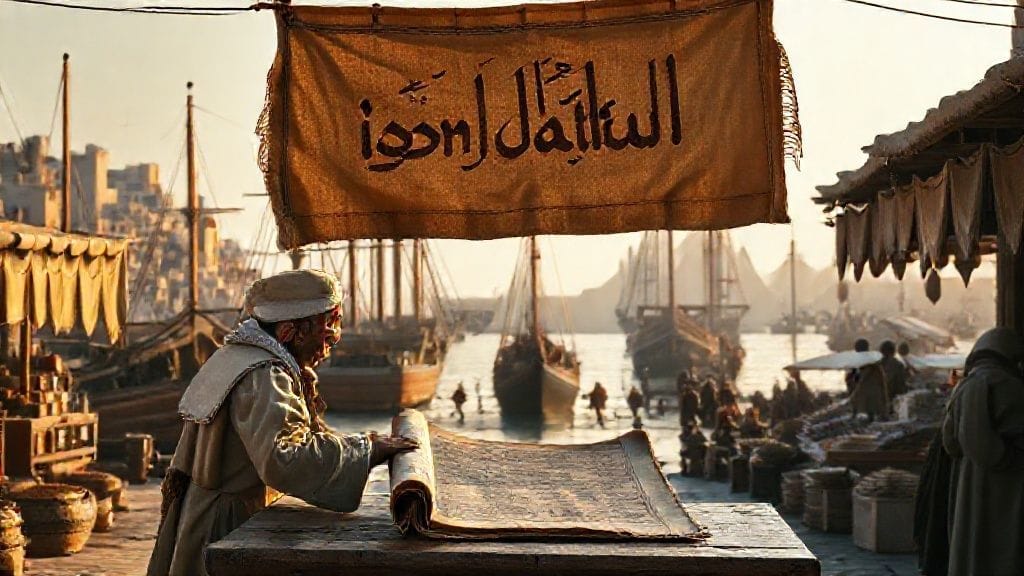
Ibn Battuta’s cherished legacy lies in his "Rihla" — a manuscript that immortalized his journeys with poetic detail and scholarly rigor. Composed under patronage back in Morocco, it offers a sprawling panorama of the 14th century world through the eyes of a keen observer.
The "Rihla" was more than a travel diary; it was a synthesis of geography, politics, religious practice, and human anecdote. Its survival through centuries of turmoil testifies to the profound impact Ibn Battuta’s narratives exerted on historiography and travel literature.
13. Political Reverberations in Morocco following Ibn Battuta’s Passing
Ibn Battuta’s passing coincided with Morocco’s increasing political challenges: mounting pressure from Iberian expansion, internal strife, and shifting trade dynamics. While he did not wield direct political power, his status as a legal scholar lent cultural gravitas to the intellectual circles.
His death marked the loss of a learned figure who bridged distant worlds and Moroccan traditions. The intellectual and diplomatic legacy he left behind contributed subtly but meaningfully to Morocco’s socio-political discourse.
14. The Preservation and Transmission of Ibn Battuta’s Work
The centuries that followed Ibn Battuta’s death saw the gradual dissemination of his manuscript across the Islamic world and beyond. Western explorers and orientalists in later eras would rediscover his accounts, shedding new light on pre-modern global encounters.
Ibn Battuta’s "Rihla" circulated in manuscript form long before printed editions, preserved by scholars and travelers who saw in his narratives a treasure trove of human experience. This transmission ensured his stories would outlive the impermanence of his mortal life.
15. Ibn Battuta’s Influence on Later Explorers and Historians
Throughout history, Ibn Battuta’s journeys provided a template for travel narratives and geographic enquiry. His encyclopedic approach to documenting lands and customs informed subsequent writers, contributing to a long-standing tradition of global exploration.
European explorers, Orientalists, and modern historians alike have drawn from his observations, often inspired by the scale and scope of his travels at a time when crossing the known world was fraught with peril and uncertainty.
16. Death and Memory: Mourning a Global Traveler in a Local Context
While his death may have been quiet, Ibn Battuta’s memory blossomed, particularly in Morocco. Stories of his exploits became embedded in oral histories and written traditions, celebrated by scholars and poets.
He remained, figuratively, a voyager of worlds, while physically he had been laid to rest in a city that both birthed and welcomed him one last time. Mourning Ibn Battuta was not just about loss, but recognition of an extraordinary human achievement placed within a distinctly Moroccan frame.
17. The World Without Ibn Battuta: How Travel Narratives Evolved
Ibn Battuta’s death ushered an era before the age of European maritime expansion. Travel writing evolved rapidly, influenced by explorers who followed in his footsteps, albeit with different aims—empires, colonization, and commerce rather than pilgrimage and legal scholarship.
His works, however, remain a precious relic and guideline for understanding the medieval world’s intricacies, reminding us of a time when travel was as much spiritual as it was corporeal, and knowledge was the most precious cargo.
18. Modern Rediscoveries and Reinterpretations of Ibn Battuta
The 19th and 20th centuries saw a renaissance of interest in Ibn Battuta’s life. Scholars across Morocco, the Arab world, and the West undertook critical studies, translations, and debates over the authenticity and accuracy of his accounts.
Archaeological finds, comparative historical research, and literary analyses continue to enrich our understanding of his journeys, positioning him rightly among the giants of exploration, while also humanizing the man behind the legend.
19. Cultural, Political, and Historical Impacts of His Life and Death
Ibn Battuta’s life challenged prevailing notions of medieval global connectivity, highlighting the dynamic interactions among different cultures and religions. His death symbolized both an end and a perpetuation of an era defined by curiosity and faith.
Politically, while not a ruler or a conqueror, he influenced the intellectual currents of his homeland and beyond. His travels and writings remain powerful tools for intercultural dialogue, deepening our appreciation for Islamic civilization’s historic role in bridging continents.
20. Tangier Today: A City Reminded by the Footprints of History
Modern Tangier honors Ibn Battuta within its vibrant cultural memory. Street names, museums, and public commemorations celebrate his legacy, reminding locals and visitors alike of a man who set out from these shores to traverse an unimaginable world.
The city stands today as a crossroads once more—between continents, cultures, and histories—casting Ibn Battuta’s adventures in a contemporary light and inspiring a renewed spirit of exploration and dialogue.
21. The Eternal Journey: Ibn Battuta’s Enduring Presence in Global Imagination
Ibn Battuta transcended the limitations of his time through unparalleled curiosity and dedication to discovery. Though death in Tangier marked his mortal end, his spirit continues to journey—within pages, stories, and the imagination of countless readers worldwide.
His life embodies the timeless human thirst for knowledge and connection—a shadow stretching across centuries, reminding us that the world is at once vast and intimately connected through the shared stories of those who dare to explore it.
Conclusion
The death of Ibn Battuta in Morocco around 1368/69 closes the remarkable tale of a man whose insatiable wanderlust connected worlds separated by oceans, deserts, and mountains. His final breath in Tangier—the city of his youth—was a poignant reminder that the greatest voyages often come full circle.
Yet, Ibn Battuta did not die into oblivion. Instead, he entered the realm of legend, a beacon for explorers, scholars, and dreamers. His legacy transcends time, language, and culture, reminding us that travel is not simply movement through space, but a journey towards understanding humanity’s shared narrative.
In the quiet streets of Tangier, where his story began and ended, his memory endures—whispering to all who listen the eternal call to adventure, discovery, and reflection.
FAQs
Q1: Who was Ibn Battuta, and why is he significant?
A1: Ibn Battuta was a 14th-century Moroccan scholar and explorer known for his extensive travels spanning from North Africa to Southeast Asia and China. His significance lies in his detailed travelogue, "Rihla," which provides invaluable insights into medieval civilizations and cultures.
Q2: What were the circumstances of Ibn Battuta’s death?
A2: Ibn Battuta is believed to have died naturally in Tangier around 1368 or 1369, after returning from three decades of travel. Specific details remain unclear, but sources agree his death was in his hometown.
Q3: How did Ibn Battuta’s travels influence geography and history?
A3: His detailed observations expanded medieval geographic knowledge and offered perspectives on political and religious diversity, influencing later explorers and historians in both the Islamic world and Europe.
Q4: What is the "Rihla," and why is it important?
A4: The "Rihla" is Ibn Battuta’s travel account, a manuscript that chronicles his journeys, observations, and experiences. It remains a crucial primary source for understanding the social, political, and cultural history of the 14th century.
Q5: How did Morocco, and specifically Tangier, shape Ibn Battuta’s life and death?
A5: As Ibn Battuta’s birthplace and final resting place, Tangier was both the starting point and endpoint of his travels, providing formative cultural, religious, and intellectual contexts that permeated his journeys.
Q6: What legacy did Ibn Battuta leave behind after his death?
A6: Beyond his travelogue, he left a legacy of intercultural dialogue, scholarly pursuit, and the spirit of exploration, influencing travel literature and the understanding of medieval global interconnectedness.
Q7: How is Ibn Battuta remembered today, especially in Morocco?
A7: He is celebrated as a national and Islamic hero, with Tangier honoring his legacy through cultural institutions, and globally he is recognized as one of history’s greatest travelers.
Q8: Have modern historians disputed or confirmed Ibn Battuta’s accounts?
A8: While some stories in his travelogue have been debated, extensive research tends to confirm that Ibn Battuta's narratives are largely authentic, with variations reflecting the era’s oral and written histories.