Table of Contents
- Introduction
- Córdoba in the 12th Century
- Early Life and Education
- Mastery of Islamic Law and Medicine
- Ibn Rushd as a Philosopher
- Commentaries on Aristotle
- Relationship with Islamic Theology
- Controversies and Opposition
- Service at the Almohad Court
- Scientific and Medical Contributions
- Legacy in Islamic Civilization
- Influence on Jewish and Christian Thinkers
- Averroism in Medieval Europe
- Clash Between Faith and Reason
- Writings and Literary Style
- Later Life and Exile
- Death and Burial
- Rediscovery in the Renaissance
- Ibn Rushd’s Lasting Symbolism
- External Resource
- Internal Link
Introduction
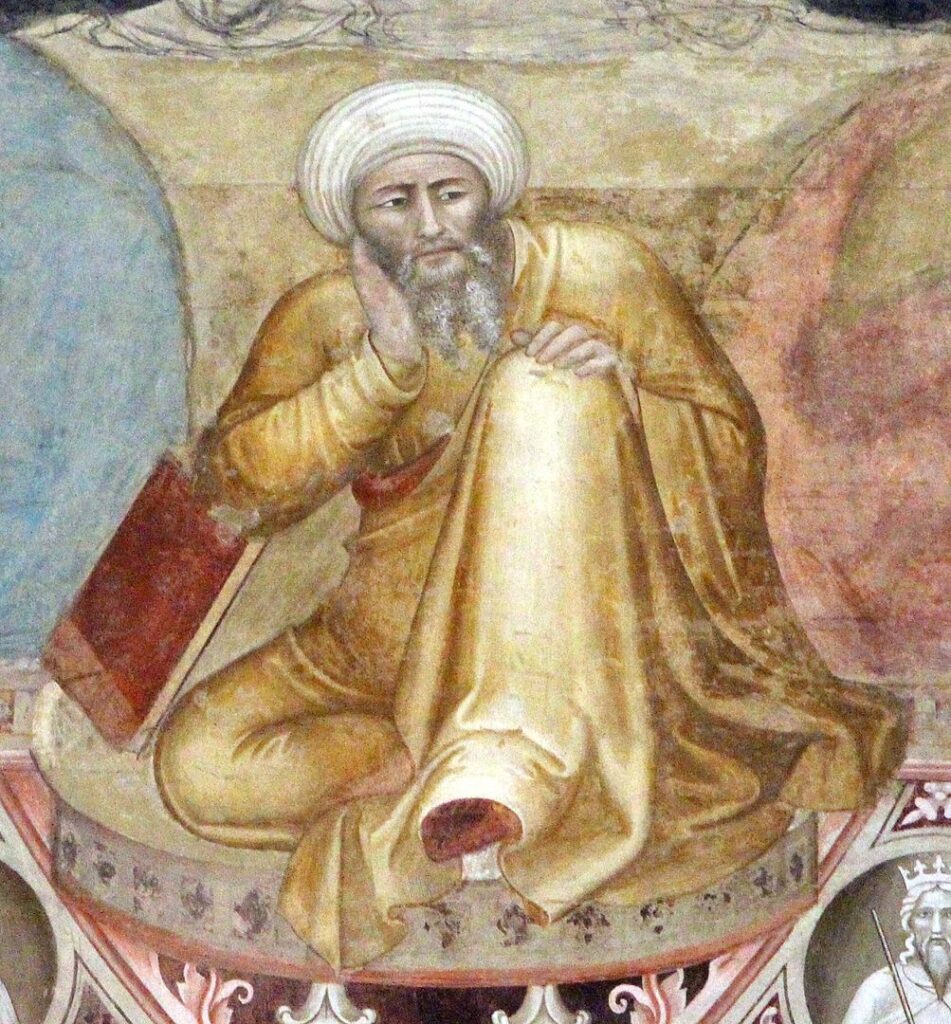
Ibn Rushd biography tells the story of one of the most brilliant minds of the Islamic Golden Age. Known in the West as Averroes, he was born in Córdoba, Spain, on April 14, 1126, during a time when Andalusia was a vibrant center of culture, philosophy, and science. He became a philosopher, jurist, physician, and commentator whose works connected the intellectual traditions of Islam with those of ancient Greece and medieval Europe.
Córdoba in the 12th Century
Córdoba was not just a city; it was one of the most advanced intellectual centers of its era. Libraries, universities, and scholars flourished. Imagine walking through its streets—Arabic calligraphy adorning the walls, discussions of astronomy and law in the markets, and the great mosque standing tall. This was the environment in which Ibn Rushd grew up.
Early Life and Education
Coming from a family of respected judges, Ibn Rushd was destined for scholarship. He studied Islamic jurisprudence, theology, medicine, mathematics, and philosophy. His deep knowledge and intellectual curiosity soon made him stand out among Andalusian scholars.
Mastery of Islamic Law and Medicine
Before gaining fame as a philosopher, Ibn Rushd was recognized as a jurist and physician. He wrote influential works on Islamic law and produced a medical encyclopedia, Al-Kulliyat fi al-Tibb (General Principles of Medicine), which was studied in Europe for centuries.
Ibn Rushd as a Philosopher
Ibn Rushd believed in the power of human reason and intellect. He sought harmony between faith and philosophy, an idea that was radical for his time. He argued that truth could be reached both through revelation and rational inquiry.
Commentaries on Aristotle
Perhaps his most famous contributions were his commentaries on Aristotle. Averroes saw Aristotle as “The First Teacher” and dedicated much of his life to explaining and expanding upon Aristotle’s works. These commentaries were later translated into Latin and Hebrew, influencing Thomas Aquinas, Maimonides, and many others.
Relationship with Islamic Theology
Ibn Rushd walked a delicate line between philosophy and religion. While he believed in God and revelation, he also insisted that reason had a role in understanding divine truth. This stance brought admiration from some but criticism from conservative theologians.
Controversies and Opposition
Not everyone welcomed Ibn Rushd’s ideas. Some religious scholars accused him of undermining faith by giving too much power to human reason. At times, his works were banned, and he faced exile. Yet, his writings survived, often finding more acceptance in Europe than in the Islamic world.
Service at the Almohad Court
Ibn Rushd served as a judge and physician at the court of the Almohad Caliphs. His intellectual brilliance was valued, though politics often placed him in dangerous positions.
Scientific and Medical Contributions
Beyond philosophy, Averroes contributed to astronomy, medicine, and physics. His medical texts were studied alongside those of Hippocrates and Galen in medieval Europe. His precise observations on diseases and treatments showed a balance between theory and practice.
Legacy in Islamic Civilization
Within Islam, Ibn Rushd’s influence was mixed. While some saw him as a dangerous rationalist, others admired his intellectual courage. In later centuries, Muslim reformers rediscovered him as a symbol of rational inquiry within the Islamic tradition.
Influence on Jewish and Christian Thinkers
Ibn Rushd’s writings crossed cultural and religious boundaries. Jewish philosophers such as Maimonides and Christian thinkers like Thomas Aquinas engaged with his ideas. His influence reached Paris, where the University became a hotbed of “Averroism.”
Averroism in Medieval Europe
In Europe, Averroes became a central figure in debates about the relationship between faith and reason. His notion of the “unity of the intellect” was controversial, sparking theological debates that shaped scholastic philosophy.
Clash Between Faith and Reason
At the heart of Ibn Rushd’s thought was the question: Can faith and reason coexist? His answer was yes, but with nuance. He argued that philosophy was not a threat to religion but a deeper path to understanding God’s creation.
Writings and Literary Style
His works ranged from short summaries to long, detailed treatises. His writing style was analytical, precise, and logical, reflecting his training in law and medicine. He valued clarity, believing that philosophy should be a tool accessible to those prepared to study it seriously.
Later Life and Exile
Toward the end of his life, political tides turned against him. He was exiled to a small village near Córdoba, his books temporarily banned. Despite these hardships, he never stopped writing and thinking.
Death and Burial
Ibn Rushd died in 1198 in Marrakesh, Morocco. His body was later brought back to Córdoba, symbolizing his lasting bond with the city of his birth. His funeral reportedly reflected his dual legacy: his coffin was balanced by the weight of his books.
Rediscovery in the Renaissance
During the Renaissance, European scholars rediscovered Ibn Rushd’s works. His rational approach helped fuel the rebirth of science, philosophy, and humanism in Europe.
Ibn Rushd’s Lasting Symbolism
Today, Ibn Rushd is remembered as a bridge-builder between cultures. He symbolizes the power of dialogue between civilizations, the courage to question, and the pursuit of truth through both faith and reason.