Table of Contents
- A Sudden Roar in the Desert: The Night the Earth Trembled
- Setting the Scene: Imperial Valley’s Geographic and Social Landscape
- Tectonic Tensions: The Forces Beneath California’s Surface
- The Prelude: Seismic Activity Before October 15, 1979
- The Earthquake Awakens: Moments of Shock and Chaos
- The Invisible Divide: Calexico and El Centro Under Siege
- Human Stories from the Epicenter: Fear, Survival, and Resilience
- Structural Failures: Buildings, Bridges, and Lifelines Crumble
- The Immediate Response: Firefighters, Medics, and Community Action
- Analyzing the 6.4 Magnitude: Science Meets Witnesses
- Aftershocks and Sleepless Nights: The Lingering Threat
- The Economic Toll: Agriculture, Infrastructure, and Livelihoods
- The Psychological Impact: Trauma Etched into Memory
- Government Intervention: Relief, Reconstruction, and Policy
- The Earthquake’s Legacy: Advances in Seismology and Preparedness
- Then and Now: How Imperial Valley Has Changed Since 1979
- Remembering the Earthquake: Memorials and Oral Histories
- Lessons Learned: The Imperative of Living with Seismic Risk
- The Earthquake in Popular Culture: Stories Told and Retold
- Closing Reflections: Nature’s Fury and Human Tenacity
1. A Sudden Roar in the Desert: The Night the Earth Trembled
On the evening of October 15, 1979, a jarring rumble tore through the still air of southern California’s Imperial Valley. The sky, dark and vast over the desert plains, seemed unchanged at first—until the ground itself began a violent dance almost too swift to comprehend. In homes, factories, and farms, people were jolted awake by a sound unlike any other—a deafening roar, a grinding roar from deep beneath the earth’s crust. The powerful jolt that followed was more than a tremor; it was a primal reminder that the land beneath us is anything but stable.
Lamps shattered, walls cracked or crumbled, and the distant simmer of normal life exploded into chaos. The Imperial Valley Earthquake, though registering a moderate magnitude of 6.4, left its imprint far beyond those few seconds of shaking—etching stories of fear, suffering, courage, and change into the fabric of this desert community.
2. Setting the Scene: Imperial Valley’s Geographic and Social Landscape
Nestled in southeastern California, the Imperial Valley lies in a desert basin carved by natural forces and nourished by the Colorado River’s life-giving waters. Framed by the San Andreas Fault system to the west and the vast Sonoran Desert to the east, this valley is a patchwork of fertile agricultural plots, bustling border towns, and small desert communities. Its principal cities, El Centro and Calexico, form vibrant hubs marked by a mix of cultural influences—American, Mexican, indigenous.
Before the earthquake, Imperial Valley thrived on farming; vast fields of alfalfa, lettuce, and winter vegetables spread across the flatlands, irrigated by extensive canal systems born from early 20th-century engineering marvels. The valley’s population included farmworkers, business owners, and immigrant communities, generating a rich yet fragile social tapestry. Economically vital, the region was also geologically volatile; it sits on a complex network of faults and tectonic boundaries that have shaped both its landscape and its history.
3. Tectonic Tensions: The Forces Beneath California’s Surface
California’s restless earth owes its volatility to the mighty Pacific and North American tectonic plates slowly grinding past each other along the famous San Andreas Fault system. The Imperial Valley finds itself at the southern terminus of this intricate network, where faults such as the Imperial and the Brawley Seismic Zones converge. Here, accumulated tectonic stress periodically releases in the form of earthquakes—sometimes devastating, sometimes barely perceptible.
In 1979, scientific understanding of these fault interactions was advanced but incomplete. The region’s position near the boundary between right-lateral strike-slip motion of the San Andreas and the extensional spreading of the Salton Trough created conditions ripe for earthquakes. The stage was set; it was only a matter of when, not if, the land would remind its inhabitants of its restlessness.
4. The Prelude: Seismic Activity Before October 15, 1979
The weeks and months preceding the earthquake had been marked by a subtle, trembling unrest. Minor earthquakes, often too faint for most to notice, rattled corners of the valley. Local seismographs detected swarms of small tremors, a common phenomenon in seismic hotspots, hinting that the fault was stirring beneath.
For many, however, these signals went unnoticed or were dismissed as typical background noise in a geologically noisy region. Only scientists and emergency planners looked with wary eyes at this whisper of geotectonic murmurs, hoping the earth would settle rather than rupture anew.
5. The Earthquake Awakens: Moments of Shock and Chaos
At precisely 11:16 PM on October 15, a rupture occurred at a shallow depth near the southwestern edge of the Imperial Valley. The main shock radiated outward, producing shaking that persisted for roughly 15 seconds but brought the community to a standstill. The ground shifted so peculiarly that residents described feeling like being rocked in a cradle or rolled on waves of concrete.
Emergency calls flooded dispatch centers as the earthquake triggered power outages, ruptured water mains, and sent thousands rushing into the streets. In Calexico, storefront windows shattered, car alarms blared endlessly, and fears compounded as aftershocks immediately followed the initial jolt.
6. The Invisible Divide: Calexico and El Centro Under Siege
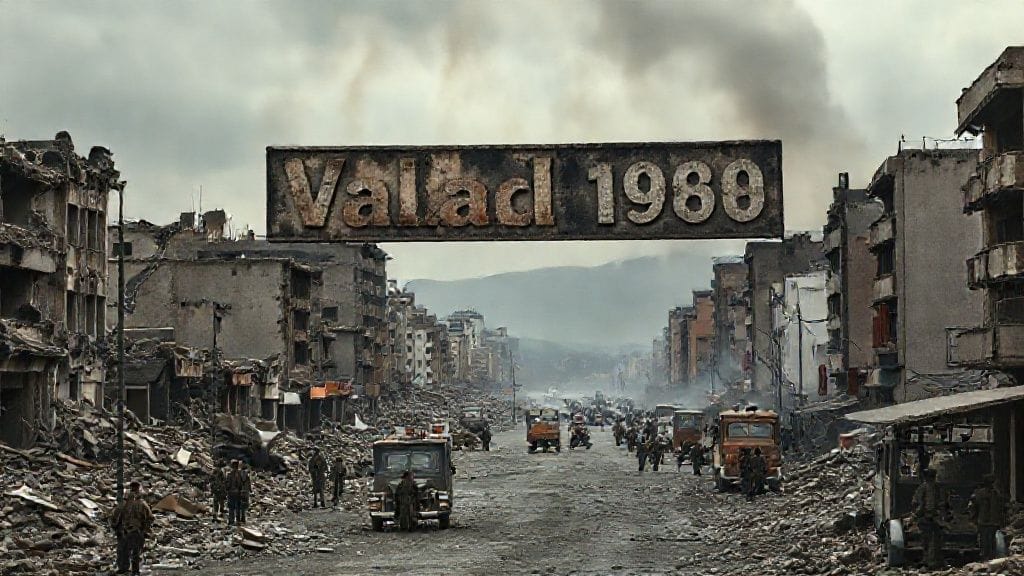
Calexico and El Centro, the two largest cities in the valley, bore the brunt of the earthquake’s fury. Though only about 10 miles apart, the damage exhibited contrasting faces of destruction. Calexico, directly above the epicenter, suffered structural collapses in its downtown district, while El Centro’s sprawling farmland and residential areas experienced widespread but less concentrated damage.
In Calexico, the shaking unmasked vulnerabilities in older buildings — many constructed before seismic building codes were standardized. Schools, hospitals, and government buildings showed cracks and partial ruin, prompting immediate evacuation orders. Meanwhile, El Centro’s vital agricultural infrastructure—irrigation canals, pumping stations—suffered breaks that threatened crops critical to the local economy.
7. Human Stories from the Epicenter: Fear, Survival, and Resilience
Emerging from the rubble and panic were stories of ordinary people caught in extraordinary circumstances—of families clutching children under trembling roofs; of neighbors helping neighbors amid the dust and broken glass. One elderly woman in Calexico recalled, “The house shook like a leaf caught in a storm. I thought the roof was coming down, but all I could do was hold onto my grandchildren and pray.”
Volunteer firefighters navigated chaotic streets to reach trapped individuals. A young agricultural worker, separated from his family in the confusion, wandered through cracked fields illuminated by flickering streetlights, calling out in desperation. Yet among chaos arose resilience: makeshift shelters appeared, community kitchens provided meals, and voices united in the resolve to rebuild.
8. Structural Failures: Buildings, Bridges, and Lifelines Crumble
The earthquake exposed the fragile underbelly of the Imperial Valley’s infrastructure. Several commercial buildings collapsed or faced structural failure, particularly those made of unreinforced masonry. The Calexico post office partially crumbled, and sections of Highway 111 displayed cracks and fissures that impeded emergency travel.
Water distribution pipelines ruptured, causing serious disruptions in the valley’s precisely managed irrigation network. Power lines fell, plunging neighborhoods into darkness and complicating emergency response efforts. The damage numbers mounted quickly, painting a grim picture of vulnerability in a region whose economy depended heavily on the health of its physical assets.
9. The Immediate Response: Firefighters, Medics, and Community Action
Despite the suddenness of the quake, local response teams mobilized swiftly. Firefighters battled small fires ignited by ruptured gas lines, while paramedics tended to hundreds of injured victims, ranging from minor cuts to serious fractures. Hospitals in El Centro stretched their capacities, witnessing a surge in emergency admissions.
Community groups and volunteers organized to clear debris and check on senior citizens isolated by the shaking. The Red Cross established emergency shelters as dozens of families found their homes unsafe. The disaster was met not only by institutional action but by a remarkable grassroots solidarity that would define recovery efforts in the weeks to come.
10. Analyzing the 6.4 Magnitude: Science Meets Witnesses
Though rated at a moderate 6.4 magnitude, the Imperial Valley Earthquake’s effects served as a reminder that intensity and impact can differ based on location, depth, and geological conditions. Scientists noted that the earthquake’s shallow depth—about 10 kilometers beneath the surface—amplified the shaking felt in nearby towns.
Seismologists also examined the focal mechanism, confirming the earthquake resulted from strike-slip faulting consistent with regional tectonics. Research from this event contributed invaluable data to the understanding of rupture propagation in the Imperial Fault Zone, fueling seismic hazard models that influence California’s ongoing earthquake preparedness.
11. Aftershocks and Sleepless Nights: The Lingering Threat
In the hours, days, and months following the main shock, the Imperial Valley continued to shudder. Numerous aftershocks, many registering above magnitude 4, rattled nerves and buildings alike. These tremors prevented many from returning safely to damaged homes and increased anxiety across the valley.
Residents described nights filled with trembling beds and the ominous feeling that the earth was far from done. Scientists used this sequence to study how stress transfers along faults after a major quake, deepening global knowledge about earthquake sequences and foreshock/aftershock behavior.
12. The Economic Toll: Agriculture, Infrastructure, and Livelihoods
Beyond physical damage, the earthquake inflicted a heavy economic burden. Imperial Valley’s fertile fields, crucial contributors to California’s agriculture, faced irrigation disruptions from broken canals and pumps. Some crops suffered from temporary water shortages during a critical growing period.
Business interruptions, repair costs, and labor displacement affected many families and enterprises. Estimates placed total losses in millions of dollars—a daunting figure for a predominantly rural community. Yet these economic scars also sparked initiatives to better insulate the valley’s economy from future seismic shocks.
13. The Psychological Impact: Trauma Etched into Memory
Earthquakes leave more than fractured earth; they leave fractured minds. Many residents reported post-traumatic stress symptoms—increased anxiety, fear of recurrence, sleep disturbances—that often went unaddressed in the immediate aftermath. Children were particularly vulnerable, their understanding of the quake shaped by months of unease.
Community counseling efforts and mental health outreach slowly emerged as part of the recovery process, underscoring an often overlooked aspect of natural disaster aftermaths: the invisible wounds carried within.
14. Government Intervention: Relief, Reconstruction, and Policy
State and federal governments responded with aid packages, grants, and rebuilding funds aimed at restoring essential services and residences. Emergency declarations unlocked financial resources, while engineering assessments informed reconstruction mandates focusing on seismic safety.
Importantly, the earthquake acted as a catalyst for California to update and enforce stricter building codes. These regulations sought to prevent similar destruction in future quakes, embedding lessons learned directly into construction practices statewide.
15. The Earthquake’s Legacy: Advances in Seismology and Preparedness
The scientific insights derived from the 1979 Imperial Valley Earthquake significantly contributed to the field of earthquake engineering and seismology. Detailed analyses of the fault rupture and aftershock sequence informed probabilistic seismic hazard assessments.
At a community level, awareness programs, educational campaigns, and early-warning research took momentum. The event underscored the imperative to balance growth and safety in vulnerable regions, setting a precedent for disaster preparedness that continues to resonate.
16. Then and Now: How Imperial Valley Has Changed Since 1979
Over four decades later, Imperial Valley has grown in population and complexity, but its relationship with seismic risk remains vigilant. Bridges and buildings incorporate seismic-resistant designs, emergency drills are routine, and community resilience models emphasize readiness.
Still, the deep imprint of the 1979 quake remains—a historical marker reminding generations of nature’s power, fragile human constructs, and the enduring spirit of those who endure and rebuild.
17. Remembering the Earthquake: Memorials and Oral Histories
Within local museums and community centers, exhibits preserve photographs, testimonies, and artifacts from the earthquake. Oral histories recorded by local historians keep alive the personal experiences that numbers alone cannot convey.
Public memorial events periodically convene survivors and their descendants, honoring lives disrupted and lessons learned. This collective memory serves both as tribute and cautionary tale.
18. Lessons Learned: The Imperative of Living with Seismic Risk
The Imperial Valley Earthquake of 1979 teaches that life on a restless planet requires preparedness, respect for geology, and community solidarity. It reminds us that no building or plan is infallible, and that human safety depends on constant vigilance, science, and cooperation.
Disaster survivors and policymakers alike have emphasized these lessons, making survival not just chance, but a circumstance actively shaped by knowledge and action.
19. The Earthquake in Popular Culture: Stories Told and Retold
Though not as famous as the San Francisco quake of 1906 or the Northridge quake decades later, the Imperial Valley event has inspired local art, literature, and folklore. Songs, poems, and short stories evoke that frightening night and the desert shaken awake.
Through these cultural forms, the earthquake’s story extends beyond geophysical records, touching the emotional and social dimensions that define historical memory.
20. Closing Reflections: Nature’s Fury and Human Tenacity
The 1979 Imperial Valley Earthquake was a sudden awakening—an elemental reminder that beneath the earth lies a powerful and unpredictable force. Yet, in the shadow of destruction, it brought forth acts of courage, kindness, and perseverance that transcend the tremors.
It is a story of a community shaken but not broken, of science and society united in vigilance, and of our enduring relationship with a dynamic, living planet.
Conclusion
The Imperial Valley Earthquake of October 15, 1979, stands as a poignant chapter in California’s seismic history. Though only lasting moments, its impact stretched far into the physical, economic, and emotional realms of the region’s inhabitants. It is a testament to the fragile coexistence between human endeavor and natural forces.
Through the rubble and fear emerged a renewed commitment to understanding, preparedness, and resilience—a legacy as vital as any foundation stone. As the desert winds continue to blow across the valley, the earth beneath remains alive with memory and possibility, reminding all who live there that beneath the quiet surface lies a story still unfolding.
FAQs
What caused the 1979 Imperial Valley Earthquake?
The earthquake was caused by a sudden rupture along the Imperial Fault, part of the larger San Andreas Fault system, due to tectonic stress between the Pacific and North American plates.
How strong was the earthquake?
It registered a magnitude of 6.4, which is classified as moderate but was especially impactful due to its shallow depth and proximity to populated areas.
Which areas were most affected by the earthquake?
The cities of Calexico and El Centro bore the brunt of the damage, with Calexico experiencing more structural collapses and El Centro facing agricultural infrastructure disruptions.
How did the community respond immediately after the earthquake?
Local emergency services mobilized quickly to manage fires, injuries, and evacuations. Community solidarity and volunteer efforts also played a crucial role in rescue and recovery.
What lessons did California learn from this earthquake?
The event underscored the need for stricter building codes, improved emergency preparedness, enhanced seismological research, and public education on earthquake hazards.
Has Imperial Valley become safer since the earthquake?
Yes, advances in engineering, stricter regulations, and ongoing community readiness efforts have increased resilience, though seismic risk remains an inherent challenge.
Are there memorials commemorating the earthquake?
Yes, local museums and historical societies maintain exhibits, and oral histories preserve personal accounts, keeping the memory of the quake alive.
How did this earthquake impact scientific research?
It provided invaluable data on fault rupture, aftershock patterns, and ground motion that have contributed to improved seismic hazard models and earthquake engineering worldwide.