Table of Contents
- The Dawn of Independence: The Morning of August 7, 1819
- The Spanish Empire and the Struggle for New Granada
- Seeds of Rebellion: The Political and Social Context before 1819
- Simón Bolívar: The Liberator’s Vision and Determination
- The Campaign to Boyacá: Marching through the Andes
- The Battles Leading to Boyacá: Skirmishes and Strategy
- The Clash at Boyacá: A Decisive Encounter
- The Turning Point: How Boyacá Shifted the Course of History
- The Role of Local Leaders and Indigenous Peoples
- Aftermath: The Collapse of Spanish Authority in New Granada
- Impact on the Wider Independence Movements in South America
- The Human Toll: Soldiers, Civilians, and Families
- Political Restructuring: From Colony to Republic
- National Symbols Born from Battle and Sacrifice
- Cultural Memory: Boyacá in Colombian Identity and Historiography
- The Legacy of Boyacá and Bolívar in Modern Latin America
- Controversies and Myths Surrounding the Battle
- International Repercussions: Spain, Britain, and the Americas
- Economic Shifts Following Independence
- Reflections on Freedom: Voices from Both Sides of the Conflict
- Boyacá Today: Monuments, Celebrations, and Education
- Conclusion: Freedom Carved in the Highlands of New Granada
- Frequently Asked Questions
- External Resource
- Internal Link
1. The Dawn of Independence: The Morning of August 7, 1819
The sun rose over the mist-laden hills of Boyacá that day with an intensity that seemed to portend change, a promise whispered by the mountains themselves. It was a morning charged with an electricity beyond mere weather—thousands of soldiers, faces etched with resolve and exhaustion, braced themselves for what would be remembered as a decisive turning point in the fight for South American independence. The glimmer of rifles, the fluttering of flags, and the pounding march of boots blended into a tense symphony. It was August 7, 1819—the day when the destiny of New Granada, a land wrapped in colonial chains for centuries, would be forever altered.
Imagine the air thick with anticipation, the sighs of soldiers, the weight of muskets, and the steady code of commands slicing through the cool mountain breeze. Across the rugged terrain, armies loyal and rebellious readied themselves to challenge the old world order one last time. The Battle of Boyacá was not just a fight for territory but the embodiment of a dream—freedom articulated in gunpowder and blood. The echoes of that morning thunder still resonate, setting the stage for a profound transformation that would ripple through the continent and the centuries to come.
2. The Spanish Empire and the Struggle for New Granada
New Granada, a sprawling viceroyalty nestled in the northern Andes—today’s Colombia, Ecuador, Panama, and Venezuela—had, for centuries, been a jewel in Spain’s imperial crown. Its riches came from the fertile highlands, the mineral veins beneath the earth, and the thriving, often exploited, indigenous populations. Yet beneath the surface of prosperity brewed discontent. The Spanish monarchy, distant and often indifferent, governed with a strict hand, enforcing mercantilist policies and colonial hierarchies that deepened social fissures.
By the dawn of the 19th century, Spain itself was embroiled in crisis. The invasion by Napoleon Bonaparte and the abdication of King Ferdinand VII in 1808 fractured imperial control, creating a political vacuum ripe for contestation. Across the Atlantic, whispers of Enlightenment ideals reverberated in secret meetings and clandestine writings. Men and women dreamed of a New Granada unshackled, dreaming of equality, representation, and justice. But loyalty and fear kept many bound to the old regime, wary of chaos or retribution.
The struggle was not just a battle against a foreign crown—it was a confrontation between two worlds: tradition and modernity, empire and nascent nationhood, submission and sovereignty.
3. Seeds of Rebellion: The Political and Social Context before 1819
Decades of tension preceded Boyacá. The creole elite—American-born Spaniards—found themselves marginalized by peninsulares, Spaniards born in Europe who held the highest offices. This social antagonism spurred political debates, gradually escalating from petitions for equality to armed rebellion.
Revolutionary ideas from Europe and the United States invaded local consciousness, inspiring figures such as Francisco de Paula Santander and Antonio Nariño, who boldly challenged the colonial order. However, New Granada’s path was staggered, marred by internal divisions—royalists loyal to the crown, federalists seeking regional autonomy, and radicals pushing for outright independence.
Fierce civil wars between these factions ravaged the land, with foreign invasions and the inexorable Spanish attempts to reconquer uprisings. Each battle, each skirmish was a microcosm of a greater ideological and existential conflict—freedom or subjugation.
Orchestrating above these fragmented forces was Simón Bolívar, whose charisma and strategy would coalesce fractured hopes into a liberation campaign of unprecedented scale.
4. Simón Bolívar: The Liberator’s Vision and Determination
Born into a wealthy creole family in Caracas, Simón Bolívar was more than a soldier; he was a visionary molded by tragedy, enlightenment, and exile. His travels in Europe exposed him to revolutionary fervor—the echoes of the French Revolution and the American War of Independence shaped his resolute belief that Latin America must chart its own destiny.
In New Granada, Bolívar’s return in 1819 was charged with urgency. His “Admirable Campaign”—a daring, near-impossible military march through the Andean mountains—injected new hope into the faltering independence cause. Bolívar was not only a military commander but a prophet of liberty; his speeches stirred hearts, his guerrilla tactics bewildered enemies accustomed to conventional warfare.
Perhaps his most renowned declaration rings through time: “The freedom of a nation is the happiness of all.”
Bolívar’s leadership was both pragmatic and idealistic, balancing swift military maneuvers with a dream of continental unity that would later fuel the creation of Gran Colombia.
5. The Campaign to Boyacá: Marching through the Andes
The physical challenge of the liberation campaign was staggering. Bolívar and his troops traversed over 1,000 kilometers from Venezuela into New Granada, through misty mountain passes, sweltering plains, and treacherous river valleys. Harsh weather and scarce supplies tested their endurance; many fell ill, others deserted.
The crossing of the Andes—often compared to Napoleon’s famed Alpine journey—was a logistical and human feat. Troops braved altitude sickness, starvation, and the looming threat of Spanish forces pursuing them. Yet the campaign thrived on surprise and stamina: the Spanish did not expect such an audacious advance deep into their strongholds.
This perilous journey forged a brotherhood among soldiers and commanders alike. Every step closer to Boyacá was a step toward liberation.
6. The Battles Leading to Boyacá: Skirmishes and Strategy
Before the decisive clash at Boyacá Bridge, Bolívar’s forces engaged in several critical encounters that softened Spanish defenses. The tactical brilliance of his lieutenants, such as General José Antonio Anzoátegui and Colonel Atanasio Girardot, complicated royalist movements.
Skirmishes in places like Cúcuta and Santafé de Bogotá disrupted communications and supply lines. The Spanish troops, confident but stretched thin, struggled against the unpredictable momentum of Bolívar’s campaign. Guerrilla fighters provided vital intelligence and harried rear guards.
Each victory and setback carved a chaotic battlefield where geography and local support often dictated outcomes as much as military prowess.
7. The Clash at Boyacá: A Decisive Encounter
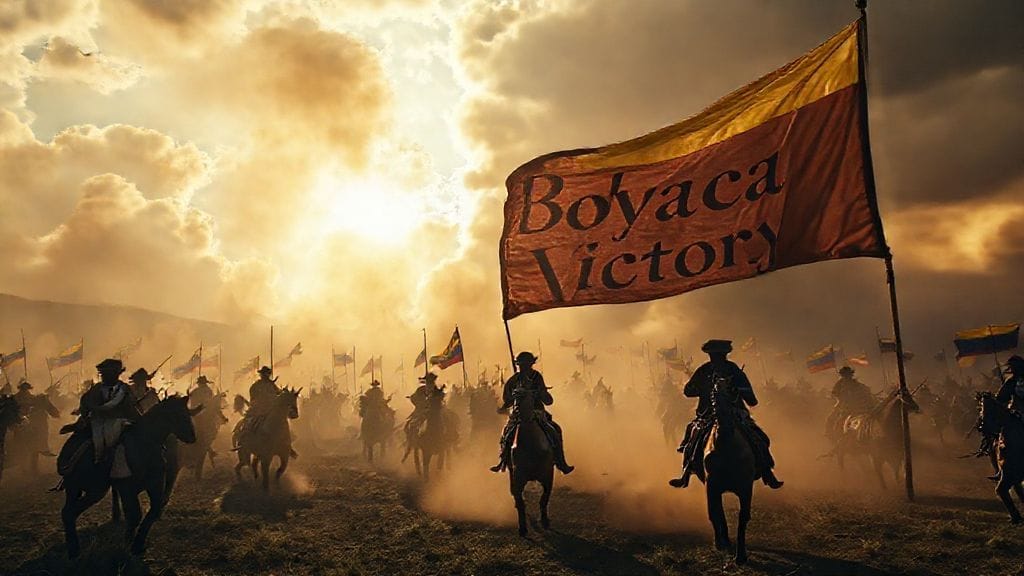
On August 7, 1819, near the Boyacá Bridge spanning the Teatinos River, fate converged for the final time before independence. Bolívar’s army faced Spanish General José María Barreiro’s column in a contest that would effectively end Spanish dominion over New Granada.
The battle itself lasted mere hours but was intense—a symphony of cannon fire, saber clashes, and musket volleys. Bolívar’s forces executed a masterful maneuver: cutting off enemy retreat paths and overwhelming scattered royalist units.
As the royalist army crumbled, Barreiro surrendered—an event marking an irreversible shift. The psychological shock sent waves through royalist ranks and invigorated patriots. Boyacá was not just a battlefield; it was a crucible where liberty was forged in fire and courage.
8. The Turning Point: How Boyacá Shifted the Course of History
This victory was more than military—it was symbolic. The capture of Bogotá followed swiftly, severing the Spanish grip on the viceregal capital. Royalist resistance collapsed, and New Granada’s independence swelled from an aspiration to reality.
The Battle of Boyacá inaugurated the "Republic of New Granada," setting in motion the creation of Gran Colombia, encompassing Venezuela, Ecuador, and Panama. It inspired sister movements in Peru and across Latin America, proving that empire could be overcome.
Boyacá demonstrated the potency of unity, perseverance, and visionary leadership—elements that would be replayed in liberation struggles worldwide.
9. The Role of Local Leaders and Indigenous Peoples
While Bolívar looms large in historical memory, the independence movement was deeply collaborative. Local creole leaders, indigenous fighters, mestizos, and freed slaves were integral. Guerilla bands and militias provided crucial support, knowledge of terrain, and manpower.
Figures such as José Hilario López and Policarpa Salavarrieta, though less globally renowned, embody the diverse threads of resistance. Indigenous communities, often torn between allegiances, saw in the rebellion a chance for dignity and rights, though promises would remain only partially fulfilled.
This mosaic of actors reflects the complexity beneath the grand narrative—a multifaceted fight for liberation, steeped in social transformation.
10. Aftermath: The Collapse of Spanish Authority in New Granada
Following Boyacá, Spanish royalists retreated into isolated strongholds. The viceroy, Juan de Sámano, capitulated, marking the effective end of colonial administration. The independence movement faced its own challenges—building governance, reconciling factions, and stabilizing economies ravaged by decades of war.
Yet the momentum was unstoppable. The path from colony to republic, though fraught with conflict, had been irrevocably paved. Soon a new flag flew over Bogotá, emblematic of a fresh political dawn.
11. Impact on the Wider Independence Movements in South America
Boyacá’s reverberations transcended New Granada. It bolstered the revolutionary cause in neighboring Venezuela, Ecuador, Peru, and beyond. Bolívar, energized by this triumph, pursued further campaigns culminating in the liberation of vast territories from Spanish control.
Foreign powers watched with interest; Britain's tacit support and the weakening of Spanish maritime power reshaped geopolitical dynamics. A new era dawned—one in which colonial empires began to fade and nation-states rooted in self-determination emerged.
12. The Human Toll: Soldiers, Civilians, and Families
Beyond grand strategy and politics lay human costs rarely captured in broad narratives. Thousands perished—soldiers succumbed to battle wounds, illness, and exhaustion. Civilians endured hardships through scorched-earth tactics, forced migrations, and economic disruption.
Families lived with uncertainty: fathers gone to fight, children orphaned, communities fragmented. Yet amid loss bloomed resilience and hope, an enduring testament to human spirit. Memoirs and letters from the time reveal intimate stories of courage, despair, and love entwined in the chaos.
13. Political Restructuring: From Colony to Republic
The victory at Boyacá propelled the establishment of republican institutions, a radical break from monarchical rule. Constitutions were drafted, citizenship redefined, and attempts made to implement separation of powers. Leaders grappled with federalism versus centralism—an ongoing debate shaping Colombia’s political landscape.
Moreover, emancipation debates moved forward, including the delicate question of slavery, illustrated by gradual abolition policies in the nascent republic. Boyacá hence was not just a military milestone but the opening act of a national political rebirth.
14. National Symbols Born from Battle and Sacrifice
Boyacá propelled not only political transformation but cultural symbolism. The battle’s site became a sacred ground; monuments were erected to honor valor. The crossing of Boyacá Bridge turned into an iconic act representing liberation.
National anthems, flags, and public holidays commemorate the sacrifice. These symbols foster collective identity, reminding citizens of the price of freedom and the heroes who forged it.
15. Cultural Memory: Boyacá in Colombian Identity and Historiography
In Colombian collective memory, Boyacá is enshrined as a founding myth. It is taught in schools, celebrated in festivals, and commemorated in literature and art. However, historiography has evolved, challenging romanticized versions by incorporating nuance—examining indigenous roles, internal conflicts, and socioeconomic impacts.
This dynamic remembrance reflects modern Colombia’s ongoing dialogue with its past, balancing pride with critical reflection.
16. The Legacy of Boyacá and Bolívar in Modern Latin America
Today, Bolívar is venerated as a symbol of unity and emancipation across Latin America. Boyacá’s triumph resonates in narratives of resistance against oppression worldwide. Yet it also offers lessons on the complexities of post-colonial governance and the challenges of creating inclusive nations.
The Liberator’s dream remains a beacon and a challenge—a reminder that independence is a beginning, not an end.
17. Controversies and Myths Surrounding the Battle
Like many historic events, Boyacá is shrouded in myths: tales of last-minute heroics, betrayal, or miraculous visions. Some narratives exaggerate Bolívar’s role, sidelining other contributors. Others romanticize the unity of rebels, casting aside deep-seated internal divisions.
Historians continue to sift fact from legend, striving for balanced perspectives that acknowledge multiple voices and complexities.
18. International Repercussions: Spain, Britain, and the Americas
Boyacá’s success hastened the decline of Spain’s American empire, altering global power balances. Britain’s emerging naval dominance and commercial interests favored the independence movements, hoping to open new markets.
The United States watched cautiously, initially reluctant to endorse new nations but later recognizing their strategic importance. This period marked a pivot from colonial empires to a system of nation-states influenced by competing powers.
19. Economic Shifts Following Independence
The fall of Spanish control disrupted established trade networks but also opened opportunities. New Granada sought to diversify its economy beyond colonial mercantilism—encouraging agriculture, mining, and nascent industry.
However, war debts, infrastructural damage, and political instability hampered growth. Economic emancipation became as arduous as political freedom, with a legacy of inequality persisting into modern times.
20. Reflections on Freedom: Voices from Both Sides of the Conflict
Letters and diaries reveal that some Spanish loyalists saw their cause as defense of legitimate order and faith, not mere oppression. Patriots shared a vision of justice and equality but struggled with practical realities.
This human dimension complicates simplistic narratives of good versus evil, illustrating that history is woven from intertwined destinies shaped by circumstance and conviction.
21. Boyacá Today: Monuments, Celebrations, and Education
Every August 7th, Colombians commemorate the Battle of Boyacá with ceremonies, military parades, and patriotic gatherings. The Boyacá Bridge is a national monument, preserved as a site of pilgrimage and education.
Museums and schools teach the story with renewed attention to diversity and inclusivity, inspiring new generations to appreciate their shared heritage.
22. Conclusion: Freedom Carved in the Highlands of New Granada
The Battle of Boyacá was more than a clash of muskets and sabers; it was a forging moment where ideals met reality. With sweat, blood, and courage, a nation birthed itself amid the rugged majesty of the Andes. Simón Bolívar’s campaign encapsulated a universal struggle for dignity and self-determination that resonated far beyond the misty valleys of Boyacá.
Today, we honor not just the heroes but the very spirit of liberty they enshrined—an enduring testament to the human quest for freedom against overwhelming odds. The echoes of that August day remind us that history is alive, shaped by choices that challenge us still.
Frequently Asked Questions
Q1: Why was the Battle of Boyacá so pivotal in South American independence?
A1: It marked the decisive defeat of Spanish forces in New Granada, effectively ending colonial rule in the region and catalyzing the creation of independent republics in northern South America.
Q2: Who was Simón Bolívar and what role did he play in the battle?
A2: Bolívar was the revolutionary leader known as “El Libertador.” His strategic genius and leadership led the independence army to victory at Boyacá, cementing his status as a foundational figure in Latin American liberation.
Q3: How did the geography of the Andes influence the campaign leading to Boyacá?
A3: The challenging mountain terrain made the campaign difficult but also allowed Bolívar to surprise Spanish forces, using knowledge of the landscape to outmaneuver the enemy.
Q4: What was the impact of the battle on indigenous and local communities?
A4: Indigenous and local militias often supported the patriots, contributing to the liberation struggle, though their hopes for autonomy and rights were only partially realized after independence.
Q5: How is the Battle of Boyacá commemorated in Colombia today?
A5: It is a national holiday celebrated with ceremonies, military parades, and educational events, honoring the sacrifice and heroism that led to national sovereignty.
Q6: Did the victory at Boyacá immediately lead to peace and stability?
A6: No. After the battle, the new republic faced ongoing challenges, including internal divisions, economic hardship, and the complex task of nation-building.
Q7: How did the Battle of Boyacá influence other independence movements in Latin America?
A7: It inspired similar liberation efforts, proving Spanish colonial forces could be defeated and reinforcing Bolívar’s vision of a united continent.
Q8: Are there any myths commonly associated with the Battle of Boyacá?
A8: Yes, many tales exaggerate Bolívar’s heroics or depict a unanimous patriotic front, when in fact the conflict was more complex with internal rivalries and multiple actors.