Table of Contents
- The Dawn of a New Nation: Montevideo on August 27, 1828
- The Colonial Shadow: Uruguay under Spanish and Portuguese Rule
- The Seeds of Revolt: Early 19th Century Struggles in the Río de la Plata
- The Banda Oriental’s Crossroads: Between Empires and Independence
- José Gervasio Artigas: Father of Uruguayan Identity
- The Cisplatine War: Struggle Between Brazil and Argentina Over Uruguay
- Diplomatic Chessboard: British Mediation and the Quest for Peace
- The Treaty of Montevideo: Birth Certificate of Uruguay
- The Official Recognition: August 27th and Its Symbolism
- Montevideo’s Streets: Celebrating Freedom and Uncertainty
- Nation-Building Amidst Fragility: Early Political Challenges
- Uruguay’s Economic Foundations: From Pastoral Lands to Port City
- Cultural Birth and Identity: Language, Traditions, and National Mythos
- The Regional Impact: How Uruguayan Independence Shifted South America
- Uruguay in the Global Context: Recognition by Major Powers
- The Human Cost: War, Division, and Reconciliation
- Stories from the People: Voices of the Revolution and Aftermath
- The Legacy of 1828: National Holidays and Memory
- Reflections on Sovereignty: Uruguay’s Ongoing Quest
- Conclusion: Independence as a Promise and a Challenge
- FAQs: Delving Deeper into Uruguay’s Independence
- External Resource
- Internal Link
The Dawn of a New Nation: Montevideo on August 27, 1828
The air in Montevideo was thick with anticipation, the salty breeze carrying whispers of change. For weeks, the city had seemed caught in a quiet tension—streets still bustling but hearts restless. On August 27, 1828, beneath the waning sun casting golden hues over the Plaza Independencia, the long and brutal fight for the sovereignty of the Banda Oriental came to a head. A proclamation echoed through the city: Uruguay’s independence was finally recognized. This was no ordinary dawn—it was the birth of a nation, forged amid rivalries, wars, and dreams for a new beginning.
The Colonial Shadow: Uruguay under Spanish and Portuguese Rule
To understand the significance of Uruguay’s independence, one must journey back to the colonial era, where the Banda Oriental was a contested gem in the Spanish and Portuguese imperial crowns. Originally inhabited by indigenous Charrúa peoples, the territory became a playground of European clashes. Spain claimed the land as part of the Viceroyalty of the Río de la Plata, while Portugal eyed it from across the Uruguay River. The ambiguous borders fostered a climate of skirmishes, shifting alliances, and transient governments.
Throughout the 17th and 18th centuries, Montevideo developed as a strategic port, furthering colonial ambitions but also becoming a crucible for local identity. It was a place where Creoles—Americans of European descent—and indigenous communities experienced a complex reality of exploitation, cultural interchange, and slowly burgeoning resistance against colonial control.
The Seeds of Revolt: Early 19th Century Struggles in the Río de la Plata
The dawn of the 19th century ignited revolutionary flames across Latin America. The Napoleonic Wars weakened Spain's grip, and ideas of liberty, equality, and self-rule infiltrated even the distant Río de la Plata. The Banda Oriental, though peripheral, was not immune. Inspired by the May Revolution of 1810 in Buenos Aires, local leaders envisioned a future free from imperial yoke.
However, geography complicated this dream. Nestled between rising powers—Argentina to the west and an expanding Brazil to the north and east—the Banda Oriental’s fate hung in balance. The territory was both a prize and a liability, caught in the tides of regional rivalry.
The Banda Oriental’s Crossroads: Between Empires and Independence
The early independence movements were paradoxical. Local leaders wanted freedom but were divided on alliances. José Gervasio Artigas, the legendary figure, championed a federalist vision that celebrated local autonomy and equitable land use, clashing with centralist ideas emerging from Buenos Aires.
Meanwhile, Brazil, having declared independence from Portugal in 1822, coveted the Banda Oriental, annexing it as the Cisplatina Province. This sparked the Cisplatine War (1825-1828), a brutal and protracted conflict between the United Provinces of the Río de la Plata (Argentina) and the Empire of Brazil.
José Gervasio Artigas: Father of Uruguayan Identity
Artigas remains a towering figure in Uruguay’s story—revered as the father of national identity. His commitment to social justice, indigenous rights, and regional autonomy made him a symbol of resistance. Even as political tides shifted, his ideas persisted in shaping Uruguay’s self-image as a nation born not just of independence but of egalitarian aspirations.
Though Artigas spent his final years in exile, his vision echoed in the independence movement, inspiring leaders and common people alike.
The Cisplatine War: Struggle Between Brazil and Argentina Over Uruguay
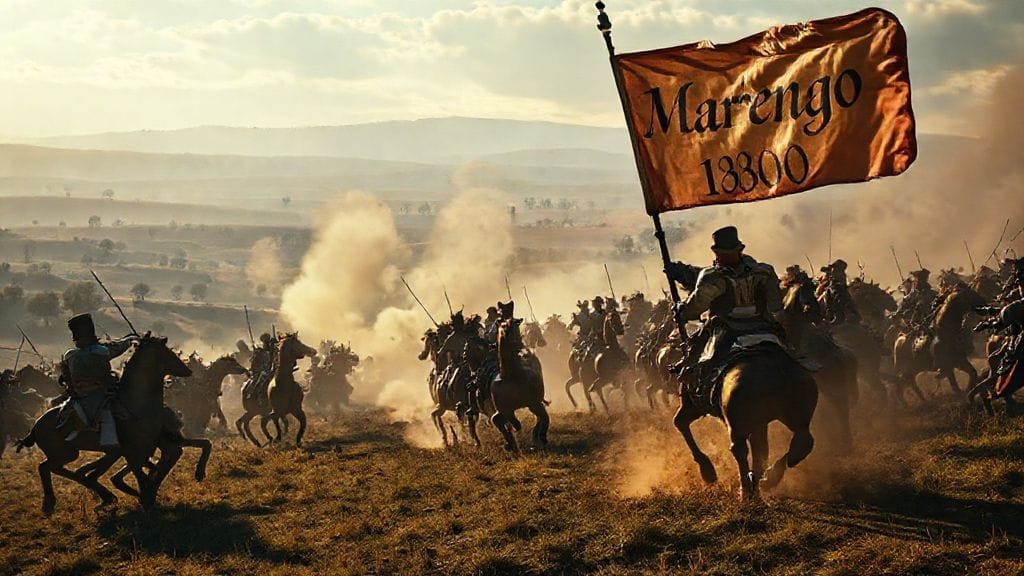
The war was a crucible of hardship and heroism. Small bands of guerrilla fighters, known as the “Orientals,” challenged the might of Brazilian forces. Battles like the Siege of Montevideo tested the resolve of every community, soldier, and family.
Yet neither side could decisively claim victory. The protracted conflict drained resources and fomented unrest. Economic blockades strangled trade, famine took root, and political factions wrestled for control.
Diplomatic Chessboard: British Mediation and the Quest for Peace
As the war dragged on, Britain—concerned about stability and trade routes in the region—stepped in as a mediator. British diplomats brokered negotiations leading to the Treaty of Montevideo on August 27, 1828.
This treaty was a diplomatic compromise: neither Brazil nor Argentina would annex the Banda Oriental. Instead, an independent nation would emerge—Uruguay. This settlement reflected the geopolitical realities of the time, as well as Britain’s desire for a neutral buffer state maintaining regional commerce and stability.
The Treaty of Montevideo: Birth Certificate of Uruguay
The Treaty was revolutionary, not just in its political implications but in what it represented—a new kind of sovereignty born not from outright conquest but from international diplomacy and local perseverance.
Article by article, the treaty defined Uruguay as a free, sovereign nation with defined borders and a promise of non-aggression. It was a fragile peace, but a crucial one.
The Official Recognition: August 27th and Its Symbolism
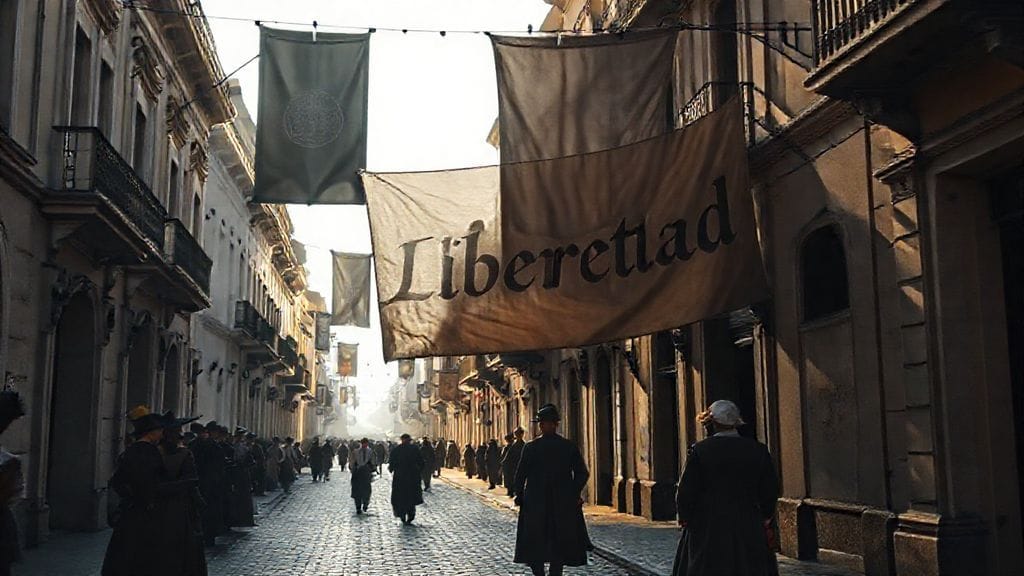
The ratification on August 27, 1828, was more than a legal formality. It was a moment charged with hope and anxiety. Citizens of Montevideo, dressed in their Sunday best, gathered in the plazas, exchanging embraces and tears. The guns that once roared in battle were silenced, replaced by the melodies of hymns and patriotic songs that echoed down narrow cobblestone streets.
Flags fluttered, children laughed—yet beneath the joy lurked uncertainty. A newborn nation faces countless trials and only time would tell if Uruguay could withstand the pressures both from within and without.
Montevideo’s Streets: Celebrating Freedom and Uncertainty
Personal stories breathe life into history. María, a young seamstress, remembered stitching flags long into the night, feeling the weight of what the independence meant. Diego, a veteran fighter, sought solace in the quiet hum of the city but remained wary of new conflicts.
The celebrations were poignant but tempered—a city rebuilding from war, citizens navigating unfamiliar freedom.
Nation-Building Amidst Fragility: Early Political Challenges
Independence was only the beginning. Uruguay faced immediate challenges—drafting a constitution, establishing institutions, and defining power divisions. Factions from Artiguist federalists to conservative elites clashed.
Political instability marked the first decade, with coups and rebellions as the young country sought its footing amid regional turbulence and internal divisions.
Uruguay’s Economic Foundations: From Pastoral Lands to Port City
Economically, Uruguay’s strength lay in its fertile pampas and access to the Atlantic via Montevideo’s port. Livestock ranching became the backbone, creating wealth that would both unite and divide society. Trade routes reopened, commerce tentatively expanded, and a middle class began to emerge.
Yet dependence on foreign markets and capital exposed vulnerabilities.
Cultural Birth and Identity: Language, Traditions, and National Mythos
Uruguay’s identity coalesced around Spanish language, Catholic traditions, and a unique blend of indigenous and European customs. Music, dance, and folklore celebrated the land and its people.
The figure of Artigas became mythic, a symbol woven into festivals and education, underpinning a national narrative of resilience and social justice.
The Regional Impact: How Uruguayan Independence Shifted South America
Uruguay’s independence altered the balance in South America. It eased tensions between Brazil and Argentina, setting precedents for peaceful conflict resolution. It became a testament to small nations asserting sovereignty amid great power rivalries.
Neighboring countries watched closely, inspired and cautious.
Uruguay in the Global Context: Recognition by Major Powers
Beyond Britain, the United States and other European nations slowly recognized Uruguay, integrating it into global diplomacy networks. This recognition granted Uruguay access to international trade and political forums but also entangled it in global power dynamics.
The Human Cost: War, Division, and Reconciliation
The wars of independence left scars. Families divided by allegiance mourned losses; entire communities faced displacement. The challenge was not only to celebrate freedom but to heal wounds.
Reconciliation efforts began early, shaping Uruguay’s reputation for social stability.
Stories from the People: Voices of the Revolution and Aftermath
Diaries, letters, and oral histories reveal the fears, hopes, and dreams of ordinary Uruguayans. From farmers to traders, the narrative was one of courage born of desperation and a steadfast belief in self-rule.
The Legacy of 1828: National Holidays and Memory
August 27 became Uruguay’s National Day, a moment to reflect on sacrifice and sovereign identity. Monuments, museums, and annual parades commemorate this defining moment, teaching new generations the cost and value of independence.
Reflections on Sovereignty: Uruguay’s Ongoing Quest
Today, Uruguay’s independence still resonates as a symbol—not a static past event but a living project. Challenges of democracy, equality, and national identity continue to echo the promises made on that pivotal August day.
Conclusion: Independence as a Promise and a Challenge
The recognition of Uruguay’s independence on August 27, 1828, was a watershed moment—a testament to resilience, diplomacy, and the universal human yearning for self-determination. Yet freedom was only the first step. The path that followed was arduous, marked by struggles to build institutions, forge unity, and assert Uruguay’s place in a turbulent world.
This story reminds us that independence is more than a declaration; it is a constant negotiation between past wounds, present realities, and future hopes.
FAQs
Q1: What were the main causes of Uruguay’s independence movement?
A1: It stemmed from colonial rivalries, local resistance to imperial control, the influence of broader South American revolutions, and the desire to avoid domination by neighboring powers.
Q2: Who was José Gervasio Artigas and why is he important?
A2: Artigas was a military leader and visionary who championed federalism, social justice, and local autonomy. He is considered the father of the Uruguayan nation.
Q3: How did the Cisplatine War influence Uruguay’s independence?
A3: The war between Brazil and Argentina over the region devastated the land but created pressure for a negotiated settlement, eventually leading to Uruguay’s emergence as an independent country.
Q4: What role did Britain play in Uruguay’s independence?
A4: Britain acted as a neutral mediator, promoting peace and negotiating the Treaty of Montevideo which guaranteed Uruguay’s independence as a buffer state.
Q5: How did Uruguay’s independence impact the wider South American region?
A5: It reduced tensions between major powers, inspired other independence movements, and demonstrated the viability of smaller sovereign states in the continent.
Q6: When is Uruguay’s Independence Day celebrated and how?
A6: August 27 is celebrated with national ceremonies, military parades, cultural festivals, and reflections on the country’s history and identity.
Q7: What were some challenges Uruguay faced after independence?
A7: Political instability, economic dependency, social divisions, and defining its national identity posed significant challenges for the young nation.
Q8: How is the legacy of 1828 viewed in contemporary Uruguay?
A8: It is regarded as a foundational moment—a source of pride and an ongoing inspiration for the values of democracy, justice, and sovereignty.
External Resource
Independence of Uruguay – Wikipedia
Internal Link
🏠 Visit History Sphere → https://historysphere.com/