Table of Contents
- The Morning the Earth Roared: December 26, 2004
- Beneath the Waves: The Geological Origins of the Indian Ocean Tsunami
- The Tectonic Setting: The Indo-Australian and Eurasian Plates in Collision
- Unseen Forces: The Mechanics Behind the Earthquake
- The World’s Largest Recorded Earthquake Since 1960
- Minutes That Changed Everything: From Epicenter to Ocean’s Ripple
- The Tsunami’s Path: Waves Racing Across the Indian Ocean
- First Impact: The Coastlines of Northern Sumatra and the Andaman Islands
- The Deluge Spreads: Sri Lanka, India, Thailand, and Beyond
- Human Tragedy Unfolds: The Scale of Casualties and Displacement
- Early Warnings Missed: The Absence of a Tsunami Warning System
- Stories from the Edge: Individual Testimonies of Loss and Survival
- Global Response: Humanitarian Aid and the Solidarity Wave
- The Science of Tsunami Monitoring: Lessons Learned and Systems Established
- Reconstruction and Resilience: Rebuilding Lives and Communities
- Cultural and Environmental Aftershocks: Long-Term Impact
- The Indian Ocean Tsunami in Memory and Media
- Scientific Advances Sparked by Disaster
- Policy Shifts: International and Regional Cooperation on Disaster Management
- The Role of Technology in Prediction and Prevention
- A Moment of Global Reflection: The Tsunami's Legacy Today
The Morning the Earth Roared: December 26, 2004
It was a serene morning in the Indian Ocean region, a day that began much like any other, with bustling markets, fishermen setting out to sea, and families preparing for the holiday season. But beneath the calm surface of the ocean, the Earth was violently whispering—then screaming. At 7:58 a.m. local time, the ocean floor ruptured along a fault line near the west coast of Sumatra, Indonesia. This silent chasm unleashed a massive release of energy, setting in motion a catastrophic event that would ripple across nations and alter lives forever.
The ocean, vast and immeasurable, suddenly withdrew with an eerie stillness, exposing scars of coral reefs and seabeds that should have been continually submerged. Moments later, in a terrifying crescendo of unstoppable power, towering waves surged forward. The tsunami was born.
Communities barely had time to react. Whole villages were swallowed in an instant, families torn apart, economies shattered, and ecosystems devastated. Yet, amid the ruin and despair, stories of resilience, heroism, and solidarity emerged—a testament to humanity’s spirit in the face of nature’s raw fury.
Beneath the Waves: The Geological Origins of the Indian Ocean Tsunami
To understand how such a massive disaster unfolded, one must delve into the restless dynamics beneath the sea. The Indian Ocean tsunami was triggered by one of the largest seismic events ever recorded—a megathrust earthquake caused by the sudden release of strain along a subduction zone where two enormous tectonic plates collide.
The Indo-Australian Plate, moving northwards, is thrust beneath the Eurasian Plate along the Sunda Trench. This process, ongoing for millions of years, stores immense amounts of energy. For centuries, this stress accumulated, locked in a fault under the ocean, until it could no longer hold. On that fateful day, the fault ruptured over a stretch of almost 1,300 kilometers, displacing the ocean floor by several meters.
The result was a sudden uplift of the seabed, propelling vast volumes of water upward and outward. This colossal displacement was the impetus for the tsunami that radiated in concentric circles, traveling at jetliner speeds of up to 800 km/h, crossing thousands of kilometers of ocean in mere hours.
The Tectonic Setting: The Indo-Australian and Eurasian Plates in Collision
The Indian Ocean basin forms a complex jigsaw puzzle of tectonic plates whose interactions define the region’s seismicity and topography. The Indo-Australian Plate, primarily oceanic crust, collides with the continental Eurasian Plate along a convergent boundary near Sumatra and the Andaman Islands.
This subduction zone is known for its seismic activity but had not produced a major earthquake since the early 19th century. Over the centuries, strains accumulated in the locked zone between these plates, stretching and warping the crust like a coiled spring. The eventual rupture unleashed a magnitude 9.1-9.3 earthquake, one of the strongest—a geological awakening that transformed the seafloor and altered thousands of lives instantly.
Unseen Forces: The Mechanics Behind the Earthquake
Unlike shallow, brittle faults that rupture horizontally, megathrust earthquakes occur at the interface where one plate dives beneath another. The process is slow but inexorable: as the Indian plate subducts, friction prevents steady motion, causing the crust to deform elastically over years.
When the accumulated strain surpasses the frictional resistance, the fault slips abruptly, releasing pent-up energy equivalent to billions of tons of TNT. The seafloor uplifted rapidly, displacing the immense mass of seawater above it. This displacement initiated gravity-driven waves propagating radially through the ocean.
The vertical thrust of the seafloor rupture was a critical element, as underwater landslides and sediment shifts may have compounded the wave generations in specific regions, intensifying local impacts.
The World’s Largest Recorded Earthquake Since 1960
With a magnitude estimated between 9.1 and 9.3, the 2004 Sumatra earthquake ranks as the third-largest ever recorded by modern instrumentation, following the Chile earthquake of 1960 and the Alaskan earthquake of 1964.
The quake’s seismic waves were logged worldwide, shaking the planet’s surface and even its rotation minutely. It lasted between 8 and 10 minutes—an eternity when the ground is cracking and the ocean is swirling into fury.
This vast release of energy was unprecedented in the Indian Ocean’s modern history and caught many off guard, as the region lacked a coordinated tsunami warning system like that of the Pacific Rim.
Minutes That Changed Everything: From Epicenter to Ocean’s Ripple
The rupture began approximately 30 kilometers beneath the seabed near northern Sumatra and propagated northwestward. The immediate effect was a sharp vertical uplift of the seabed by up to 15 meters in some places. Seconds later, in a hauntingly deceptive calm, the nearby coastal waters rapidly receded, exposing sea beds and fishing boats grounded far from shore.
But this was no ordinary tide. It was a telling prelude to destruction. The waves started to build, gaining height as they approached shallower coastal waters, reaching heights of 15 to 30 meters (50 to 100 feet) in some areas. These monstrous waves crashed into settlements with devastating force less than an hour after the earthquake struck.
The Tsunami’s Path: Waves Racing Across the Indian Ocean
Unlike earthquakes, tsunamis do not respect national boundaries. The energy released radiated outward in a near-perfect circular pattern, impacting coastlines thousands of kilometers away.
Within two hours, the tsunami struck coastal Thailand—popular tourist resorts turned disaster zones. Nearly simultaneously, it battered the shores of Sri Lanka and the eastern coast of India. As time wore on, the waves reached the Maldives, the eastern coasts of Africa, and islands as far as Seychelles and Somalia.
The ocean’s vastness became a conveyor of death and destruction. Countries separated by thousands of miles found themselves bound by a common tragedy, linked by the relentless advancing tsunami.
First Impact: The Coastlines of Northern Sumatra and the Andaman Islands
Northern Sumatra, closest to the epicenter, bore the brunt of the initial strike. Fishing villages like Meulaboh, Banda Aceh, and Simeulue disappeared beneath the waves. The water rushed inward at terrifying speeds, destroying homes, schools, hospitals, and religious sites.
On Simeulue, an island just off Sumatra, the impact was less catastrophic, thanks to indigenous knowledge passed through generations—the locals recognized the warning signs, such as the withdrawing sea, and fled to higher grounds.
The Andaman and Nicobar Islands, Indian territories nearby, suffered extensive damage as waves carved through forests and communities, sweeping away much of the population and infrastructure.
The Deluge Spreads: Sri Lanka, India, Thailand, and Beyond
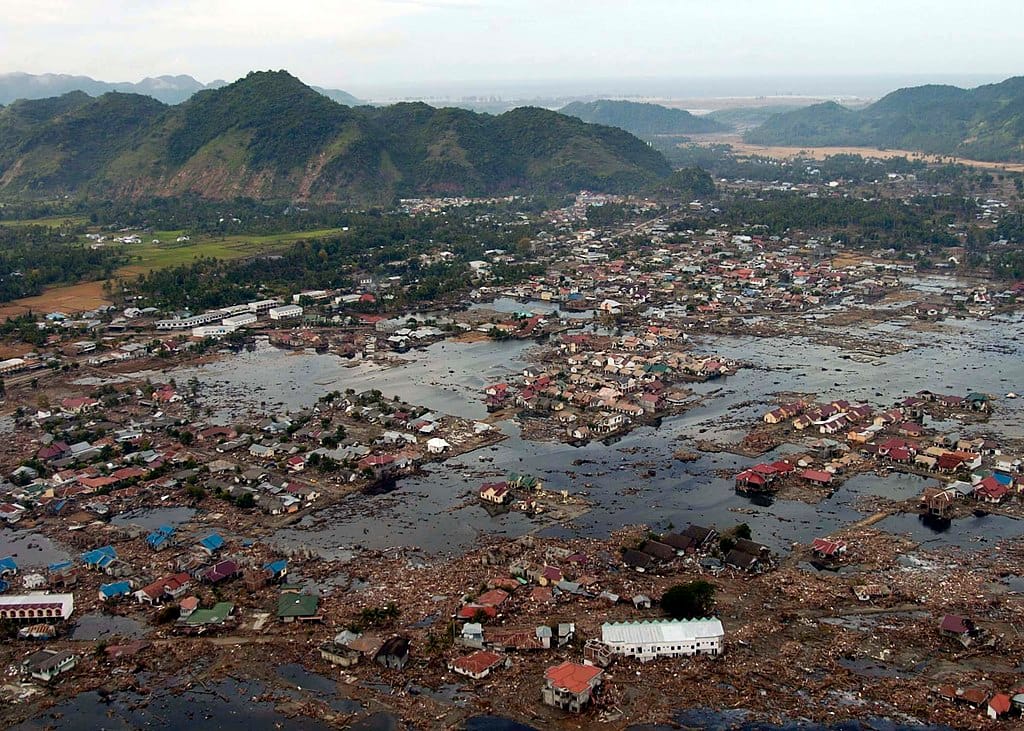
As the tsunami's waves reached Sri Lanka and India, regions with high population densities faced an overwhelming surge of water. Iconic cities like Galle in Sri Lanka and the southeastern shores of Tamil Nadu in India were engulfed.
The southern coast of Thailand—world-renowned tourist destinations like Phang Nga and Phuket—became scenes of horror. Vacationers and locals alike found themselves caught in the maelstrom.
The scale of destruction was staggering. Entire villages vanished, with tens of thousands killed in countries thousands of kilometers removed from the earthquake’s epicenter. The global community began to realize the extent of the disaster beyond Indonesia.
Human Tragedy Unfolds: The Scale of Casualties and Displacement
The Indian Ocean tsunami claimed over 230,000 lives across 14 countries, making it one of the deadliest natural disasters in recorded history. Over 1.7 million people were displaced, others left injured and shelterless.
The victims were as diverse as their cultures—fishermen, tourists, children at play, elderly parents. Families were torn apart; in some places, entire generations lost in minutes. The sheer magnitude defied comprehension: hospitals overrun, bodies removed in mass funerals, survivors forced into makeshift camps.
The psychological scars—trauma, loss, grief—persist decades later in the hearts of those who endured that nightmare.
Early Warnings Missed: The Absence of a Tsunami Warning System
While countries bordering the Pacific Ocean had long-standing tsunami warning networks, ironically, the Indian Ocean region was not equipped with such a system at the time.
Seismologists and disaster managers describe this as a catastrophic failure in preparedness. The early warning systems that could have alerted coastal populations minutes before the waves hit simply did not exist or failed due to technical and communication gaps.
This absence contributed directly to the high mortality rates. Even rudimentary signs—the peculiar withdrawal of the sea—went unheeded by many uninformed communities.
Stories from the Edge: Individual Testimonies of Loss and Survival
Among the sea of statistics emerge deeply personal stories of anguish and hope. Families describe children lost and found miraculously alive days later. Fishermen recount how instinct saved them when the ocean beckoned them away from shore.
In Banda Aceh, a young mother recalls hearing the “great roar” and fleeing in despair, only to find her village obliterated. In Thailand, tourists learning about the tsunami’s arrival shared harrowing experiences of running from crashing waves, often barefoot and injured.
Such accounts offer a human lens on incomprehensible devastation—reminders that history is not just dates and figures but lived experience.
Global Response: Humanitarian Aid and the Solidarity Wave
The international community mobilized swiftly in response. Countries, NGOs, and individuals donated billions of dollars in aid, raising one of the largest coordinated relief efforts ever seen.
Rescue teams, medical personnel, and supplies were dispatched. Temporary shelters, food programs, and water purification were rapidly implemented. Governments faced enormous challenges coordinating such massive assistance, while addressing critical infrastructure needs.
This solidarity also sparked a global conversation on disaster risk reduction, international cooperation, and the responsibilities countries bear toward one another in times of crisis.
The Science of Tsunami Monitoring: Lessons Learned and Systems Established
The 2004 disaster became a catalyst for scientific innovation. Recognizing the tragic consequences of no warning system, countries established the Indian Ocean Tsunami Warning and Mitigation System (IOTWMS).
This network, combining seismographs, deep-ocean pressure sensors, and communication tech, sought to detect undersea earthquakes promptly and alert vulnerable populations.
Scientists around the world intensified research into tsunami dynamics, wave propagation, and early indicators. Collaboration between nations turned competition into partnership—a truly transformative legacy born from calamity.
Reconstruction and Resilience: Rebuilding Lives and Communities
Recovery took years and demanded monumental efforts. Housing had to be rebuilt, often on safer ground, and infrastructure restructured to withstand future dangers.
Communities grappled with economic recovery; fishing fleets, tourism-dependent economies, and agriculture sectors faced massive disruptions. Aid agencies worked alongside local governments to incorporate disaster resilience into rebuilding efforts.
The trauma lingered, but so did an inspiring determination to rise from the rubble—villages rebuilt stronger, education systems revived, and a renewed commitment to preparedness instilled among future generations.
Cultural and Environmental Aftershocks: Long-Term Impact
Beyond human loss, the tsunami wrought profound cultural and environmental damage. Sacred sites were destroyed, entire ecosystems altered, beaches eroded, coral reefs damaged.
Fisheries suffered from altered coastal geography and sediment displacement. Mangrove forests, natural buffers against such events, were lost or severely damaged.
Restoration efforts attempted to balance human needs and ecological preservation, illuminating the intimate link between environment and livelihood in affected regions.
The Indian Ocean Tsunami in Memory and Media
The disaster's imagery—waves engulfing villages, rescue efforts, grieving families—etched indelibly into global consciousness through media coverage.
Documentaries, photo essays, and books sought to capture its scale and human dimension. Memorials and anniversaries are observed annually in affected countries, honoring the dead and reminding the living.
Artistic projects, from paintings to music, emerged as a way to process grief and commemorate resilience, ensuring the tsunami remains vivid in collective memory.
Scientific Advances Sparked by Disaster
The tsunami accelerated advances in geosciences. Improvements in seafloor mapping, earthquake modeling, and tsunami simulation have since reduced uncertainty around these phenomena.
Interdisciplinary collaborations—for example, integrating social sciences—have refined warning dissemination strategies, making sure messages effectively reach vulnerable communities.
The event also served as a stark illustration of climate hazards and the limits of human control over nature’s forces.
Policy Shifts: International and Regional Cooperation on Disaster Management
Governments recognized the need for shared responsibility in disaster preparedness. Regional bodies such as ASEAN integrated disaster risk into their agendas.
International frameworks like the Sendai Framework for Disaster Risk Reduction reflected lessons from the tsunami, promoting prevention, resilience, and sustainable recovery.
Funding priorities shifted, emphasizing early warning investment and community-based approaches, signaling a long-term commitment to minimize future risks.
The Role of Technology in Prediction and Prevention
From satellite monitoring to artificial intelligence algorithms predicting wave patterns, technological innovation has become vital.
Community-alert systems using SMS, sirens, and education apps ensure people know when to evacuate. Drills and awareness campaigns have become part of life in vulnerable regions.
However, technology alone cannot protect; it must blend with cultural understanding and governance to be truly effective.
A Moment of Global Reflection: The Tsunami’s Legacy Today
Nearly two decades later, the 2004 Indian Ocean tsunami remains a powerful reminder of nature’s unpredictability and humanity’s vulnerability.
Yet it also stands as a testament to interconnectedness. The wave of destruction spread across borders, but so did a wave of compassion, cooperation, and learning.
It reshaped scientific inquiry, global policy, and humanitarian response, leaving a legacy not only of tragedy but of hope—proof that even from the darkest moments, light and progress can emerge.
Conclusion
The Indian Ocean tsunami of December 26, 2004, is etched into history not just as a natural catastrophe but as a profound human experience. It revealed the latent power beneath the earth, the fragility of human settlements, and the extraordinary capacity for resilience and solidarity.
This disaster challenged the complacency of nations to prepare for such rare but devastating events and motivated unprecedented global collaboration. It forced humans to confront the deep bonds that tie them to their environment and to each other.
In contemplating that terrifying morning—when the earth roared and the seas rose—one cannot help but feel humbled and urged toward vigilance, compassion, and shared responsibility. For in the face of such vast forces, it is humanity's response, rather than nature’s fury, which ultimately defines our destiny.
Frequently Asked Questions
Q1: What caused the Indian Ocean tsunami on December 26, 2004?
A1: It was triggered by a massive megathrust earthquake resulting from the sudden rupture of a fault line where the Indo-Australian Plate subducts beneath the Eurasian Plate off the coast of Sumatra. This uplifted the seafloor and displaced seawater, creating the tsunami.
Q2: Why did so many people die in the 2004 tsunami?
A2: The high death toll was due to the sheer size of the earthquake and tsunami, the proximity of heavily populated coastlines, and critically, the lack of an early warning system in the Indian Ocean at the time.
Q3: Which countries were most affected by the tsunami?
A3: Indonesia, Sri Lanka, India, Thailand, and the Maldives were among the hardest hit. The waves affected 14 countries around the Indian Ocean, with Indonesia suffering the greatest loss of life.
Q4: How did the international community respond to the disaster?
A4: Governments, NGOs, and individuals worldwide provided humanitarian aid amounting to billions of dollars, offering medical aid, food, shelter, and reconstruction assistance.
Q5: What changes were made to tsunami warning systems after 2004?
A5: The Indian Ocean Tsunami Warning and Mitigation System was established, including seismic monitoring stations, ocean buoys, and improved communication networks to provide timely alerts.
Q6: How did the tsunami impact the environment?
A6: Coastal ecosystems, including coral reefs and mangroves, were damaged or destroyed, affecting marine biodiversity and the livelihoods of communities relying on fishing.
Q7: Are there lessons still relevant today from the 2004 tsunami?
A7: Yes, the importance of disaster preparedness, early warning systems, community education, regional cooperation, and integrating scientific research into policy are all enduring lessons.
Q8: How is the Indian Ocean tsunami remembered?
A8: Through memorials, annual ceremonies, media, art, and education programs aimed at honoring victims and promoting disaster awareness.