Table of Contents
- The Long Shadow of War: Prelude to a Fragile Ceasefire
- Roots of Conflict: How Two Neighbors Became Enemies
- The Invasion of Iran: Sparks That Ignited a Bloodbath
- Early Battles and Miscalculations: Iraq’s Initial Advances
- Iran’s Resilience: Mobilization Under Fire
- The War of Attrition: Years of Stalemate and Suffering
- The Human Cost: Civilian Lives Amidst Chaos
- International Stakes: The Global Chessboard
- Chemical Weapons: The Darkest Chapter
- Economic Exhaustion: Both Sides on the Brink
- The Road to Ceasefire: Diplomatic Pressure Mounts
- August 20, 1988: The Ceasefire Comes Into Effect
- Immediate Aftermath: Reactions from Tehran and Baghdad
- The Forgotten Front: Border Demarcation and Security
- Legacy of the War: Political and Social Consequences
- The War’s Impact on Iranian Identity and Iraqi Politics
- Lessons Learned: Military and Diplomatic Reflections
- Memory and Reconciliation: How the War is Remembered Today
- The Iran-Iraq Ceasefire in Broader Middle Eastern History
- Looking Forward: From Ceasefire to Fragile Peace
The Long Shadow of War: Prelude to a Fragile Ceasefire
On the morning of August 20, 1988, a weary silence cloaked the scorched borderlands between Iran and Iraq. For eight interminable years, the roar of artillery and the thunder of tanks had hammered through villages, cities, and deserts, turning once-prosperous lands into wastelands of despair and fury. Yet on this day, as the sun rose over Tehran, an announcement echoed worldwide: a ceasefire between two bitter foes had officially taken effect. The sounds of gunfire faded, replaced by the fragile whispers of relief and the tentative hope for peace.
This moment did not merely mark the halting of hostilities; it symbolized the end of an epoch defined by chaos, sacrifice, and ideological brinksmanship. Citizens, soldiers, and civilians alike, who had endured the worst, faced an uncertain dawn. The Iran-Iraq conflict would leave behind scars that no treaty could fully erase. But before the guns fell silent, the saga of distrust, ambition, and tragedy had sculpted a story both deeply personal and dangerously geopolitical.
Roots of Conflict: How Two Neighbors Became Enemies
To understand the ceasefire of 1988, one must first journey back through the tangled histories of Iran and Iraq — two nations bound by culture, yet divided by fierce nationalistic flames. At the heart of the conflict lay a mixture of territorial disputes, religious sectarianism, and factional rivalry.
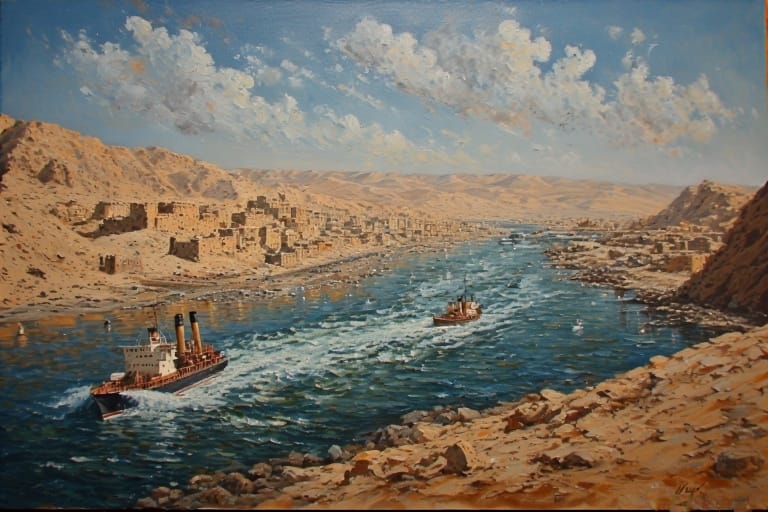
Iraq, under the Baghdad-based regime of Saddam Hussein, sought to assert dominance over the Shatt al-Arab waterway—a vital artery formed by the confluence of the Tigris and Euphrates rivers. Meanwhile, Iran, freshly transformed by the 1979 Islamic Revolution, was intent on exporting its revolutionary zeal across its borders and reclaiming regional influence lost under the Shah.
The regional chessboard was complex: Iran’s mostly Shia population contrasted with Iraq’s Sunni-led leadership, while both grappled with ethnic minorities and past pretensions stemming from ancient empires. The contest was not merely about land; it was a battle for political survival and ideological supremacy.
The Invasion of Iran: Sparks That Ignited a Bloodbath
September 22, 1980—the day Saddam Hussein launched a massive Iraqi invasion into Iran—heralded the eruption of what would become one of the bloodiest wars of the late 20th century. Confident in Iran’s post-revolutionary chaos, Baghdad calculated that Tehran’s fledgling Islamic Republic would crumble quickly. Yet the reality was far grimmer for both sides.
Early blitzkrieg attempts gave way to grueling trench warfare, as Iranian forces mobilized under a banner of revolutionary defense. The war consumed young lives, cities, and hopes—stubbornly refusing to yield to quick victories or decisive victories. The battlefield became a brutal stalemate, sowing destruction and human misery across the border.
Early Battles and Miscalculations: Iraq’s Initial Advances
Iraq’s initial military success—capturing the oil-rich province of Khuzestan and penetrating deep into Iran—was, in hindsight, one of its last tangible gains. Strategic miscalculations soon emerged: underestimating Iranian nationalism, overextending supply lines, and ignoring the resilience of poorly armed but highly motivated Iranian militias.
Despite technological advantages in weaponry and heavy armor, Iraqi forces found themselves stalled, locked into a war of attrition that slowly drained their resources and morale. The myth of a swift conquest shattered on the barbed wires and pockmarked fields of southern Iran.
Iran’s Resilience: Mobilization Under Fire
Iran’s response was both remarkable and tragic. Under the charismatic and austere leadership of Ayatollah Khomeini, millions of young volunteers known as the Basij surged onto the frontlines. Lacking advanced weaponry but rich in ideological fervor, these forces took part in costly human wave attacks that became horrific symbols of the conflict.
The Iranian regime turned the war into a "sacred defense," fusing nationalism with religious zeal. Despite internal divisions and purges, the country’s industrial and agricultural sectors geared towards sustaining the war effort. This sense of existential struggle hardened the Iranian population, embedding the conflict deeply into the national psyche.
The War of Attrition: Years of Stalemate and Suffering
As 1982 passed, with neither side able to achieve decisive victory, the conflict settled into a grinding war of attrition. Frontlines barely shifted, but the toll of daily bombardments, chemical attacks, and minefields irremediably weakened both armies.
Civilian populations on both sides endured terror and deprivation. Cities like Basra in Iraq and Abadan in Iran suffered repeated sieges and shelling. The infrastructure itself—roads, schools, hospitals—became collateral damage, leaving lasting marks that would take decades to repair.
The Human Cost: Civilian Lives Amidst Chaos
The human cost of the Iran-Iraq War is staggering: estimates suggest between 500,000 and 1 million dead, including soldiers and civilians. Families were shattered, communities uprooted, futures extinguished in moments of violence. The emotional narratives of mothers who lost all their children, of volunteers marching to frontlines with trembling faith, thread through the war’s darkest chapters.
Refugee crises swelled, and the psychological trauma endured by survivors—both combatants and non-combatants—has echoed through the generations. This war was not just fought on battlefields, but within hearts and minds long after the ceasefire.
International Stakes: The Global Chessboard
Though the conflict seemed regional, it quickly became a proxy battleground for Cold War rivalries and oil geopolitics. The United States, the Soviet Union, and various Gulf states aligned at different times with either Iraq or Iran, influenced by shifting alliances and fears over the spread of revolutionary Islam.
Superpowers supplied arms, intelligence, and political support while publicly calling for peace—revealing the contradictions and complexities of international diplomacy. The conflict underscored how local wars could be amplified by global strategic interests.
Chemical Weapons: The Darkest Chapter
One of the most harrowing elements of the war was Iraq’s use of chemical weapons against Iranian troops and civilians. Gas attacks, including mustard gas and nerve agents, inflicted horrific suffering and death. The 1988 Halabja chemical attack also targeted Kurdish civilians, exposing Saddam’s brutal tactics.
These violations of international law shocked the world but often provoked muted responses, as global players prioritized geopolitical calculations over humanitarian concerns. The legacy of chemical warfare lingers in the health scars borne by thousands and in the moral reckonings of postwar judgment.
Economic Exhaustion: Both Sides on the Brink
The continuous war effort exhausted the resources of Iran and Iraq. Oil revenues, crucial for both economies, were disrupted by tanker attacks and embargoes. Infrastructure damage deepened economic woes, while military expenditures plunged both nations into heavy debt.
In Iran, international sanctions compounded the financial strain, while Iraq’s promise of quick conquest was replaced by a desperate search for funds. Both countries found themselves trapped in a cycle of destruction that sapped their potential for development.
The Road to Ceasefire: Diplomatic Pressure Mounts
By 1987 and 1988, war fatigue settled over the warring nations and the international community. The United Nations Security Council passed Resolution 598, calling for an immediate ceasefire and negotiations.
Both Iran and Iraq—aware of their depleted capacities and yearning for peace—gradually accepted mediation efforts. Battles continued sporadically, yet talks intensified. The balance of power, coupled with desire to avoid further ruin, led Tehran and Baghdad to jointly announce the ceasefire.
August 20, 1988: The Ceasefire Comes Into Effect
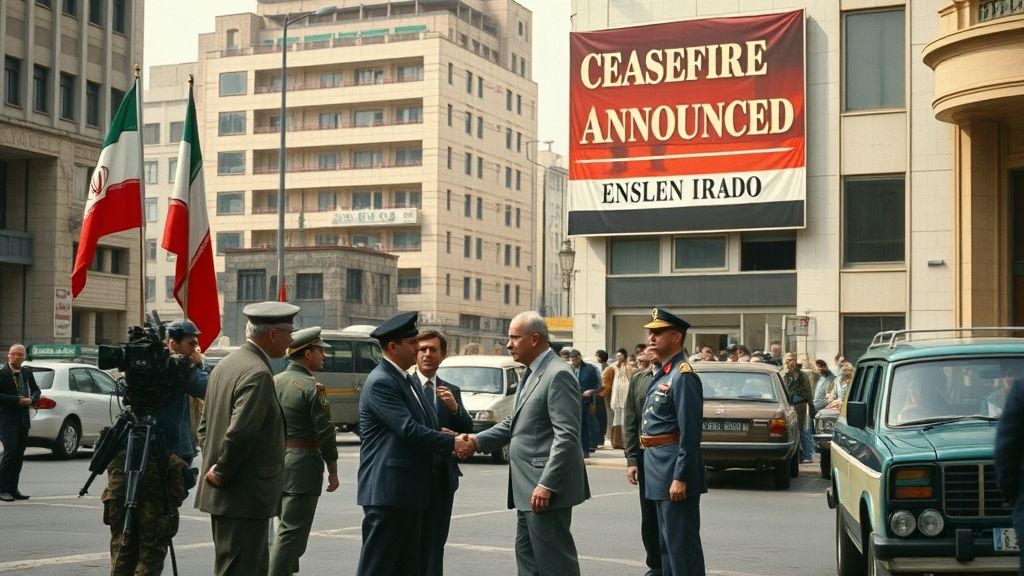
At the stroke of midnight on August 20, 1988, the guns fell silent. Monitor teams from the UN moved in to oversee the fragile peace. On Iran’s streets, citizens burst into cautious celebration; many wept openly, aware that peace was both a relief and a reminder of endless loss.
Tehran’s rhetoric tipped from revolutionary calls to hardened pragmatism, while Saddam’s regime presented the ceasefire as a victory, though a hollow one. The silence that followed was as much a breath held as it was the beginning of complex reconciliation.
Immediate Aftermath: Reactions from Tehran and Baghdad
For Iran, the ceasefire was a testament to survival amid adversity, but fraught with internal questions about the revolution’s future. Mixed feelings of relief and bitterness converged as families mourned the missing and awaited prisoners of war.
In Iraq, Saddam Hussein projected an image of triumph, yet privately recognized the war’s toll on his authority and ambitions. The Dream of regional hegemony faded, replaced by a precarious grip on power. Both capitals faced the daunting task of reconstruction and dealing with veterans and widows.
The Forgotten Front: Border Demarcation and Security
While guns silenced, the border remained a contested and tense line. Efforts to demarcate the frontier and prevent renewed clashes were ongoing challenges throughout the late 1980s and the 1990s.
Mines, abandoned fortifications, and distrust lingered, as both armies kept forces near the frontier for years. The ceasefire was not a formal peace treaty, and underlying grievances simmered, foreshadowing future conflicts.
Legacy of the War: Political and Social Consequences
Politically, the war solidified authoritarian control in both countries. Iran’s Revolutionary Guard’s influence expanded, internal dissent was quelled, and the war became central to state mythology. Iraq saw increased repression, investment in military build-up, and shifts toward more aggressive foreign policies.
Societally, generations grew up with loss imprinted deeply in family narratives. The war catalyzed changes in gender roles, the role of religion in public life, and nationalism.
The War’s Impact on Iranian Identity and Iraqi Politics
For Iran, the war was a forge of national identity, blending religious conviction with patriotism. It also intensified isolation from the West. In Iraq, the war heightened sectarian tensions and empowered Saddam’s Ba’athist regime’s brutal measures against dissenters and minorities.
These internal dynamics shaped decades of Middle Eastern power struggles, influencing conflicts that followed and shaping the regional order.
Lessons Learned: Military and Diplomatic Reflections
The war taught harsh lessons about the limits of conventional military power, the perils of ideological fanaticism, and the costs of prolonged conflict. It underscored the need for regional dialogue and demonstrated the dangers of proxy conflicts.
Diplomatic failures and successes alike became case studies for international relations scholars, pushing forward debates on conflict resolution and peacekeeping.
Memory and Reconciliation: How the War is Remembered Today
In Iran, the war is remembered as the “Sacred Defense,” enshrined in museums, literature, and official ceremonies. Iraqi remembrance is more fragmented, complicated by subsequent conflicts and regime changes. Efforts toward reconciliation remain fragile, with memory often divided along political and ethnic lines.
Survivors’ testimonies and scholarship continue to grapple with the war’s moral and human implications, seeking avenues for healing.
The Iran-Iraq Ceasefire in Broader Middle Eastern History
The ceasefire of 1988 signified a turning point—a pause in a region perennially marked by conflict. It shaped the geopolitics of the Gulf, influenced the Gulf War of 1990-91, and set precedents for international involvement in the Middle East.
Its echoes remain relevant in today’s political dialogues about conflict resolution and regional security.
Looking Forward: From Ceasefire to Fragile Peace
Though the guns fell silent in 1988, true peace would prove elusive. The ceasefire opened the door to a complex peace process, one undermined by mistrust and competing ambitions. The Iran-Iraq War’s legacy remains a potent reminder of what is lost in conflict and how fragile peace often is.
The story of August 20, 1988, endures not simply as an endpoint, but as a beginning—a call to remember, to learn, and to strive for a future where dialogue replaces destruction.
Conclusion
The Iran-Iraq ceasefire of August 20, 1988, was more than the cessation of hostilities; it was an epochal moment in twentieth-century history that revealed the profound capacity for destruction—and the tentative hope for healing. Through the smoke of battle, the cries of the bereaved, and the quiet moments of reflection, this ceasefire encapsulated the end of a nightmare but also the arduous beginning of recovery.
It teaches us that wars are never won by sheer force alone, that the cost of pride and ideology can be measured in lives lost and futures diminished. But even in the darkest epochs, the human spirit’s yearning for peace shines through. The fragile calm that settled on that late summer night in 1988 reminds us that peace is hard-won, delicate, and sacred.
FAQs
Q1: What caused the Iran-Iraq War to start?
The war began largely due to territorial disputes over the Shatt al-Arab waterway, Saddam Hussein’s ambitions to assert dominance regionally, and Iran’s post-revolution instability. Sectarian, nationalistic, and ideological factors deepened the conflict.
Q2: How long did the Iran-Iraq War last?
The conflict lasted from September 1980 until the ceasefire came into effect on August 20, 1988—almost eight years of intense and brutal fighting.
Q3: Why was the ceasefire agreed upon in 1988?
Both sides were militarily exhausted, economically strained, and suffering immense casualties. International diplomatic pressure, especially from the UN, pushed Iran and Iraq to accept Resolution 598, which called for an immediate ceasefire.
Q4: What was the role of chemical weapons during the war?
Iraq deployed chemical weapons against Iranian forces and Kurdish civilians, including brutal attacks in 1988 that caused mass casualties and long-term health consequences. This was one of the war’s darkest and most condemned aspects.
Q5: How did the war affect civilians?
Civilians bore enormous suffering, including displacement, death, and economic hardship. Entire cities were damaged, families lost loved ones, and refugees fled conflict zones, creating deep social scars.
Q6: Did the ceasefire bring lasting peace?
The ceasefire halted active combat but did not resolve underlying tensions fully. Iraq and Iran remained suspicious, and the border remained volatile. A formal peace treaty was never signed.
Q7: How is the war remembered in Iran and Iraq today?
In Iran, it is memorialized as the “Sacred Defense,” integral to national identity. In Iraq, memories are more divided due to subsequent political upheavals—but the war remains a key turning point in modern Iraqi history.
Q8: What lessons does the Iran-Iraq War hold for modern conflicts?
It highlights the devastating human cost of prolonged wars of attrition, the dangers of external interference, and the importance of timely diplomatic intervention to prevent protracted suffering.