Table of Contents
- The Deadly Dawn: Morning of November 23, 1980
- The Irpinia Region: A Landscape on the Edge
- Italy in the Late 20th Century: A Nation in Transition
- The Forces Beneath: Understanding the Geology of Irpinia
- The First Tremors: The Earth’s Warning Signs
- The Moment the Ground Shattered: Magnitude and Impact
- Lives Upended: Personal Stories from the Rubble
- The Emergency Unfolds: Rescue Efforts and Challenges
- Government Response: From Shock to Action
- Media and Public Awareness: A Nation’s Eye on Irpinia
- Aid from Abroad: International Solidarity and Support
- The Aftershocks: Nature’s Lingering Threat
- Social and Economic Consequences: The Long Road to Recovery
- Urban Planning and Reconstruction: Rebuilding Irpinia
- Political Fallout: Accountability and Controversy
- Cultural Memory: How the Earthquake Entered Italian Consciousness
- Scientific Advancements Sparked by Disaster
- Lessons Learned: Disaster Preparedness in Italy Post-1980
- Commemoration and Remembrance: Honoring the Victims
- Narratives of Resilience: Irpinia’s People Today
- Global Impact: The Earthquake’s Place in Seismological History
- Conclusion: The Earthquake That Shook Italy’s Heart
- FAQs: Answering Key Questions About the Irpinia Earthquake
- External Resource
- Internal Link
November 23, 1980, was a dawn like any other in southern Italy — or so it seemed. But beneath the quiet, the earth was preparing to unleash fury. At 7:34 AM, an earthquake of magnitude 6.9 tore through the fragile fabric of the Irpinia region, centering near the towns of Sant’Angelo dei Lombardi and Conza della Campania. In an instant, centuries-old buildings crumbled, homes collapsed, and lives were shattered. The ground's violent shaking left in its wake a haunting silence punctuated by cries of despair, rescue efforts scrambling, and a nation lasting a long moment speechless before its grief.
1. The Deadly Dawn: Morning of November 23, 1980
The sun was just beginning to cast faint amber light over the rolling hills of Irpinia. Birds still chirped uncertainly, animals stirred in their pens, and families prepared for the day ahead. Little did they know that beneath their feet, fault lines pressed against each other in an unbearable tension. In the Gregorian morning stillness, that subterranean pressure gave way without warning, triggering one of the deadliest earthquakes in post-war Italy. The suddenness, the sheer power, was cataclysmic.
Buildings that had stood for generations succumbed; roads buckled, bridges came crashing down, and in towns where life had once been predictable, chaos exploded. Yet as the earth shattered homes, it also shattered complacency — revealing vulnerabilities in infrastructure, governance, and emergency preparedness. This was an event that would become etched into the collective memory of Italy and the scientific community worldwide.
2. The Irpinia Region: A Landscape on the Edge
Irpinia, nestled in the heart of Italy’s southern Campania region, is a land of breathtaking natural beauty and deep historical roots. Its mountainous terrain, dotted with medieval villages and ancient churches, had long been a place of quiet agricultural life. Grapevines covered terraces, olive trees stretched across sunlit slopes, and narrow alleyways meandered through stone towns.
Yet this beauty cloaked a fragile existence. The region had long endured economic hardship, isolation, and neglect compared to northern Italy's industrial prosperity. Infrastructure was outdated; many buildings were not designed to withstand seismic shocks. Beneath its idyllic facade, the land was a tinderbox waiting for a spark — and that spark came suddenly on that cold November morning.
3. Italy in the Late 20th Century: A Nation in Transition
In 1980, Italy was a country grappling with rapid change. The post-war economic miracle of the ‘50s and ‘60s had transformed its northern cities into industrial hubs, but the south lagged behind, caught in a cycle of poverty and emigration. Politically, Italy was fractious, with governments turning over frequently amidst ideological battles between Christian Democrats, Communists, and Socialists.
Against this backdrop, the earthquake struck a region that was already socially vulnerable. The disaster exposed not just geological fragility but chronic political and social fractures. The government's response would be scrutinized for years to come, reflecting tensions between central authority and local needs.
4. The Forces Beneath: Understanding the Geology of Irpinia
Italy rests on a complex tectonic crossroads between the African and Eurasian plates. The southern Apennines, including the Irpinia area, are known for their seismic activity due to the compression and faulting caused by these immense geological forces. The fault responsible for the 1980 quake, known as the Irpinia Fault system, had been relatively quiet for decades, but forces deep underground built up steadily.
When the quake struck, the fault abruptly slipped by several meters, releasing pent-up energy. The intensity of the shaking, combined with the particular soil compositions and topography of southern Italy, magnified damage — especially in hilltop towns perched precariously on unstable formations.
5. The First Tremors: The Earth’s Warning Signs
Seismologists note that major earthquakes are often preceded by smaller tremors called foreshocks. In Irpinia’s case, small shakes had been felt in the days leading to November 23, but they were not strong nor consistent enough to trigger large-scale alarm. Residents accustomed to minor shifting dismissed these as typical of a seismically active area.
But beneath this dismissiveness lay fatal complacency — a lack of adequate monitoring stations, emergency protocols, and public education. The earth’s subtle warnings went unheeded, a tragedy repeated across seismically vulnerable regions worldwide.
6. The Moment the Ground Shattered: Magnitude and Impact
At 7:34 AM, the ground violently convulsed. The earthquake registered a magnitude of 6.9, placing it among the strongest Italian tremors of the 20th century. The shockwave radiated through Campania and neighboring Basilicata, lasting nearly 30 seconds — an eternity when buildings collapse in seconds.
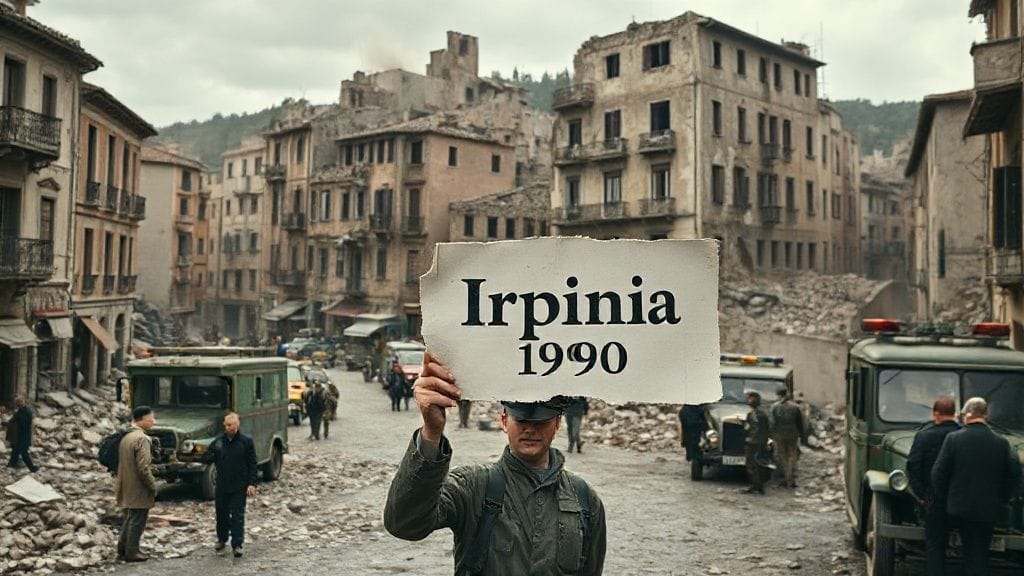
Entire villages like Sant’Angelo dei Lombardi were devastated, with up to 90% of structures destroyed or heavily damaged. The death toll quickly rose to nearly 3,000, with more than 10,000 injured and thousands left homeless. Roads were impassable; communications severed. Unimaginable scenes unfolded amidst the rubble — families trapped, children crying, elderly lost.
7. Lives Upended: Personal Stories from the Rubble
Behind the overwhelming statistics were the individual tragedies and acts of courage that shape collective memory. Maria, a 35-year-old mother of three, lost her home within moments but crawled under debris to rescue her youngest child. Giuseppe, a schoolteacher, rushed into collapsing buildings to save students, paying with his life. Survivors spoke of long, cold nights under open skies, of neighbors sharing blankets and hope.
Such stories reveal the resilience of human spirit amid disaster, but also the profound vulnerability of fragile communities unprepared for such trauma.
8. The Emergency Unfolds: Rescue Efforts and Challenges
The immediate aftermath was a chaotic scene of desperate rescue attempts hampered by cold weather, damaged infrastructure, and limited equipment. Local residents were often the first responders, digging with bare hands to reach survivors. Emergency services faced overwhelming demand, while communications were patchy.
Nationally, Italy was slow to fully mobilize. Helicopters arrived late; medical supplies were insufficient. The tragedy exposed weaknesses in civil protection and disaster management — weaknesses that would prompt institutional reforms in later decades.
9. Government Response: From Shock to Action
The Italian government declared a state of emergency, mobilizing the army and allocating emergency funds. Yet bureaucratic delays, political tensions, and accusations of corruption marred the relief phase. Aid distribution was uneven; reconstruction plans faced local opposition and logistical hurdles.
Critics accused officials of treating the disaster as a “political opportunity,” with some propaganda overshadowing genuine efforts. Still, many officials and volunteers worked tirelessly to help those affected.
10. Media and Public Awareness: A Nation’s Eye on Irpinia
Television and newspapers brought grim images of Irpinia into the national consciousness like never before. Emotional appeals for solidarity flooded airwaves; fundraisers mobilized aid. The earthquake became a moment of unifying grief in a politically fragmented Italy.
Journalists documented not only the scale of destruction but also compelling personal stories, shining a spotlight on the South’s struggles beyond the tremors themselves.
11. Aid from Abroad: International Solidarity and Support
Italy was not alone. Countries around the world sent material assistance, rescue teams, and financial aid. The Irpinia quake inspired a global humanitarian response, highlighting the increasing ability and willingness of nations to collaborate in disaster relief.
This international dimension further emphasized the universal vulnerability to natural catastrophes and the bonds forged in adversity.
12. The Aftershocks: Nature’s Lingering Threat
In the following weeks, powerful aftershocks continued to rattle the region, compounding anxiety and damage. Thousands of aftershocks — some registering above magnitude 5 — hindered rescue and reconstruction, prolonging trauma.
The continuing seismic activity also deepened scientific understanding of aftershock patterns and their impact on human recovery efforts.
13. Social and Economic Consequences: The Long Road to Recovery
Irpinia’s economy, already fragile, was battered. Agriculture, commerce, and industry were disrupted. Thousands lost jobs or saw their livelihoods destroyed. Many displaced families emigrated either temporarily or permanently.
The social fabric was stretched thin, with psychological scars evident in survivors for decades. Reconstruction efforts were slow and costly, with debates over priorities and community needs.
14. Urban Planning and Reconstruction: Rebuilding Irpinia
Reconstruction became a monumental task. New towns were planned away from vulnerable hilltops; infrastructure modernized, but the process was rife with delays, disputes, and accusations of corruption.
The disaster forced a radical reassessment of urban planning in seismic zones across Italy, promoting safer building standards and disaster preparedness.
15. Political Fallout: Accountability and Controversy
Irpinia’s earthquake response sparked political controversy. Investigations uncovered mismanagement and misuse of funds. Some officials faced legal proceedings; others defended themselves amidst public outrage.
This episode fueled debates about governance, regional inequalities, and the role of the Italian state in protecting its citizens.
16. Cultural Memory: How the Earthquake Entered Italian Consciousness
Irpinia’s earthquake entered Italy’s collective memory through literature, film, and commemorations. Memorials were erected; anniversary events became moments of reflection.
Artists and writers captured the human toll and resilience, contributing to a national narrative about disaster, loss, and hope.
17. Scientific Advancements Sparked by Disaster
Seismologists intensified studies of the Apennines, improving understanding of fault systems and earthquake prediction.
The quake galvanized reforms in Italy’s civil protection system and inspired innovations in seismic engineering, influencing policies worldwide.
18. Lessons Learned: Disaster Preparedness in Italy Post-1980
The tragedy prompted profound changes. Early warning systems were improved; emergency response coordinated more efficiently; public education campaigns deployed.
Italy’s modern civil protection agency, Protezione Civile, expanded its mandate, reflecting lessons from Irpinia about preparedness, rapid response, and social cohesion.
19. Commemoration and Remembrance: Honoring the Victims
Every November 23, Italians remember the Irpinia victims with moments of silence, church services, and community gatherings. Memorials recall the lives lost and the resilience shown.
These acts of remembrance honor the past and teach future generations about the fragility and strength of human communities.
20. Narratives of Resilience: Irpinia’s People Today
After decades, Irpinia’s towns have rebuilt, blending tradition and modernity. New generations grow up aware of their region’s history but also its potential.
Residents’ stories of perseverance and renewal continue to inspire, a testament to human spirit and the will to rebuild after devastation.
21. Global Impact: The Earthquake’s Place in Seismological History
Irpinia’s earthquake remains a key case study in disaster management, seismic science, and urban resilience.
It highlights the universal challenges of living in earthquake zones and the ongoing need to balance human habitation with environmental realities.
Conclusion
The Irpinia earthquake of November 23, 1980, was more than a sudden rupture of the earth — it was a profound rupture in the life of a community, a nation, and the scientific understanding of earthquakes. It exposed vulnerabilities and shortcomings, but also revealed remarkable resilience, solidarity, and capacity for renewal.
Italy, scarred but not broken, emerged with new tools and heightened awareness to face future threats. The memory of those trembling moments and their aftermath serve as both a warning and an inspiration: nature’s forces are indifferent, yet humanity’s response is bound by courage, empathy, and determination.
In Irpinia’s stones and stories, one finds the eternal conflict between devastation and rebirth — a story that transcends time and place.
FAQs
Q1: What caused the 1980 Irpinia earthquake?
A: The earthquake was caused by the sudden slip of the Irpinia Fault system, part of the southern Apennines tectonic zone where the African and Eurasian plates converge, creating seismic tension.
Q2: How many people were affected by the earthquake?
A: Nearly 3,000 people died, over 10,000 were injured, and more than 300,000 were rendered homeless, with vast destruction across multiple towns.
Q3: How did the Italian government respond?
A: The government declared a state of emergency and mobilized military and rescue efforts, but faced criticism over delays, mismanagement, and corruption during relief and reconstruction.
Q4: What lessons were learned regarding disaster preparedness?
A: The tragedy exposed the need for better early-warning systems, emergency protocols, public education on seismic risk, and more robust construction standards.
Q5: How is the earthquake remembered in Italy today?
A: Through annual memorials, cultural works, and educational programs emphasizing resilience, remembrance, and preparedness.
Q6: Did the earthquake influence scientific research?
A: Yes, it prompted extensive geological and seismological studies, improving understanding of earthquake mechanics and influencing global approaches to seismic risk.
Q7: What was the economic impact on the region?
A: The earthquake devastated agriculture, businesses, and homes, triggering long-term economic hardship and migration from affected areas.
Q8: How did international communities assist?
A: Many countries sent financial aid, rescue teams, and supplies, showing unprecedented global solidarity in disaster relief.