Table of Contents
- The Dawn of a New Empire: Italy’s Imperial Ambition in the Horn of Africa
- The Strategic Importance of Eritrea in the Late 19th Century
- Asmara Before Empire: A Land of Diverse Cultures and Ancient Traditions
- The Scramble for Africa and Italian Colonial Aspirations
- Giuseppe Sapeto and the Early Footsteps of Italian Influence
- From Treaties to Territory: Italy’s Incremental Control Over Eritrea
- January 1, 1890: The Birth of the Italian Colony of Eritrea
- Asmara Transformed: Urban Development under Italian Rule
- Colonial Administration: Governing a New Possession
- The Role of the Indigenous Population: Cooperation, Resistance, and Survival
- Economic Exploitation and Infrastructure: Railways, Agriculture, and Commerce
- Religion and Culture: Catholic Missions and the Clash with Indigenous Beliefs
- The Eritrean Resistance: Beginnings of a Long Struggle
- Italy’s Broader Imperial Ambitions in East Africa
- International Reactions: European Powers and Ottoman Interests
- The Legacy of 1890: Eritrea’s Colonial Identity Takes Shape
- Cultural Imprint: Architecture, Language, and Social Changes
- The Seeds of Future Conflicts: Colonial Policies and Ethnic Divisions
- The Italian Colony in the Context of African Colonial History
- Conclusion: The Human Story Behind Colonial Proclamations
- FAQs: Understanding the Italian Colony of Eritrea
- External Resource
- Internal Link
The Dawn of a New Empire: Italy’s Imperial Ambition in the Horn of Africa
The crisp air of January 1, 1890, was thick with the promises and tensions that accompany the birth of empires. On this day, amidst the rugged mountains and sunlit plains of Eritrea, a proclamation echoed through the halls of colonial administration: the Italian Colony of Eritrea was officially established, with Asmara as its administrative heart. This act was not merely a bureaucratic milestone but the clear manifestation of Italy’s desperate aspiration to carve out its place among the colonial powers of the 19th century.
Picture Asmara before the Italian flag was raised—an assemblage of mountain villages and markets, inhabited by a mosaic of ethnic groups, each with their traditions, languages, and histories. The Italian declaration marked a profound rupture, foreshadowing decades of transformation, confrontation, and cultural synthesis.
But this proclamation was a product of decades of ambition, diplomacy, and conflict. To understand its significance, we must delve deeper into the intricate tapestry of politics, culture, and power that unfolded in the Horn of Africa during the era of the Scramble for Africa.
The Strategic Importance of Eritrea in the Late 19th Century
Eritrea’s geographic position on the southwestern coast of the Red Sea endowed it with a strategic value far beyond its rugged terrains. Overlooking the vital maritime passage of the Bab-el-Mandeb strait—the gateway between the Red Sea and the Gulf of Aden—Eritrea was a coveted jewel for any empire seeking influence over international trade routes, especially after the opening of the Suez Canal in 1869.
European powers cast hungry eyes on coastal outposts and inland territories in the Horn of Africa. Britain, France, and the Ottoman Empire already held sway in parts of the region, but Italy—a newly unified nation-state yearning to assert itself on the global stage—yearned for its slice of African territory to claim as its own. The establishment of a colony in Eritrea was as much a strategic maneuver to gain leverage in the Red Sea region as it was an act of national prestige.
Asmara Before Empire: A Land of Diverse Cultures and Ancient Traditions
Before Italian colonial ambitions took root, the land that would become Eritrea was home to centuries-old cultures and communities—Tigrinya highlanders, Afar pastoralists, Saho tribes, and various lowland groups, each weaving their own web of social customs, trade, and spiritual life.
Asmara itself, perched at an elevation over 2,300 meters above sea level, was a modest town embedded in the Ethiopian Highlands' fringes. It was known for its temperate climate and as a nexus for local trade routes.
These communities had established complex systems of governance, kinship, and economy long before an Italian flag appeared on the horizon. The arrival of foreign powers would disrupt these long-standing balances, forcing encounters that ranged from cooperation to violent resistance.
The Scramble for Africa and Italian Colonial Aspirations
The last three decades of the 19th century witnessed the fever pitch of European imperial expansion. The Berlin Conference of 1884-1885 had codified the rules of conquest and colonization, accelerating the partition of Africa between imperial powers.
Italy was a latecomer to the colonial game, unified only in 1861 and burdened by domestic political instability and economic challenges. Yet, the desire to project power abroad was fiercely felt among Italian elites and the public alike, eager to overcome the humiliation of being left behind by Britain and France.
Eritrea became the focal point of this aspiration, representing a tangible first step toward creating an Italian empire that could rival established colonial powers.
Giuseppe Sapeto and the Early Footsteps of Italian Influence
The story of Italian Eritrea begins with individuals like Giuseppe Sapeto, a Catholic missionary turned explorer, whose work in the 1860s laid the groundwork for Italian interest in the region.
Sapeto’s efforts in mapping the coastlines, negotiating with local leaders, and documenting the region's resources were instrumental for Italy’s diplomatic claims. His accounts romanticized Eritrea as a land ripe for “civilizing” and economic exploitation, feeding into Italy’s colonial rhetoric.
It was through such figures that Italy justified its expansion — wrapping imperial ambition in the language of religious and moral duty.
From Treaties to Territory: Italy’s Incremental Control Over Eritrea
Italy’s path to colonization was gradual and marked by a series of treaties and local agreements, often signed under pressure or confusion by indigenous leaders who did not fully grasp their consequences.
Starting with the acquisition of Assab Bay in 1882, Italy steadily expanded its territorial claims, exploiting internal rivalries among local rulers and the destabilization caused by Ethiopian expansionism.
By 1889, after the defeat of the Egyptian influence in the region and with the backing of European powers, Italy consolidated its holdings, setting the stage for the formal proclamation of the colony.
January 1, 1890: The Birth of the Italian Colony of Eritrea
The solemn day dawned with both ceremony and quiet anxiety. At a formal gathering in Massawa—the key port city and administrative center—Italian officials, soldiers, and clergy raised the tricolor and declared the establishment of the Italian Colony of Eritrea.
“This land, once distant and foreign, is now entrusted into the hands of Italy,” proclaimed Governor Baldassarre Orero, the first Italian colonial governor. The declaration was broadcast along coastal towns and highland villages, sent officially to Rome, and recorded in the annals of empire.
Yet, beneath the pomp and protocol, the reality was far more complex: Eritrea was a patchwork mosaic of loyalists, skeptics, and fierce resisters; of ancient traditions confronting modern imperialism.
Asmara Transformed: Urban Development under Italian Rule
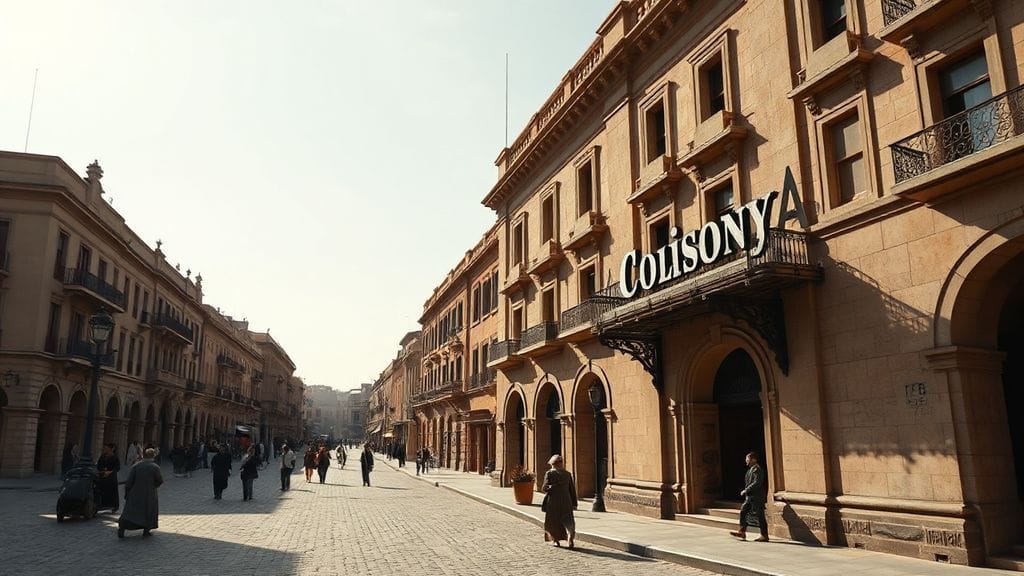
Following the proclamation, Asmara underwent a dramatic transformation. What was once a quiet highland town rapidly evolved into an engineered “modern” capital, showcasing Italian architectural ambition.
Wide boulevards lined with Art Nouveau villas, public buildings inspired by Renaissance motifs, and neatly planned neighborhoods sprung up, making Asmara a testament to Italian modernity transplanted on African soil.
The city’s urban planning symbolized both colonial control and the utopian vision of assimilating Eritrea into Italy’s imperial fold. Yet, the grandeur for Italians often coexisted uneasily alongside segregated zones and marginalized native quarters.
Colonial Administration: Governing a New Possession
The creation of the colony entailed setting up an administrative machinery that balanced military authority with civil governance. Italian governors ruled through a mix of direct control and indirect arrangements with local chiefs.
Colonial policies focused on law and order, taxation, land redistribution, and the regulation of trade. Italian administrative practices sought to impose European ideals of governance, but often struggled with local realities.
The bureaucracy was staffed largely by Italian officials, supported by a limited indigenous clerical class, creating a hierarchical society with clear racial and political divides.
The Role of the Indigenous Population: Cooperation, Resistance, and Survival
Eritrea’s peoples were not passive observers in this colonial transformation. Some sought to cooperate with Italian authorities for personal or clan advantage, hoping for protection or economic opportunity.
Others resisted—through armed conflict, passive refusal, or maintaining cultural distinctiveness under colonial pressure. The Eritrean resistance would ferment throughout the decades, fueled by resentment against land seizures, forced labor, and cultural imposition.
Survival meant navigating the dangerous currents of colonial power—sometimes adapting, other times defying.
Economic Exploitation and Infrastructure: Railways, Agriculture, and Commerce
The Italians were acutely aware of Eritrea’s economic potential. By investing in railway construction—particularly the famous Massawa-Asmara line—they linked the port with the highlands, facilitating resource extraction and troop movements.
Agriculture was reoriented toward cash crops designed for export—coffee, cotton, and cereals—often at the expense of traditional subsistence farming.
Commercial enterprises, many Italian-owned, flourished in towns, causing a realignment of social and economic power that privileged settlers and collaborators.
Religion and Culture: Catholic Missions and the Clash with Indigenous Beliefs
Alongside political and economic control, religion played an essential role in Italy’s colonial project. Catholic missions expanded quickly, aiming to convert local populations and embed European cultural values.
This program, however, collided with established Orthodox Christian traditions of the highlands and diverse indigenous belief systems, leading to tensions and religious competition.
Missions founded schools, hospitals, and churches, which were double-edged swords—engines of education and health, but also tools for cultural domination.
The Eritrean Resistance: Beginnings of a Long Struggle
While the colonial government declared Eritrea under firm control, pockets of resistance persisted. Sporadic uprisings occurred, often triggered by land confiscations, forced labor demands, or religious impositions.
Leaders such as Bahta Hagos, who famously rebelled in 1894, emerged as symbols of nationalist aspirations against colonial rule.
The resistance, though initially fragmented and localized, sowed seeds that would grow into more organized anti-colonial movements in the 20th century.
Italy’s Broader Imperial Ambitions in East Africa
The establishment of Eritrea was only the first act in Italy’s East African ambitions. It set the stage for conflicts with Ethiopia, ambitions in Somalia, and eventual creation of Italian East Africa decades later.
Eritrea was Italy’s “foot in the door,” but also a source of strategic vulnerability and colonial overreach that would provoke military disaster and diplomatic tensions.
Italy’s imperial dreams were entwined with nationalism, military pride, and the desire to join the ranks of global powers.
International Reactions: European Powers and Ottoman Interests
Italy’s formal colonial claim did not go unnoticed. Britain viewed Eritrea with cautious approval, seeing in Italy a useful counterweight to Ottoman and French ambitions.
France, focused on its own territories in Djibouti and beyond, kept an ambivalent attitude.
The Ottoman Empire, nominally connected through previous claims along the Red Sea, saw its influence wane. Eritrea’s colonization was a piece in the grand chessboard of imperial maneuvering, where alliances shifted rapidly.
The Legacy of 1890: Eritrea’s Colonial Identity Takes Shape
The proclamation of the colony cemented Eritrea’s identity as a distinct political entity within the colonial world. It distinguished Eritrea from neighboring Ethiopia, sowing seeds of nationalism and particularity.
This identity was shaped by the complex layering of indigenous cultures, Italian colonial policies, economic integration, and social change.
The events of 1890 thus resonate to this day—in the nation’s collective memory, political boundaries, and cultural hybridity.
Cultural Imprint: Architecture, Language, and Social Changes
Beyond politics and economics, Italy left a lasting cultural mark on Eritrea. Asmara’s stunning modernist architecture earned the city a UNESCO World Heritage designation a century later.
The Italian language, a colonial legacy, survived in administration and business for decades.
Social practices shifted, creating a new urban middle class with mixed identities, while also perpetuating colonial hierarchies and inequalities.
The Seeds of Future Conflicts: Colonial Policies and Ethnic Divisions
Italy’s colonial governance fostered divisions between ethnic groups by favoring certain communities over others, particularly in recruitment and land policies.
These fractures, alongside imposed borders, would outlast colonial rule, complicating future Eritrean-Ethiopian relations and internal cohesion.
The colonial experience was a prism through which subsequent struggles for independence and nation-building unfolded.
The Italian Colony in the Context of African Colonial History
Italian Eritrea was unique among African colonies for its early date of proclamation and highland capital city development.
It exemplified the complexities of a “minor” colonial power with grand ambitions, and highlighted the varied textures of colonialism—military conquest, settler colonialism, missionary activity, and indigenous resilience.
Eritrea’s story enriches our understanding of imperialism’s global reach and its intimate human cost.
Conclusion: The Human Story Behind Colonial Proclamations
The proclamation of the Italian Colony of Eritrea on January 1, 1890, was far more than a headline event. It symbolized the collision of worlds—European imperialism and African tradition, ambition and survival, domination and resistance.
Asmara’s transformation, the struggles of Eritrean communities, and Italy’s shifting fortunes all reveal that history is not a mere sequence of dates but a living narrative of people caught in turbulent times.
In tracing this moment, we gain insight not just into Italy’s colonial dreams but into the enduring spirit of Eritrea itself—a land reshaped but never silenced.
FAQs: Understanding the Italian Colony of Eritrea
Q1: What motivated Italy to establish a colony in Eritrea?
Italy sought strategic control over Red Sea trade routes, national prestige, and economic opportunities, fueling its late 19th-century imperial ambitions.
Q2: How did the local population react to Italian colonization?
Reactions varied widely—from collaboration and adaptation to fierce resistance, including notable uprisings that challenged colonial authority.
Q3: Why was Asmara chosen as the colonial capital?
Asmara’s high elevation offered a favorable climate, strategic inland location, and symbolic foothold to project Italian influence beyond the coastal zones.
Q4: What economic activities marked the Italian colony?
Key sectors included the development of transport infrastructure (railways), export-oriented agriculture, and a growing settler economy.
Q5: How did Italian colonial policies affect Eritrea’s social fabric?
Policies deepened ethnic divisions, created social hierarchies privileging Italians and certain groups, and reshaped cultural identities through education and religious missions.
Q6: What was the international context surrounding Eritrea's colonization?
Eritrea’s colonization was part of the broader Scramble for Africa, with European powers balancing influence in the Red Sea region, often at the expense of the declining Ottoman Empire.
Q7: How did the proclamation of 1890 influence Eritrea’s future?
It laid the foundations for Eritrea’s modern political boundaries, colonial identity, and the complex interplay of cooperation and resistance that would define its path to independence.
Q8: Are there visible remnants of Italian colonization in Eritrea today?
Yes, particularly in Asmara’s architecture, some cultural practices, and linguistic traces, reflecting a deeply ingrained colonial legacy.