Table of Contents
- Dawn Over the Highlands: The Morning of March 1, 1896
- Ethiopia on the Edge: A Nation's Struggle Against Colonization
- Italy’s Ambition and the Scramble for Africa
- The Road to Adwa: Diplomatic Deceptions and Broken Promises
- Emperor Menelik II: The Architect of Ethiopian Resistance
- Ethiopian Unity: From Diverse Kingdoms to a Common Cause
- The Italian Invasion: Strategic Miscalculations and Overconfidence
- Marching Towards Destiny: Italian and Ethiopian Forces Prepare
- The Clash of Titans: Battle Unfolds in the Rugged Terrain
- Awe-Inspiring Ethiopian Military Tactics and Courage
- The Role of Technology and Terrain in the Battle’s Outcome
- Italian Defeat: The Collapse of a Colonial Dream
- Human Costs: Lives Lost and Aftermath on Both Sides
- The Global Shockwave: How Adwa Changed Colonial Perceptions
- Adwa’s Legacy in Ethiopian National Identity and African Resistance
- Political Repercussions: Italy’s Retreat and European Nightmares
- Menelik II’s Diplomatic Triumphs After the Battle
- Memory and Myth: The Battle of Adwa in Ethiopian Culture
- The Battle’s Influence on Pan-Africanism and Anti-Colonial Movements
- Modern Reflections: Adwa’s Place in Contemporary Geopolitics
- Preservation of the Battlefield and Commemorations Today
- Lessons From Adwa: Resistance, Unity, and the Fight for Sovereignty
Dawn Over the Highlands: The Morning of March 1, 1896
The sunrise on that crisp dawn in early March did not hint at the seismic shift about to unfold over the rugged hills near the town of Adwa. A mist hugged the Ethiopian highlands as thousands of soldiers, clad in a mosaic of traditional attire and modern uniforms, prepared for an encounter that would carve its name indelibly into the annals of history. The air was thick with tension, anticipation, and amidst it all, an unyielding resolve. This was more than a battle—it was a crucible where empires and aspirations clashed, where colonial dreams met the fierce rebellion of a proud nation determined to preserve its sovereignty.
The Battle of Adwa would not simply alter borders; it would shatter illusions, awaken suppressed pride, and resonate across continents. As the sun climbed higher, casting brilliant light over weary men and trembling earth, history braced itself for a defining moment.
Ethiopia on the Edge: A Nation's Struggle Against Colonization
The late 19th century was a period marked by aggressive European expansion into the African continent. Known as the Scramble for Africa, this era saw great powers race to claim African territories, driven by resources, prestige, and strategic advantage. Ethiopia stood as a rare, formidable barrier against colonial ambitions.
Unlike many regions dispersed by internal divisions and weakened by colonial manipulation, Ethiopia had nurtured a long-standing ethos of fierce independence, drawing from centuries of monarchies, tradition, and a rugged sense of identity. Yet, this independence was increasingly threatened by the relentless push of imperial forces, especially from Italy, eager to expand its obscure colonial ambitions.
The political atmosphere was volatile, polarizing diplomats, military leaders, and ordinary citizens alike. Ethiopia’s fate seemed to teeter precariously, with many anticipating the inevitable fall that had swallowed neighboring peoples.
Italy’s Ambition and the Scramble for Africa
Italy’s unification had been relatively recent and fraught with internal challenges, and colonial expansion emerged as a pathway to assert the nation’s place among Europe’s great powers. Fueled by nationalist fervor and competitive embarrassment—particularly rivaling France and Britain—Italy eyed the Horn of Africa as its “place in the sun.”
Italian ambitions were formalized through the Treaty of Wuchale (or Uccialli) signed with Emperor Menelik II in 1889, which Italy interpreted as a legal foothold over Ethiopian territory by leveraging ambiguous wording in its Italian version. While Italy claimed a protectorate status over Ethiopia, Menelik and his government rejected this interpretation vehemently. This diplomatic tension kindled the flames that would soon explode onto the battlefield.
The Road to Adwa: Diplomatic Deceptions and Broken Promises
The Treaty of Wuchale represented a classic case of colonial deception. Italy framed the document to legitimize a protectorate over Ethiopia in the Italian text, while the Amharic copy offered a vastly different interpretation. Menelik’s realization of Italy’s duplicity turned treaty talks into hostility.
In the years that followed, Italy intensified military excursions into Eritrea and sought to enforce its claims. Menelik responded by expanding his army and forging alliances with regional rulers and even foreign suppliers of arms.
Meanwhile, European powers watched nervously, realizing Ethiopia’s resistance was a potential wedge in their own imperialist agendas. But many underestimated the deep well of Ethiopian patriotism and the tactical ingenuity that would surface in the battle to come.
Emperor Menelik II: The Architect of Ethiopian Resistance
At the heart of Ethiopia’s successful stand was Emperor Menelik II—a complex figure of wisdom, strategic brilliance, and unrelenting spirit. Ascending the throne in 1889, Menelik was keenly aware of the modern methods shaping global power dynamics.
A master of diplomacy and warfare alike, he expanded Ethiopia’s borders, centralized authority, and modernized his army by acquiring advanced weaponry from Russia, France, and even the United States.
Menelik’s leadership style was inclusive, uniting diverse and often fractious peoples under the banner of Ethiopian nationalism. By rallying nobility, local chiefs, and ordinary soldiers alike, he cultivated a spirit of shared destiny critical to the upcoming challenge.
Ethiopian Unity: From Diverse Kingdoms to a Common Cause
Ethiopia’s strength lay not only in arms and terrain but in a profound sense of unity forged in the crucible of impending threat. The empire was a patchwork of ethnic groups—Oromo, Amhara, Tigrayans, and others—each with distinct identities and regional loyalties.
Yet Menelik's call transcended difference. The Italians would learn, often too late, that Ethiopia’s strength was the coming together of disparate peoples, warriors bringing not just weapons but centuries of pride.
Local levies merged with trained troops, and even women played vital roles in logistics and morale. The entire society mobilized, crafting a matrix of defense that was as social as it was military.
The Italian Invasion: Strategic Miscalculations and Overconfidence
In the early months of 1896, Italian forces numbering around 17,000, under General Oreste Baratieri, advanced to solidify control in the area around Adwa. Italian military doctrine, shaped by European experience, seemed confident of an easy victory against a “backward” African force.
But the rugged highlands, with steep valleys and unpredictable weather, presented a landscape unfamiliar to Italians. Baratieri fragmented his forces into divisions, expecting to isolate Ethiopian groups. This dilution of strength, combined with poor intelligence and underestimation of enemy capabilities, sowed confusion.
Equally damaging was the assertion of racial and cultural superiority permeating Italian command—the dangerous assumption that Ethiopia’s army was amateurish and poorly led.
Marching Towards Destiny: Italian and Ethiopian Forces Prepare
As Italian divisions spread across the Adwa region, Menelik’s reconnaissance and communication outpaced their adversaries. Ethiopian forces had swelled to approximately 100,000, including seasoned soldiers and hastily equipped militias.
On the night before battle, Ethiopian leaders coordinated their convergence into the surrounding hills and valleys, preparing a multi-pronged assault that would exploit the terrain’s natural advantages.
Menelik personally oversaw logistics, ensuring steady supplies of ammunition and food, a task as crucial as deploying troops. His wife, Empress Taytu Betul, famously took up a position commanding the left flank, embodying the inclusive spirit of the Ethiopian defense.
The Clash of Titans: Battle Unfolds in the Rugged Terrain
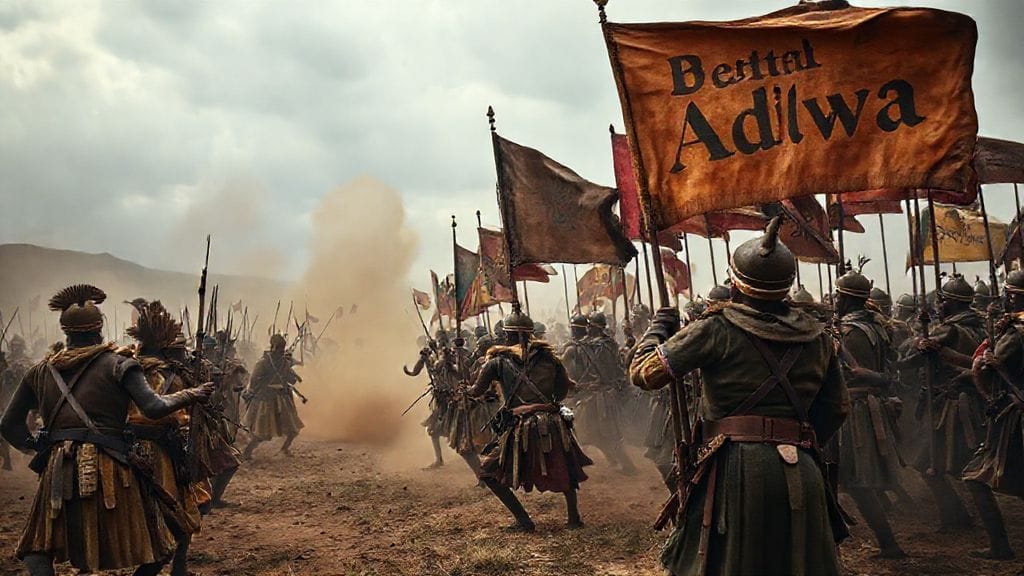
At dawn on March 1, 1896, fog masked movements as the Ethiopian forces began their coordinated assault. The Italian troops, stretched thin and caught by surprise, faced a swirling storm of warriors attacking from all sides.
The terrain amplified Ethiopian advantages—the narrow mountain passes and steep ridges restricted Italian maneuverability. Ethiopian riflemen and guerrilla fighters struck decisively, enveloping divisions before they could regroup.
Despite superior artillery and rifles, Italian formations collapsed under the weight of numbers and tactical errors. Frantic attempts to rally troops were drowned out by the roar of battle and cries of charge.
Awe-Inspiring Ethiopian Military Tactics and Courage
Ethiopian forces demonstrated an impressive blend of traditional bravery and modern warfare techniques. Menelik’s army wielded rifles, artillery, and utilized rapid communication through runners and signal fires.
The use of ambushes, night attacks, and psychological warfare sapped Italian morale. Warriors, often mounted and nimble, exploited Italian confusion to devastating effect.
Anecdotes abound, such as the famed charge led by Ras Alula Engida, who combined daring cavalry tactics with solid infantry cooperation. The battle was as much a display of improvisation and resolve as of drill and discipline.
The Role of Technology and Terrain in the Battle’s Outcome
Technology alone was not enough to secure victory for Italy. Despite enjoying modern Mauser rifles and artillery, the Italians failed to systemize their firepower effectively in an environment that negated many advantages.
The mountainous terrain favored Ethiopian forces, accustomed to local conditions, enabling them to encircle and isolate enemy detachments.
Moreover, Ethiopia’s stockpiling of arms—including modern rifles imported through Europe—allowed for sustained resistance unlike many other colonized regions, where insurgents faced overwhelming technological inferiority.
Italian Defeat: The Collapse of a Colonial Dream
By late afternoon, the Italian lines had crumbled. Thousands were killed, wounded, or captured. General Baratieri narrowly escaped with remnants of his force, retreating in disarray back to Eritrea.
The battle was a catastrophic defeat for Italy—the first time in the colonial period that an African army decisively defeated a European one. It sent shockwaves through Italy’s political establishment, leading to military inquiries and national humiliation.
The dream of an Italian empire in Africa, so vividly proclaimed in Rome’s halls, lay shattered among the rocky hills of Adwa.
Human Costs: Lives Lost and Aftermath on Both Sides
Estimates vary, but it is believed that Italian casualties numbered between 6,000 and 7,000 killed or wounded, while Ethiopian deaths were significantly higher, possibly up to 30,000.
The loss affected countless families and communities on both sides. Yet the battle also forged a collective memory of sacrifice and triumph in Ethiopia.
For Italy, the defeat led to deep political repercussions, including the fall of Prime Minister Francesco Crispi’s government. For Ethiopia, it reinforced the cost—and necessity—of unity and vigilance.
The Global Shockwave: How Adwa Changed Colonial Perceptions
News of the Ethiopian victory reverberated across the globe. The mighty European empires, accustomed to unchallenged dominance, found themselves confronted by an African nation that had not only resisted but vanquished.
Adwa became a symbol of anti-colonial resistance, inspiring enslaved peoples, oppressed minorities, and emerging nationalist movements worldwide.
British and French colonial administrators reconsidered their plans. The "dark continent" was no longer a blank check for conquest, and Ethiopia appeared as proof that indigenous sovereignty could withstand imperialism.
Adwa’s Legacy in Ethiopian National Identity and African Resistance
To Ethiopians, Adwa is not merely a battle; it is the heartbeat of national pride and resilience. It reinforced Ethiopia’s status as a sovereign state—the only African nation to successfully resist colonization during the Scramble for Africa.
Annual commemorations, monuments, and oral histories keep the memory alive. The battle remains a cornerstone teaching about unity, courage, and self-determination.
For the African diaspora, Adwa inspired Pan-Africanist leaders like Marcus Garvey and W.E.B. Du Bois, who invoked Ethiopia’s victory to galvanize calls for racial dignity and liberation.
Political Repercussions: Italy’s Retreat and European Nightmares
Italy’s humiliating defeat forced the renegotiation of colonial boundaries. The Treaty of Addis Ababa (1896) recognized Ethiopia’s sovereignty and nullified the contentious protectorate clause.
However, Italy’s wound festered, and decades later Rome would attempt renewed control over Ethiopia during Mussolini’s fascist regime—underscoring that Adwa was not an end but a milestone.
Meanwhile, European powers grew wary of the fragile balance between conquest and resistance, leading to intensified colonial administrations elsewhere.
Menelik II’s Diplomatic Triumphs After the Battle
In the aftermath, Menelik leveraged his victory on the diplomatic stage. He established formal relations with major powers, gaining recognition, trade agreements, and arms shipments.
His rule entered a golden era, with modernization projects in infrastructure, education, and governance, albeit not without internal dissent and emerging challenges.
Menelik’s image as both warrior and statesman remained emblematic of Ethiopia’s exceptionalism—an African ruler who wielded both spear and pen with equal effect.
Memory and Myth: The Battle of Adwa in Ethiopian Culture
Adwa has transcended history books to live in poetry, music, oral storytelling, and national rituals.
Legends arose of warriors whose bravery bordered on mythic, while songs honored the fallen and glorified unity.
The Empress Taytu’s valor is celebrated alongside heroic generals. Adwa is taught in schools not just as a battle, but as a moral epic of survival against the odds.
The Battle’s Influence on Pan-Africanism and Anti-Colonial Movements
Adwa’s resonance went beyond Ethiopia, inspiring African liberation movements across the continent and in the diaspora.
Figures from Marcus Garvey to Kwame Nkrumah cited Adwa as proof that colonial rule was not invincible.
The victory fueled the psychological liberation necessary for Africans to challenge imperial domination. It contributed to the emerging discourse on African identity and sovereignty.
Modern Reflections: Adwa’s Place in Contemporary Geopolitics
In modern Ethiopia and the Horn of Africa, Adwa remains a powerful symbol amid ethnic complexities and political challenges.
The battle is invoked frequently in debates around nationalism, sovereignty, and international relations.
Moreover, Ethiopia’s survival as an independent nation during colonization continues to influence regional alliances and discussions about self-determination and foreign intervention.
Preservation of the Battlefield and Commemorations Today
Today, the site of the Battle of Adwa is a protected historical landmark, attracting scholars, tourists, and patriots.
Memorials and museums detail the conflict’s events, preserving artifacts and testimonials.
Every March 1, commemorations revive the spirit of the battle, featuring parades, reenactments, and speeches that remind new generations of the price and valor of freedom.
Lessons From Adwa: Resistance, Unity, and the Fight for Sovereignty
The Battle of Adwa teaches timeless lessons about the power of unity in the face of oppression, the importance of leadership rooted in the people, and the limits of technological superiority without strategic understanding.
It stands as a beacon of hope and resistance for any people confronting domination and dispossession—an embodiment of the refusal to be erased.
Adwa’s story is one of conviction forged on the anvil of history, a testament to the enduring spirit of a nation and a continent.
Conclusion
The Battle of Adwa in 1896 is more than an episode of military history; it represents an emblematic moment where courage, unity, and strategy overcame imperial arrogance. As the dawn broke that March morning in Ethiopia’s rugged highlands, it heralded not just a decisive victory but a profound assertion of dignity and sovereignty at a time when much of Africa was being carved up without consent.
For Emperor Menelik II and his people, Adwa was the culmination of a vision—one that fused ancient traditions with modern tactics, localized strength with global awareness. For the world, it was a stark reminder that the so-called “Dark Continent” harbored nations and leaders capable of defying the tide of colonialism.
Over a century later, Adwa endures in memory and symbol, inspiring struggles for justice and freedom across Africa and beyond. It reminds us that history often pivots on the will of determined individuals and peoples who refuse to bend under the weight of oppression.
FAQs
1. What were the main causes of the Battle of Adwa?
The battle was primarily caused by conflicting interpretations of the Treaty of Wuchale, diplomatic deceit by Italy claiming Ethiopian protectorate status, and Italy’s subsequent military incursions into Ethiopian territory, met with determined Ethiopian resistance.
2. Who was Emperor Menelik II and what role did he play in the battle?
Emperor Menelik II was the Ethiopian ruler who masterminded the nation’s military and diplomatic strategies. He unified diverse groups, modernized the army, secured foreign arms, and coordinated the forces that ultimately won the battle.
3. How did the terrain influence the outcome of the Battle of Adwa?
The mountainous, rugged terrain favored Ethiopian forces familiar with the landscape. It restricted Italian troop movement, complicated supply lines, and facilitated ambushes, which proved decisive in the Ethiopian victory.
4. What were the consequences of the Battle of Adwa for Italy?
Italy suffered a humiliating defeat with heavy casualties. The loss delayed its colonial ambitions in Africa, led to political upheaval at home, and forced diplomatic recognition of Ethiopian independence in the Treaty of Addis Ababa.
5. How did the victory at Adwa affect African and global perceptions of colonialism?
Adwa challenged the myth of European invincibility and inspired anti-colonial and nationalist movements worldwide. It became a symbol of African resistance and dignity, influencing Pan-African thought and the wider discourse on sovereignty.
6. Is the Battle of Adwa commemorated in Ethiopia today?
Yes, Adwa is commemorated annually on March 1 with ceremonies, parades, and educational events. It remains a cornerstone of Ethiopian national identity and pride.
7. Were women involved in the Battle of Adwa?
Yes, Empress Taytu Betul notably commanded troops and supported logistics. Women played various roles in the battle effort, including supplying food, ammunition, and boosting morale.
8. Did the Battle of Adwa end European colonial ambitions in Ethiopia?
While the battle secured Ethiopian sovereignty at the time, Italy and other powers later renewed colonial ambitions, culminating in the Italian invasion of Ethiopia during Mussolini’s regime in the 1930s. However, Adwa remained a symbol of resistance.