Table of Contents
- Introduction
- Birth and Early Life in Kolomenskoye
- A Childhood of Power and Paranoia
- Coronation as the First Tsar of Russia
- Early Reforms and Achievements
- The Oprichnina – Rule of Fear
- Wars and Foreign Policy
- Personal Tragedies and Mental Decline
- Cultural and Religious Patronage
- Death and Succession
- Legacy of Ivan the Terrible
- Anecdotes and Lesser-Known Facts
- External Resource
- Internal Link
Introduction
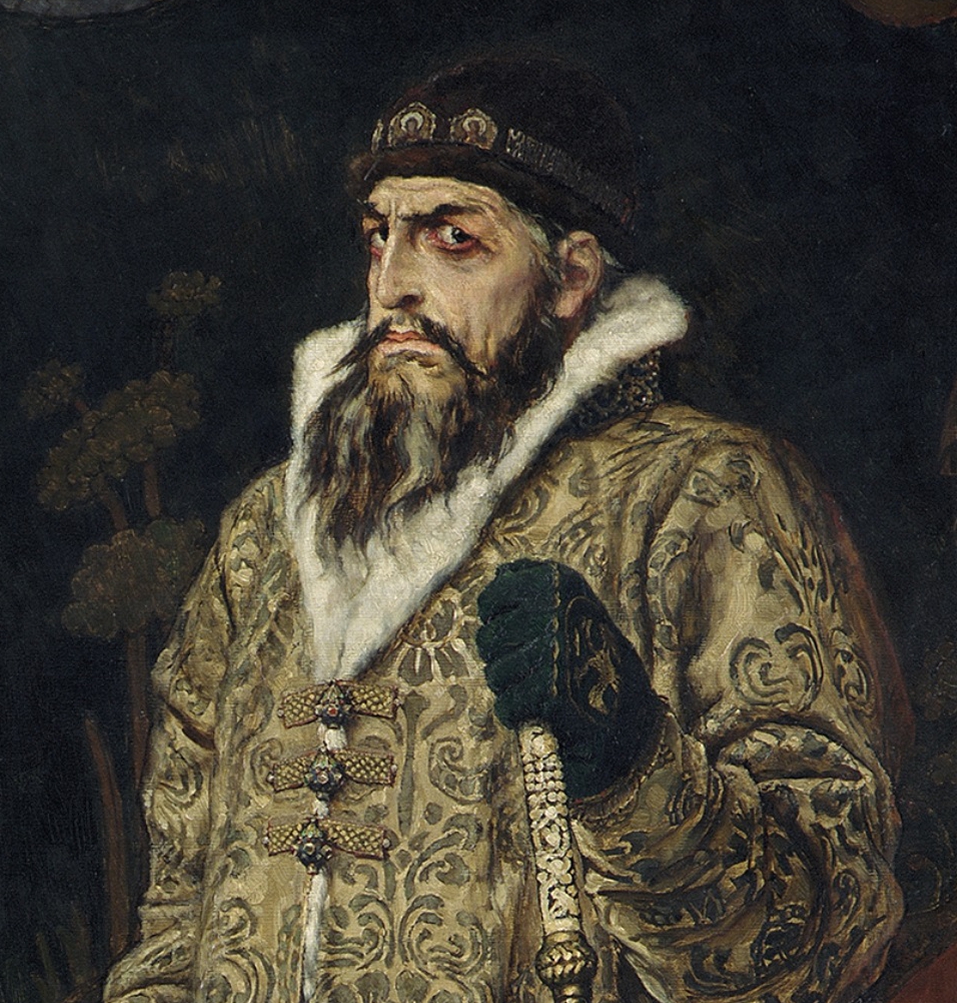
Ivan IV Vasilyevich, known to history as Ivan the Terrible, was born on August 25, 1530, in Kolomenskoye, near Moscow. His story is one of sharp contrasts — a ruler who modernized the Russian state, expanded its territory, and strengthened the monarchy, but who also unleashed a reign of terror that left scars on his people and court. It’s fascinating, isn’t it? How a single man could be both a visionary leader and a source of fear.
Birth and Early Life in Kolomenskoye
Kolomenskoye was then a royal estate, a place of rolling green hills and wooden palaces. Ivan was born into the ruling Rurik dynasty, the son of Vasili III and Elena Glinskaya. His birth was celebrated across the land, but his early life would be shaped by political intrigue and tragedy.
When Ivan was just three years old, his father died. The boy was proclaimed Grand Prince of Moscow, but as he was still a child, his mother ruled as regent. Her sudden death when Ivan was eight — possibly from poisoning — left him at the mercy of boyar (noble) factions competing for influence.
A Childhood of Power and Paranoia
Raised in the Kremlin yet often neglected, Ivan grew up surrounded by corruption and cruelty. He witnessed the boyars’ violent power struggles, which planted in him a deep mistrust and paranoia. Later, he would use these memories to justify his authoritarian rule.
There are accounts that, even as a young boy, Ivan displayed a fascination with power and a cruel streak. He would throw animals from Kremlin walls for sport — a chilling foreshadowing of his future.
Coronation as the First Tsar of Russia
In 1547, at the age of 16, Ivan was crowned as the first Tsar of All Russia. This title elevated him beyond that of a traditional Grand Prince, aligning him more with the grandeur of the Byzantine emperors and placing him as God’s chosen ruler over all Rus’.
The coronation was filled with symbolic meaning — Ivan wore the Monomakh’s Cap, received the scepter, and was blessed in the Dormition Cathedral. This moment was not just political theater; it set the tone for a centralized, autocratic Russian state.
Early Reforms and Achievements
During his early years as tsar, Ivan seemed determined to strengthen and modernize Russia. He introduced a new law code (Sudebnik of 1550), reformed the military, and improved local governance. He also convened the first Zemsky Sobor (assembly of the land), giving a voice — however limited — to different societal groups.
He expanded trade, encouraged diplomatic ties with England, and supported the conquest of Kazan and Astrakhan, bringing vast new territories under Russian control. For a time, it seemed Ivan’s reign would be remembered as one of progress and stability.
The Oprichnina – Rule of Fear
But in the 1560s, everything changed. The death of his beloved first wife, Anastasia Romanovna, plunged Ivan into grief and suspicion. Convinced that boyars had poisoned her, he created the Oprichnina, a separate territory under his direct control, guarded by a loyal force of oprichniki dressed in black.
The Oprichnina became a tool of terror. Entire towns were destroyed, nobles executed, and property confiscated. The infamous 1570 massacre of Novgorod, where thousands were killed under accusations of treason, remains one of the darkest episodes in Russian history.
Wars and Foreign Policy
Ivan sought to expand Russia’s influence westward through the Livonian War (1558–1583). At first, his forces gained territory, but over time, defeats at the hands of Sweden, Poland-Lithuania, and internal unrest drained the country’s resources.
Despite his military ambitions, these prolonged wars weakened Russia economically and left parts of the country depopulated.
Personal Tragedies and Mental Decline
The later years of Ivan’s reign were marked by increasing instability. His temper became uncontrollable, leading to a tragic event in 1581 when he struck his eldest son, Ivan Ivanovich, during a heated argument, killing him. This left the succession to his less capable son, Feodor.
Ivan’s paranoia deepened; executions became more frequent, and the court lived in constant fear of the tsar’s wrath.
Cultural and Religious Patronage
Yet even in his darker years, Ivan remained a patron of culture and religion. He ordered the construction of Saint Basil’s Cathedral in Moscow, a masterpiece of Russian architecture whose colorful onion domes still amaze visitors today.
He corresponded with European rulers and took an interest in theology, sometimes engaging in deep religious debates with church leaders.
Death and Succession
Ivan the Terrible died on March 28, 1584, while playing chess. His sudden death marked the end of a reign that had seen Russia rise in power but also suffer under brutal oppression. His successor, Feodor I, lacked the strength to govern effectively, and within a few years, Russia would enter the chaotic Time of Troubles.
Legacy of Ivan the Terrible
Ivan’s reign left a mixed legacy. On one hand, he laid the foundations for a centralized Russian state and expanded its borders. On the other, his use of terror and ruthless policies left deep wounds in the nation’s psyche. He remains one of history’s most controversial rulers — both admired for his vision and condemned for his cruelty.
Anecdotes and Lesser-Known Facts
- Ivan had an extensive library, rumored to contain rare Byzantine manuscripts, though it has never been found.
- He once proposed marriage to Queen Elizabeth I of England — she declined.
- His nickname “Grozny” in Russian is better translated as “Formidable” rather than “Terrible.”
External Resource
🌐 Wikipedia – Ivan the Terrible