Table of Contents
- The Unseen Fury: Dawn of the Jōgan Sanriku Tsunami
- Japan in the Mid-9th Century: A Land of Growth and Fragility
- The Geological Forces Beneath: Understanding the Tectonic Setting
- Early Signs and Sudden Catastrophe: July 13, 869
- The Tsunami’s Wave: Nature’s Merciless Sweep over Sanriku Coast
- Eyewitness Shadows: Piecing Together Accounts from the Past
- Aftermath of the Deluge: Societal and Economic Ruptures
- Lost Villages and Changed Landscapes: The Human Toll
- The Silent Centuries: How Memory Faded into Myth
- Rediscovering the 869 Tsunami: Archaeological Revelations
- Sediments Speak: The Science Unveiling an Ancient Disaster
- Warnings from the Past: Lessons for Modern Japan
- The 2011 Echo: Comparing Jōgan Sanriku Tsunami with the Tōhoku Disaster
- Cultural Reflections: How the 869 Event Shaped Local Lore
- Japan’s Evolving Relationship with Earthquakes and Tsunamis
- The Importance of Historical Tsunamis in Contemporary Disaster Preparedness
- The Role of Oral Tradition and Written Records in Disaster History
- Resilience of Communities: Then and Now
- Scientific Advances Since 869: Predicting the Next Wave
- A Glimpse Forward: Honoring the Past to Protect the Future
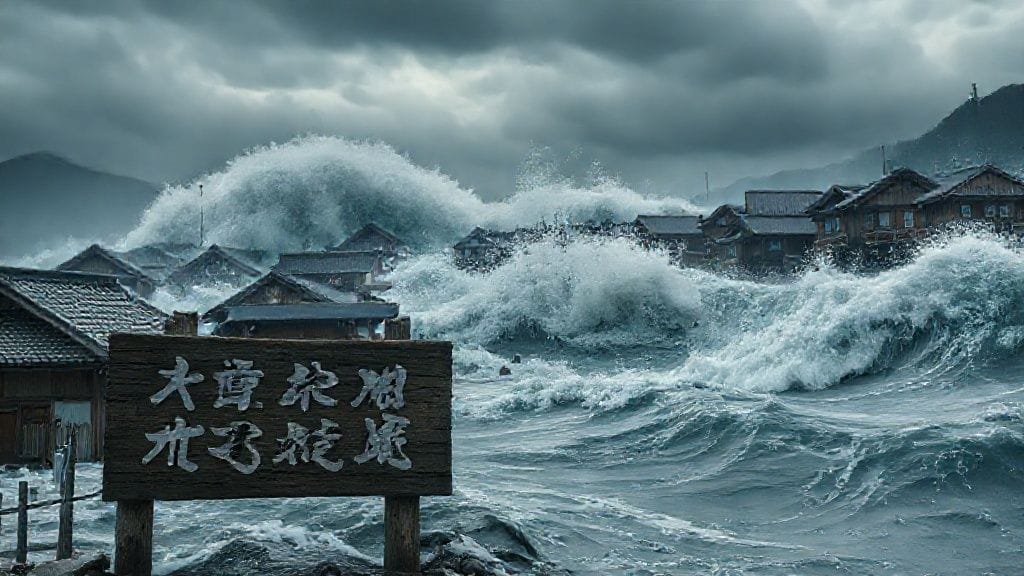
The morning of July 13, 869, in the rugged coastline of Sanriku, Japan, began as any other summer day. Fishermen prepared their nets, farmers tended their fields, and the sleepy villages awakened to the quiet murmur of the Pacific Ocean. Yet, beneath this tranquil dawn, the earth was stirring with a hidden menace. Without warning, the ground quivered and the sea roared with an unnatural might. A monstrous wave, born from a colossal earthquake beneath the seabed, raced toward the shores, swallowing entire settlements in its unforgiving embrace. It was a moment of incomprehensible devastation that would echo through centuries, a catastrophe now called the Jōgan Sanriku tsunami.
This event, though shrouded in the mists of time, offers a grim window into nature’s unpredictability and the vulnerabilities of human civilizations. It predates the massive tsunami of 2011 by over a millennium, yet its lessons resonate just as profoundly today. Exploring this ancient disaster uncovers not only the geological forces that shaped it but also the human stories, the loss, and the slow march toward remembrance and resilience.
Japan in the Mid-9th Century: A Land of Growth and Fragility
The 9th century in Japan was a complex mosaic of political consolidation and cultural flourishing. The Heian period (794–1185) was underway, marked by an aristocratic courtlife centered in Heian-kyō (modern Kyoto), which saw the blossoming of art, poetry, and governance. Yet, at its fringes—particularly along the northeastern coasts—the power of the central court waned, and communities lived in a delicate balance with nature’s moods.
Sanriku, a rugged stretch of coastline faced with fierce winters and abundant marine life, sustained many small fishing and farming villages. These communities depended heavily on the sea, less equipped than today for the brutal surprises it could unleash. Beyond human society, the land itself was perched at the intersection of immense geological threats—where the Pacific Plate slid beneath the North American and Eurasian Plates, setting the stage for violent upheavals.
The Geological Forces Beneath: Understanding the Tectonic Setting
The Japanese archipelago itself is a testament to the ceaseless activity of the Earth’s crust. Positioned above four converging tectonic plates, Japan has long been a natural crucible of earthquakes and volcanic eruptions. The Sanriku coast, in particular, lies perilously close to the Japan Trench, where the Pacific Plate subducts beneath the continental plates with slow but inexorable force.
These motions accumulate stress along fault lines under the ocean floor, which can release suddenly in megathrust earthquakes. When such quakes rupture the seafloor, they displace enormous volumes of water, generating tsunamis that surge outward at the speed of jetliners.
In the 9th century, there was neither understanding nor warning systems to anticipate such disasters. The people of Sanriku faced the full fury of nature’s power without preparation or protection.
Early Signs and Sudden Catastrophe: July 13, 869
Historical records—particularly the Nihon Sandai Jitsuroku, a Japanese chronicle compiled in the late 9th century—offer haunting glimpses of the disaster. They describe a violent earthquake shaking the region, followed rapidly by a towering tsunami that engulfed the coast. The tremors, lasting several minutes, were among the strongest ever recorded in the chronicles of that era.
According to these documents, the tsunami's waves traveled far inland, swallowing villages, destroying rice fields, and obliterating roads and fortifications. Though precise accounts are scarce, local legends and folklore preserved in oral tradition spoke for generations of waters rising like mountains consuming all in their path.
Some modern studies estimate the earthquake could have been a magnitude 8.3 or greater—a truly massive event even by today’s standards.
The Tsunami’s Wave: Nature’s Merciless Sweep over Sanriku Coast
The coastal topography of Sanriku is a jagged mosaic of cliffs, bays, and inlets, which simultaneously amplified and complicated the tsunami's destructive force. Waves reached heights estimated between 20 to 30 meters (65 to 100 feet), dwarfing any normal ocean swell.
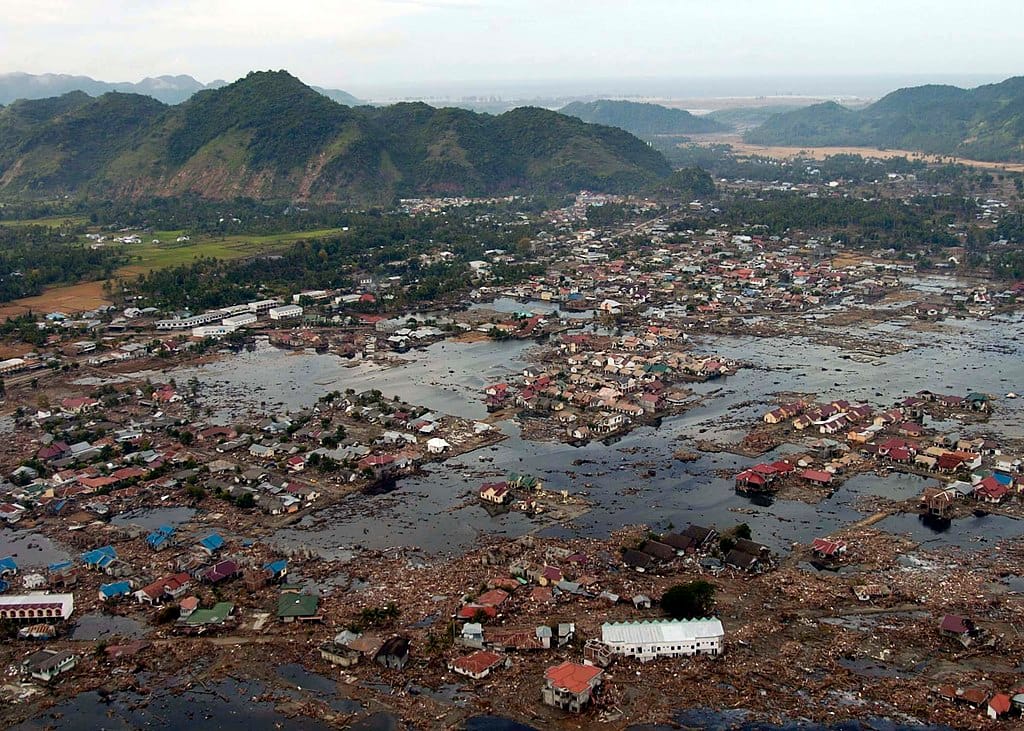
Such waves would have swept away everything from flimsy wooden huts to sturdier stone structures, lifting boats and hurling them inland, uprooting trees, and choking the fertile plains with saltwater.
It is remarkable—yet chilling—that the power of this natural event has been etched not only in ancient texts but also in the very sediments beneath the soil, whispering to modern scientists the tale of the water’s reach.
Eyewitness Shadows: Piecing Together Accounts from the Past
While no direct eyewitness accounts survive, historians rely on chronicles like the Nihon Sandai Jitsuroku and later regional documents to reconstruct events. Description is sparse but evocative: after the great shake, a sudden withdrawal of the sea preceded the towering wave’s arrival—an ominous sign recognized in tsunami science even today.
Anecdotes describe survivors fleeing to higher grounds and temples, as people helplessly watched their homes vanish. Some oral traditions even speak of mysterious creatures or divine portents, embedding the event deeply into local consciousness.
One cannot help but feel the stark terror, confusion, and grief that must have gripped the affected communities.
Aftermath of the Deluge: Societal and Economic Ruptures
In the immediate wake of the tsunami, the devastated communities faced ruin beyond the loss of life. Agricultural lands were salted and rendered infertile for years, disrupting food supplies. Fishing boats and harbors were destroyed, cutting off crucial economic lifelines.
The destruction of settlements also weakened political control in the northeast, as the Heian court’s reach over the region was limited even before the disaster. Reconstruction efforts would have been slow and constrained by technological and logistical limitations of the epoch.
Moreover, psychological trauma and cultural disruption must have rippled through generations.
Lost Villages and Changed Landscapes: The Human Toll
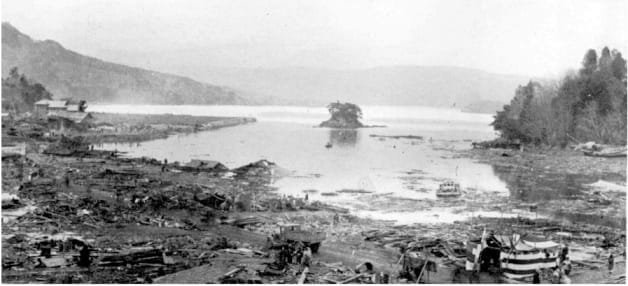
Archaeological excavations along the Sanriku coast reveal layers of tsunami deposits, interspersed with remnants of 9th-century habitations. Entire villages were buried beneath sand and debris, their residents swept away by a merciless tide.
Skeletons discovered in mass graves provide silent testimony to the human cost. The demographic decline in the region—evidenced by radiocarbon dating and population markers—corroborates the scale of loss.
Yet, amid destruction, some communities undoubtedly persisted, rebounding slowly through resilience and adaptation.
The Silent Centuries: How Memory Faded into Myth
After the 869 tsunami, the region experienced relative calm in terms of similarly massive tsunamis for centuries. As generations passed, detailed memory of the disaster dimmed, becoming interwoven with myth and legend.
The event was relegated to cryptic references in historical documents. Coastal populations, however, retained cultural narratives and folk wisdom about the dangers of the sea, which helped preserve a modicum of preparedness.
But this was insufficient to prevent future catastrophe, as the tragic events of 2011 would show.
Rediscovering the 869 Tsunami: Archaeological Revelations
It was not until the late 20th century that Japanese geologists and archaeologists pieced together physical evidence of the Jōgan Sanriku tsunami. Thick deposits of sand and marine sediments found far inland, dating precisely to the mid-9th century, became a keystone in understanding Japan’s tsunami history.
The discovery of uprooted tree remains and broken artifacts within these layers offered a tangible bridge to the distant calamity described in ancient texts.
This rediscovery revolutionized the understanding of Japan’s vulnerability and historical disaster patterns.
Sediments Speak: The Science Unveiling an Ancient Disaster
Modern techniques like radiocarbon dating, sediment core analysis, and tsunami simulation models combine to paint a vivid, quantifiable picture of the 869 event. These insights reveal wave heights, inundation distances, and the earthquake’s probable magnitude.
Scientists now view the Jōgan Sanriku tsunami as a benchmark for identifying “tsunami earthquakes,” which can produce devastating waves even where ground shaking intensity might be deceptive.
The sediment layers, sometimes over 3 meters thick inland, speak volumes about the violent force unleashed—and help model future risk.
Warnings from the Past: Lessons for Modern Japan
The reinterpretation of the 869 tsunami serves as a grim historical warning. Prior to the 2011 Tōhoku disaster, many believed that a similar scale event in Sanriku’s northeast was centuries away. Yet this ancient trauma reminds us that catastrophic tsunamis in this region are cyclical, separated by centuries rather than millennia.
Consequently, disaster preparedness in Japan has integrated this long historical perspective. Warning systems, evacuation routes, and public awareness campaigns draw from these lessons, underscoring the necessity of vigilance against complacency.
The 2011 Echo: Comparing Jōgan Sanriku Tsunami with the Tōhoku Disaster
The 2011 Great East Japan Earthquake and Tsunami brought terrifyingly close the nightmare first encountered in 869. The wave heights, inland penetration, and economic damage were similar in scale and scope.
This parallel shocked the world and amplified the significance of historical records in disaster science.
Indeed, meticulous research into the Jōgan Sanriku tsunami inspired urgency and informed emergency response frameworks after 2011.
Cultural Reflections: How the 869 Event Shaped Local Lore
The Jōgan Sanriku tsunami transcended its immediate destruction to embed itself in local folklore. Stories of vengeful sea gods, protective shrines, and the “Fury of the Ocean” persist in Sanriku’s cultural identity.
These narratives served both as cautionary tales and spiritual frameworks for coping with loss and unpredictability, reinforcing communal bonds and respect for nature.
Japan’s Evolving Relationship with Earthquakes and Tsunamis
From the 9th century to today, Japan has continuously adapted to its precarious geophysical setting. From simple wooden buildings raised on stilts to elaborate early warning systems, this evolution reflects humanity's enduring struggle with the forces of the Earth.
The Jōgan Sanriku tsunami remains a poignant milestone in this ongoing dialogue, reminding us of nature’s might and the need for humility.
The Importance of Historical Tsunamis in Contemporary Disaster Preparedness
The archaeological and historical reconstruction of events like the 869 tsunami dramatically heighten national and global awareness of tsunami recurrence intervals and risk zones.
They underscore that preparedness must incorporate long-term geological records—not just modern experience—to anticipate future disasters.
Such knowledge helps safeguard lives, infrastructure, and culture in vulnerable regions worldwide.
The Role of Oral Tradition and Written Records in Disaster History
In a land where written chronicles were scarce and prone to loss, oral transmission of disaster memory carried vital warnings across generations. The interplay between tangible artifacts, sedimentary evidence, and ancient texts demonstrates a compelling synergy.
Working in tandem, these sources allow historians and scientists to reconstruct events with increasing fidelity, enriching our collective comprehension of natural hazards.
Resilience of Communities: Then and Now
Despite immense suffering, the resilience of Sanriku’s communities shines through history’s shadows. Continuously rebuilding after repeated catastrophes, these populations demonstrate remarkable fortitude.
Modern disaster response, centered around community engagement and local knowledge, draws inspiration from such historic endurance, emphasizing humanity’s capacity to adapt and survive.
Scientific Advances Since 869: Predicting the Next Wave
Today, seismologists monitor plate activity with unprecedented precision. Early warning systems, tsunami simulation models, and evacuation drills are fruits of centuries of evolving research.
Advances in paleotsunami studies pioneered by uncovering events like the 869 disaster foster hope that future waves can be anticipated—and their human cost lessened.
A Glimpse Forward: Honoring the Past to Protect the Future
The story of the Jōgan Sanriku tsunami is a testament to the intertwined fates of nature and humanity. Remembering this tragedy is not just an academic exercise but a moral imperative.
By honoring those lost more than a millennium ago, we commit anew to respecting natural forces, strengthening resilience, and guarding against complacency.
This ancient wave, silent beneath layers of earth, continues to speak—if only we choose to listen.
Conclusion
The Jōgan Sanriku tsunami of July 13, 869, stands as a haunting reminder of nature’s sudden cruelty and the fragile balance of human societies with geological forces. Though over a thousand years have passed, its echoes resonate deeply in Japan’s cultural memory and modern scientific understanding. The event reveals not only the devastating power of the Pacific but also the unwavering resilience of coastal communities who faced total destruction and chose to rebuild.
In a world increasingly aware of climate change and natural disasters, the lessons carved by this ancient wave are invaluable. They compel us to maintain vigilance, to blend traditional knowledge with modern science, and to harness collective memory as a beacon of survival. The Jōgan Sanriku tsunami teaches us about loss—but more importantly, about hope, adaptation, and the enduring dialogue between humanity and the Earth’s tumultuous heart.
FAQs
1. What caused the Jōgan Sanriku tsunami in 869?
The tsunami was caused by a massive megathrust earthquake resulting from the sudden release of stress where the Pacific tectonic plate subducts beneath the continental plates along the Japan Trench.
2. How powerful was the earthquake that triggered the tsunami?
Modern estimates suggest the earthquake had a magnitude of approximately 8.3 or higher, capable of generating waves over 20 meters high.
3. How did the 869 tsunami impact Japan’s population and infrastructure?
It destroyed numerous coastal villages, obliterated farmland through saltwater intrusion, and disrupted economic and political stability in the northeastern region of Japan.
4. Why was the 869 tsunami forgotten for so long?
Over centuries, detailed memories faded as generations passed without similar disasters. The event became embedded in folklore rather than explicit historical record until rediscovered by modern science.
5. How did researchers rediscover the 869 tsunami event?
Archaeologists and geologists uncovered tsunami sediment layers far inland, dated to the 9th century, matching ancient chronicles, confirming the historical tsunami’s scale.
6. What lessons did Japan draw from the Jōgan tsunami for modern disaster preparedness?
Understanding that major tsunamis occur cyclically triggered improvements in early warning systems, evacuation planning, and public awareness, emphasizing the need to learn from historical events.
7. How does the 869 tsunami relate to the 2011 Tōhoku disaster?
Both involved massive megathrust earthquakes and devastating tsunamis on the same Sanriku coast, highlighting a repeating pattern of natural hazards in the region.
8. How has culture reflected the memory of the 869 tsunami?
Local folklore, spiritual beliefs, and communal stories have preserved the tsunami’s legacy, teaching respect for the sea and cautionary lessons passed through generations.