Table of Contents
- The Final Days in Delft: December 1675
- The Quiet Departure of a Master: Vermeer’s Death Unfolds
- The City of Delft under Shadow: A Context of Loss and Change
- Vermeer’s Life in Retrospect: From Promise to Poverty
- The Dutch Republic in the Seventeenth Century: A Time of Turmoil and Glory
- Artistry amidst Adversity: Vermeer’s Unique Vision and Struggles
- The Immediate Aftermath: Family, Friends, and a Widow’s Plight
- The Fate of Vermeer’s Workshop and Artistic Legacy
- Rediscovering Vermeer: How His Reputation Evolved Posthumously
- Delft’s Role in the Dutch Golden Age: A City at a Crossroads
- Economic Pressures and Artistic Patronage in Late Seventeenth-Century Netherlands
- A Portrait of Mortality: Reflections on Death and Legacy in Vermeer’s Time
- The Hidden Network of Delft’s Artistic Community
- Political Undercurrents: The Dutch Republic’s Fragile Stability in 1675
- The Cultural Memory of Vermeer: From Obscurity to Revered Icon
- Modern Scholarship and the Quest to Understand Vermeer’s Death
- Symbolism of December 15, 1675: A Turning Point in Dutch Art History
- Vermeer’s Death in Art and Literature: Myth and Reality
- The Global Impact: How Vermeer’s Passing Affected Art Beyond Dutch Borders
- Conclusion: The End of an Era, The Beginning of Immortality
- FAQs
- External Resource
- Internal Link
The Final Days in Delft: December 1675
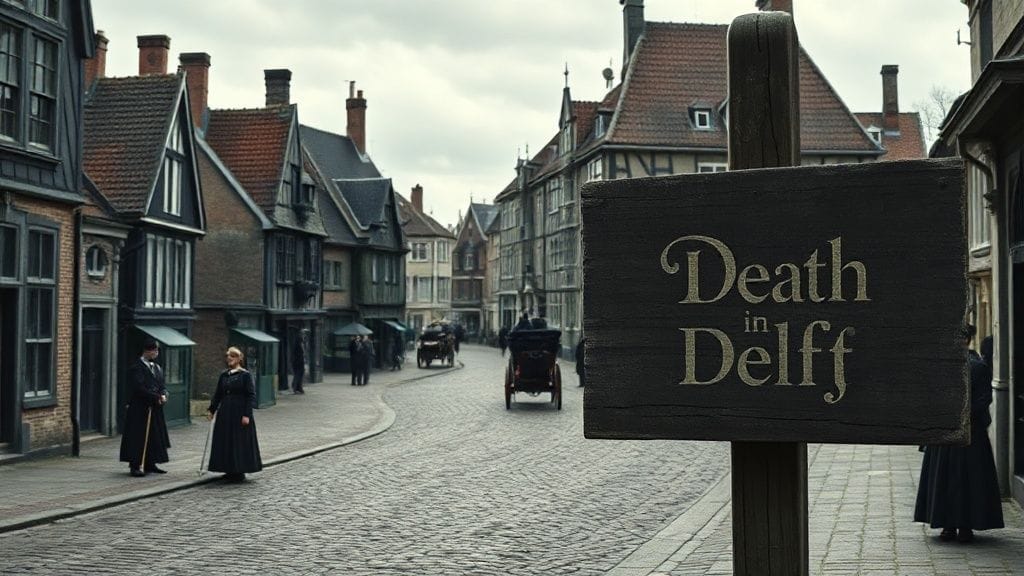
The winter of 1675 cloaked Delft in a pale shroud of frost and mist as the cold crept into every corner of the city. It was a quiet day in mid-December, yet beneath the stillness, an unspoken sorrow weighed on the hearts of those who knew the gentle artist, Jan Vermeer. The master painter, whose luminous canvases had captured the intimate beauty of everyday life with unmatched subtlety, breathed his last on the 15th of December, leaving behind a city—and a world—destined to forget him, at least for a time.
Vermeer’s death was not marked by pomp or grandeur. Instead, it was a private, intimate farewell, witnessed by family and perhaps a few close friends. In the flickering candlelight of a modest Delft household, a life filled with both brilliance and hardship quietly slipped away. But this departure was more than the end of a man’s life; it was the closing chapter of a luminous, if tragically brief, artistic career during one of the most tumultuous eras in Dutch history.
The Quiet Departure of a Master: Vermeer’s Death Unfolds
On that December day, the streets of Delft remained largely indifferent to their losing son. Vermeer passed away at the age of only 43 or 44—relatively young, even by the standards of the 17th century—after a short illness, which historical documents suggest was a sudden and severe fever or stroke. His wife, Catharina Bolnes, stood at his side, a widow now facing the daunting task of raising their eleven children alone in a fragile economic reality.
News of the death sailed quietly through the tight-knit community. Unlike some of his illustrious contemporaries, Vermeer had not enjoyed great wealth or fame in his lifetime. His works were treasured by a small circle of patrons but largely uncelebrated by the broader art market. His passing therefore did not spark immediate waves of public grief or widespread mourning. Yet the seed of legacy had been planted, imperceptible then, that would flourish centuries later.
The City of Delft under Shadow: A Context of Loss and Change
Delft in 1675 was at once a city proud of its heritage and wary of its uncertain future. A vibrant hub during the Dutch Golden Age, it had been the birthplace or home of legendary figures—Hugo Grotius, Antonie van Leeuwenhoek, and of course, Johannes Vermeer himself. But the latter half of the century brought economic strain as the Dutch Republic faced protracted warfare, shifting trade routes, and internal political tensions.
The plague, which ravaged Europe intermittently during this period, still haunted the collective memory. The shadow of mortality was a constant presence, reminding all that life’s fragile beauty was fleeting. Within this milieu, Vermeer’s death was not unique, but his passing symbolized the fading of a creative light in a world growing harsher and more pragmatic.
Vermeer’s Life in Retrospect: From Promise to Poverty
To understand the impact of Vermeer’s death, one must look back on his life—a tale woven with contrasts. Born in Delft in 1632, at the height of the Dutch Golden Age, Vermeer’s trajectory seemed initially hopeful. Trained under local artists and possibly inspired by the likes of Rembrandt and Pieter de Hooch, his early work showed promise marked by innovation in the use of light and perspective.
Yet, despite undeniable talent, Vermeer struggled financially throughout his career. He was a member of the Delft Guild of Saint Luke but produced fewer than fifty known paintings, a modest output that hardly sustained nine children and a modest household. His artistic path was riddled with interruptions—perhaps teaching, administrative duties as a guild officer, or the economic realities of maintaining a family.
His death came like the extinguishing of a faint but precious glow—a reluctant farewell to unfulfilled potential and quiet heroism in the face of hardship.
The Dutch Republic in the Seventeenth Century: A Time of Turmoil and Glory
Jan Vermeer’s life and death cannot be separated from the broader currents of the Dutch Republic in the 1600s. This period was known as the Dutch Golden Age, a time of unprecedented economic growth, cultural flourishing, and global maritime power. Cities like Amsterdam, Rotterdam, and indeed Delft thrived as centers of commerce, science, and the arts.
However, this glittering surface masked ongoing conflict. The Republic contended with continuing wars against England and France, religious tensions between Calvinists and Catholics, and the pressures of managing a sprawling colonial trade network. Within this complex framework, artists like Vermeer found themselves navigating not only brushes and canvases but also the shifting tides of political and social change.
Artistry amidst Adversity: Vermeer’s Unique Vision and Struggles
Vermeer’s paintings are renowned for their serene representation of domestic scenes, luminous interiors, and the subtle play of light. His painstaking technique, involving multiple glazes and extraordinary attention to detail, set him apart. Yet, the very qualities that made his art exceptional also meant a slow production pace, unsuitable for the pressures of market demand.
It is incredible to reflect that an artist of such brilliance was also a man caught between creativity and survival. Vermeer’s quiet life was punctuated by periods of financial crisis, exacerbated by the death of his father-in-law and the economic disturbances of the 1670s. The cumulative toll of these pressures surely weighed heavily on his final days.
The Immediate Aftermath: Family, Friends, and a Widow’s Plight
After Vermeer’s death, Catharina Bolnes faced a bleak future. The family was deeply indebted, and with eleven children to support, she was forced to appeal to the local church and guild for help. Records reveal that several of Vermeer’s paintings were sold posthumously to cover debts and secure the family’s survival.
Friends and patrons of the artist likely felt the loss keenly, though public recognition was limited. The artistic circles in Delft, small and interconnected, learned to navigate the absence of a quiet yet remarkable voice—a presence short-lived but deeply missed.
The Fate of Vermeer’s Workshop and Artistic Legacy
Vermeer left no known apprentices or heirs who inherited his artistic mantle. His workshop ceased almost immediately after his death, with no students recorded to carry on his distinctive style. This abrupt end contributed to the near anonymity that settled over his name throughout the 18th and early 19th centuries.
Only a handful of collectors possessed his works, and the art market favored more prolific painters. Yet beneath the surface, Vermeer’s art remained, patiently waiting for rediscovery—a timeless beacon whose light would one day shine brighter than ever.
Rediscovering Vermeer: How His Reputation Evolved Posthumously
It was not until the late 19th century that Vermeer’s genius was truly recognized. Art historians, including Théophile Thoré-Bürger, championed his work, sparking a resurgence of interest across Europe. Today, Vermeer is regarded as one of the greatest painters of the Dutch Golden Age, his few works treasured worldwide.
Paradoxically, the obscurity following his death perhaps preserved the mystique that only centuries later would fascinate audiences, inspiring countless books, films, and exhibitions.
Delft’s Role in the Dutch Golden Age: A City at a Crossroads
Delft was more than Vermeer’s home; it was a microcosm of Dutch cultural and economic vitality. Artisans, scientists, and merchants mingled within its walls. The city’s architecture and canal systems mirrored the innovation and prosperity of the era, even as political tensions simmered underneath.
Vermeer’s death coincided with a subtle shift in Delft’s fortunes—signaling the waning of the city’s preeminence. The grace and tranquility of its domestic scenes mirrored the fragile beauty of a city grappling with the inevitable changes of time.
Economic Pressures and Artistic Patronage in Late Seventeenth-Century Netherlands
The economics of art in Vermeer’s time were complex and often unforgiving. Patronage depended on the whims of wealthy merchants and nobility, who favored certain genres or artists. Political instability, outbreaks of disease, and shifts in trade revenue all affected the disposable income available for the arts.
Vermeer’s intimate genre scenes, though masterful, may not have aligned with market demands during his life, leading to his economic difficulties. His death thus highlighted the harsh realities artists faced behind the scenes of cultural flourishing.
A Portrait of Mortality: Reflections on Death and Legacy in Vermeer’s Time
Death in the seventeenth century was an ever-present reality, shaping art, literature, and daily life. The plague, poor medical knowledge, and the unpredictability of fate instilled a profound awareness of mortality.
Vermeer’s passing amid these realities invites reflection on not just the loss of a man but the fragility of creative endeavor. His art, capturing fleeting moments of beauty and tranquility, resonates as a defiant response to the impermanence that surrounded him.
The Hidden Network of Delft’s Artistic Community
Though Vermeer’s oeuvre was small, he was part of a vibrant artistic community. Names like Pieter de Hooch and Carel Fabritius reflect a circle of painters inspired and influenced by each other’s work. The guild of Saint Luke bound these artists in professional camaraderie amidst competition and collaboration.
Vermeer’s death removed a gentle, observant presence from this network, closing a chapter of intimate, light-filled artistry in the city’s history.
Political Undercurrents: The Dutch Republic’s Fragile Stability in 1675
The year 1675 was politically fraught. The Dutch Republic faced ongoing conflicts with France under Louis XIV, alongside internal power struggles between republican and monarchical factions. These stresses affected national morale and economic stability.
Vermeer’s personal struggles and death cannot be disentangled from this wider political turbulence, reflecting how individual destinies intertwine with the grand narrative of statecraft.
The Cultural Memory of Vermeer: From Obscurity to Revered Icon
In the centuries following his death, Vermeer’s name all but vanished from the forefront of art history, replaced by more prolific or fashionable painters. Yet, his work endured in private collections, museums, and the faint whispers of connoisseurs.
The 19th-century revival repositioned Vermeer as a symbol of purity and quiet genius—a cultural icon now inseparable from the aura of the Dutch Golden Age itself.
Modern Scholarship and the Quest to Understand Vermeer’s Death
Today, scholars continue to debate the circumstances of Vermeer’s death, his artistic methods, and his biography. Advanced imaging techniques unveil secrets beneath the paint, while archival research sheds light on his financial struggles and family life.
The mystery of his early death adds to the layered fascination with an artist who remains at once elusive and profoundly human.
Symbolism of December 15, 1675: A Turning Point in Dutch Art History
December 15, 1675, marks more than just a date on the calendar; it symbolizes the closing of an unparalleled chapter in Dutch art. Vermeer’s death heralded the diminishing of an era defined by intimate realism and classical balance.
Yet, paradoxically, it also sparked a long-term awakening—one that would recognize the invaluable contribution of an artist whose vision transcended his time.
Vermeer’s Death in Art and Literature: Myth and Reality
Vermeer’s life and death have inspired a wealth of artistic and literary responses. From novels that fictionalize his biography to paintings that pay homage to his style, the narrative has grown mythic.
Despite gaps in historical evidence, the emotional power of this story persists, reminding us that art often endures as legend shaped by memory and imagination.
The Global Impact: How Vermeer’s Passing Affected Art Beyond Dutch Borders
Though his immediate influence was limited by his early death and modest reputation, Vermeer’s rediscovery altered global perceptions of Dutch art. His techniques influenced Impressionists and modern artists who marveled at his delicate use of light and composition.
Vermeer’s death, therefore, was not an end but a prelude to a broad and lasting impact on the art world.
Conclusion: The End of an Era, The Beginning of Immortality
Jan Vermeer’s death on December 15, 1675, in his beloved Delft was a quiet farewell to a man whose vision encapsulated the subtle beauty of a fleeting moment. Though his life was marked by hardship, his legacy is a testament to the power of artistic perseverance amid adversity.
In the stillness of that winter day, a light went out—only to be relit centuries later by those who discovered the silent grace within his canvases. Vermeer’s journey from obscurity to immortality embodies not only the story of one artist but the enduring human quest to capture beauty amidst the impermanence of life.
FAQs
Q1: What were the circumstances surrounding Jan Vermeer’s death?
A1: Vermeer died suddenly on December 15, 1675, likely from illness such as a fever or stroke. His death was relatively unnoticed publicly due to his limited fame and financial difficulties.
Q2: How did Vermeer’s death affect his family?
A2: His widow, Catharina Bolnes, was left to care for eleven children under challenging financial conditions. The family’s debts compelled the sale of some of Vermeer’s paintings.
Q3: Why was Vermeer not famous during his lifetime?
A3: Vermeer produced relatively few paintings and worked slowly. His intimate, domestic scenes were not widely favored by the market, limiting his fame during his life.
Q4: What role did Delft play in Vermeer’s life and death?
A4: Delft was Vermeer’s lifelong home and the center of his creative work. The city’s social, economic, and political climate deeply influenced his life and posthumous legacy.
Q5: How has Vermeer’s reputation changed since his death?
A5: Rediscovered in the 19th century, Vermeer’s work is now celebrated globally as masterpieces of the Dutch Golden Age, highlighting his extraordinary technique and artistic vision.
Q6: What does Vermeer’s death tell us about the wider context of the Dutch Republic in 1675?
A6: His death occurred amid political instability, economic challenges, and cultural shifts, reflecting the fragility beneath the Dutch Republic’s Golden Age prosperity.
Q7: Are there any myths surrounding Vermeer’s death?
A7: Some myths and fictionalizations exist due to limited historical records, but factual details point to a natural death possibly from sudden illness.
Q8: How did Vermeer’s death influence future generations of artists?
A8: While immediate influence was minimal, his rediscovered works inspired later painters, including Impressionists, who admired his mastery of light and composition.

