Table of Contents
- The Dawn Before Battle: Tensions in East Asia at the Close of the 19th Century
- Setting the Stage: Sino-Japanese Rivalry and the Road to War
- The Strategic Importance of the Yalu River and Dandong
- September 17, 1894: The Battle Unfolds at Dawn
- Japanese Forces: Modernization and Tactical Brilliance
- Qing Dynasty’s Military: Valor Amidst Disarray
- The Clash of Titans: A Detailed Chronology of the Battle
- The Role of Terrain and Weather in Shaping Outcomes
- Casualties and Losses: The Human Cost of Victory
- The Aftermath on the Battlefield: Immediate Repercussions
- How Victory at Yalu Reverberated Through East Asia
- The Psychological Blow to Qing China and the Rise of Japan
- Naval and Diplomatic Consequences Beyond the River
- International Observers’ Perspectives: Western Powers Weigh In
- The Battle’s Place in the First Sino-Japanese War’s Narrative
- Cultural Memory and the Mythos of Yalu in Japanese and Chinese Histories
- The Legacy of Yalu: Military Reforms and Modern Warfare Lessons
- Commemorations, Memorials, and Recorded Testimonies
- Reflections on the Clash of Empires: What Yalu Tells Us Today
1. The Dawn Before Battle: Tensions in East Asia at the Close of the 19th Century
The early morning mist lingered low over the Yalu River, shrouding it in a surreal quietude that belied the storm soon to break. Along its banks, near the strategic city of Dandong, thousands of soldiers waited tensely, breaths visible in the crisp September air. The year was 1894, and here, at this seemingly tranquil frontier between China and Korea, the trajectory of East Asia's future was about to be carved in blood and resolve.
In this ephemeral moment of calm, one could almost hear the echoes of empires clashing – the whispered anxieties of Qing generals, the resolute confidence of Japanese commanders, and the restless hopes of Korean civilians caught in the crossfire. This was no ordinary military encounter; it was a decisive confrontation that would shatter illusions and redefine power balances for decades to come.
2. Setting the Stage: Sino-Japanese Rivalry and the Road to War
By the late 19th century, China’s Qing dynasty, long the regional hegemon, was struggling under the weight of internal decay and external pressures. Corruption, coupled with a sluggish response to industrial and military modernization, left the empire vulnerable. In contrast, Japan, bolstered by the Meiji Restoration, embarked on a rapid transformation – embracing Western technology, reforming its army, and nurturing a burgeoning industrial base.
Korea, a tributary state to Qing China, found itself at the center of this geopolitical chessboard. Its strategic position and resources made it an object of increasing contention. Japan's ambition to expand influence and undermine Chinese supremacy in the peninsula precipitated escalating tensions.
When Korean internal rebellions broke out, China sent troops to stabilize the kingdom, prompting Japan to respond in kind. Both dynasties declared their military presence legitimate, but their forces were soon locked in an inexorable march towards conflict. The stage was thus set for a war that would test the mettle of old imperial might against a new, dynamic power.
3. The Strategic Importance of the Yalu River and Dandong
The Yalu River, known in Chinese as the "Yalu Jiang," formed a natural boundary between northeastern China and the Korean peninsula, making it a highly significant geographical and strategic asset. Control of the river’s crossings meant dominance over supply routes, easier troop movements, and a foothold for further incursions.
Dandong, a modest city nestled on the Chinese side of the river, emerged as a key logistical hub. Commanding access to the upper reaches of the Korean Peninsula, it became the staging ground for armies preparing to wrest control. Whoever held Dandong would influence not just military operations but the political leverage over Korea.
It was here, confrontations would turn the tides, and upon this riverbank, the fate of East Asian power equilibrium would hinge.
4. September 17, 1894: The Battle Unfolds at Dawn
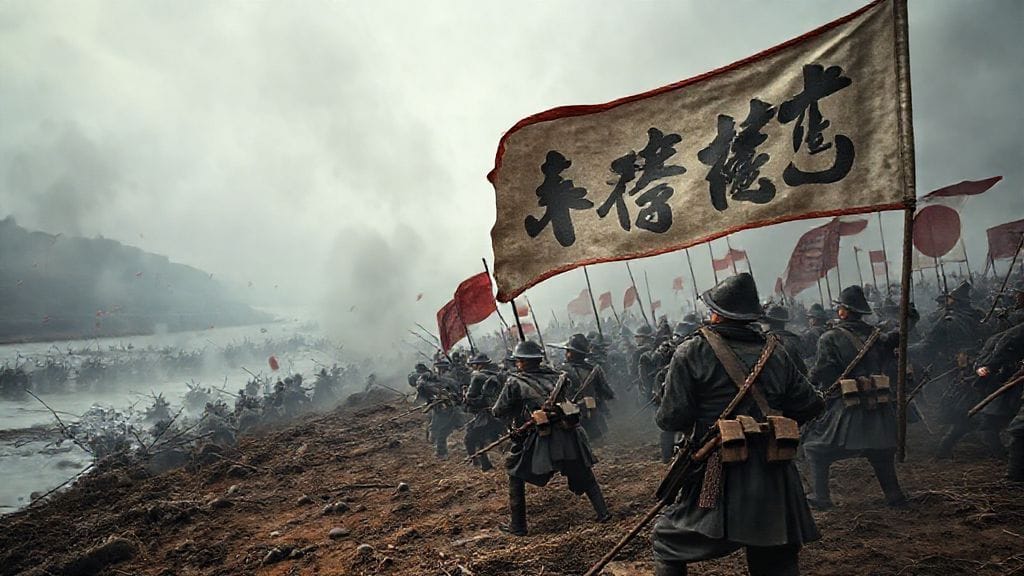
As the first light of day crept over the horizon, Japanese forces began their advance across the Yalu. Precisely timed artillery barrages shattered the early quiet, signaling the opening salvo. Japanese infantry, well-trained and resolute, pressed forward with a combination of disciplined formations and innovative tactics.
The Qing troops, though numerous, faced challenges coordinating their movements amid dense jungles and rugged terrain. Despite determined resistance, they struggled against the Japanese command’s superior communication and execution.
The battle raged for hours, smoke thickening the morning air as cannon fire rang out incessantly. Small pockets of fierce hand-to-hand combat erupted along riverbanks and hillsides. The Japanese forces, methodically encircling and overpowering their adversaries, slowly asserted dominance.
5. Japanese Forces: Modernization and Tactical Brilliance
One critical element behind Japan's victory at Yalu was the unrivaled modernization of its military. Drawing on lessons from Western armies, Japan had restructured its armed forces around conscription, improved training, and new weaponry, including the rapid-firing Murata rifle.
Commanders such as General Yamagata Aritomo and General Nozu Michitsura exemplified a new era of Japanese strategic thinking. Their ability to integrate artillery, infantry, and logistics outpaced the Qing’s outdated doctrines.
Moreover, Japanese soldiers were imbued with both a sense of national pride and professional discipline, factors that translated into battlefield effectiveness unmatched by their opponents.
6. Qing Dynasty’s Military: Valor Amidst Disarray
The Qing army, composed of both provincial troops and Manchu bannermen, exhibited courage and steadfastness despite their technological shortcomings and fragmented command structure. However, decades of neglect had left the army poorly equipped and hampered by outdated weaponry.
Corruption at various levels resulted in irregular supply chains and uneven training standards. Officers often lacked unified strategic vision, with some clinging to traditional tactics ill-suited to the realities of modern warfare. Yet, the soldiers fought valiantly, demonstrating moments of fierce resistance and tactical ingenuity in the heat of battle.
Their performance, though unable to secure victory, revealed the complex dynamics within a faltering empire striving to hold its ground.
7. The Clash of Titans: A Detailed Chronology of the Battle
In the early hours, Japanese artillery softened Qing defenses, targeting key positions along the riverbank. By mid-morning, infantry brigades crossed pontoon bridges, dividing their efforts to outflank the enemy’s left and right.
Qing commanders reordered their forces to stem the tide but struggled to maintain cohesion. Around noon, a decisive Japanese cavalry charge broke the Qing center line, creating openings for infantry penetration.
Despite counterattacks, the Qing soldiers were gradually driven away from commanding heights. By late afternoon, the Japanese flag flew over many critical positions. The engagement drew to a close only as dusk approached, with Qing forces in retreat and significant territorial gains claimed.
8. The Role of Terrain and Weather in Shaping Outcomes
The rugged, forested terrain along the river complicated maneuvers for both armies. Japanese reconnaissance and superior logistical planning allowed their forces to use the landscape advantageously, securing ridges and choke points effectively.
Meanwhile, recent rainfall turned riverbanks muddy, challenging troop movements for the bulkier Qing forces. The Japanese troops, better equipped for rapid mobilization and accustomed to harsh conditions, exploited this deeply.
Weather, often an overlooked factor in military history, here subtly but decisively influenced the pace and success of operations.
9. Casualties and Losses: The Human Cost of Victory
Estimates of casualties vary, but it is believed that the Qing forces suffered upwards of 3,000 dead or wounded, including many officers. Japanese losses were significantly lower, around 1,000 men, testifying to their tactical advantage and effective force deployment.
However, behind these figures lie thousands of human stories—families shattered, communities thrown into mourning, and soldiers grappling with the brutal reality of war. In letters and diaries unearthed years later, one finds expressions of fear, courage, and sometimes despair.
Victory was not won without sacrifice.
10. The Aftermath on the Battlefield: Immediate Repercussions
The Japanese victory secured a vital foothold in Manchuria and sent shockwaves through the Qing command. Qing troops retreated in disarray, regrouping to defend core Chinese territories. Meanwhile, Japanese forces consolidated their positions, preparing for further offensives.
The battlefield itself bore scars — scorched earth, shattered fortifications, and countless reminders of violence. Temporarily abandoned villages became silent witnesses to the clash.
For ordinary civilians in the region, the arrival of armies signaled uncertainty and upheaval, as supply lines, security, and daily life were disrupted.
11. How Victory at Yalu Reverberated Through East Asia
This battle confirmed Japan’s emergence as a regional military power and marked one of the first major defeats of Qing China by a modernized force. It sent clear signals not only to the belligerents but also to the Western powers observing from afar.
The faltering of China’s military image weakened its diplomatic standing and invited increased foreign interference. Simultaneously, Japan’s victory emboldened its imperial ambitions, catalyzing a more confident push into Korea and beyond.
The ripple effects extended to Korea, which became a geopolitical pawn and eventual annexation target, reshaping its sovereignty trajectory.
12. The Psychological Blow to Qing China and the Rise of Japan
Beyond tactical loss, the defeat at Yalu dealt a profound psychological blow to Qing morale. The image of the invincible Middle Kingdom was tarnished. Internally, the loss intensified calls for reform, and factions blamed incompetence from the court and military.
In Japan, the victory ignited nationalist fervor and belief in a destiny to lead Asia. Newspapers lauded the army, and stories of heroism circulated rapidly. The battle became emblematic of Japan's transformation from secluded island nation to ambitious power.
This mental shift fueled future policies that would drive the nation’s course in the 20th century.
13. Naval and Diplomatic Consequences Beyond the River
Although the Battle of Yalu was primarily land-based, it intertwined with maritime and diplomatic developments. Japanese naval dominance along Korea’s coasts hindered Qing resupply efforts and underscored Japan’s control of sea lanes.
Internationally, the conflict drew concern from Russia, Germany, and other powers with designs on Chinese territory. The balance of power in the region became an urgent matter, influencing treaties and diplomatic negotiations in the years following.
The battle hence served as a catalyst for wider geopolitical realignments.
14. International Observers’ Perspectives: Western Powers Weigh In
Foreign military attachés and diplomats in East Asia closely monitored the battle. Western military analysts recognized Japan’s effective use of modern tactics and technology, often contrasting it with the Qing army’s antiquated approach.
European newspapers reported with a mix of admiration and concern, noting that an Asian power had decisively challenged a larger empire. Some Western strategists interpreted the conflict as a harbinger of shifting global power dynamics.
These observations influenced subsequent foreign policies toward both China and Japan.
15. The Battle’s Place in the First Sino-Japanese War’s Narrative
The clash at Yalu was a pivotal moment in the First Sino-Japanese War, symbolizing the turning point from tentative engagements to decisive Japanese military supremacy. It catalyzed the momentum that would lead to subsequent Japanese victories and the eventual Treaty of Shimonoseki.
Historians view Yalu as the moment the war transformed from regional tension into open declaration of Japan’s strategic ascendancy.
16. Cultural Memory and the Mythos of Yalu in Japanese and Chinese Histories
In Japan, the Battle of Yalu became a touchstone of national pride, celebrated in literature, art, and public commemorations. Monuments and military honors preserved the memory of those who fought.
In China, by contrast, Yalu carried a bittersweet legacy—embodying the painful realization of imperial decline and spurring nationalist sentiments and calls for modernization.
Over time, narratives surrounding the battle evolved, reflecting shifting political landscapes and collective identities in both countries.
17. The Legacy of Yalu: Military Reforms and Modern Warfare Lessons
The battle exposed critical lessons in warfare: the importance of modernization, coordinated strategy, and technological advantage. For China, it underscored the imperative for military reform, though changes proceeded unevenly and slowly.
Japan’s experience at Yalu informed future military doctrine and preparation, anticipating conflicts that lay ahead in the 20th century.
The clash exemplified a broader transformation in warfare, where industrialization and modernization dictated outcomes.
18. Commemorations, Memorials, and Recorded Testimonies
Decades later, the shores of the Yalu River still bear reminders of the fierce confrontation. Memorials honor fallen soldiers, while museums on both sides preserve artifacts and testimonies.
Personal accounts—letters, diaries, and oral histories—offer poignant glimpses into the human dimension of the battle. They capture the fears, hopes, and resignation of men caught in the maw of history.
Through commemorations, the battle transcends mere military engagement to become a shared human story of sacrifice and change.
19. Reflections on the Clash of Empires: What Yalu Tells Us Today
The Battle of Yalu remains a powerful lens through which to understand the dynamics of power, identity, and modernization. It illustrates the volatility of imperial ambitions, the human cost of geopolitical struggle, and the inexorable march of history.
Today, as East Asia continues to evolve, the echoes of Yalu remind us how moments of conflict reshape nations and people, forging paths that resonate far beyond their temporal bounds.
Conclusion
The Japanese victory at the Yalu River on September 17, 1894, stands as a defining episode in the tumultuous narrative of East Asia’s transformation. Amidst the haze of war and the roar of battle, the result was not merely a military triumph but an irreversible shift in the balance of power.
Beyond the clash of swords and artillery, this battle revealed the interplay of human courage, innovation, and the tragic cost of war. It exposed the vulnerabilities of long-standing empires and heralded the rise of a new force destined to reshape regional—and eventually global—dynamics.
Yet, through history’s lens, the Battle of Yalu teaches us not just about empire and conquest but about resilience, the need for adaptation, and the enduring humanity of those who live through such upheavals. The river still flows, quietly bearing memory, testimony, and lessons from a pivotal dawn.
FAQs
Q1: What caused the Battle of Yalu River in 1894?
A1: The battle was caused by escalating tensions between Japan and Qing China over influence in Korea. Both nations sought to assert control following the outbreak of Korean rebellions, leading to military conflict.
Q2: Why was the Yalu River strategically important?
A2: The Yalu River marked the border between China and Korea, controlling its crossings meant commanding access to the Korean Peninsula and influencing military campaigns in the region.
Q3: How did Japanese military modernization influence the outcome?
A3: Japan’s adoption of Western military techniques, improved training, better weapons, and effective command structures gave it a decisive advantage over the Qing’s outdated and fragmented forces.
Q4: What were the immediate consequences of the Japanese victory?
A4: The Japanese secured a foothold in Manchuria, inflicted a psychological blow on Qing China, and shifted the momentum of the war firmly in Japan’s favor, leading to further territorial gains.
Q5: How did the battle impact international relations in East Asia?
A5: The victory alarmed Western powers and regional states, influencing diplomatic alignments and heightening competition over Chinese territories.
Q6: What is the legacy of the Battle of Yalu in Japan and China today?
A6: In Japan, it is a symbol of national pride and modernization; in China, it marks a sobering episode of decline and the urgent need for reform, with both countries commemorating the battle in different ways.
Q7: Were there any notable commanders involved?
A7: Yes, Japanese Generals Yamagata Aritomo and Nozu Michitsura played key roles, while Qing commanders struggled with coordination and outdated tactics.
Q8: What lessons did the battle teach about modern warfare?
A8: The engagement highlighted the importance of modernization, technology, integrated strategy, and morale, lessons that shaped military doctrines in both sides and beyond.