Table of Contents
- The Midnight Roar: When the Sea Became a Wall
- Early Warning Signs: Nature’s Unseen Murmurs
- Banyuwangi’s Coastal Life Before the Disaster
- June 3, 1994: A Day Marked by Tragedy
- The Trigger: Earthquake beneath the Java Trench
- The Tsunami Unleashed: An Unrelenting Force
- First Responses: Chaos, Confusion, and Courage
- Human Stories: Survivors Amidst the Ruins
- Indonesian Government on Alert: Mobilizing Relief Efforts
- The Role of Local Communities in Rescue Operations
- International Aid and Solidarity: The World's Response
- Environmental Devastation: The Sea Recedes, the Land Bleeds
- Aftermath and Reconstruction: Rebuilding Lives and Infrastructure
- Scientific Revelations: Lessons from the 1994 Java Tsunami
- Policy Shifts: Toward Early Warning Systems in Indonesia
- Cultural Memory: How Banyuwangi Remembers the Tsunami
- The Psychological Toll: Trauma and Healing in Survivors
- Economic Impact: Fishing, Agriculture, and Tourism Crippled
- Global Context: Tsunamis in the Late 20th Century
- The Enduring Legacy: Indonesia’s Resilience in the Face of Disaster
- The Warning Calls: Preparing for Future Oceanic Fury
The Midnight Roar: When the Sea Became a Wall
On the night of June 3, 1994, the gentle waves bathing the shores of Banyuwangi, a serene coastal regency in East Java, betrayed no hint of the havoc they were about to unleash. Families nestled in their homes, fishermen had returned tired but satisfied from their daily catch, and the markets were closing under the deepening twilight. Then, without a whisper of warning, the ocean roared—a monstrous wall of water, tens of meters high, barreling towards the land with merciless swiftness. It was a tsunami born of the deep earth’s violent tremors, ripping through lives, homes, and dreams.
This was no usual night by the Sunda Strait; this was a nightmare made real. In mere moments, Banyuwangi’s coastline was engulfed by a natural calamity that would etch its name into the annals of Indonesian history and global disaster chronicles alike.
Early Warning Signs: Nature’s Unseen Murmurs
Long before the catastrophic wave ravaged Banyuwangi, nature had been subtly signaling the brewing disturbance. Indonesia, straddling the infamous Pacific “Ring of Fire,” is a land perpetually restless with tectonic motion. The Java Trench, a deep undersea chasm bordering the southern shores of Java, is one of the most seismically active zones on Earth. Beneath its shadow, the Indo-Australian Plate plunges beneath the Eurasian Plate in a dramatic subduction process—a violent geological ballet that frequently triggers earthquakes and tsunamis.
But the people living along the coast, familiar as they were with the unpredictability of the sea, had grown accustomed to the earth’s murmurs. Local folklore, passed down through generations, spoke of “Surono," the spirit of the ocean who sometimes roared in anger, but the precise science of seismic activity remained poorly understood and poorly communicated in these rural communities.
Banyuwangi’s Coastal Life Before the Disaster
Banyuwangi, known affectionately as “the land of the sun rising,” thrives on its intimate relationship with both land and sea. Fishing has long been the lifeblood of its coastal villages—nights spent mending nets beneath starlit skies, days filled with salt-crusted boats bouncing on gentle waves. Rice paddies stretch inland, patchworked with forests where traditional dances and ceremonies nourish the cultural tapestry.
The rhythmic pulse of daily life was anchored on this delicate balance between human endeavor and natural environment—until everything changed in a single night.
June 3, 1994: A Day Marked by Tragedy
At approximately 10:45 PM local time, a powerful earthquake registering a magnitude of 7.8 struck beneath the Java Trench, almost directly south of Banyuwangi’s coastline. The initial tremors were felt by residents, many confused and terrified by the violent shaking. But the true horror awaited in the moments after, when the sea began to recede ominously—a phenomenon often precluding the arrival of a tsunami.
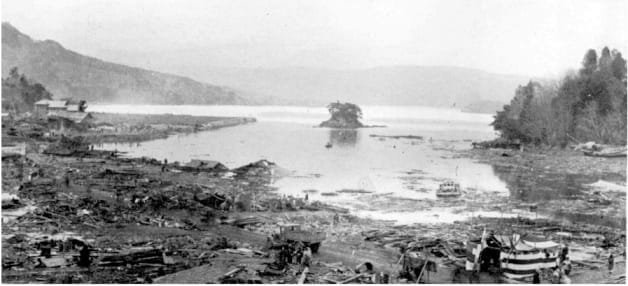
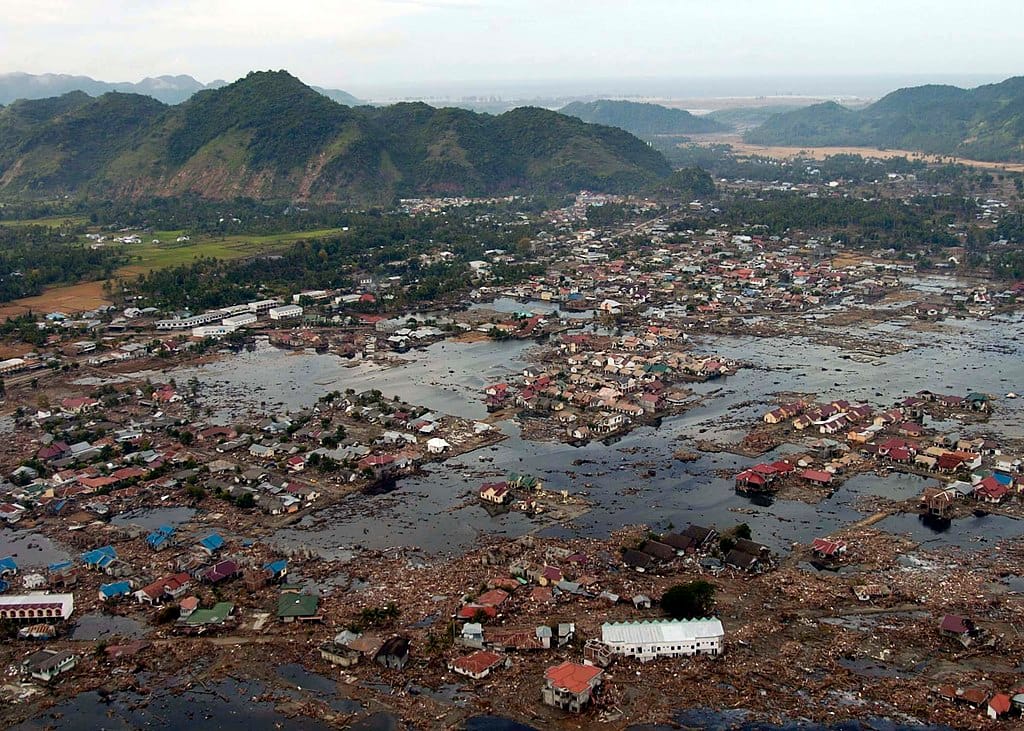
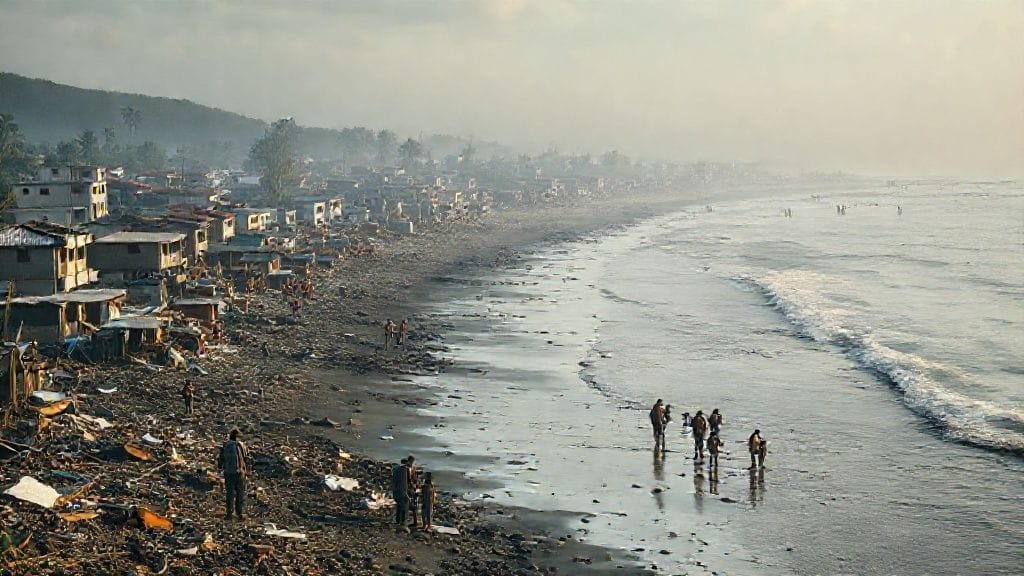
Within minutes, a towering wave surged ashore. Entire fishing boats were hurled inland as if toys; homes crumbled like sandcastles; palm trees—a hallmark of the serene coastal landscape—were uprooted and snapped. The roar of the tsunami, a monstrous rush of water, drowned out all other sounds.
The Trigger: Earthquake beneath the Java Trench
This earthquake was no ordinary tremble. Originating approximately 40 kilometers undersea, the event was the result of accumulated stress along the subduction zone finally releasing in a violent jerk. Geologists describe such quakes as "megathrust" events, capable of displacing billions of tons of seawater and generating tsunamis of frightening proportions.
What made the 1994 Java tsunami particularly deadly was the combination of intensity, shallow depth, and proximity to the coast, which allowed little time for warning and evacuation.
The Tsunami Unleashed: An Unrelenting Force
Witnesses spoke later of the sea withdrawing in a surreal, almost ghostly fashion—befitting the eerie calm before the shadow of the tsunami—only to return moments later as a churning, deafening wall of water. The wave’s height near Banyuwangi reached upwards of 20 meters, tearing through everything in its path.
This wall of water was not a singular wave but a series of destructive surges, each compounding the devastation. Survivors faced the impossible choice of fleeing uphill in darkness or clinging to anything that could float.
First Responses: Chaos, Confusion, and Courage
In the immediate aftermath, the scale of destruction stunned local authorities. Communications were cut off, roads washed away, and many survivors remained trapped beneath debris or stranded on shattered coastlines. Yet, amid the chaos, stories of extraordinary courage emerged—fishermen who heroically dragged neighbors to safety, mothers shielding children from debris, and entire communities banding together to pull survivors from the wreckage.
Police and military units, though under-resourced, expedited search and rescue operations, navigating treacherous terrain to reach isolated villages.
Human Stories: Survivors Amidst the Ruins
In the days following, survivors recounted harrowing moments—the scream of collapsing houses, the chilling silence after the waves passed, the sight of familiar places reduced to ruins.
One fisherman, Pak Agus, recounted: “I saw the sea run away like it was scared. Then, it came back angry—a mountain of water crashing down. I lost my boat, my home, but I found my child clinging to a broken table.”
Such testimonies give us a human face to the dreadful statistics—thousands injured, hundreds dead, and countless displaced.
Indonesian Government on Alert: Mobilizing Relief Efforts
Indonesia’s central government, faced with an escalating humanitarian crisis, swiftly declared a state of emergency in East Java. Relief agencies, including the Indonesian Red Cross and military medical units, were dispatched to the affected zones. Temporary shelters were erected, food and medical supplies sent in, and efforts to restore basic infrastructure began under grim urgency.
Challenges abounded: the remote nature of many communities, damaged roads, and initial lack of international attention delayed some aid, yet determination prevailed.
The Role of Local Communities in Rescue Operations
While government efforts were critical, it was often local communities themselves who acted fastest. Neighbors cleared debris, shared scarce food, and set up makeshift hospitals.
Traditional social networks—gotong royong, a communal cooperation ethos—proved vital in survival and rebuilding, illustrating how culture and community act as lifelines in disaster.
International Aid and Solidarity: The World's Response
Although initially overshadowed by other global crises, the 1994 Java tsunami eventually galvanized international humanitarian assistance. Nations dispatched aid packages and experts in disaster management. The event also caught the attention of global scientific bodies, spurring renewed calls for a regional tsunami warning system.
This solidarity illuminated a growing awareness of the interconnected nature of natural disasters—even in geographically distant communities.
Environmental Devastation: The Sea Recedes, the Land Bleeds
The tsunami’s force reshaped the Banyuwangi coastline dramatically. Fertile mangroves, crucial fish breeding grounds, were uprooted. Salinization of agricultural lands threatened food supplies long term. Coral reefs were damaged irreparably.
Such environmental wounds underscored the fragility of human coexistence with nature, reminding us of the double-edged sword of earth’s dynamism.
Aftermath and Reconstruction: Rebuilding Lives and Infrastructure
Reconstruction was a marathon, not a sprint. Houses were rebuilt, infrastructure restored, but scars remained—both physical and psychological. New building codes emerged to withstand future quakes; community education programs began focusing on disaster preparedness.
This slow rebirth was powered by resilience and an enduring hope for peace.
Scientific Revelations: Lessons from the 1994 Java Tsunami
The disaster provided critical data for seismologists and oceanographers studying the region’s seismic behavior. Analysis revealed how shallow thrust earthquakes beneath convergent margins could produce devastating localized tsunamis.
These findings informed better risk assessment models and underscored gaps in Indonesia’s early-warning capabilities.
Policy Shifts: Toward Early Warning Systems in Indonesia
In the wake of the tragedy, Indonesia accelerated efforts to develop tsunami detection technology. The installation of seismographs and tidal gauges, coupled with community training programs, aimed at reducing death tolls in future events.
Though these systems remain imperfect, 1994 marked a significant step toward proactive disaster management.
Cultural Memory: How Banyuwangi Remembers the Tsunami
In Banyuwangi, the catastrophe is memorialized annually through ceremonies blending sorrow and hope. Oral histories continue to pass down lessons, and new generations learn the importance of respect for natural forces.
Artistic expressions—murals, songs, dances—serve as vessels of remembrance and resilience, intertwining the tragic with the celebratory.
The Psychological Toll: Trauma and Healing in Survivors
Beyond physical loss, the tsunami inflicted deep psychological wounds. Many survivors suffered post-traumatic stress, grief, and anxiety. Understanding these invisible scars led to the introduction of mental health support services following the disaster.
Healing became not just about rebuilding walls, but mending hearts.
Economic Impact: Fishing, Agriculture, and Tourism Crippled
Economically, the tsunami wreaked havoc on Banyuwangi’s pillars. The destruction of fishing fleets and coral ecosystems hit fishermen’s livelihoods hard. Agricultural fields suffered saltwater intrusion. Tourism, a budding sector, paused as infrastructure collapsed.
Recovery involved diversifying local economies and rebuilding with sustainability in focus.
Global Context: Tsunamis in the Late 20th Century
The 1994 Java tsunami was part of a broader pattern of destructive tsunamis striking the Pacific Rim in the late 1900s—from 1960 in Chile to 1983 in the Philippines. Each disaster propelled technological and policy advances, forming a collective global memory and a shared responsibility to minimize future harms.
The Enduring Legacy: Indonesia’s Resilience in the Face of Disaster
Indonesia today stands as a testament to human endurance. While the 1994 tsunami took lives and shook foundations, it also sharpened the nation’s resolve. The lessons learned have saved countless lives since and continue to shape a culture that reveres vigilance, education, and communal strength.
The Warning Calls: Preparing for Future Oceanic Fury
As the world watches, scientists warn that such events will recur, possibly with greater ferocity. Technology, education, and policy must be continuously refined.
The story of Banyuwangi reminds us that while nature’s fury is inevitable, human resilience coupled with foresight can transform tragedy into survival.
Conclusion
The Java (Banyuwangi) tsunami of June 3, 1994, was more than a natural disaster—it was a crucible of human spirit, nature’s unpredictable might, and the urgent need for harmony between mankind and the environment. In the dark aftermath of that fateful night, amidst loss and ruin, rose a community’s determination to remember, rebuild, and prepare. Their story echoes universally as a lesson in courage and caution.
The waves that swept away homes also washed ashore invaluable wisdom: life is fragile, yet resilience is enduring; the earth is heedless of humanity, yet humanity must learn to listen. Through sorrow and reconstruction, Banyuwangi's people have gifted us a poignant narrative—a mosaic of devastation and hope framed by the endless horizon of the sea.
FAQs
Q1: What caused the Java (Banyuwangi) tsunami in 1994?
A1: The tsunami was caused by a powerful magnitude 7.8 earthquake beneath the Java Trench, where tectonic plates converge and cause megathrust earthquakes. This sudden seabed displacement triggered the large waves that hit Banyuwangi.
Q2: How many people were affected by the tsunami?
A2: Thousands were displaced or injured, and hundreds lost their lives. Exact numbers vary due to the remoteness of some affected areas and limited documentation, but the disaster had profound human impact.
Q3: What were the immediate challenges in rescue and relief efforts?
A3: Difficult terrain, damaged infrastructure, lack of coordination, and limited early-warning systems hampered rescue operations. Local communities’ cooperation was vital in saving many lives.
Q4: Did this tsunami influence Indonesia’s disaster preparedness policies?
A4: Absolutely. The event was a catalyst for developing tsunami early-warning technology, community education programs, and improved emergency response frameworks throughout Indonesia.
Q5: How is the tsunami remembered culturally in Banyuwangi?
A5: Through annual memorial ceremonies, oral histories, and artistic expressions, the tsunami is remembered as both a tragedy and a testament to resilience, shaping local identity and preparedness culture.
Q6: What environmental impacts did the tsunami cause?
A6: The event devastated coastal ecosystems, including mangrove forests and coral reefs, caused soil salinization affecting agriculture, and temporarily altered marine habitats vital to the local economy.
Q7: How did international aid contribute to recovery?
A7: Although delayed, international aid provided crucial medical supplies, expertise, and financial support that complemented local and national efforts for relief and reconstruction.
Q8: What lessons have scientists learned from this tsunami?
A8: The disaster enhanced understanding of seismic risks in subduction zones and underscored the urgency of early detection systems and community preparedness for future tsunamis in similar regions.