Table of Contents
- The Sleeping Giant Awakens: A Prelude to Catastrophe
- The 1883 Eruption of Krakatoa: Nature’s Fury Unleashed
- Java and Ujung Kulon’s Vulnerable Shores
- The Moment of Impact: The Tsunami’s Raw Power
- Witnesses of the Wave: Human Stories and Survival
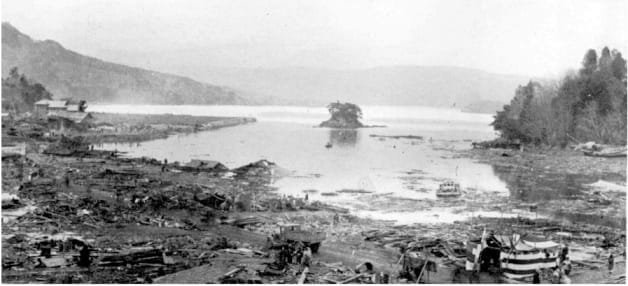
- The Immediate Aftermath: Cities in Ruins and Lives Shattered
- Ecological Devastation: The Scorched Earth and Ravaged Seas
- The Role of Colonial Powers in the Disaster’s Response
- Scientific Revelations: How Krakatoa Changed Volcanology
- Global Shockwaves: The Tsunami’s Reach Beyond Indonesia
- Reconstruction Amid Ruins: Rebuilding Java and Ujung Kulon
- Cultural Memory: Folklore and Oral Histories of the Tsunami
- Anxiety and Awe: The Psychological Aftermath for Survivors
- Comparing the 1883 Tsunami with Later Indonesian Disasters
- Lessons in Disaster Preparedness Born from Tragedy
- Remembering the Dead: Memorials and Commemorations
- The Ujung Kulon Peninsula Today: From Devastation to Sanctuary
- Krakatoa’s Legacy in Art, Literature, and Science
- Environmental Resilience and Recovery after the Catastrophe
- The Interplay of Nature and Humanity: A Continuing Dialogue
- Conclusion: The Unforgettable Wave That Shaped Indonesia
- FAQs on the 1883 Java (Ujung Kulon) Tsunami
- External Resource
- Internal Link
1. The Sleeping Giant Awakens: A Prelude to Catastrophe
It was a humid evening in late August 1883 when the earth beneath the Sunda Strait stirred with a foreboding restlessness. For decades, the jagged rim of Krakatoa, an unassuming volcanic island nestled between the larger masses of Java and Sumatra, had been simmering quietly—an ominous giant biding its time. The villagers along the coasts of Java and Ujung Kulon, far from modern warnings and scientific instruments, entertained everyday worries: markets, tides, crops. Yet nature was about to unleash a nightmare that would sear itself deep into the collective memory of Indonesia and the world.
On August 26, 1883, the stage was set. Krakatoa exploded with a violence so immense it echoed across continents. But the worst was not simply the volcanic thunderclap; it was the monstrous tsunami that surged over the shores of Ujung Kulon—the southwestern tip of Java—obliterating everything in its wake. This natural disaster was unlike anything the region had witnessed for centuries. Entire villages disappeared beneath roiling waves, thousands of lives were snuffed out, and the earth itself seemed to quiver under the weight of nature’s ferocity.
2. The 1883 Eruption of Krakatoa: Nature’s Fury Unleashed
Volcanoes are often described as windows into Earth’s fiery heart. Krakatoa, though small in size, was one of the deadliest gateways. By 1883, the volcano’s eruption began with a series of violent blasts and rumblings starting in May. The local population noted the darkened skies, toxic ash, and tremors, but the full scope of the danger remained unfathomable.
On the late evening of August 26, after days of smaller explosions, Krakatoa’s caldera finally collapsed catastrophically. This collapse triggered massive undersea landslides, which in turn caused a series of giant tsunamis. Scholars estimate the fireball of ash released exploded with the force of approximately 200 megatons of TNT—roughly 13,000 times the size of the Hiroshima atomic bomb.
What made the event more terrifying was its suddenness. Villagers had no way of comprehending the chain of violent events taking place. The eruption's explosive power was such that sky darkened miles away, and thunderous sound waves traveled over 3,000 miles, heard as far away as Australia and Sri Lanka.
3. Java and Ujung Kulon’s Vulnerable Shores
The Indonesian archipelago’s geography contributed much to the scale of devastation. Ujung Kulon, a remote and rugged peninsula at Java’s southwest tip, jutted directly into the Sunda Strait, making it the frontline of the tsunami’s assault. Its coastal communities, composed largely of fisherfolk and farmers, were helpless before the onrushing waters.
Java itself, then under Dutch colonial rule, was one of the most densely populated islands on earth. The coastal settlements were poorly defended against natural disasters; their simple wooden structures and close-knit villages clustered perilously by the sea. The geography funneled tsunami waves into narrow bays, amplifying their destructive potential.
4. The Moment of Impact: The Tsunami’s Raw Power
As the earth continued to shake and the Krakatoa caldera collapsed, colossal waves began to race outwards, reaching heights up to 40 meters (130 feet). In Ujung Kulon and Java, the tsunami struck in a frenzied, devastating tidal surge.
Eyewitness accounts tell of an eerie stillness just before the waves, when the sea unexpectedly receded far from the shore—a deceptive silence that any modern geologist would recognize as a deadly warning. Then came the monstrous wall of water surging inland, destroying entire villages, sweeping away people, animals, and homes in a single, relentless sweep.
At the moment of the tsunami’s arrival, the night was ruptured by the deafening roar of water and booming volcanic blasts. People who survived later recounted efforts to climb trees, cliffs, or float on remnants of debris. For many, though, there was no escape.
5. Witnesses of the Wave: Human Stories and Survival
Accounts from survivors—though few—offer poignant glimpses into human courage and tragedy amidst the chaos. The fisherfolk of Ujung Kulon witnessed their boats and families torn apart, while others in villages farther inland awoke to find their homes submerged.
One survivor, a young Javanese man named Jaya, would recall how he clung to a coconut tree as the waves surged. "The sea was alive," he said decades later. "It took everything—my home, my father—but it spared me. I woke up after the flood and saw a world changed."
The death toll is estimated at around 36,000 people, though some records suggest even higher numbers. The disaster obliterated communities, severing kinship ties and forever altering local cultures, which had thrived on the sea’s bounty.
6. The Immediate Aftermath: Cities in Ruins and Lives Shattered
In the harrowing days following the tsunami, survivors grappled with loss, hunger, and desolation. The Dutch colonial authorities dispatched relief expeditions, but infrastructure was rudimentary and the scale of devastation overwhelming.
Villages such as Carita, a fishing village at the western tip of Java, were wiped off the map. Fields lay buried under layers of ash and pumice; saltwater contamination ruined farmlands, as did the relentless rains. Disease and malnutrition soon followed in the wake of the catastrophe.
Even Batavia (modern-day Jakarta), several hundred kilometers away, felt the aftershocks—both geological and social. The city’s newspapers carried grim reports and appeals for aid, yet many coastal communities suffered in almost complete isolation.
7. Ecological Devastation: The Scorched Earth and Ravaged Seas
Natural destruction extended beyond humanity’s losses. The eruption’s pyroclastic flows and ash clouds scorched the landscape. Forests on Ujung Kulon were flattened; coral reefs close to the straits were smothered by sediments.
Marine biodiversity suffered tremendously, disrupting fishing economies for years afterwards. The coastal ecosystems were reshaped—some habitats were lost, while new ones formed around volcanic deposits.
The eventual regrowth of rainforest on Krakatoa itself became a scientific curiosity, symbolizing nature’s resilience amid ruin. But the initial devastation was severe and widespread.
8. The Role of Colonial Powers in the Disaster’s Response
The Dutch colonial administration, which ruled over Java and Sumatra, responded with a mixture of urgency and constraint. Communications were slow, resources limited, and political priorities complex.
Efforts to provide food, medicine, and shelter were complicated by remoteness and monsoon rains. Yet, colonial scientists took this disaster as an opportunity to study volcanic eruptions and seismic phenomena more intently.
The tragedy also exposed systemic inequalities: indigenous populations suffered disproportionately with minimal assistance, highlighting the social fractures of colonialism.
9. Scientific Revelations: How Krakatoa Changed Volcanology
The Krakatoa eruption and ensuing tsunami became a watershed moment in the study of volcanoes and tsunamis. It was one of the first disasters where detailed scientific observations and measurements were systematically recorded worldwide.
Notably, the eruption’s sound wave circled the globe multiple times, recorded by barometers as far as England—remarkable data for understanding atmospheric physics.
Researchers pieced together the relationships between volcanic collapses and tsunamis, setting the foundation for modern volcanic hazard assessments.
10. Global Shockwaves: The Tsunami’s Reach Beyond Indonesia
Though the tsunami’s most brutal effects were local, the Krakatoa eruption had planetary consequences. Ash clouds entering the stratosphere affected global climates, causing “the year without a summer” that saw fire-red sunsets over Europe and North America.
The sound of the explosion was reportedly heard over 3,000 miles away, a chilling reminder of Earth’s capacity for widespread disruption.
11. Reconstruction Amid Ruins: Rebuilding Java and Ujung Kulon
In the months and years following, survivors undertook the staggering task of rebuilding. Using salvaged timber and community labor, fishing villages slowly reemerged from the ashes.
The Dutch colonial government enacted some infrastructure improvements, including better coastal monitoring, though comprehensive disaster preparedness remained weak.
The resilience of communities became a testament to human determination in the face of overwhelming loss.
12. Cultural Memory: Folklore and Oral Histories of the Tsunami
The tsunami and eruption left deep imprints on local imaginations. Legends and folktales arose around Krakatoa’s eruption, warning against disrespecting nature.
In Ujung Kulon, stories passed down generations recounted the sea’s sudden fury and miraculous survivals. These narratives contributed to a cultural consciousness aware of nature’s unpredictable power.
13. Anxiety and Awe: The Psychological Aftermath for Survivors
Survivors lived intertwined with trauma and reverence. Many suffered from what we would now identify as post-traumatic stress, haunted by the memory of the waves and the loss.
Communities developed rituals of remembrance and mourning, churches and mosques held prayers, and the natural world was imbued with spiritual significance.
14. Comparing the 1883 Tsunami with Later Indonesian Disasters
Indonesia’s geological volatility has repeatedly borne witness to tsunamis and volcanic eruptions. The 1883 event set historical benchmarks for understanding disaster scale and response.
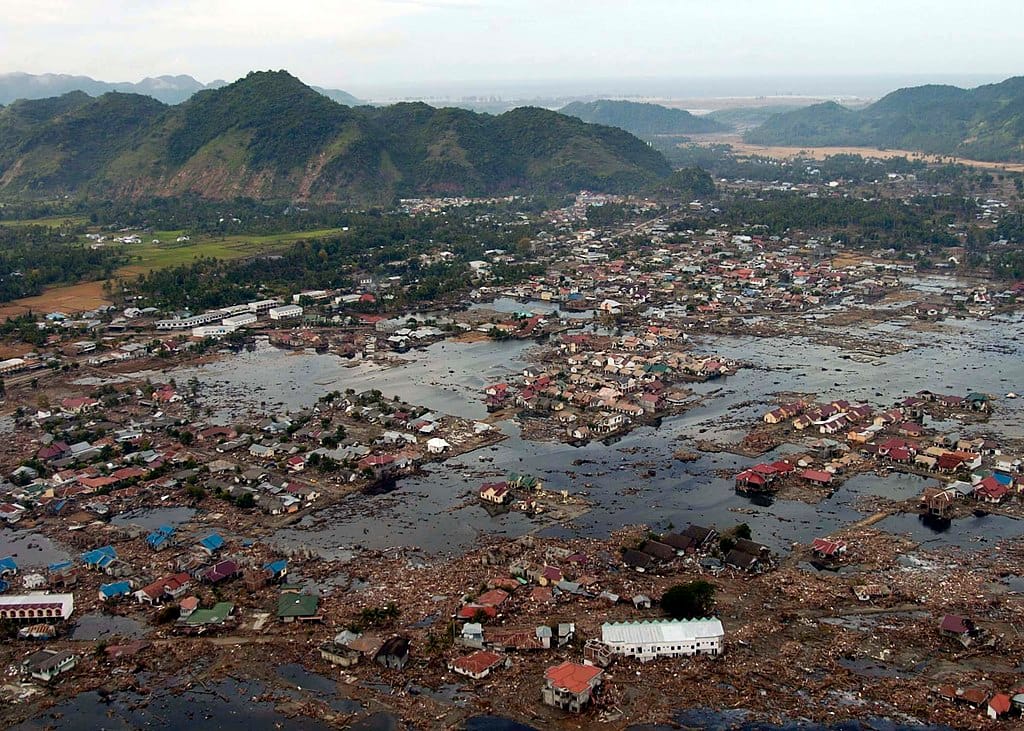
Comparisons with the 2004 Indian Ocean tsunami reveal advances in technology, preparedness, and international cooperation, yet also show enduring challenges in reaching vulnerable populations.
15. Lessons in Disaster Preparedness Born from Tragedy
Though early warning systems were nonexistent in 1883, Krakatoa galvanized efforts over decades to monitor seismic activity.
It became clear that education, communication networks, and scientific vigilance were crucial to saving lives—lessons that still guide Indonesian resilience initiatives.
16. Remembering the Dead: Memorials and Commemorations
Memorials in Java and Ujung Kulon silently attest to the lives lost. Gravesites, small monuments, and annual ceremonies mark the date, blending colonial and indigenous commemorative practices.
These memorials underscore a collective commitment to remembrance and caution.
17. The Ujung Kulon Peninsula Today: From Devastation to Sanctuary
Today, Ujung Kulon is a national park, a sanctuary for endangered species including the Javan rhinoceros. The landscape has healed, forests dense and teeming with life.
Visitors can witness both the scars and the renewal—the dual testament of nature’s wrath and resilience.
18. Krakatoa’s Legacy in Art, Literature, and Science
The eruption inspired a wide array of cultural responses: paintings, poems, and scientific treatises that captured awe and human vulnerability.
From European romanticism’s dramatic depictions to local Indonesian oral poetry, Krakatoa remains a potent symbol.
19. Environmental Resilience and Recovery after the Catastrophe
While the initial decades after 1883 were marked by hardship, ecological succession transformed barren land into fertile grounds.
Scientists continue to study this living laboratory, illustrating how ecosystems endure and adapt after massive disruptions.
20. The Interplay of Nature and Humanity: A Continuing Dialogue
The Krakatoa eruption and the tsunami are reminders of humanity’s position within a dynamic planet—vulnerable yet adaptive.
Their history fuels ongoing conversations about climate, disaster policy, and our respect for the forces that shape life on Earth.
21. Conclusion: The Unforgettable Wave That Shaped Indonesia
The 1883 Java (Ujung Kulon) tsunami was more than a natural disaster; it was a pivotal moment that unveiled the fragility and strength of human societies in the face of overwhelming elemental power.
It altered landscapes and histories, scarred hearts and inspired centuries of reflection. Today, as Indonesia continues to confront its volatile geology, the memory of that cataclysmic night remains an enduring call to vigilance, resilience, and compassion.
FAQs on the 1883 Java (Ujung Kulon) Tsunami
Q1: What caused the tsunami that struck Java and Ujung Kulon in 1883?
The tsunami was triggered by the catastrophic collapse of Krakatoa’s volcanic caldera, which caused massive undersea landslides and displaced enormous volumes of water, creating giant tsunami waves that struck the surrounding coasts.
Q2: How many people died as a result of the tsunami?
Estimates vary, but approximately 36,000 people lost their lives in the tsunami and associated aftermath, including earthquakes and volcanic ash fall.
Q3: What was the role of the Dutch colonial government during the disaster?
The Dutch authorities organized relief and rescue operations but were hampered by limited infrastructure and resources. Their response highlighted social inequalities and led to increased scientific interest in volcanic monitoring.
Q4: How did the eruption of Krakatoa influence science?
It provided some of the earliest well-recorded data on volcanic eruptions and tsunamis. The event spurred advances in volcanology, seismology, and atmospheric studies, including understanding of global climatic disturbances caused by volcanic ash.
Q5: What is the significance of Ujung Kulon after the tsunami?
Once devastated, Ujung Kulon has recovered as a biodiverse national park, home to endangered species and a symbol of environmental resilience and conservation.
Q6: How is the tsunami remembered in Indonesia today?
Through oral histories, memorials, religious ceremonies, and education, the event remains a vital part of regional cultural memory and disaster readiness.
Q7: Were there any early warning signs before the tsunami?
Some signs like sea recession and tremors were noticed, but no organized warning system existed. These events are now understood as natural precursors to tsunamis.
Q8: What lessons from the 1883 tsunami are applied today?
Improved monitoring, early warnings, disaster education, and infrastructure investments in Indonesia and worldwide trace roots to lessons learned from the Krakatoa eruption and tsunami.