Table of Contents
- The Twilight of a Philosopher: July 2, 1778, Ermenonville
- Jean-Jacques Rousseau: A Life Marked by Turmoil and Genius
- Philosophical Storms and Inner Demons: The Road to Ermenonville
- The Enlightenment in Flames: Rousseau’s Place in a Changing World
- The Final Days in Ermenonville: A Retreat into Solitude
- Death at Dawn: The Last Moments of Rousseau
- The Immediate Aftermath: Mourning in the Village and Beyond
- Rousseau’s Funeral: A Ceremony Steeped in Symbolism
- The Controversies Surrounding His Burial Site
- The Legacy of the Philosopher: Ideas That Shaped Revolutions
- Philosophical Reverberations throughout Europe
- Rousseau and the French Revolution: Inspiration and Irony
- The Cultural Iconography of Rousseau’s Death
- Rousseau’s Influence on Modern Political and Educational Thought
- The Memory of Ermenonville: Pilgrimage and Preservation
- Anecdotes from Witnesses and Biographers
- The Science of Mourning: Changing Attitudes to Death in the 18th Century
- Rousseau’s Death in Literature and Arts
- From Silence to Voice: Posthumous Publications and Their Impact
- Conclusion: The End of an Era, The Birth of a Legacy
- FAQs: Understanding Rousseau’s Death and Beyond
- External Resource: Wikipedia Link
- Internal Link: Visit History Sphere
1. The Twilight of a Philosopher: July 2, 1778, Ermenonville
The early morning mist clung to the grounds of the château de Ermenonville as the countryside slowly awoke to a world on the brink of transformation. On July 2, 1778, Jean-Jacques Rousseau, the prodigious and troubled mind who had become both a beacon and a lightning rod for Enlightenment thought, breathed his last. His death was less a quiet departure than a culmination of decades of ideological battles, inner turmoil, and the burden of fame that often felt like a curse. The air was heavy—not just with summer humidity but with the weight of history in the making.
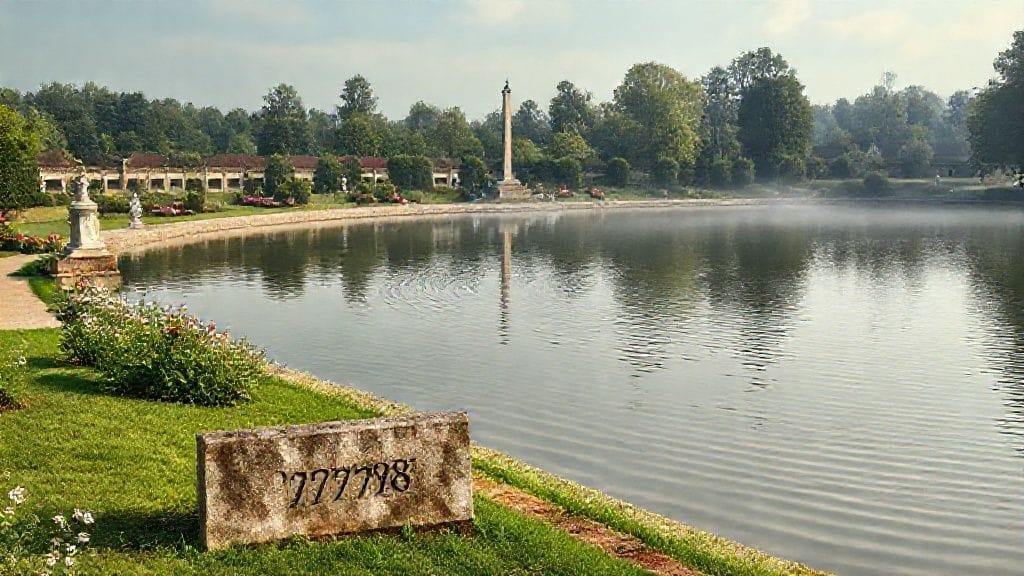
As the sun pierced the fog to illuminate the wooded paths and the serene lake near Ermenonville, a crowd gathered, muted in their grief and admiration. Here, in this pastoral retreat, Rousseau’s life came to an end—but his ideas were just beginning to ignite the fires of revolution, education, and political philosophy across Europe.
2. Jean-Jacques Rousseau: A Life Marked by Turmoil and Genius
Born in Geneva in 1712, Rousseau’s life was as tempestuous as it was brilliant. Orphaned young and thrust into a series of apprenticeships and wanderings, he carved a path largely self-made, fueled by an insatiable curiosity and a profound sensitivity to the human condition. His writings, from Discourse on Inequality to The Social Contract and Emile, would challenge the very foundations of monarchy, religion, and societal norms, often courting scandal and censorship.
Rousseau’s relationship with society was ambivalent: celebrated yet ostracized, revered yet feared. He was a man who both loved and loathed humanity, disillusioned by the hypocrisy he exposed in his contemporaries and haunted by his own contradictions. His later years, shadowed by paranoia and ill health, were spent seeking solace in nature and isolation, ultimately finding refuge at Ermenonville, under the patronage of the Marquis de Girardin.
3. Philosophical Storms and Inner Demons: The Road to Ermenonville
The decade preceding Rousseau’s death was turbulent. Political enemies, intellectual rivals, and ecclesiastical authorities had turned against him, condemning his ideas as dangerous. His seminal works were banned across several states, compelling Rousseau to live in constant fear of arrest or exile.
Moreover, Rousseau wrestled with profound psychological anguish. He was often tormented by feelings of betrayal and abandonment—a complexity intensified by his fraught relationships with other Enlightenment figures such as Voltaire and Diderot. The death of his close collaborators and mistreatment by students deepened his isolation.
In 1770, Rousseau fled Paris after police searched his home; the philosopher sought refuge in the countryside. Eventually, with a generous pension awarded by King Louis XVI, he settled at the Château de Ermenonville, a site that would become his final sanctuary.
4. The Enlightenment in Flames: Rousseau’s Place in a Changing World
The Enlightenment was often portrayed as a symphony of reason, but for Rousseau it was rife with discord. While many contemporaries championed rationality and science, Rousseau foregrounded emotion, nature, and the innate goodness of man corrupted by society—a view that set him apart and made his work both beloved and reviled.
In the broader intellectual ferment, Rousseau was a prophet of democracy and individual freedom, his writings foreshadowing the tumultuous political upheavals of the late eighteenth century. Yet his warnings about inequality and tyranny were ignored by many who viewed him as a dangerous radical. His death thus occurred amid growing tensions that would soon explode into revolution.
5. The Final Days in Ermenonville: A Retreat into Solitude
At Ermenonville, Rousseau found a fragile peace. The lush gardens, reflecting pools, and wooded groves were designed to showcase the harmony between man and nature, an embodiment of his philosophy. Under the watchful eye of Girardin and his caretakers, Rousseau’s health deteriorated slowly.
Eyewitnesses recount his moments of lucid reflection interspersed with bouts of despair and physical weakness. He frequently walked through the ten hectares of parkland, meditating on nature’s simplicity as his body betrayed him. Letters from this period reveal a man grappling with mortality, yet steadfast in his belief that his ideas would endure beyond his flesh.
6. Death at Dawn: The Last Moments of Rousseau
On the early morning of July 2, 1778, those present at Ermenonville witnessed a frail figure fade gently into death. Rousseau’s final words reportedly captured his philosophical core: a profound yearning for innocence and truth. His breathing slowed, his gaze found the distant hills, and as the church bells tolled in nearby villages, one of the most influential thinkers passed away quietly, almost unnoticed by the world clamoring for his ideas.
His medical condition, complicated by chronic respiratory issues and frailty, meant that the death—though anticipated—still shook the small community. The serenity of Ermenonville contrasted sharply with the storm of intellectual upheaval his passing signaled.
7. The Immediate Aftermath: Mourning in the Village and Beyond
News of Rousseau’s death travelled swiftly across France and Europe. Intellectual circles reacted with a mixture of sorrow, celebration, and apprehension. To some, his death marked the loss of a visionary who had demanded humanity face uncomfortable truths about itself. To others, it was the fall of a dangerous ideologue.
Locally, Ermenonville mourned its most famous resident with a mixture of pride and reverence. The Marquis de Girardin ordered a modest monument by the lake—a fitting tribute to a man who had championed the natural world over urban corruption.
8. Rousseau’s Funeral: A Ceremony Steeped in Symbolism
Rousseau’s funeral was a carefully orchestrated event. The ceremony reflected the man’s philosophical ideas more than his social status, an intimate communion with nature rather than pomp. Attended by loyal friends and admirers, the burial site near the artificial island of the park embodied Rousseau’s ideals of purity and simple living.
The choice to bury him in Ermenonville instead of Paris was controversial, symbolizing the tension between society and the renegade thinker. It was the beginning of a legacy physically rooted in the French countryside but universally resonant.
9. The Controversies Surrounding His Burial Site
Rousseau’s tomb would not remain undisturbed. In 1794, amid revolutionary fervor, his remains were transferred to the Panthéon in Paris, a resting place reserved for France’s greatest minds. This exhumation was emblematic of how Rousseau’s reputation shifted from suspect philosopher to national hero.
Yet disputes about the sanctity, symbolism, and politics of his remains persisted well into the 19th century, reflecting the complex ways in which thinkers like Rousseau were appropriated or challenged by successive regimes.
10. The Legacy of the Philosopher: Ideas That Shaped Revolutions
Beyond the physical resting place lies Rousseau’s enduring intellectual legacy. Few philosophers have inspired political, social, and educational revolutions as deeply as Rousseau. His concept of the general will laid the philosophical groundwork for modern democracy, and his ideas on education influenced thinkers as diverse as Pestalozzi and Dewey.
The French Revolution of 1789 directly echoed Rousseau’s calls for equality and freedom, though the outcomes diverged from his ideals. His influence extended beyond France to the Americas and beyond, where nascent republics sought to embody principles drawn from his writings.
11. Philosophical Reverberations throughout Europe
Rousseau’s death reverberated across the continent. German Romantics embraced his celebration of nature and emotion; British thinkers wrestled with his critiques of civilization; Italian and Spanish intellectuals debated his ideas on freedom and authority.
His work also inspired counter-movements, from conservatism to early socialism, dialogue constantly in motion. The ripple effect of his philosophy ensured that his voice continued shaping debates long after his physical departure.
12. Rousseau and the French Revolution: Inspiration and Irony
Ironically, while Rousseau’s theories helped foment revolutionary ideals, the revolution soon turned violent and authoritarian in ways he never intended. Leaders cited his work even as they undermined individual freedoms; terror and egalitarianism clashed in a maelstrom that would haunt France.
This gap between philosophy and practice illustrates the complex legacy Rousseau left behind: a challenge to envision a just society, fraught with human contradictions.
13. The Cultural Iconography of Rousseau’s Death
Artists, poets, and musicians seized upon Rousseau’s death as a symbol—his final resting place in Ermenonville became a romanticized site of pilgrimage, a symbol of the tortured genius united with nature. Paintings and literary works often portrayed his demise as the necessary end of an era and the herald of modern thought.
The image of Rousseau walking alone through his beloved park, caught between the mortal and the eternal, remains etched in cultural memory.
14. Rousseau’s Influence on Modern Political and Educational Thought
Rousseau’s concepts of child-centered education, the social contract, and direct democracy have indelibly shaped modern political science and pedagogy. His belief in innate human goodness and the corrupting power of institutions challenges educators and politicians alike to reconsider the foundations of authority.
Contemporary debates on freedom, equality, and civic responsibility still echo Rousseau’s voice, proving that his death was but an interlude in the ongoing dialogue about what it means to be human.
15. The Memory of Ermenonville: Pilgrimage and Preservation
Ermenonville evolved into a cultural landmark. The château and its gardens became places of pilgrimage for admirers and scholars. Visitors tread the paths Rousseau once walked, seeking connection with the philosopher’s spirit amid the tranquil landscape.
Ongoing preservation efforts reflect the enduring significance of the site, balancing tourism with respect for historical authenticity.
16. Anecdotes from Witnesses and Biographers
Close companions and later biographers offer intimate glimpses of Rousseau’s last days. One notable account describes how the philosopher, moments before death, asked to be read a passage from the Confessions, his private spiritual testament.
His caretakers recorded moments of fierce clarity and sudden frailty, reflecting the paradoxes of a life lived with intensity and contradiction.
17. The Science of Mourning: Changing Attitudes to Death in the 18th Century
Rousseau’s death occurred during a period when European attitudes toward death were evolving. The Enlightenment’s rationalism challenged traditional rituals even as Romanticism was beginning to celebrate emotion and individualism in mourning.
The philosopher’s funeral—marked by simplicity and reverence for nature—mirrored emerging trends towards personal, rather than institutional, expressions of grief.
18. Rousseau’s Death in Literature and Arts
The moment of Rousseau’s passing inspired numerous works. From Romantic poetry mourning the loss of “man’s friend,” to operatic compositions that dramatized his inner conflict, art sought to capture the intensity of his character and the epoch’s shifting values.
His death became a metaphor for the clash between reason and passion, nature and society—a drama echoing across artistic genres.
19. From Silence to Voice: Posthumous Publications and Their Impact
After his death, Rousseau’s unpublished manuscripts and personal letters surfaced, revealing new facets of his thought. These texts deepened understanding of his philosophy, personal struggles, and prophetic vision.
Posthumous publications sparked renewed controversies and admiration, ensuring that Rousseau’s influence would continue to evolve.
20. Conclusion: The End of an Era, The Birth of a Legacy
Jean-Jacques Rousseau’s death on July 2, 1778, did not silence a thinker whose ideas have resonated across centuries. Instead, it marked the closing of a turbulent life and the awakening of an enduring intellectual force.
Ermenonville was the stage of his final act—a place of pastoral beauty that mirrored his quest for harmony between man and nature. But from this tranquil setting emerged a legacy that inflamed revolution, shaped modernity, and continues to challenge every generation to rethink freedom, society, and the self.
Conclusion
The passing of Jean-Jacques Rousseau was far more than the death of a man; it was a watershed moment for Enlightenment Europe and beyond. In the serene solitude of Ermenonville, a life marked by passion, intellect, and contradiction came to an end—yet the ideas seeded in his works took root and flourished toward a new world order.
His final breaths signaled both a personal release and a call to humanity: to confront inequality, nurture the natural self, and strive for social contracts grounded in justice and collective will. Rousseau’s death reminds us that the philosopher’s journey, fraught with internal and external struggle, is inseparable from the sweep of history itself.
Let us remember him not only as a great thinker but as a human being whose life and death continue to illuminate the complexities of freedom and the enduring quest for meaning.
FAQs
Q1: What caused Jean-Jacques Rousseau’s death?
A1: Rousseau died of natural causes related to chronic respiratory problems and general physical weakness at the age of 66 in Ermenonville.
Q2: Why was Ermenonville chosen as his final residence?
A2: Ermenonville offered Rousseau a peaceful retreat supported by the Marquis de Girardin, who admired his work and provided a sanctuary away from political persecution.
Q3: How did Rousseau’s death influence the Enlightenment?
A3: His death crystallized his role as a pivotal Enlightenment figure whose ideas on liberty and equality would inspire revolutions and reform movements.
Q4: What was controversial about Rousseau’s burial?
A4: His burial at Ermenonville was initially modest and private; later, his remains were moved to the Panthéon in Paris during the Revolution, symbolizing his elevation to national hero status despite earlier controversies.
Q5: How did Rousseau’s ideas influence the French Revolution?
A5: His concepts of the social contract and general will underpinned revolutionary ideals, even if the Revolution’s violent course diverged from his vision of freedom and equality.
Q6: Are there monuments dedicated to Rousseau at Ermenonville today?
A6: Yes, the park retains monuments and the burial site, preserved as historical and cultural landmarks attracting scholars and tourists.
Q7: Did Rousseau’s death affect his writings’ publication?
A7: Yes, after his death, several unpublished papers were released, deepening understanding and sparking new interest and debates about his philosophy.
Q8: How is Rousseau remembered in modern philosophy and education?
A8: Rousseau is a foundational figure whose ideas continue to influence democratic theory and educational philosophy, especially regarding human nature and development.