Table of Contents
- The Final Battleground: Přibyslav in Early 1424
- The Life and Legacy of John Zizka: A Bohemian Templar
- The Bohemian Hussite Wars: A Nation Divided
- Brewing Storms: Religious and Political Tensions in Early 15th Century Bohemia
- The Rise of John Zizka: From Nobleman to Hussite Commander
- The War of the Hussites: Innovations and Ideology on the Battlefield
- Přibyslav’s Strategic Importance: Why This Town Mattered
- The Siege and Battle at Přibyslav: A Closer Look
- The Wounds of War: Injuries and Illness Among the Hussite Ranks
- John Zizka’s Last Campaign: The Physical Toll of Conflict
- Death of a Hero: The Passing of John Zizka in 1424
- Reactions Across Bohemia: Grief, Fear, and Determination
- The Succession of Hussite Leadership: Challenges After Zizka
- The Myth and Memory of John Zizka: Folklore and History Collide
- The Long Shadow: Hussite Influence on the European Stage
- Přibyslav Today: Remembering the Site of Zizka’s Final Days
- The Symbolism of Zizka’s Death: Strength in Defeat
- Military Innovations Born from Hussite Strife
- The Religious Ramifications of Zizka’s Passing
- Cultural Echoes: Hussite Themes in Art and Literature
- Concluding Reflections: The End of an Era, The Birth of a Legend
- FAQs: Understanding John Zizka’s Death and Its Significance
- External Resource
- Internal Link
1. The Final Battleground: Přibyslav in Early 1424
The chill of a Bohemian winter seeped through the stone walls of Přibyslav, a town whose cobbled streets now echoed with the drumbeats of war and whispers of fate. It was here, in this unassuming corner of medieval Bohemia, that one of the most pivotal moments of the Hussite Wars would unfold — the final chapter in the life of a legendary warrior, John Zizka. The air was taut with anticipation, the people of Bohemia silently aware that their land was on the cusp of a profound transformation. The battle-scarred general who had led them through years of religious war and rebellion was approaching his mortal dusk, his indomitable spirit challenged by wounds and suffering.
2. The Life and Legacy of John Zizka: A Bohemian Templar
Born around 1360 into Bohemia’s minor nobility, John Zizka (Jan Žižka z Trocnova) was far more than a soldier; he was an icon of resilience and tactical ingenuity. His early years, though shrouded in mystery, saw him rise as a mercenary and nobleman before aligning passionately with the Hussite cause — a radical religious reform movement born out of both theological conviction and national identity. Zizka's story is one of transformation from a regional knight to the foremost symbol of defiance against Catholic orthodoxy and imperial power.
3. The Bohemian Hussite Wars: A Nation Divided
The Hussite Wars (1419–1434) raged across Bohemia like a tempest, plantinga seed of irreversible change. After the execution of Jan Hus in 1415 — the Czech priest and reformer who challenged the Catholic Church’s corruption — Bohemia erupted in conflict. Hussite factions, deeply divided yet united against perceived external oppression, contested forces loyal to the Catholic Church and the Holy Roman Empire. At the heart of this turmoil was John Zizka’s tactical genius, which would usher in a new era of warfare and ideological struggle.
4. Brewing Storms: Religious and Political Tensions in Early 15th Century Bohemia
Bohemia’s religious landscape was a tinderbox by the early 1400s. The population was deeply influenced by Jan Hus’s calls for ecclesiastical reform, emphasizing communion in both kinds (bread and wine), vernacular scripture, and moral purity. Political elites were split, some wary of rebellion, others supportive of the Hussite cause. The Holy Roman Emperor Sigismund sought to reassert control, igniting open warfare. Intellectual fervor merged with national pride, creating a volatile mixture that would fuel years of conflict.
5. The Rise of John Zizka: From Nobleman to Hussite Commander
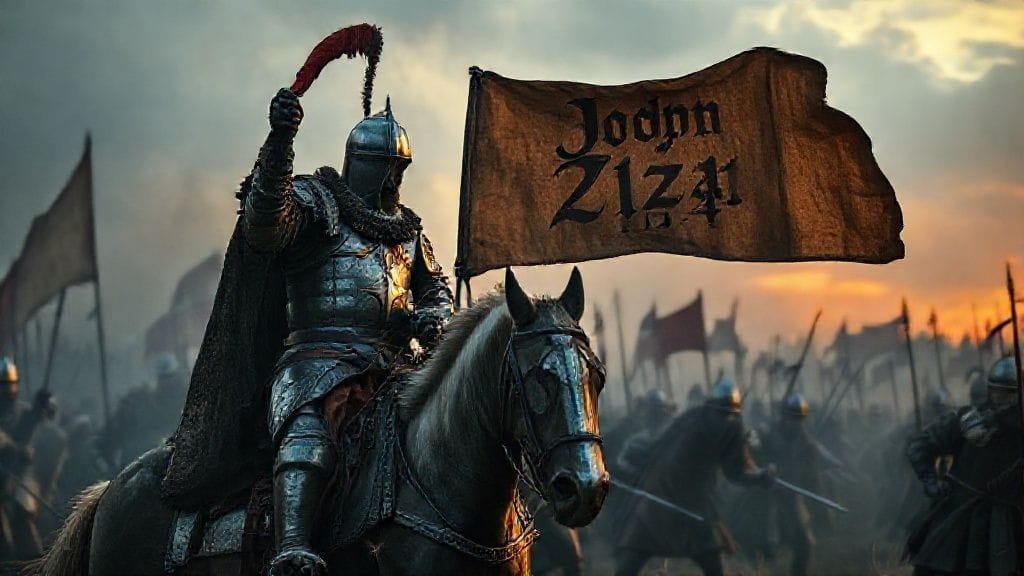
Zizka’s rise was not meteoric; it was forged in the crucible of war and betrayal. After losing an eye in earlier battles, he famously continued commanding with ruthless determination. His military genius lay in utilizing innovative tactics such as war wagons (wagenburgs), which provided mobile fortifications and redefined cavalry warfare. By 1419, during the first Hussite uprisings, Zizka had become the de facto leader of the radical Taborite faction, rallying peasants, townsfolk, and disaffected nobles under a banner of reform and resistance.
6. The War of the Hussites: Innovations and Ideology on the Battlefield
What made the Hussite Wars stand out in medieval Europe was not merely their religious fervor but their military innovation. Zizka’s use of war wagons, combined arms tactics, and an emphasis on disciplined infantry forced enemies to reconsider medieval warfare conventions. Units of sharpshooters wielding handguns and crossbows, protected by defensive fortifications, created an almost impenetrable force that steadily eroded crusader armies intent on suppressing the rebellion.
7. Přibyslav’s Strategic Importance: Why This Town Mattered
Situated in eastern Bohemia, Přibyslav served as an essential logistical and strategic hub. Control of the town meant domination of nearby trade routes and influence over surrounding territories. In 1424, Hussite forces sought to solidify their hold on the region while contending with imperial loyalists who aimed to fracture their gains. It was into this crucible that John Zizka rode, determined to secure a decisive advantage despite his advancing injuries.
8. The Siege and Battle at Přibyslav: A Closer Look
Accounts of the siege and battle at Přibyslav blend fact with legend, but what is clear is the intensity and complexity of the fighting. Under relentless assaults, Hussite formations wove mobile defensive perimeters, defying traditional siege tactics. Despite this, the strain of constant campaigning and Zizka’s deteriorating health weighed heavily on leadership and morale. The battle was as much a test of endurance as one of strategy.
9. The Wounds of War: Injuries and Illness Among the Hussite Ranks
Years of brutal campaigns left countless Hussites scarred or disabled, none more so than Zizka himself. Known to have lost one eye and blinded in the other late in life, his condition worsened considerably during 1424. The combination of battlefield wounds, old injuries, and illness took its toll, hospitalizing the great leader at Přibyslav. His resilience was extraordinary, but nature’s limits were becoming impossible to deny.
10. John Zizka’s Last Campaign: The Physical Toll of Conflict
Even as his body weakened, Zizka’s mind remained sharp, directing defense efforts through trusted lieutenants and dispatching orders that reflected an unwavering commitment to the Hussite cause. His final days were marked by a paradox: a shrinking physical presence but an expanding legend. Clutching the reins of battle from a bed of suffering, he embodied the iron will of a movement that refused to be extinguished.
11. Death of a Hero: The Passing of John Zizka in 1424
On October 11, 1424, in Přibyslav, John Zizka breathed his last. His death was not sudden but the conclusion of a slow decline that mirrored the relentless attrition of war itself. According to chroniclers, the town’s atmosphere darkened as word spread — the leader who had vanquished knights, inspired peasants, and rebuffed emperors was no more. Yet his death was less an end than a transformation into myth.
12. Reactions Across Bohemia: Grief, Fear, and Determination
News of Zizka’s death rippled through Bohemia, triggering waves of grief among his followers and alarm among enemies. Yet, rather than demoralize, his passing galvanized Hussite factions to maintain their struggle with even greater fervor. Leaders such as Prokop the Great emerged to carry forward Zizka’s strategic vision, respecting the foundations he had laid. The inevitability of change was accepted with stoicism and renewed purpose.
13. The Succession of Hussite Leadership: Challenges After Zizka
The vacuum left by Zizka was both a political and military dilemma. Hussite factions, already divided along theological and tactical lines, struggled to present a unified front. Prokop and other commanders faced difficulties matching Zizka’s charisma and strategic flair, revealing the fragility of movements overly reliant on a single leader. Internal tensions foreshadowed further conflict, even as the Hussite cause endured.
14. The Myth and Memory of John Zizka: Folklore and History Collide
Over centuries, Zizka’s life has blended history and legend, his figure transcending the purely factual and becoming a symbol of Czech national pride and resistance. Tales of his battlefield exploits, often exaggerated, entered the cultural imagination, with monuments erected and literary works celebrating his courage. From folk songs to 19th-century national revivalists, Zizka stands as a potent embodiment of defiance against tyranny.
15. The Long Shadow: Hussite Influence on the European Stage
The Hussite Wars, punctuated by Zizka’s brilliance, had repercussions far beyond Bohemia’s borders. Their military innovations foreshadowed modern warfare, their religious ideas inspired future reformers, and their social upheavals reverberated through Europe’s political landscape. While ultimately contained, the Hussite revolt catalyzed reconsiderations of faith, governance, and national identity.
16. Přibyslav Today: Remembering the Site of Zizka’s Final Days
Today, Přibyslav bears quiet marks of its tumultuous past. Though the scars of medieval conflict have faded, the town’s connection to John Zizka endures in museums and commemorations. Visitors can wander streets that once echoed with war cries and sense the weight of history entwined with everyday life. It is a place where memory is kept alive through careful preservation.
17. The Symbolism of Zizka’s Death: Strength in Defeat
Zizka’s death at Přibyslav symbolizes the paradox of strength found in apparent defeat. His physical demise did not mean the collapse of the Hussite spirit; rather, it enfranchised a movement that bore his imprint for decades. His perseverance despite blindness and injury serves as a metaphor for human endurance and leadership amid adversity.
18. Military Innovations Born from Hussite Strife
The tactical creativity that Zizka pioneered changed the face of warfare: disciplined infantry formations, mobile defenses, and combined arms tactics influenced subsequent European battles. The notion that peasant levies could defeat armored knights destabilized existing military hierarchies and demonstrated the power of innovation spurred by ideological zeal.
19. The Religious Ramifications of Zizka’s Passing
Zizka’s death came at a crossroads for Hussite theology, as more moderate and radical factions debated the future direction of the church and state. His role as defender of radical beliefs meant that his absence allowed diplomatic overtures but also intensified internal disputes. The eventual Hussite concessions can partly be traced to the leadership void his death caused.
20. Cultural Echoes: Hussite Themes in Art and Literature
The Hussite Wars, and Zizka’s figure specifically, inspired a wealth of artistic works — from Jan Amos Komenský’s writings to modern Czech art. They evoke themes of struggle, sacrifice, and national identity, reminding later generations of the costs and convictions of their forebears. This enduring cultural legacy ensures that Zizka’s story remains vital and evocative.
21. Concluding Reflections: The End of an Era, The Birth of a Legend
John Zizka’s death at Přibyslav was not merely the closing of a life but the sealing of a historic chapter that defined Bohemia’s medieval identity. In a brutal age defined by faith and feudal power, Zizka stood as an exemplar of courage and innovation. Though the man passed, his vision and valor continue to resonate — a testament to the human capacity to challenge overwhelming odds and rewrite history.
Conclusion
In the cold shadows of Přibyslav, as John Zizka breathed his last, a nation held its breath between despair and hope. His death marked both an ending and a beginning — the close of a warrior’s journey and the dawn of a legend that would inspire generations. Zizka was a man of paradoxes: blind yet visionary, noble yet of the people, a soldier for faith and freedom. His passing underscored the fierce, often painful process of nation-building and religious reform. Today, remembering Zizka is to remember the indomitable spirit that defied power, the courage to innovate amidst chaos, and the enduring human quest for justice and identity.
FAQs
Q1: Who was John Zizka and why is he important?
A1: John Zizka was a Czech military leader and Hussite commander known for innovative tactics and unwavering leadership during the Hussite Wars. He symbolizes Czech resistance against religious and imperial oppression.
Q2: What were the Hussite Wars?
A2: The Hussite Wars were religious and civil conflicts in early 15th century Bohemia, sparked by demands for reform in the Catholic Church following the execution of Jan Hus.
Q3: Why did John Zizka die in Přibyslav?
A3: After years of battle wounds and illness, Zizka died in Přibyslav during a campaign; his health had severely deteriorated amid the relentless warfare.
Q4: What military innovations did Zizka introduce?
A4: He introduced war wagons with firearms and crossbows, combined arms tactics, and mobile defensive formations that revolutionized medieval warfare.
Q5: How did Zizka’s death affect the Hussite movement?
A5: His death was a significant leadership loss, causing some factional disputes but also inspiring continued commitment to the Hussite cause.
Q6: What is the legacy of John Zizka today?
A6: Zizka remains a national hero in the Czech Republic, celebrated for his military skill and symbolizing struggle for faith, freedom, and national identity.
Q7: How is Přibyslav connected to Zizka’s story?
A7: Přibyslav was the site of Zizka’s final days and death, making it a historically important location for remembering his legacy.
Q8: What cultural impact did the Hussite Wars have in Europe?
A8: Beyond warfare, the Hussite Wars influenced religious reform movements, military tactics, and national identities across Europe.