Table of Contents
- The Ides of March: A City on Edge
- Rome in 44 BCE: The Stage of an Empire in Turmoil
- Julius Caesar: From Conqueror to Dictator
- The Rise and Fall of a Republic
- Political Tensions: Senators Divided and the Weight of Power
- The Conspirators United: Motives and Men Behind the Plot
- The Morning of March 15: A Deadly Senate Gathering
- The Famous Warning Ignored: “Beware the Ides of March”
- The Assassination Unfolds: Blades in the Theatre of Power
- The Aftermath in the Senate: Shock, Chaos, and Silence
- Rome’s Reaction: Mourning and Outrage
- Antony’s Funeral Oration: The Power of Words and Crowd
- The Collapse of Order: Civil War Looms
- Caesar’s Heirs and the Struggle for Succession
- From Republic to Empire: The Turning Point of Roman History
- The Legacy of Julius Caesar: Reform, Power, and Tragedy
- The Ides of March in Collective Memory: Myth, Drama, and History
- Lessons from the Fall of a Tyrant
- Conclusion: The Eternal Shadow of the Ides
- Frequently Asked Questions
- External Resource
- Internal Link
The Ides of March: A City on Edge
The air in Rome was thick with portent on that fateful day, March 15, 44 BCE. Streets once vibrant with the clamors of market vendors and the bustle of senators felt tense, almost suffocating. The city held its breath as the ancient Senate convened in the Theatre of Pompey, a symbolic venue heavy with history and irony. For Julius Caesar, the man who had crossed the Rubicon, shattered norms, and crowned himself dictator for life, this day would mark the cessation of a meteoric rise. An eerie calm settled over the marble halls, masking the deadly conspiracy about to unfold—a brutal stabbing that would echo through history, shaking Rome’s foundations and altering the arc of Western civilization forever.
Rome in 44 BCE: The Stage of an Empire in Turmoil
To understand the gravity of Caesar’s assassination, one must first see Rome not merely as a city, but as an empire at a crossroads. Over the preceding decades, Rome’s republican ideals were fraying under relentless military expansion, social inequality, and volatile political factions. The Senate, a body once revered as the guardian of tradition and balance, wrestled with a leader whose charismatic rule and unprecedented accumulation of power threatened the very republic they had sworn to protect.
Rome had been the heartbeat of Mediterranean civilization, but by the mid-first century BCE, it pulsed with unrest. The Republic, born from republican values and rule of law, bore deep scars from civil wars and power grabs. A new order was rising—one that promised unity and reform but demanded submission to a single man.
Julius Caesar: From Conqueror to Dictator
Gaius Julius Caesar was no ordinary man. Born into a patrician family with a dwindling influence, his rise was extraordinary, fueled by strategic alliances, military brilliance, and political cunning. His conquest of Gaul dazzled Rome with tales of valor, calculated cruelty, and expansion.
Yet, Caesar was more than a soldier; he was a visionary reformer who sought to restructure Rome. He distributed land to veterans, reformed the calendar, overhauled debt laws, and centralized power in a way never before seen in the republic’s annals. Declaring himself “dictator for life,” he provoked admiration and deep-seated ire alike—especially among senators who saw in him a direct threat to their cherished freedoms.
The Rise and Fall of a Republic
Rome’s republic was a delicate dance of power-sharing among consuls, the Senate, and the popular assemblies. However, cracks had long appeared. Ambitious generals, emboldened by loyal legions, no longer bowed to the Senate’s decrees. Personal alliances, wealth disparity, and populist rhetoric fed a wildfire of civil strife.
Caesar’s crossing of the Rubicon River in 49 BCE was the literal and figurative breaking point—the declaration of civil war. The republic that had governed through debate and compromise was swiftly replaced by force and dictatorship. Although peace appeared restored after Caesar’s victory at Pharsalus, the underlying tensions festered, culminating in a perilous duel between loyalty to the republic and submission to Caesar’s vision.
Political Tensions: Senators Divided and the Weight of Power
By early 44 BCE, the senators were deeply divided. Some champions of the old order, including Gaius Cassius Longinus and Marcus Junius Brutus—both men with personal ties to Caesar—led a faction convinced that assassination was the only means to save Rome’s republican soul. Their worldview was anchored in the idea that Caesar’s rule equated to tyranny, a direct assault on Roman liberty.
Opposing them were Caesar’s supporters, including Mark Antony and Octavian, who believed that Caesar’s reforms heralded a new epoch of Rome’s greatness. The Senate’s chambers, once venues of debate and alliance-building, became battlegrounds of whispered plots and strategic calculations.
The Conspirators United: Motives and Men Behind the Plot
The conspiracy was not merely a political act but a cacophony of personal ambitions, fears, and grievances. Cassius was driven by envy and political marginalization; Brutus, haunted by an idealized vision of Rome’s freedom, wrestled with loyalty to Caesar and duty to the republic.
A formidable network of senators and nobles came together under a secret pact, sworn to rid Rome of its “king” and restore the republic. Their plan: to kill Caesar swiftly during a Senate session attended by few loyal guards—a murder as much symbolic as strategic.
The Morning of March 15: A Deadly Senate Gathering
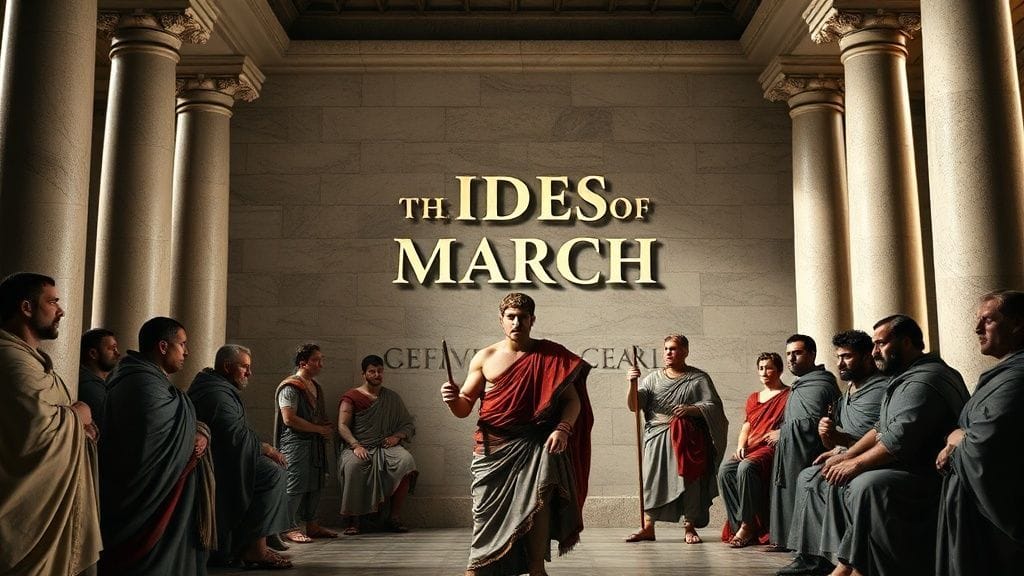
On that morning, Caesar arrived at the Theatre of Pompey, wary but confident. Among the crowd of senators, some greeted him with respect, others with concealed daggers. According to accounts, Caesar bypassed his bodyguards, a sign of trust—or perhaps fatal resignation.
As he took his seat, conspirators surrounded him in a pre-planned formation. The first strike came with a sharp stab from Casca, followed by dozens more. Caesar, reportedly shocked, famously struggled and called out "Et tu, Brute?"—acknowledging the betrayal by Brutus before succumbing to 23 wounds.
The Famous Warning Ignored: “Beware the Ides of March”
Legend immortalized a soothsayer’s warning to Caesar: “Beware the Ides of March.” Some tell that Caesar laughed off the prophecy days before, choosing faith in his invincibility over caution. This ominous phrase has since become synonymous with looming doom and ignored premonitions.
Historians debate the authenticity and timing of this warning, but its symbolic weight in literature and collective memory is undeniable.
The Assassination Unfolds: Blades in the Theatre of Power
The ferocity and precision of the attack stunned witnesses. A scene meant for governance turned into a tableau of violence and betrayal. Senators, caught between duty and fear, either joined the fray or recoiled in horror.
The bloodshed was swift but deeply scarring for Rome’s psyche—a violent punctuation that terminated Caesar’s reign and unleashed chaos beneath the city’s marble veneers.
The Aftermath in the Senate: Shock, Chaos, and Silence
Immediately following the murder, the Senate erupted into confusion. The conspirators declared themselves liberators, calling for a return to republican rule, but calm was fragile. Many senators fled or aligned with powerful factions jockeying to seize control amid the power vacuum.
Rome was unprepared for the ripple effects that would fracture its political landscape and unleash years of civil war.
Rome’s Reaction: Mourning and Outrage
The people of Rome responded with a mixture of shock, grief, and anger. Public mourning grew as the news spread, but so too did unrest and violence. Caesar’s body was cremated in the Forum, where Mark Antony’s impassioned funeral oration famously turned the tide of public opinion, transforming grief into outrage against the conspirators.
Antony’s Funeral Oration: The Power of Words and Crowd
In a masterstroke of rhetoric, Antony unleashed a searing eulogy, laden with irony and emotional appeals. His repeated refrain, “You all did love him once, not without cause,” undermined the conspirators’ claims of tyrannicide.
By displaying Caesar’s blood-stained cloak and detailing his will, Antony stirred the masses into rebellion, igniting the flames of civil war. That speech reshaped the political narrative and positioned Antony as a key player in Rome’s future.
The Collapse of Order: Civil War Looms
The assassination did not restore the republic; it shattered fragile peace. Rival factions, including Antony and Octavian—Caesar’s adopted heir—clashed with Brutus and Cassius, spiraling Rome into another bloody civil conflict.
The ideals that motivated the conspirators were drowned in the chaos they unleashed. Rome was poised between republic and empire, a transformation that would redefine world history.
Caesar’s Heirs and the Struggle for Succession
Amid the turmoil, Octavian emerged as a shrewd survivor and eventual victor. With Antony and later Lepidus, he formed the Second Triumvirate to defeat the conspirators and consolidate power.
This triumvirate would pave the way for Octavian’s later transformation into Augustus, Rome’s first emperor—marking the definitive end of republican governance.
From Republic to Empire: The Turning Point of Roman History
Caesar’s death was paradoxically the catalyst that ended the republic he sought to revive and the prelude to imperial Rome. The republic’s collapse had roots deeper than Caesar, but his assassination accelerated the regime change.
The shift toward autocracy redefined political structures, social order, and Rome’s relationship with its provinces, laying the groundwork for an empire that would dominate for centuries.
The Legacy of Julius Caesar: Reform, Power, and Tragedy
Julius Caesar’s legacy is a tapestry of paradoxes: a brilliant military commander and political reformer, yet also a dictator whose ambition threatened republican ideals. His assassination has inspired countless works of art, literature, and political discourse about power, fate, and betrayal.
He remains an emblem of the price and peril of transformative leadership in volatile times.
The Ides of March in Collective Memory: Myth, Drama, and History
The phrase “Beware the Ides of March” has transcended its historical roots, embedding itself in cultural consciousness as a symbol of inevitable betrayal and the fragility of power. Shakespeare’s “Julius Caesar” immortalized the event as a timeless tragedy.
Historians continue to study the assassination as a pivotal moment that reveals the enduring tensions between liberty and authority.
Lessons from the Fall of a Tyrant
The Ides of March offers enduring lessons on political power, the dangers of unchecked ambition, and the complexities of revolutionary change. The conspirators’ failure to grasp the consequences of their act exemplifies the unpredictable outcomes of political violence.
Rome’s transformation teaches us about resilience, adaptation, and the continuous struggle to balance freedom with order.
Conclusion
The assassination of Julius Caesar on the Ides of March was more than a killing; it was the climax of a political, social, and moral crisis that Rome had been wrestling with for decades. It represented the violent fracture between an old republican world and the dawning era of imperial authority. The brutal tableau in the Senate echoed far beyond Rome’s marble halls, sending tremors through history and shaping the course of Western civilization.
Caesar’s death sowed chaos, but from that chaos rose a new order, embodying both the promise and peril of power. The Ides of March remains a profound testament to the eternal human struggles with ambition, betrayal, and the quest for legacy.
FAQs
1. Why was Julius Caesar assassinated?
Julius Caesar was assassinated because many senators viewed his accumulation of power as a threat to the Roman Republic’s traditions and liberties. They feared he aimed to become a king or dictator, undermining the Senate’s authority.
2. Who were the main conspirators in Caesar’s assassination?
The primary conspirators included Gaius Cassius Longinus and Marcus Junius Brutus, along with around sixty other senators who believed killing Caesar was necessary to preserve the republic.
3. What happened immediately after Caesar was killed?
The Senate was thrown into chaos. Public grief turned into unrest after Mark Antony’s funeral oration stirred the people against the conspirators, ultimately leading to civil wars.
4. How did the assassination affect Rome politically?
Rather than restoring the republic, the assassination accelerated its collapse. Power struggles led to civil wars, culminating in Octavian’s rise and the establishment of the Roman Empire.
5. What is the significance of the phrase “Beware the Ides of March”?
The phrase is attributed to a soothsayer warning Caesar of impending danger on March 15. It symbolizes ignored warnings and inevitable betrayal.
6. How has Julius Caesar’s assassination influenced culture?
The event inspired countless literary and artistic works, most notably Shakespeare’s tragedy “Julius Caesar,” which explores themes of power, loyalty, and fate.
7. Did Caesar suspect a threat before his assassination?
While he received warnings, including the famous “Beware the Ides of March,” Caesar reportedly dismissed or ignored them, walking into the Senate unaware of the full extent of the conspiracy.
8. What legacy did Julius Caesar leave after his death?
Caesar’s reforms and centralization of power laid the groundwork for the Roman Empire. His life and death continue to symbolize the complexity of leadership and the dangers of absolute power.

