Table of Contents
- The Roaring Tides of Early 20th Century Imperialism
- Tangier, March 31, 1905: A City on the Brink
- Who Was Kaiser Wilhelm II?
- The Global Chessboard: Powers Eyeing Morocco
- The Speech That Stirred Storms
- The Words That Echoed in Tangier’s Plaza
- The Immediate Reactions: Cheers, Gasps, and Diplomatic Shudders
- Behind the Scenes: German Objectives and Calculations
- France’s Alarm Bell: The Protectorate Dream Under Threat
- Britain’s Calculus: Balancing Power and Peace
- The Moroccan Sultan’s Dilemma: Tradition in the Eye of the Storm
- The International Response: Conferences and Coalition Talks
- Roosevelt, Ententes, and the Dance of Diplomacy
- Economic Stakes: Railways, Resources, and Capital in Morocco
- The Crises That Followed: The Road to Tangier’s Internationalization
- Personalities in the Spotlight: From the Kaiser to French Premier Maurice Rouvier
- Propaganda and Public Opinion: Newspapers and Popular Sentiment
- Lessons in Power Politics: Nationalism and Imperial Ambition
- The Tangier Speech’s Undeniable Legacy
- How the Moroccan Crisis Prefigured the Great War
- Remembering 1905: Historical Memory and Interpretations
- Conclusion: A Speech That Reverberated Beyond Borders
- FAQs about the Tangier Crisis and Kaiser’s Speech
- External Resource
- Internal Link: Visit History Sphere
The air in Tangier was thick with anticipation on March 31, 1905. The bustling North African port city, a crossroads of cultures and empires, was poised at the threshold of a tempest that few could yet foresee. As Kaiser Wilhelm II stepped onto the terrace of the German consulate, his voice crossed the Mediterranean breeze — confident, defiant, and charged with imperial ambition. What followed was not merely a speech but a spark that would ignite an international crisis, reshaping the geopolitical landscape long before the eruption of the First World War.
This article delves deep into that moment, unpacking the tangled web of imperial rivalry, diplomacy, and nationalist fervor that converged in Tangier on that fateful spring day.
1. The Roaring Tides of Early 20th Century Imperialism
The dawn of the 20th century was an era defined by ambitious empires carving up the globe with disregard for old boundaries and complex human realities. Europe was a powder keg of nationalism, alliances, and competition, where colonial acquisitions were an extension of power and prestige.
For decades, Morocco had remained a jewel coveted by many — a gateway between Europe and Africa, rich in resources and strategically perched on the Atlantic. France and Spain had long cast covetous eyes on the region, but the German Empire, newly unified and restless under the leadership of Kaiser Wilhelm II, sought to assert itself on the world stage with vigour.
2. Tangier, March 31, 1905: A City on the Brink
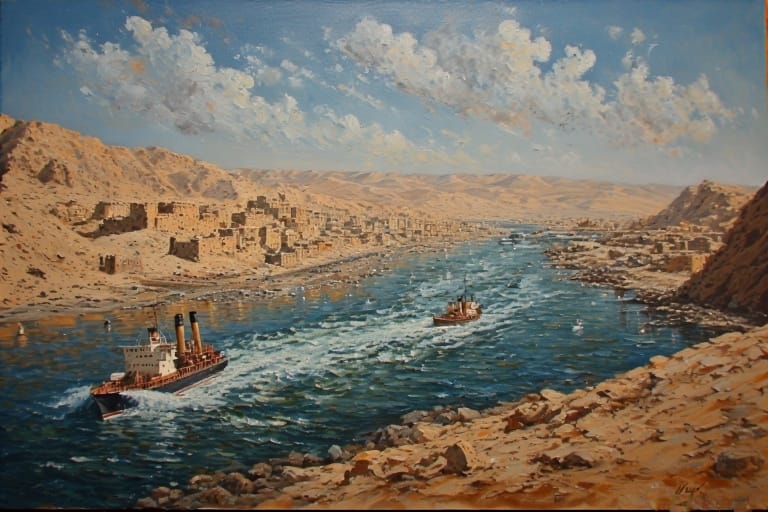
Tangier was no ordinary city. Situated at Africa’s northwest tip, it was a meeting point of cultures, traders, diplomats, spies, and adventurers. Foreign powers maintained a significant presence there, transforming it into symbolic ground where diplomacy played out under the African sun.
On this crisp morning, the German emperor arrived with a show of force, a keen eye on the Mediterranean currents of power. The atmosphere was electric; locals and diplomats alike sensed that what was about to unfold was historic.
3. Who Was Kaiser Wilhelm II?
Wilhelm II was a complicated figure — proud, impulsive, and eager to break away from the shadow of Bismarck’s cautious Realpolitik. Ascending to the throne in 1888, he was determined to revive Germany’s naval strength and stake a claim far beyond Europe’s borders.
His personality was larger than life; flamboyant in uniform and prone to dramatic gestures, he often prioritized spectacle over subtlety — traits that would both define and eventually doom his reign. His Tangier speech was no exception.
4. The Global Chessboard: Powers Eyeing Morocco
To understand the impact of the speech, one must see Morocco as a chessboard upon which the great powers played. France sought to establish a protectorate based on long-standing influence; Britain was wary of French dominance threatening the Mediterranean trade routes and the path to the Suez Canal; Spain claimed historical rights in the north and south strips of Morocco; Germany, relatively late in the imperial “scramble,” sought to press its claims and disrupt French ambitions.
Russia and Italy watched cautiously, and the United States, while maintaining a policy of isolation, kept diplomatic fingers on the pulse.
5. The Speech That Stirred Storms
On that day, Kaiser Wilhelm II declared unequivocally that Germany supported Moroccan sovereignty, opposing any exclusive European control — a direct rebuke to France’s objectives. He proclaimed Morocco’s independence as a matter of principle, calling for “equal economic opportunity” for all powers.
To many, this was more than a speech — it was a declaration of challenge, a refusal to allow French dominance unchecked.
6. The Words That Echoed in Tangier’s Plaza
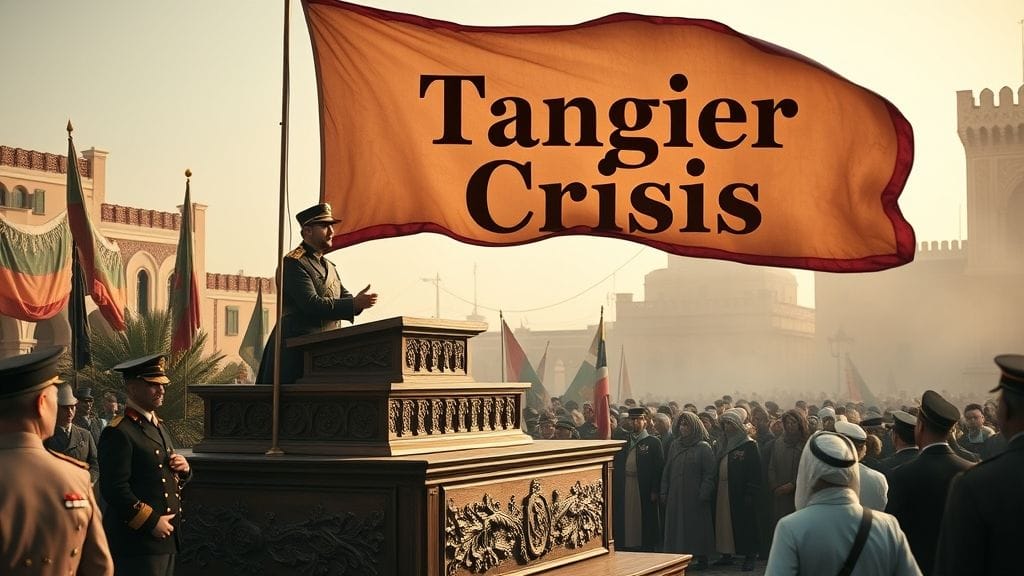
The speech itself was a theatrical event. Wilhelm spoke before assembled diplomats, local notables, and the gathered crowd, weaving a narrative of justice and fairness. Yet beneath the surface, the subtext was unmistakable: Germany was flexing its muscles.
Contemporary observers noted the “boiling tension” in the air; one French diplomat was quoted as whispering, “This is a slap in the face, one that will not be forgotten.”
7. The Immediate Reactions: Cheers, Gasps, and Diplomatic Shudders
In Germany, the speech was greeted with enthusiasm; newspapers hailed the Kaiser’s bold stand, while nationalist groups celebrated the assertion of national pride. In France and Britain, shock quickly morphed into outrage.
The French government viewed the speech as a direct affront to its national honor and imperial aspirations. The British, concerned about the balance of power, feared an escalation that could spark broader conflict. The Moroccan Sultan, Abderrahman, found himself caught amid competing tides.
8. Behind the Scenes: German Objectives and Calculations
Germany’s strategy was both offensive and defensive. By injecting itself into the Moroccan question, it hoped to force France into concessions elsewhere and demonstrate its arrival as a global power not to be ignored.
This diplomatic gambit, however, was fraught with risk; the Kaiser’s advisors warned of possible isolation or confrontation, but Wilhelm’s confidence overrode caution.
9. France’s Alarm Bell: The Protectorate Dream Under Threat
At the Élysée Palace, the mood was grim. France had invested heavily in Morocco through investments, infrastructure, and political influence. The speech threatened to unravel years of covert and overt maneuvering.
French Premier Maurice Rouvier responded by strengthening ties with Britain and preparing to defend French interests on all fronts. “Our patience is not infinite,” he reportedly said to his cabinet.
10. Britain’s Calculus: Balancing Power and Peace
Britain found itself walking a diplomatic tightrope. While not directly involved in Moroccan affairs, it understood that unchecked German expansion could upset the delicate balance linking London and Paris.
Discreet communication with France began, sowing the seeds for the Entente Cordiale’s eventual solidification. Yet London also urged caution to prevent an arms race that could plunge Europe into war.
11. The Moroccan Sultan’s Dilemma: Tradition in the Eye of the Storm
Sultan Abdelaziz was a ruler whose authority was simultaneously traditional and precarious. Tangier’s turmoil thrust him into a difficult role — how to safeguard Moroccan sovereignty amid competing imperial designs.
The Sultan initially welcomed the Kaiser's declaration, hoping it would affirm his independence, but soon realized he was a pawn in a much larger imperial game.
12. The International Response: Conferences and Coalition Talks
The crisis escalated internationally, leading to the Algeciras Conference of 1906, where major powers sought to negotiate Morocco’s fate. Though Germany failed to block French influence entirely, it succeeded in stalling the process and securing “equal economic rights.”
This diplomatic theater revealed cracks in alliances and foreshadowed future conflicts.
13. Roosevelt, Ententes, and the Dance of Diplomacy
Across the Atlantic, President Theodore Roosevelt observed the crisis with interest. While the U.S. remained officially neutral, Roosevelt’s “big stick” diplomacy and growing naval power persuaded European powers to consider stability more seriously.
The crisis underscored how interconnected world politics had become.
14. Economic Stakes: Railways, Resources, and Capital in Morocco
Morocco was more than a prize of land; it was a landscape rich with mineral wealth and fertile ground for European investments. Discussions about railway lines, trade agreements, and mining rights intensified the contest.
Control of these economic arteries meant influence, and the Kaiser’s speech was an announcement: Germany demanded a share of this bounty.
15. The Crises That Followed: The Road to Tangier’s Internationalization
The Moroccan Crisis did not end with the speech but unfolded over months and years, eventually leading to the establishment of Tangier as an international zone and Morocco’s partial colonization by France and Spain.
These developments sowed resentments and alliances that contributed indirectly to the outbreak of World War I.
16. Personalities in the Spotlight: From the Kaiser to French Premier Maurice Rouvier
The drama played out on a stage of vivid personalities. Wilhelm’s impulsiveness clashed with the cautious diplomacy of French politicians and the British balancing act between intervention and restraint.
Memoirs and diaries from participants reveal the human element — fears, ambitions, and misunderstandings that escalated the crisis.
17. Propaganda and Public Opinion: Newspapers and Popular Sentiment
Newspapers on both sides fueled nationalist fervor. In Germany, the Kaiser was lionized as a defender of honor; in France, the speech was dubbed an “insult to civilization.”
Public demonstrations, editorials, and cartoons spread emotions far beyond diplomatic corridors, making the crisis a matter of national pride for millions.
18. Lessons in Power Politics: Nationalism and Imperial Ambition
The Tangier speech illustrates a critical lesson: how individual acts of rhetoric, when entangled with nationalist pride and imperial ambitions, can have outsized effects.
It highlights the delicate balance between diplomacy and brinkmanship in an age driven by competing loyalties and expanding empires.
19. The Tangier Speech’s Undeniable Legacy
Though overshadowed by later events like the Great War, the 1905 Tangier speech remains a pivotal moment that exposed European rivalries and the limits of cooperation.
It showed how imperial ambitions could ignite crises with consequences far beyond a single speech.
20. How the Moroccan Crisis Prefigured the Great War
In hindsight, the Moroccan Crisis was a precursor to the alliances, animosities, and military preparations that would culminate in 1914’s cataclysm.
It underscored the fragility of peace in a volatile world where even a single speech could ignite a firestorm.
21. Remembering 1905: Historical Memory and Interpretations
Historians debate the significance of the Tangier speech — was it hubris, a calculated power play, or a genuine diplomatic stance?
Its memory serves as a reminder of the power of words, personalities, and unyielding ambitions to shape history.
Conclusion
The day Kaiser Wilhelm II raised his voice in Tangier was more than an episode of imperial bravado; it was the trumpet call of a world inching towards seismic change. His words resounded with the restless aspirations of a rising empire challenging the established order, igniting a crisis that revealed the fragile latticework of early 20th-century alliances.
Yet beneath the drama lay the human stories of rulers, diplomats, and ordinary Moroccans caught in the eddies of great power politics. The Tangier speech reminds us that history is not just the story of states and armies but of voices carried on the wind — voices that can enflame worlds or beckon peace.
As the echoes of 1905 reverberate into our times, they invite reflection on the enduring complexities of power, pride, and diplomacy.
FAQs
Q1: What was the main cause of the Moroccan Crisis triggered by Kaiser Wilhelm II’s speech?
The immediate cause was Wilhelm’s public declaration in Tangier opposing exclusive French control over Morocco, challenging French ambitions and demanding equal economic opportunities for all powers. This challenged the fragile balance of imperial interests and led to heightened tensions.
Q2: How did France react to the Kaiser’s Tangier speech?
France was alarmed and outraged, perceiving the speech as an affront to its national honor and imperial plans. It accelerated diplomatic efforts to secure a protectorate while seeking British support.
Q3: Why was Tangier such a significant location for this speech?
Tangier was an international diplomatic hub and symbolically represented the crossroads of empires in Morocco. The Kaiser's choice of location amplified the speech’s impact, making it a deliberate display of German interests.
Q4: How did the Tangier speech affect international diplomacy?
It prompted the Algeciras Conference of 1906, where major powers sought to resolve the crisis. Though it settled some disputes, it exposed deep divisions and set the stage for future conflicts.
Q5: What role did the Moroccan Sultan play during this crisis?
The Sultan was a central yet vulnerable figure, attempting to preserve Morocco’s sovereignty amidst foreign pressures but ultimately becoming a pawn in imperial negotiations.
Q6: In what ways did this crisis foreshadow World War I?
The crisis highlighted the breakdown of trust among powers, the rise of military alliances, and the dangers of imperial competition — elements that contributed directly to the environment leading to the Great War.
Q7: Was the Kaiser’s speech universally supported in Germany?
While generally popular among nationalists and the public who saw it as a bold assertion of power, some advisors warned it risked isolating Germany diplomatically.
Q8: How is the Tangier speech remembered today?
Historians view it as a significant episode revealing the tensions that bred global conflict, emphasizing the impact of rhetoric and imperialism in early 20th-century geopolitics.