Table of Contents
- The Deadly Roar of the Pacific: Dawn of the Kamchatka-Kuril Tsunami
- The Geographical and Geological Stage of Disaster
- The Russian Far East in the Early 18th Century: Communities on the Edge
- The Calm Before the Cataclysm: Signs and Omens
- The Great Earthquake of October 6, 1737: Earth Trembles and Sky Darkens
- The Birth of the Tsunami: Waves That Devoured the Coastline
- Eyewitness Accounts and Oral Traditions: Voices from the Past
- The Immediate Human Toll: Lives Lost and Lands Devastated
- Russian Imperial Reactions: From Report to Response
- The Scientific Understanding of the Tsunami: Progress and Gaps in the 18th Century
- Ecological and Environmental Aftershocks: A Changed Landscape
- The Kuril Islands and Kamchatka Peninsula: Rebuilding Amid Ruins
- Cultural Memory and Myth: How the Tsunami Entered Local Lore
- Modern Geological Insights: Revisiting the 1737 Tsunami Through Today's Lens
- Kamchatka-Kuril Tsunami in the Context of Pacific Rim Disasters
- The Legacy of 1737: Lessons for Tsunami Preparedness in Russia and Beyond
- Comparative Analysis: The 1737 Tsunami and Other Historic Pacific Tsunami Events
- Scientific Expeditions and Research in Kamchatka: Peering Beneath the Waves
- Contemporary Risk Assessment and Disaster Mitigation Strategies
- Conclusion: Remembering the 1737 Kamchatka-Kuril Tsunami – Humanity's Fragility and Resilience
- FAQs about the Kamchatka-Kuril Tsunami
- External Resource
- Internal Link
The Deadly Roar of the Pacific: Dawn of the Kamchatka-Kuril Tsunami
On an autumn morning in 1737, the remote and rugged coasts along the Kamchatka Peninsula and the Kuril Islands received a brutal, unannounced visitor. For the inhabitants of these windswept lands bordering the expansive Pacific Ocean, tranquility was shattered by a monstrous earthquake, soon followed by towering walls of water crushing into villages, forests, and uncertain futures. The sound of the earth rupturing beneath their feet was soon drowned by the terrifying, rising roar of the tsunami. No written chronicles or detailed maps from that era survive in abundance, yet the event stands as one of the most potent natural disasters to have struck the Russian Far East — a stark reminder of the merciless forces pulsating beneath the Earth’s surface.
The 1737 Kamchatka-Kuril tsunami swept away lives and landscapes with brutal efficiency, reverberating along coastlines hundreds of kilometers apart. Though centuries have passed, its story is stitched into local memory and scientific reconstructions, a poignant echo of nature’s force. As we trace the event, we uncover the layered narratives of a disaster that predates modern communication and warning systems, but that continues to teach us about the volatile relationship between humanity and the restless Pacific Ocean.
The Geographical and Geological Stage of Disaster
The Kamchatka Peninsula and Kuril Islands lie at the outer reaches of the “Ring of Fire,” a seismically volatile arc wrapping around the Pacific Ocean, displaying some of the most intense tectonic activity on the planet. Here, the Pacific Plate relentlessly plunges beneath the North American and Eurasian Plates along the Kuril-Kamchatka Trench, generating massive earthquakes and volcanic eruptions in a cyclical dance of creation and destruction.
In 1737, this remote corner of the world was virtually uncharted by European observers but well known to indigenous peoples like the Itelmen, Koryaks, and Ainu, whose lifeways were intimately connected to the sea and its moods. The landscape bristled with volcanoes, geysers, and earthquake scars, a volatile playground for elemental forces. These natural conditions, invisible yet omnipotent, set the stage for a disaster waiting beneath the ocean floor — a tectonic rupture that would send massive tremors shaking the earth and create a devastating tsunami.
The Russian Far East in the Early 18th Century: Communities on the Edge
Russian expansion into Siberia and toward the Pacific was still in its early stages, driven by fur traders, explorers, and Cossack adventurers probing the unknown. The scattered settlements from Kamchatka’s modest forts to fishing hamlets across the Kuril chain lived in relative isolation. Communication with Moscow was irregular and slow, taking months to years.
These communities depended heavily on fishing, seal hunting, and limited agriculture, their survival tightly entwined with the rhythms of nature. Indigenous worldviews revered the spirits of land and sea, weaving natural catastrophes into a rich tapestry of mythology and ritual. Still, none could predict how tragedy would unleash itself on that fateful October day.
The Calm Before the Cataclysm: Signs and Omens
Historical reconstruction suggests that seismic tremors may have preceded the great quake, subtle warnings imperceptible to most. Local oral traditions, as recorded centuries later, speak of strange animal behavior, whispered winds that seemed to carry warnings, and uneasy silences from the usually vibrant ocean.
Yet, far from the comforting bustle of modern cities with their sensors and alerts, the people watched the skies and seas with a mix of reverence and growing apprehension, their usual knowledge unable to prepare them for the catastrophe about to unfold.
The Great Earthquake of October 6, 1737: Earth Trembles and Sky Darkens
On October 6, 1737, approximately in the early hours of daylight, a massive earthquake struck beneath the Kuril-Kamchatka Trench. The ground shook with a ferocity estimated today to be around 8.3 to 9.0 in magnitude, making it one of the strongest quakes recorded in historical accounts of this region.
Entire forests likely swayed violently; mountains rumbled with avalanches; fragile wooden homes collapsed like matchsticks. For those who lived near the shorelines, the trembling was only the prelude. The sea, which had for a moment receded frighteningly—revealing the ocean floor and stranded fish—soon surged back with primal rage.
The Birth of the Tsunami: Waves That Devoured the Coastline
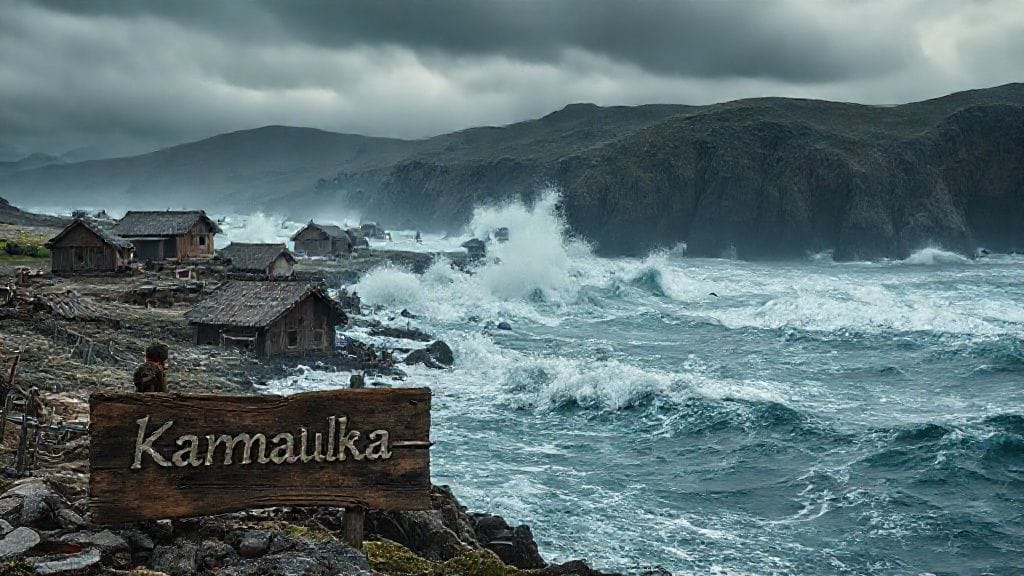
The physical mechanism behind the tsunami was a sudden displacement of the seafloor during the earthquake’s rupture, pushing billions of tons of water into great oscillations. The tsunami waves raced across the Pacific, some reaching heights estimated at 20 to 25 meters as they slammed into the coasts less than an hour later.
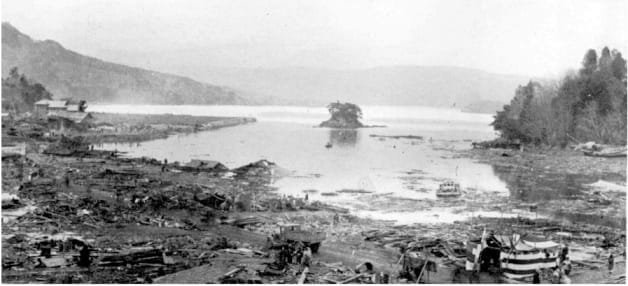
Villages along the Kamchatka and Kuril shores were wiped out. Timber, boats, and debris were carried for kilometers inland. Accounts later pieced together from indigenous stories and sparse Russian records describe how people fled to higher ground, some narrowly escaping death, many others tragically lost in the flood’s first and subsequent surges.
The tsunami did not just strike a local area; its power spread along 1,200 kilometers of coastline, demonstrating an intelligence of destruction that today’s disaster management experts still study intensively.
Eyewitness Accounts and Oral Traditions: Voices from the Past
Given the lack of written firsthand reports, much of the tsunami’s human story is preserved in oral tradition. Indigenous elders recounted stories of “the great water that swallowed the earth,” of “fire in the sky” as the land shook, and of ancestral spirits urging survivors to find safe places.
One Itelmen account vividly describes how the sea first retreated, exposing strange reefs before returning with a wall of frothing water taller than the tallest tree. Ainu narratives link the tsunami to wrathful sea gods, interpreted through shamanistic rites.
European settlers later referred to these testimonials in official reports, granting them weight in reconstructing the disaster’s scale.
The Immediate Human Toll: Lives Lost and Lands Devastated
The 1737 tsunami claimed hundreds, possibly thousands, of lives—tragically lost without medical help or organized rescue. Entire fishing camps were destroyed; fields were inundated by saltwater making them barren for years. Animal populations were decimated both by the quake and the waves.
In some accounts, entire families vanished beneath the water; in others, scattered survivors wandered for days, unable to return home. The disaster compounded the hardship of a frontier society already vulnerable to nature’s whims.
Russian Imperial Reactions: From Report to Response
Far from the epicenter, news of the disaster trickled slowly to St. Petersburg. Initial reports were relayed through explorers, priests, and traders, often incomplete or overly vague. The imperial government, preoccupied with European politics and internal affairs, took limited immediate action.
However, the event heightened awareness within certain scientific and administrative spheres about the need to better understand the far east’s volatile environment. Russian explorers such as Vitus Bering would later include seismic observations as part of their expeditions, laying early groundwork for geological science in the region.
The Scientific Understanding of the Tsunami: Progress and Gaps in the 18th Century
In the 18th century, earthquakes and tsunamis were largely mysteries, often seen as acts of divine wrath, fate, or mythological intervention. The emerging age of Enlightenment urged scholars to find natural explanations, but much remained speculative.
The 1737 tsunami was one of the first in Russian history to be given serious attention. Yet scientific instruments of the time were primitive; systematic seismic networks were still centuries away. The disaster helped spark curiosity, gradually transforming myths into questions for emerging geoscience.
Ecological and Environmental Aftershocks: A Changed Landscape
When the raging waters withdrew, they left behind more than human grief. Saltwater intrusion devastated terrestrial ecosystems; forests lay uprooted and drowned. Salmon spawning grounds were altered, affecting indigenous fishing economies for years.
Volcanic activity in Kamchatka sometimes increased after seismic events, suggesting interwoven geological processes. The land itself bore scars that visitors centuries later still found visible, forming a natural archive of catastrophe.
The Kuril Islands and Kamchatka Peninsula: Rebuilding Amid Ruins
Survivors of the tsunami faced the monumental task of rebuilding. Homes had to be reconstructed from driftwood; fishing gear remade; communities relearned to read the moods of an unpredictable sea.
The social fabric tightened as mutual aid became essential. The event may have slowed Russian colonization temporarily but also fostered resilience, adaptability, and deeper knowledge of the risks posed by this volatile frontier.
Cultural Memory and Myth: How the Tsunami Entered Local Lore
For indigenous peoples, the tsunami became part of origin stories, morality tales, and spiritual teachings. Shamans incorporated the disaster into rituals, attributing it to specific spirits or natural laws.
For Russian settlers, the event gradually transformed from isolated tragedy to a symbol of the challenges of eastern expansion. This interweaving of cultural memories enriched the historical tapestry and preserved a human connection to events otherwise lost to time.
Modern Geological Insights: Revisiting the 1737 Tsunami Through Today's Lens
Contemporary scientists use sediment analysis, historical seismology, and computer modeling to reconstruct the 1737 event. Such research reveals the immense seismic potential of the Kuril-Kamchatka Trench and confirms the tsunami’s magnitude and reach.
Studies also demonstrate that the 1737 tsunami is part of a repeating cascade of seismic events in the Pacific, underscoring the necessity of continual monitoring and preparedness.
Kamchatka-Kuril Tsunami in the Context of Pacific Rim Disasters
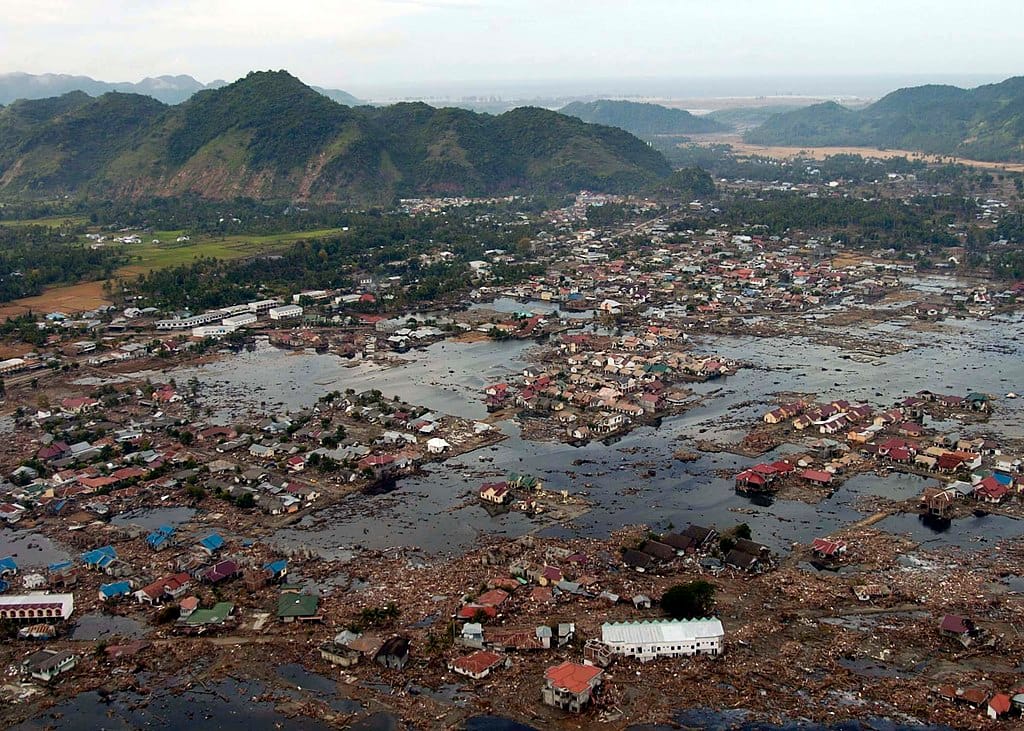
While overshadowed in popular memory by the catastrophic 2004 Indian Ocean tsunami or the 2011 Tōhoku event, the Kamchatka-Kuril tsunami occupies a critical place in the history of Pacific Rim natural disasters.
It represents an early chapter in humanity’s long struggle to comprehend and survive seismic megathrusts, serving as a sobering marker of the risks facing coastal populations along the “Ring of Fire.”
The Legacy of 1737: Lessons for Tsunami Preparedness in Russia and Beyond
The 1737 disaster, though centuries past, informs current disaster risk reduction strategies in the Russian Far East. It emphasizes the need for early warning systems, education, and resilient infrastructure in remote coastal communities.
Russian authorities today work closely with international bodies to monitor seismic activity and improve evacuation plans, honoring those lost by striving to prevent future tragedies.
Comparative Analysis: The 1737 Tsunami and Other Historic Pacific Tsunami Events
When compared with other historical tsunamis—such as the 1700 Cascadia event or Japan’s 1771 tsunami—the 1737 Kamchatka-Kuril tsunami shares patterns in tectonic causation and coastal impact but remains less documented.
However, its study fills important gaps in understanding tsunami recurrence intervals and risks in the northern Pacific, an area crucial for trans-Pacific maritime routes and ecosystems.
Scientific Expeditions and Research in Kamchatka: Peering Beneath the Waves
From the 19th century onward, Russian and international scientists embarked on expeditions to Kamchatka and the Kuril Islands to study volcanic activity and seismicity, piecing together the region’s violent geological history.
Contemporary oceanography and seismology continue to benefit from data collected in these remote zones, with technology enabling more precise tsunami modeling and hazard mapping.
Contemporary Risk Assessment and Disaster Mitigation Strategies
Modern Kamchatka remains vulnerable to seismic and tsunami risk, but advances in monitoring technology, public education campaigns, and construction codes have markedly improved resilience.
Multinational cooperation in the Pacific Tsunami Warning System includes Russia, facilitating rapid communication to vulnerable communities. The legacy of 1737 thus serves not just as a historical curiosity but as a catalyst for contemporary safety.
Conclusion
The Kamchatka-Kuril Tsunami of October 6, 1737, stands as a poignant chapter in the annals of natural disasters—an event etched into the rocky coasts and the hearts of people who faced an unthinkable assault by nature. Though light on written records, its echoes live in oral histories, geological strata, and scientific inquiry. It reminds us of the fragile thread connecting human life and earth’s restless dynamism.
This tragic story, unfolding far from the centers of global power in an isolated corner of the world, dispels illusions of human control over nature. Yet, it also highlights resilience—the capacity to rebuild, remember, and learn. From this distant disaster emerges an urgent message: in the face of natural cataclysms, preparedness, respect for the environment, and the preservation of memory are our best defenses.
FAQs
Q1: What caused the 1737 Kamchatka-Kuril tsunami?
A1: The tsunami was triggered by a massive megathrust earthquake (estimated magnitude 8.3 to 9.0) caused by the sudden slip along the Kuril-Kamchatka Trench, where the Pacific Plate subducts beneath the Eurasian Plate.
Q2: How many people died in the tsunami?
A2: Precise numbers are unknown due to sparse records. Estimates suggest hundreds to possibly over a thousand lives were lost among indigenous peoples and Russian settlers.
Q3: Were there any warning signs before the tsunami struck?
A3: Oral traditions mention unusual animal behavior and the sea receding, which is a classic natural warning sign of an imminent tsunami. However, there were no formal warning systems.
Q4: How did the Russian Empire respond to the disaster?
A4: Response was limited and delayed due to vast distances and political focus on European affairs. However, the event raised scientific interest in seismic phenomena in the region.
Q5: What is the significance of the 1737 tsunami in modern geology?
A5: It provides critical data about the seismic behavior of the Kuril-Kamchatka Trench and informs current tsunami risk assessments in the Northern Pacific.
Q6: How is the tsunami remembered in local cultures?
A6: Indigenous peoples incorporate the event into their oral histories and spiritual traditions, viewing it as a powerful natural and supernatural phenomenon.
Q7: Are Kamchatka and the Kuril Islands still at risk of tsunamis today?
A7: Yes, the region remains highly seismically active. Modern monitoring and warning systems aim to reduce future risks.
Q8: Where can I learn more about this event?
A8: Comprehensive information is available on resources like Wikipedia and scientific journals focused on Pacific seismicity.