Table of Contents
- The Calm Before the Fury: Setting the Stage in Negros, Philippines
- Kanlaon Volcano: A Living Giant with a Storied Past
- Early Signs: The Subtle Warnings of a Sleeping Titan
- The Night of August 2016: When Earth and Sky Collided
- The Eruption Unfolds: Ash, Lava, and Panic
- Communities on the Edge: The Human Face of the Disaster
- Government Response: Mobilizing Amidst Chaos
- Scientists in the Field: Monitoring a Volcano in Fury
- The Role of Social Media and Communications During Crisis
- Environmental Impact: The Aftermath on Nature and Agriculture
- Economic Ripple Effects: Livelihoods Shattered and Rebuilt
- Cultural Resilience: Traditions, Beliefs, and Recovery
- Narratives from Survivors: Personal Stories of Loss and Hope
- Comparative Perspectives: Kanlaon Among Philippine Volcanic Eruptions
- Lessons Learned: Disaster Preparedness and Volcanic Risk Reduction
- The Long Shadow of Kanlaon: Months After the Eruption
- Scientific Advances Spurred by the 2016 Event
- Tourism and Kanlaon Post-Eruption: Fear and Fascination
- Kanlaon's Place in Philippine Geological Heritage
- Legacy and Memory: How the Eruption Shapes Community Identity
- Conclusion: The Eruption as a Mirror of Human Strength and Frailty
- FAQs: Answering Key Questions about the Kanlaon Eruption
- External Resource: Wikipedia Link to Kanlaon Volcano
- Internal Link: Visit History Sphere
1. The Calm Before the Fury: Setting the Stage in Negros, Philippines
In the tropical warmth of Negros Island, nestled among the lush landscapes and vibrant communities, few imagined the giant that loomed silently above them was preparing to awaken. Kanlaon Volcano, a near-constant presence on the horizon, was often regarded as a distant, untouchable force—majestic but benign. Villagers went about their daily lives unaware or perhaps resigned to the subtle rumblings beneath their feet. The air was thick with humidity, the scent of earth and greenery intoxicating, and as the sun dipped below the horizon, a deceptive calm enfolded the land.
But deep within the earth's crust, molten rock churned, pressures grew, and gas pockets swelled in restless magma chambers. This was no ordinary night in August 2016. It was the night when Kanlaon decided to remind the world of its raw, unpredictable power.
2. Kanlaon Volcano: A Living Giant with a Storied Past
Towering at approximately 2,435 meters (7,992 feet), Kanlaon Volcano is the highest peak on Negros Island and one of the most active volcanoes in the Philippines. Its imposing conical shape is part of the Pacific "Ring of Fire," where tectonic plates converge, creating conditions ripe for volcanic activity.
Kanlaon's history is marked by frequent eruptions—some small and relatively harmless, others devastating. Its volcanic activity has punctuated local oral histories and folklore, often seen as a living deity by indigenous groups whose spiritual life revolves around the mountain’s moods.
Throughout the 19th and 20th centuries, Kanlaon erupted numerous times, the records revealing episodes of ashfall, lava flows, and volcanic earthquakes. Each event inspired a mixture of awe and dread, as communities balanced the fertile soils that volcanic ash provided with the threat of disaster.
3. Early Signs: The Subtle Warnings of a Sleeping Titan
Before August 2016, Kanlaon’s activity had been closely monitored. Philippine volcanologists recorded subtle increases in seismic activity and gas emissions in the preceding months—whispers from deep beneath that something was stirring.
Residents living in the shadow of Kanlaon noticed the mountain's restless behavior—unusual steaming, tremors, and a faint sulfuric smell—silent heralds that often go unheeded until catastrophe strikes.
These signs triggered alerts from the Philippine Institute of Volcanology and Seismology (PHIVOLCS), which raised the alert level incrementally, urging local governments and communities to prepare for possible evacuation. Yet, as often in volcanic regions, a complex mixture of hope, skepticism, and daily necessity kept people close to their homes.
4. The Night of August 2016: When Earth and Sky Collided
On the evening of August 21, 2016, the air vibrated with an intensity that unsettled even the most stoic inhabitants. At around 9 p.m., Kanlaon's slumber was violently broken. A powerful explosion shook the mountain with an audible roar that echoed through valleys and villages miles away.
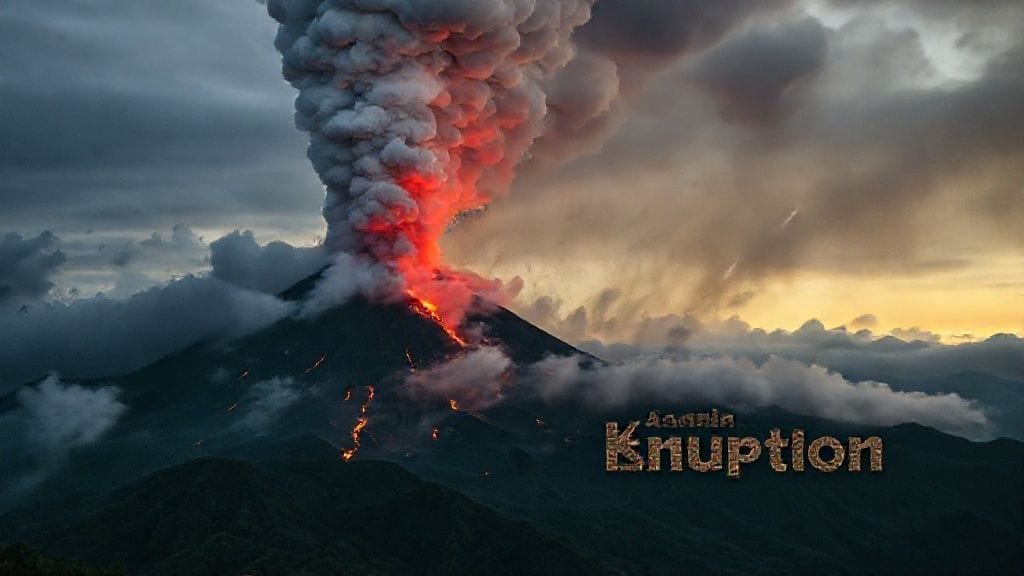
Plumes of dense ash billowed into the night sky, illuminated sporadically by fiery glows from incandescent lava fragments hurled from the summit. The eruption column ascended over two kilometers into the atmosphere, blocking out stars, and casting an eerie twilight across the land.
Ashfalls began blanketing nearby towns, choking the sky, stinging eyes, and piercing the silence with the frantic rush of people fleeing downhill. The pyroclastic surges tore at forests and fields, carving paths of destruction through the mountain’s slopes.
5. The Eruption Unfolds: Ash, Lava, and Panic
The initial explosive eruption was followed by intermittent bursts of activity over the next days and weeks. Lava fountains illuminated the dark skies, and continuous ash emissions drifted eastward, carried by prevailing winds, threatening to contaminate water sources and engulf agricultural lands.
Emergency warnings spread rapidly, with local authorities coordinating the evacuation of thousands. Panic rippled across the region, fueled not only by immediate danger but by uncertainties: How long would the eruption last? Could it escalate further? Would it trigger landslides or secondary disasters?
Despite efforts to maintain order, the atmosphere was thick with fear and confusion. Roads became clogged with families clutching belongings, livestock, and memories, moving away from what had been their homes for generations.
6. Communities on the Edge: The Human Face of the Disaster
What makes natural disasters truly tragic is their impact on people. In Negros, countless families endured sleepless nights in evacuation centers, anxiety gnawing away at the edges of hope.
Elderly residents recalled past eruptions with a skeptic’s eye but found themselves powerless against nature’s raw force. Children, bewildered and frightened, asked questions their parents struggled to answer. The mountain that nurtured life through fertile soil now imposed a ruthless test of survival.
Yet, amid the chaos, acts of extraordinary solidarity emerged — neighbors helping neighbors, local officials coordinating aid with limited resources, and strangers offering shelter.
7. Government Response: Mobilizing Amidst Chaos
The Philippine government, through the National Disaster Risk Reduction and Management Council (NDRRMC), responded swiftly. Military and police units were deployed to enforce evacuation orders and distribute relief goods.
PHIVOLCS maintained rigorous monitoring and continuously updated hazard maps. Inter-agency collaboration sought to minimize casualties, yet limited infrastructure and communication gaps posed significant challenges.
International aid organizations also offered support, recognizing how fast-moving volcano eruptions strain local resources. Blood donations, temporary shelters, and medical supplies became lifelines for evacuees.
8. Scientists in the Field: Monitoring a Volcano in Fury
Volcanologists found themselves at the frontlines, tracking seismic tremors, gas emissions, and ground deformation. Instruments placed around Kanlaon transmitted crucial data, helping forecast further activity.
These scientists, often risking their own safety, provided the critical knowledge needed to anticipate explosions and guide evacuations. Their work underscored the fragile balance between man’s quest for understanding and nature’s unpredictable temperament.
9. The Role of Social Media and Communications During Crisis
In 2016, social media platforms played an unprecedented role in disseminating information, warnings, and real-time updates. Residents shared videos and images, amplifying awareness both locally and globally.
But communication was a double-edged sword. Misinformation and rumors sometimes spread panic, highlighting the need for reliable information sources and media literacy.
Still, the eruption marked a turning point for crisis communication in the Philippines, shaping future responses to disasters.
10. Environmental Impact: The Aftermath on Nature and Agriculture
Kanlaon’s eruption left scars on the landscape. Thick ash covered slopes, smothering vegetation and contaminating rivers and streams. Livestock suffered, crops failed, and the soil’s fertility faced potential degradation.
Forests, once dense and green, bore the brunt of pyroclastic flows. Wildlife retreats and habitats were disrupted, triggering ripple effects in biodiversity.
Yet, volcanic soils are famously fertile over the long term—a paradox of destruction and renewal. Local farmers faced the daunting task of rebuilding, relying on both traditional knowledge and scientific guidance.
11. Economic Ripple Effects: Livelihoods Shattered and Rebuilt
Negros Island’s economy, largely grounded in agriculture and tourism, felt the tremors far beyond the immediate disaster zone. Sugarcane fields—an economic mainstay—were damaged, affecting production and income.
Tourism sites around Kanlaon saw cancellations and closures, resulting in financial losses for local businesses. Yet, recovery efforts eventually integrated disaster risk awareness, leading to stronger, more resilient economic planning.
12. Cultural Resilience: Traditions, Beliefs, and Recovery
Kanlaon holds a powerful place in local culture, not just as a physical presence but as a spiritual guardian. Indigenous groups and communities engaged in rituals seeking protection and healing, drawing on centuries-old beliefs.
Cultural resilience helped communities process trauma—it shaped funerals, rebuilding ceremonies, and daily life rhythms. These practices ensured continuity—a subtle defiance against erasure by disaster.
13. Narratives from Survivors: Personal Stories of Loss and Hope
One cannot grasp the full scope of Kanlaon's eruption without listening to its survivors. Maria, a grandmother from La Castille, recalled how ash blanketed her windows while she clutched her granddaughter.
“My home felt like it was breathing fire,” she said, eyes glistening. “But our village didn’t break. We helped each other get through the smoke.”
Stories like hers reveal courage and compassion in the face of upheaval—the heartbeats within the volcanic saga.
14. Comparative Perspectives: Kanlaon Among Philippine Volcanic Eruptions
The Philippines is no stranger to volcanic fury. From the catastrophic 1991 eruption of Mount Pinatubo to the more recent Taal events, Kanlaon fits into a broader narrative of geological volatility.
Yet, its 2016 eruption was distinctive—marked by particular patterns of evacuation, response, and ecological impact—offering valuable insights for disaster management nationwide.
15. Lessons Learned: Disaster Preparedness and Volcanic Risk Reduction
The 2016 Kanlaon eruption underscored glaring gaps and strengths in disaster preparedness. It accelerated improvements in early warning systems, community training, and multidisciplinary coordination.
Communities learned to read the mountain’s signs better, while authorities embraced more participatory approaches. Mitigating volcanic risks became a shared responsibility, blending science and local wisdom.
16. The Long Shadow of Kanlaon: Months After the Eruption
Months after the eruption, ash still coated rooftops, and "black rain" stained the landscape sporadically. Recovery was slow, marked by infrastructure repairs, reforestation efforts, and gradual return of displaced families.
The mental toll lingered—post-traumatic stress becoming a quiet epidemic in impacted areas. Yet, hope endured as educational programs and government initiatives took root.
17. Scientific Advances Spurred by the 2016 Event
Kanlaon's eruption enriched the scientific community's understanding of andesite stratovolcano behavior, hydrothermal systems, and eruption precursors.
It also propelled technological investments—enhanced monitoring equipment, remote sensing applications, and community-based observation networks emerged to brace for future events.
18. Tourism and Kanlaon Post-Eruption: Fear and Fascination
In the years following, Kanlaon transformed into a site of cautious tourism, where trekkers and adventurers sought both beauty and danger.
Eco-tourism initiatives highlighted responsible visitation, emphasizing safety and environmental preservation. Kanlaon’s story captivated seekers of natural wonders and history alike.
19. Kanlaon's Place in Philippine Geological Heritage
Recognized as a geological monument, Kanlaon's significance extends beyond its eruption. It stands as a natural classroom, a testament to the Philippines' volatile terrain, and a cultural icon woven into island identity.
Efforts to preserve this heritage continue, balancing accessibility with conservation.
20. Legacy and Memory: How the Eruption Shapes Community Identity
The Kanlaon eruption of 2016 is etched into collective memory—memorials, storytelling festivals, and local histories keep its lessons alive.
It changed not only landscapes but the way communities view their relationship with nature—a dynamic of respect, vigilance, and partnership.
Conclusion
Kanlaon’s 2016 eruption is more than a geological event; it is a poignant narrative of vulnerability, resilience, and human spirit standing against the titanic forces of Earth. This living volcano, with its fiery breath and unpredictable temper, reminds us that beneath the serene beauty of places like Negros Island lies a world where creation and destruction dance in tandem.
The eruption’s story weaves together science, culture, community, and nature—a mosaic that beckons not fear alone, but profound respect. As ashes settle and life renews, Kanlaon continues to inspire, caution, and challenge those who dwell in its shadow. Its roar echoes beyond the slopes, calling humanity to listen, prepare, and embrace the awe-inspiring pulse of our planet.
FAQs
Q1: What caused the 2016 eruption of Kanlaon Volcano?
A: The eruption resulted from the upward movement of magma triggered by tectonic movements along the Pacific Ring of Fire. Increased seismic activity and gas emissions preceded the explosion, indicating rising magma pressure within the volcano.
Q2: How many people were affected by the 2016 Kanlaon eruption?
A: Thousands of residents in nearby towns and barangays were evacuated due to ashfall and the threat of lava flows. While there were no reported fatalities, the eruption displaced many families and disrupted livelihoods.
Q3: What role did government agencies play during the eruption?
A: Agencies like PHIVOLCS and the NDRRMC led monitoring, evacuation, and relief operations, collaborating with local governments and the military to ensure safety and provide aid.
Q4: How did the eruption impact agriculture on Negros Island?
A: Ashfall damaged crops, especially sugarcane plantations, and contaminated water sources, leading to short-term declines in agricultural productivity and income for farmers.
Q5: How has Kanlaon’s eruption influenced disaster preparedness in the Philippines?
A: The event highlighted the need for improved early warning systems, enhanced community engagement, and better communication strategies, leading to reforms in volcanic risk management.
Q6: Are there any cultural traditions linked to Kanlaon Volcano?
A: Yes, indigenous groups regard the volcano as a sacred entity, incorporating it into rituals, offerings, and stories aimed at seeking protection and harmonizing with nature.
Q7: What scientific insights were gained from studying the 2016 eruption?
A: Researchers advanced understanding of eruption triggers, magma chemistry, and gas emissions, informing better prediction models and monitoring techniques.
Q8: Is Kanlaon still active today?
A: As of the latest data, Kanlaon remains an active volcano with ongoing monitoring to detect signs of renewed activity.

