Table of Contents
- The Dawn of Devastation: October 8, 2005, Kashmir Shaken to Its Core
- A Region on Edge: Geopolitical and Social Faultlines of Kashmir
- The Ground Breaks: The Science Behind the Earthquake
- The Tremor’s First Echoes: Immediate Reactions and Chaos
- A Fractured Landscape: Physical Destruction and Human Trauma
- Survivors’ Voices: Stories from the Rubble
- The Search for the Missing: Rescue Operations Under Strain
- Healthcare in Crisis: Battling Injury, Disease, and Fear
- Cross-Border Tensions: India and Pakistan's Delicate Dance
- International Response: Aid, Diplomacy, and Politics
- Where Governments Stood: Coordination and Controversy
- The Mountainous Challenge: Logistical Nightmares in Relief Work
- Rebuilding Lives: From Tent Cities to Permanent Homes
- Psychological Scars: Coping with Trauma Amidst Conflict
- The Kashmir Earthquake and Regional Geopolitics Revisited
- Lessons Learned: Disaster Preparedness and Policy Change
- Media Narratives: Framing the Catastrophe in Global Eyes
- Remembering October 8: Memorialization and Historical Memory
- The Earthquake’s Long Shadow: Economic and Social Ripples
- Voices from the Future: How Kashmir’s Youth Carry the Legacy
The dawn was crisp, the mountain air deceptively calm on October 8, 2005. But beneath the tranquil peaks of Kashmir, the earth was restless, holding back a terrible surprise. At 8:50 a.m. local time, a monstrous 7.6 magnitude earthquake tore through the rugged terrain, its violent pulse shattering homes, hopes, and the very ground beneath tens of thousands of lives across India and Pakistan. This was not simply a natural disaster — it was an event that would forever alter the social, political, and emotional landscape of a region already fraught with tension.
1. The Dawn of Devastation: October 8, 2005, Kashmir Shaken to Its Core
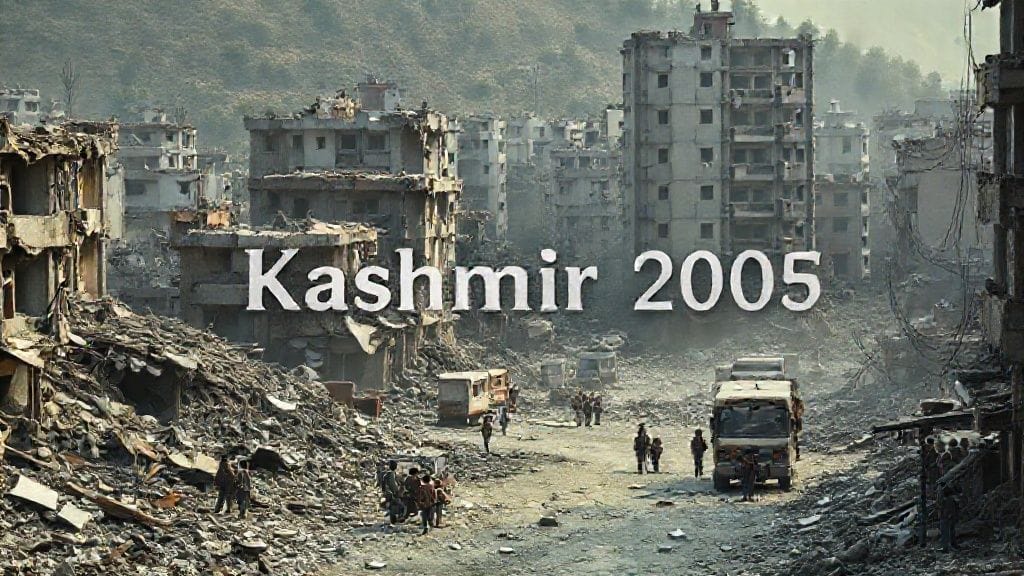
As morning light crept over the mighty Himalayas, the earth suddenly convulsed beneath the town of Muzaffarabad, the capital of Pakistan-administered Kashmir. Buildings shattered, mountainsides crumbled, and roads fractured into impassable chasms. The world watched in disbelief as the heart of Kashmir convulsed violently, throwing a region steeped in conflict into profound chaos. The earthquake did not discriminate — it ripped through villages and cities alike, claiming over 86,000 lives and leaving millions homeless.
The initial moments were filled with terror: walls cracked, children screamed, families clung together. Then came the silence — eerie and absolute, broken only by distant cries and the ominous rumble of aftershocks. It was a catastrophe of epic proportions, a moment that blended human vulnerability with the raw power of nature.
2. A Region on Edge: Geopolitical and Social Faultlines of Kashmir
To fully grasp the gravity of the earthquake's impact, one must understand Kashmir’s complex tapestry. This contested mountainous region has been a flashpoint between India and Pakistan since the Partition of British India in 1947. Both countries claim Kashmir in full, but each governs a portion, leading to a volatile mix of military tension, political unrest, and civilian suffering.
Kashmir’s terrain — rugged, steep, and prone to avalanches — was ill-prepared to withstand such a massive seismic event. The region’s fragile infrastructure and political divisions hampered relief efforts. Villages were isolated, communications ruptured — all against a backdrop of mistrust between Indian and Pakistani authorities, and between local governments and communities.
3. The Ground Breaks: The Science Behind the Earthquake
The earthquake originated along the fault lines where the Indian Plate and Eurasian Plate collide. This boundary, part of the majestic Himalayan mountain-building process, is a hotbed of seismic activity. The 7.6 magnitude quake was caused by a sudden slip along the Main Central Thrust fault, releasing pent-up energy accumulated over centuries.
Seismologists described it as a “megathrust” event — a powerful and complex rupture two segments long, spanning approximately 180 km underground. The quake’s depth was shallow, around 25 kilometers, which amplified its destructiveness on the surface. Such quakes are rare but devastating, especially in densely populated and poorly constructed regions.
4. The Tremor’s First Echoes: Immediate Reactions and Chaos
In the instant after the ground shook, panic spread like wildfire. In Muzaffarabad and surrounding areas, people fled out of collapsing buildings into open spaces, only to confront aftershocks that kept rattling their fragile nerves. In urban centers, concrete skeletons stood as grim monuments to lives lost and dreams obliterated.
The quake struck during morning hours, catching many in schools, offices, or markets. Roads buckled, bridges collapsed, cutting off routes needed for rescue. Communication lines were severed, compounding isolation. Hospitals, already overstretched, were crippled by the influx of the injured.
5. A Fractured Landscape: Physical Destruction and Human Trauma
The earthquake’s physical toll was staggering. Over 1 million homes were destroyed or severely damaged, leaving an estimated 3.5 million people homeless. Entire villages were reduced to rubble. Landslides buried highways and isolated communities, many unreachable for days.
Infrastructure was obliterated: power grids failed, water supplies contaminated, schools and public buildings turned to dust. The human toll was gruesome. Families fractured, communities broken. Corpses lay amid twisted metal and splintered timber, many never recovered.
6. Survivors’ Voices: Stories from the Rubble
Amid the ruins, personal narratives emerged — stories of resilience, loss, and hope. A mother in Balakot recounted how she shielded her children with her body as their house collapsed, surviving against all odds. A young teacher in Muzaffarabad spoke of leading frightened children to safety as their school disintegrated.
But others lived nightmares beyond words: a shopkeeper who buried his family in a landslide, a healer who roamed the mountains alone, tending to the wounded. These human portraits revealed the staggering emotional cost, a mosaic of suffering and courage illuminating the tragedy’s depth.
7. The Search for the Missing: Rescue Operations Under Strain
Rescue efforts began immediately but were hampered by the scale of destruction and treacherous terrain. Pakistani military, local volunteers, and international agencies coordinated frantic searches for survivors trapped beneath concrete tombs.
Equipment was scarce; heavy machinery couldn’t reach remote sites. Many rescues required manual labor with bare hands, as time was critical. Yet, even as aftershocks rattled nerves and hope waned, countless lives were pulled from the wreckage. But thousands remained unaccounted for, lost to the unforgiving mountains.
8. Healthcare in Crisis: Battling Injury, Disease, and Fear
Medical systems strained under the deluge of injuries ranging from fractures to crush syndrome and infections. Field hospitals sprung up in makeshift tents, staffed by overwhelmed doctors operating in conditions of dire scarcity.
Cold autumn nights compounded suffering, with exposure becoming a silent killer. Waterborne diseases surged due to contamination. Psychological trauma was evident; many victims exhibited symptoms of acute stress and post-traumatic disorder. Mental health, a rarely addressed issue in the region, emerged as a vital concern.
9. Cross-Border Tensions: India and Pakistan's Delicate Dance
The earthquake’s fallout unfolded in a politically charged environment. Kashmir’s disputed status meant that India and Pakistan faced both geographical and diplomatic obstacles in coordinating aid and relief.
While both sides sent limited assistance across the Line of Control, suspicion often overshadowed cooperation. Indian-administered Kashmir suffered casualties and damage as well, with remote communities in Jammu and Kashmir state desperately needing support. Despite adversity, the disaster spurred rare, if cautious, moments of dialogue.
10. International Response: Aid, Diplomacy, and Politics
Global reaction was swift and massive. Countries including the United States, China, European nations, and international organizations like the Red Cross offered aid — from financial support to rescue teams and supplies.
Diplomatic tensions never fully abated, but humanitarian concerns transcended politics to some extent. Still, the sheer scale of devastation overwhelmed relief capacities, revealing the limits of aid delivery in politically sensitive zones.
11. Where Governments Stood: Coordination and Controversy
Pakistan's government took the lead in relief efforts on its side of Kashmir, launching the Earthquake Reconstruction and Rehabilitation Authority (ERRA) to manage response and rebuilding. India, meanwhile, mobilized military and civilian resources to mitigate damage.
However, critiques arose regarding bureaucracy, delays, corruption allegations, and resource mismanagement. Local voices accused governments of prioritizing political optics over real relief, exposing systemic flaws in disaster preparedness and governance.
12. The Mountainous Challenge: Logistical Nightmares in Relief Work
Relief workers faced Herculean challenges. Narrow, winding roads clogged with debris severely restricted access. Helicopter missions became lifelines but were hampered by fog and bad weather.
Cold temperatures, avalanches, and ongoing aftershocks made conditions perilous. The rugged landscape forced creativity: supply chains relied on porters, volunteers, and makeshift air drops to deliver food, blankets, and medicine.
13. Rebuilding Lives: From Tent Cities to Permanent Homes
The months that followed transformed the region’s social geography. Tent camps ballooned around cities and towns, serving as lifelines but also stark reminders of loss.
Reconstruction was a marathon. ERRA formulated plans to rebuild homes with earthquake-resistant technologies, schools, and hospitals. But balancing cost, culture, and speed proved difficult. Many displaced remained skeptical, fearful of new instability.
14. Psychological Scars: Coping with Trauma Amidst Conflict
The earthquake was not only a physical shock but psychological upheaval. Survivors grappled with grief, survivor guilt, and fear of future quakes.
Conflicted by ongoing violence and political uncertainty, mental health care was scarce. NGOs and community groups began to address these invisible wounds, advocating for trauma counseling and community healing initiatives.
15. The Kashmir Earthquake and Regional Geopolitics Revisited
The disaster highlighted the absurd tragedy of conflict amid human suffering. It laid bare the shared vulnerabilities of Kashmiri people, regardless of political borders.
Some analysts argue that the earthquake created a brief opening for peace dialogue, emphasizing shared human needs over territorial claims. But entrenched hostilities limited lasting change. Still, the earthquake became a watershed moment for humanitarian diplomacy in South Asia.
16. Lessons Learned: Disaster Preparedness and Policy Change
In the quake’s aftermath, governments and NGOs reassessed disaster readiness in the Himalayas. ERRA became a model for coordinated reconstruction in fragile states.
Efforts emphasized seismic-resistant construction, community education, and early warning systems. The tragedy underscored the need for integrating disaster preparedness into broader security and development frameworks in Kashmir and beyond.
17. Media Narratives: Framing the Catastrophe in Global Eyes
International media coverage was intense but often reductionist, portraying Kashmir through narrow lenses of victimhood or conflict.
Local journalists pushed back, emphasizing resilience, agency, and the nuanced reality of the disaster zone. The earthquake became a prism revealing regional complexities and human costs beneath headline simplicity.
18. Remembering October 8: Memorialization and Historical Memory
Each year, commemorations honor the victims and survivors. Memorials dot the landscape; literary and artistic works capture the event’s emotional landscape.
For many, the earthquake is a turning point — a shared trauma that unites disparate Kashmiri communities in memory, even across political divides.
19. The Earthquake’s Long Shadow: Economic and Social Ripples
Economically, Kashmir faced a long road to recovery. Agriculture, the backbone of many rural economies, was devastated. Tourism, a vital sector, plummeted due to infrastructure damage and instability.
Socially, displacement reshaped demographics and sparked shifts in community dynamics. Still, reconstruction efforts stimulated some local economies and introduced new building technologies.
20. Voices from the Future: How Kashmir’s Youth Carry the Legacy
The younger generation, many of whom were children during the quake, carry a complex inheritance of trauma, resilience, and hope. Educational programs, youth forums, and civic initiatives engage these new voices in rebuilding Kashmir’s future.
Their narratives blend memory with aspiration, seeking peace, stability, and sustainability amid the mountains that once trembled so fiercely beneath their feet.
Conclusion
The Kashmir earthquake of October 8, 2005, stands as a stark reminder of nature’s unpredictable fury but also of humanity’s enduring capacity for hope amid disaster. It ravaged a region already scarred by conflict, laying bare vulnerabilities that transcended politics and borders. Yet, amid the rubble emerged stories of courage, compassion, and cooperation that defy narratives of division.
As the dust settled, Kashmir faced not only the challenge of physical reconstruction but of healing the invisible fractures—the psychological, social, and political wounds that tremble long after the earth has stilled. This tragedy is woven into the collective memory of a land and its people, a painful but vital chapter in a story still being written by survivors, leaders, and the younger generations who carry the weight of history with resilient hearts.
In remembering October 8, we honor lives lost and celebrate the indomitable spirit of renewal. The Kashmir earthquake reminds us that in the face of catastrophe, humanity’s greatest strength lies not in resisting fate, but in the shared resolve to rise again.
FAQs
1. What caused the Kashmir earthquake in 2005?
The earthquake resulted from a sudden slip along the Main Central Thrust fault where the Indian and Eurasian tectonic plates collide. This megathrust event released massive energy at a shallow depth, causing widespread devastation.
2. How many people were affected by the earthquake?
Over 86,000 people lost their lives, millions were injured or displaced, and approximately 3.5 million became homeless due to the destruction of homes and infrastructure.
3. What were the main challenges in the rescue and relief efforts?
Difficult mountainous terrain, damaged roads and communication lines, severe weather, political tensions, and limited resources complicated rescue operations and aid delivery.
4. How did the political tension between India and Pakistan affect the disaster response?
The disputed status of Kashmir created mistrust and limited cooperation between the two countries, complicating cross-border aid efforts despite some moments of humanitarian collaboration.
5. What long-term changes did the earthquake prompt in disaster management in the region?
The tragedy led to the establishment of coordinated agencies like ERRA, emphasis on earthquake-resistant construction, improved disaster preparedness, and greater international involvement in relief operations.
6. How is the Kashmir earthquake remembered today?
Annually commemorated through memorials, literature, and community events, the earthquake is remembered as a defining moment of shared trauma and resilience for the Kashmiri people.
7. Did the earthquake impact the geopolitical situation in Kashmir?
While it briefly fostered humanitarian dialogue, entrenched political tensions remained largely unaltered. The disaster exposed common vulnerabilities but did not lead to lasting peace breakthroughs.
8. How have survivors coped with the psychological impact of the disaster?
Mental health initiatives were slow to develop, but NGOs and communities began addressing trauma through counseling, support groups, and education, highlighting the need for sustained psychological care.