Table of Contents
- The Looming Giant: Iceland on the Eve of 1918
- Katla: The Sleeping Volcano beneath the Ice
- Signs of Unrest: Pre-Eruption Tremors and Whispers
- June 1918: When Fire Shattered the Ice
- The Eruption Unfolds: A Symphony of Destruction
- Floods from Hell: Jökulhlaups and Their Fury
- Communities Under Threat: Human Stories amid the Crisis
- The Response: Iceland’s Struggle against Nature’s Wrath
- Scientific Eyes on Katla: Observations and Discoveries
- Economic and Cultural Shockwaves in Post-Eruption Iceland
- The Volcanic Legacy: How Katla Shaped Icelandic Identity
- Global Context: Katla’s Eruption in a World at War’s End
- Lessons from Katla: Advances in Volcanology Sparked by Disaster
- From Ashes to Awareness: Environmental Aftermath and Landscapes Transformed
- Remembering Katla: Memorials, Myths, and Modern Reflections
- Conclusion: The Enduring Impact of Katla’s 1918 Fury
- FAQs: Understanding Katla’s 1918 Eruption
- External Resource
- Internal Link
1. The Looming Giant: Iceland on the Eve of 1918
In the quiet, stark expanses of Iceland's southern highlands, an ancient threat brooded beneath a thick mantle of ice and snow. The year was 1918, a year marked by global turbulence as the First World War drew to a tumultuous close, and yet in this remote corner of the North Atlantic, something far older and more primal was stirring. Iceland, a land forged from fire and shaped by ice, was about to witness one of its great geological spectacles unfold—an eruption of the feared Katla volcano.
In the vast silence broken only by the whispering winds and the distant crash of glaciers, few could have imagined the catastrophic drama that was about to erupt beneath their feet. Katla, concealed under the immense Mýrdalsjökull glacier, had long been part of Icelandic legend and dread. The looming expectation of its awakening cast an unseen shadow over the communities who lived in its perilous shadow.
But, as the summer of 1918 unfurled, the balance of earth and ice was shattered in a violent upheaval. The eruption would not only reshape the landscape but would leave indelible marks on the hearts and lives of Iceland’s people and resonate far beyond its shores.
2. Katla: The Sleeping Volcano beneath the Ice
Katla stands as one of Iceland’s most formidable volcanoes. Nestled beneath nearly 600 meters of thick glacier ice, it forms part of the larger volcanic system in the Southern Volcanic Zone, a region where the North American and Eurasian tectonic plates diverge. Its activity is notorious; Katla has erupted at least 20 times since the year 930, with eruptions often characterized by cataclysmic glacial floods—known as jökulhlaups—that raced down the valleys with violent force.
Icelanders have long kept wary eyes on Katla. Its name itself is steeped in mystery and myth, often associated with fire giants and tales of destruction. For decades, Katla showed no overt activity, but subtle signs hinted at its restless inner life. The volcanic giant was neither dormant nor asleep—it was waiting.
3. Signs of Unrest: Pre-Eruption Tremors and Whispers
The early months of 1918 bore witness to subtle tremblings beneath the ice. Seismic activity, although not yet alarming, tickled the nerves of local farmers and shepherds. Strange rumblings echoed faintly over the barren plains; some animals behaved unusually, sensing the disturbance before humans could.
These signals were often dismissed as background noise—mere whispers of the Earth’s restless heartbeat. Yet, for geologists and local folklore alike, these tremors were grim omens. Villages in the Mýrdalssandur plain, situated perilously close to Katla’s caldera, began to prepare—in secret, in humble ways—for disaster.
4. June 1918: When Fire Shattered the Ice
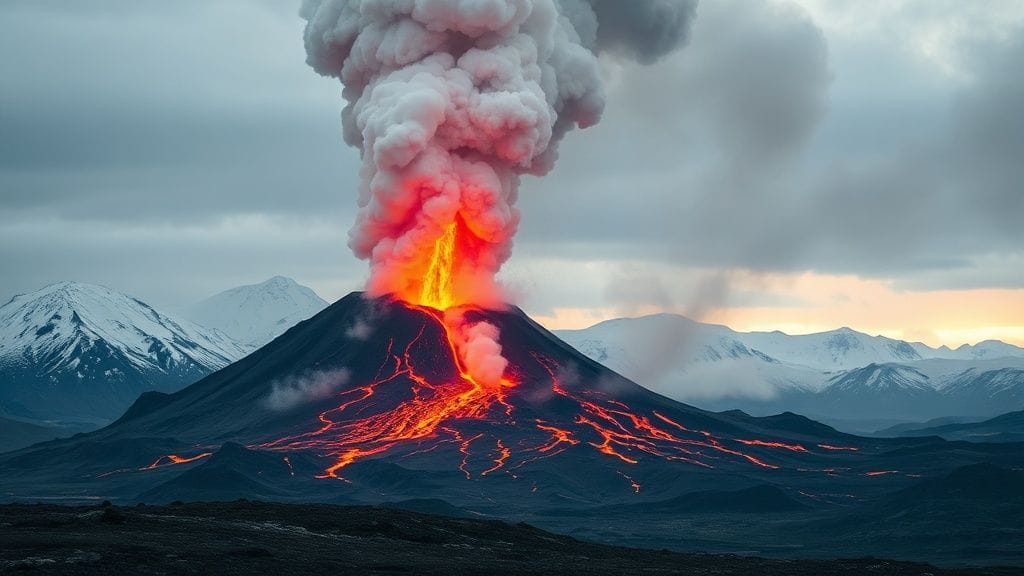
It was on a stark June morning when the stillness shattered. The eruption began beneath the glacier, a violent vent opening miles beneath the ice sheet. The initial explosiveness tore through kilometers of ice and ash, sending towering plumes of steam and volcanic rock skyward.
In an instant, the landscape was transformed from frozen silence into a torch-lit hellscape. Black ash blotted out the midday sun, and a deafening roar filled the air as molten rock met ice, triggering one of nature’s most destructive confrontations. Below the plume, the ice began to fracture, sending torrents of water rushing downhill.
This violent clash between fire and ice would last for weeks, challenging every notion the island’s inhabitants had about survival.
5. The Eruption Unfolds: A Symphony of Destruction
What followed was an epic sequence of eruptive phases—explosive bursts, lava flows, and ash clouds turning skies into ominous gray sheets. Katla hurled tons of volcanic material into the atmosphere, darkening skies over southern Iceland and sending ash across hundreds of kilometers.
But the true terror lay beneath the visible eruption. As the volcanic heat melted the glacier’s base, enormous floods—jökulhlaups—were unleashed with tremendous force, sweeping away cabins, fields, and livestock. Rivers swelled beyond reckoning, washing out roads and bridges, isolating communities.
Toward the end of the eruption, a strange stillness fell, as if the land itself had been exhausted by its own fury. Ash lay thick on the fields; rivers ran brown and swollen, and the once-dominant glacier retreated, scarred by volcanic fire.
6. Floods from Hell: Jökulhlaups and Their Fury
The jökulhlaups were arguably the deadliest aspect of the 1918 eruption. These glacial outburst floods launched at unprecedented rates, carrying with them vast blocks of ice, mud, trees, and debris. Their power was such that they remade the southern coast of Iceland, sculpting new valleys and destroying old farmlands.
Entire communities found themselves trapped or washed away. Farmers lost both homes and livelihoods; some barely escaped with their lives. These floods reminded Icelanders that the island’s geological forces were not distant dramas but immediate threats capable of reshaping human fate in an instant.
7. Communities Under Threat: Human Stories amid the Crisis
Amid the natural chaos, human stories emerged—tales of courage, despair, and resilience. In the small hamlet of Vík, stories circulate of families fleeing as the floodwaters surged, clutching children and livestock, guided by lantern light and desperate prayers. Elderly inhabitants, rooted in their ancestral lands, faced impossible choices.
Yet, in the face of nature’s fury, communities banded together, sharing scant resources, opening homes, and staging rescues. These human moments add texture and depth to the raw geological narrative, reminding us that history is not only rock and ash but flesh and bone.
8. The Response: Iceland’s Struggle against Nature’s Wrath
In 1918, Iceland’s infrastructure was limited and localized governance was fragile. The eruption exposed these vulnerabilities. Local leaders coordinated relief, but resources were stretched thin. The eruption arrived just weeks after Iceland attained sovereignty from Denmark (June 1918), complicating administrative responses during a period of national transition.
Communities pooled efforts to restore farmland, rebuild homes, and clear waterways. The eruption accelerated efforts for better hazard awareness and improved communication between settlements exposed to natural disasters.
9. Scientific Eyes on Katla: Observations and Discoveries
The Katla 1918 eruption offered crucial insights into subglacial eruptions—phenomena poorly understood at the time. Geologists and volcanologists documented the ice-magma interactions, seismic patterns, and jökulhlaup dynamics, laying groundwork for modern Icelandic volcanology.
The eruption spurred interest in systematic monitoring of volcanic activity, integrating seismic measurements and glacier observations. For many scientists, Katla became a living laboratory demonstrating the volatile interplay between fire and ice.
10. Economic and Cultural Shockwaves in Post-Eruption Iceland
The eruption, combined with the devastating floods, struck a blow to southern Iceland’s agrarian economy. Croplands were buried beneath ash; fertile soil was lost, forcing farmers to relocate or seek alternative livelihoods. The damage exacerbated hardships in a country still recovering from war and global influenza pandemics.
Culturally, Katla’s eruption reinforced Icelandic respect and fear of natural forces. Poets, storytellers, and artists incorporated the events into their works, weaving the disaster into Iceland’s rich narrative fabric. It became, for many, a symbol of nature’s dual gift and curse—creation and destruction entwined.
11. The Volcanic Legacy: How Katla Shaped Icelandic Identity
More than a geological event, the 1918 eruption became emblematic of Iceland’s identity—a land of survival where humans live on a volcanic knife-edge. The disaster epitomized resilience, underscoring the notion that Icelanders belong to their environment, not the other way around.
Katla’s presence shaped national policy on disaster preparedness and contributed to a collective consciousness that merges myth, science, and cultural pride in confronting nature’s might.
12. Global Context: Katla’s Eruption in a World at War’s End
It’s striking that Katla erupted during a historic pivot moment—the end of World War I. As Europe grappled with rebuilding shattered nations, Iceland was undergoing its own transformation from a Danish territory to a sovereign state.
This backdrop of global upheaval adds layers to Katla’s narrative; the eruption was not just a local crisis but part of a shifting tableau where natural and human histories intersected.
13. Lessons from Katla: Advances in Volcanology Sparked by Disaster
Katla’s 1918 eruption catalyzed advancements in the emerging science of volcanology. Researchers learned to correlate seismic activity with eruptive patterns, recognized hazards unique to subglacial volcanoes, and pinpointed early warning signs.
Techniques developed in Iceland influenced volcanic monitoring worldwide, laying foundations for today’s hazard mitigation frameworks, especially critical as populations encroach on volatile landscapes.
14. From Ashes to Awareness: Environmental Aftermath and Landscapes Transformed
The eruption’s geological footprint remains visible today. Ash deposits enriched but initially suffocated ecosystems. The hydrological reshaping affected rivers, wetlands, and coastlines, creating new habitats over time.
Ecosystem recovery took decades, but the event ultimately contributed to ecological diversity. From destruction arose renewal—a pattern inherent to volcanic landscapes.
15. Remembering Katla: Memorials, Myths, and Modern Reflections
A century later, Katla’s 1918 eruption remains etched in Icelandic collective memory. Monuments and plaques near affected villages honor the lives impacted. The eruption fuels continued folklore, inspiring novels, songs, and documentaries.
Modern scientists keep watch of Katla’s rumblings with state-of-the-art technology, well aware that history could repeat itself. The eruption’s legacy is one of vigilance, humility, and respect.
16. Conclusion: The Enduring Impact of Katla’s 1918 Fury
Katla’s 1918 eruption was far more than a geological event—it was a pivotal moment where nature’s immense power collided with human endurance. Through roaring magma and devastating floods, Icelanders witnessed a display of elemental forces that shaped not only their land but also their identity.
Their stories of survival, adaptation, and scientific curiosity remind us that history lives in the nexus of human experience and natural phenomenon. Katla’s fiery awakening still challenges us to understand our place in the ever-changing drama of the Earth.
17. FAQs: Understanding Katla’s 1918 Eruption
Q1: What triggered the 1918 eruption of Katla?
The eruption was caused by the buildup of magma beneath the Mýrdalsjökull glacier, which eventually breached the ice cap through volcanic activity, triggered by tectonic movement along the Mid-Atlantic Ridge.
Q2: How destructive were the jökulhlaups during the eruption?
The floods were catastrophic—washing away farmland, homes, and infrastructure. They dramatically reshaped southern Iceland's landscape, with some floodwaters reaching speeds comparable to fast rivers, causing fatalities and displacement.
Q3: How did the eruption affect Iceland’s economy?
Agricultural losses were significant because ash deposits rendered land infertile temporarily, affecting food production and livelihoods. Recovery took years, straining the nation already dealing with post-war difficulties.
Q4: What scientific progress resulted from studying this eruption?
The eruption improved understanding of subglacial volcanic activity, jökulhlaups, and seismic precursors. It spurred the development of monitoring techniques that continue to be vital today.
Q5: How do Icelanders today commemorate the 1918 eruption?
Through monuments, cultural works, educational programs, and ongoing scientific monitoring, the eruption is remembered as a defining event linking identity and respect for natural forces.
Q6: Could Katla erupt again?
Absolutely. Katla remains one of Iceland’s most active volcanoes. Its potential for eruption always keeps Icelandic scientists vigilant.
Q7: What made Katla’s eruption particularly unique?
Its subglacial nature created a dramatic interaction between fire and ice, producing powerful floods and ash clouds, making it one of the most explosive and destructive eruptions in Iceland’s modern history.
Q8: How did the 1918 eruption influence emergency response development in Iceland?
It exposed gaps in communication and disaster preparedness, prompting governmental and local reforms in emergency management and hazard awareness.

