Table of Contents
- The Day the World Changed: Morning of June 6, 1912
- The Quiet Before the Storm: Alaska at the Dawn of the 20th Century
- The Setting: The Katmai and Novarupta Volcanoes – Giants in Waiting
- Early Signs: Nature’s Whispers Before the Roar
- Eruption Commences: The Mighty Force Unleashed
- The Explosive Birth of Novarupta: A New Volcano Emerges
- The Ash Cloud’s Dark Embrace: Days When Day Became Night
- The Valley of Ten Thousand Smokes: Scorched Earth and Silent Witnesses
- Human Stories Amidst Disaster: Tribes, Scientists, and Survivors
- International Scientific Attention: The World’s Gaze Turns North
- Mapping the Catastrophe: Discovering the True Scale of Destruction
- The Long Shadow: Environmental Aftermath and Geological Legacy
- Cultural Impacts: Myths, Memories, and Modern Reflections
- Comparing Giants: Katmai-Novarupta in the Pantheon of Volcanic Eruptions
- Lessons From the Past: Understanding Volcanic Risks Today
- The Volcano’s Voice Heard Across the Globe: Atmospheric Effects
- Modern-Day Katmai National Park: Preservation and Public Awareness
- The Role of Technology: How 1912 Shaped Volcanology
- Humanity’s Relationship with Volcanoes: Fear, Respect, and Curiosity
- The Enduring Mystery: What We Still Don’t Know About the 1912 Eruption
- Conclusion: The Echoes of Fire and Ash Through Time
- FAQs: Key Questions Answered About the Katmai–Novarupta Eruption
- External Resource: Further Reading on Wikipedia
- Internal Link: Visit History Sphere
The Day the World Changed: Morning of June 6, 1912
It was a quiet dawn in the wild expanses of Alaska. The serene wilderness, with its dense forests and placid lakes, held secrets beneath its tranquil facade. But beneath the earth’s crust, immense pressure was building—a silent, invisible threat waiting to assert its colossal power. On June 6, 1912, this threat erupted with a force so tremendous that it became the largest volcanic eruption of the 20th century—a cataclysm that reshaped the Alaskan landscape, rattled the Earth’s atmosphere, and forever altered how humanity understands volcanic fury.
The sky darkened ominously, not as a distant thundercloud but from a vast plume of volcanic ash billowing upwards. For miles around, the land was transformed into a near-apocalyptic wasteland. The sound of the eruption was heard hundreds of miles away; it was as if the Earth itself groaned in pain. This moment—marked by fire, ash, and fury—was the dramatic birth of Novarupta volcano and the massive cataclysm now known as the Katmai–Novarupta eruption.
Yet, this was not simply a geological event. It was a collision of nature’s raw power against the fragile human tapestry woven nearby. It was a herald of scientific discovery and a sobering reminder of the forces that mold our planet.
The Quiet Before the Storm: Alaska at the Dawn of the 20th Century
In the early 1900s, Alaska remained one of the most remote and least understood regions of the United States. Its vast stretches of wilderness were sparsely inhabited, dominated by indigenous communities and scattered settlers. The volcanic regions of the Aleutian Arc, including Katmai Peninsula, were enigmatic and seldom studied, hidden behind a veil of fog and inaccessibility.
The area was, to most, a silent wilderness—majestic but unforgiving. Life here moved to the slow rhythm of seasons, closely attuned to the land’s cycles. Yet beneath the apparent tranquility lay tension. The region was part of the Pacific Ring of Fire, an arc notorious for its seismic and volcanic activity. Scientists knew little about the precise dynamics of this remote volcanic system, and even less about its potential for catastrophic eruption.
Residents and native communities lived in cautious respect of the land’s occasional tremors and vents, wary of nature’s hidden powers. But no one then could anticipate the scale of what lay beneath.
The Setting: The Katmai and Novarupta Volcanoes – Giants in Waiting
Katmai volcano, towering over 6,700 feet, was a known geological landmark on the Alaskan Peninsula. Alongside it, a lesser-known feature—a quietly rumbling vent later named Novarupta—was, at the time, obscured by dense forest and rugged terrain. Both were part of a volcanic complex shaped by tectonic plates converging beneath the Pacific Ocean and North America.
The area’s geology revealed layers of past eruptions, signaling cycles of destruction and renewal. But the lack of detailed observation made both volcanoes wild cards. Scientists suspected something dormant but potentially volatile. Meanwhile, for the nearby indigenous Alutiiq and Sugpiaq peoples, the mountains were symbols of ancestral power—venerated, feared, but respected.
In the months leading to June 1912, subtle changes began beneath the ground. Shallow earthquakes increased, distorting the very earth's surface. If only they had been known to the wider world, these tremors might have hinted at the impending disaster.
Early Signs: Nature’s Whispers Before the Roar
In the spring of 1912, minor tremors rattled the ground. Fishers and trappers reported odd phenomena—dead fish floating in rivers, strange sulfurous smells, and curious bubbling in remote lakes. The earth seemed restless, murmuring secrets to those patient enough to listen.
But such signs were easily dismissed as part of the natural cycles in such an active region. Without modern seismic tools or continuous observation stations, these whispers of nature went largely unnoticed by the scientific community. Meanwhile, for local communities, these signs stoked old fears rather than any scientific theories.
On the night of June 5, a fissure opened, releasing an underground din—pressure building relentlessly, awaiting release. By early morning on June 6, the eruption’s first violent blasts shattered the silence.
Eruption Commences: The Mighty Force Unleashed
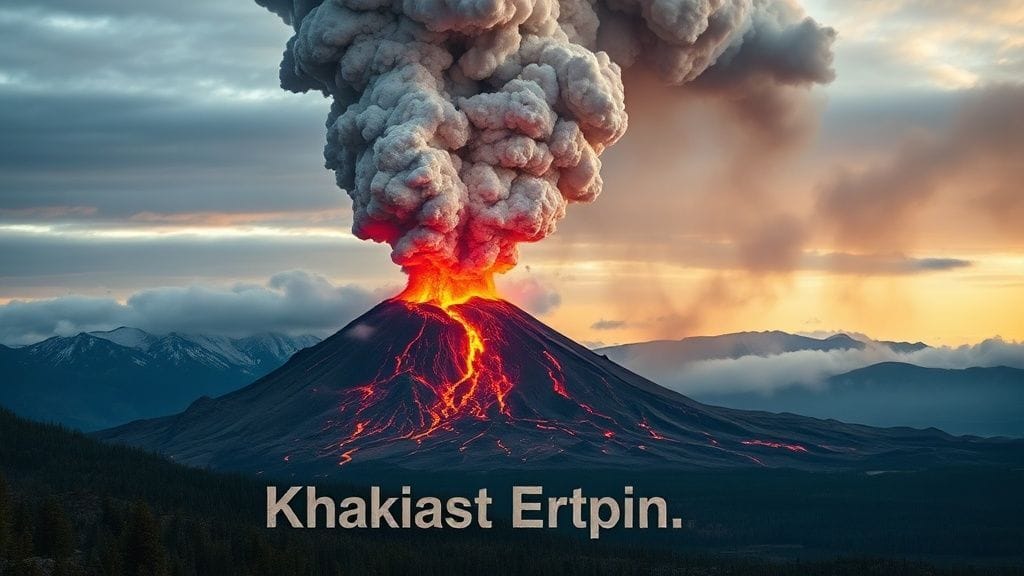
At approximately 8 a.m., the eruption burst forth with an unimaginable force. Novarupta, not Katmai as initially believed, unleashed molten rock, ash, and volcanic gases, releasing volumes of material that dwarfed previous known eruptions in the region.
The explosive energy ripped through the landscape, sending pyroclastic flows racing down valleys with deadly speed, scorching everything in their path. An ash column soared 20 miles into the atmosphere, darkening the skies over Alaska and beyond. Residents, miles away, reported a thunderous roar that lasted for hours, shaking the ground and rattling windows.
The sheer volume of volcanic material ejected was staggering—approximately 30 cubic kilometers of magma—making it the largest eruption by volume in the 20th century. The force was so immense it caused the summit of Katmai volcano itself to collapse, forming a caldera nearly two miles wide.
The Explosive Birth of Novarupta: A New Volcano Emerges
Novarupta was virtually unknown before the eruption. Its sudden emergence was nature’s dramatic unveiling. Unlike Katmai, Novarupta was a vent created by the violent release of magma from deep below the earth’s crust.
This nascent volcano spewed lava, ash, and gases in a spectacular display of geological transformation. Scientists later discovered that the eruption drained magma from beneath Katmai as well, leading to the infamous collapse of Katmai’s summit.
The birth of Novarupta was not just the creation of a physical feature but a turning point in volcanology. It challenged existing ideas about how volcanoes behaved and taught a painful lesson about the unpredictability of earth’s forces.
The Ash Cloud’s Dark Embrace: Days When Day Became Night
The eruption cloud cast a thick veil over the region. Daylight faded into an eerie twilight as ash rained down relentlessly. Layers of volcanic dust blanketed forests, rivers, and villages alike.
Communications and transportation were crippled. The ash infiltrated everything—from water sources to farm fields—causing widespread disruption. News of the eruption took days to reach outside, given Alaska’s remoteness, but when it did, it shocked the world.
More than just a local disaster, the ash cloud circled the globe, influencing skies thousands of miles away. Eyewitnesses in distant cities noted unusual sunsets and atmospheric effects—a foreshadowing of the global reach volcanic eruptions can have.
The Valley of Ten Thousand Smokes: Scorched Earth and Silent Witnesses
The area surrounding Novarupta transformed almost overnight into what scientists would later call the “Valley of Ten Thousand Smokes.” The name came from the countless fumaroles—vents releasing steam and gases—that spewed from the volcanic ash deposits.
For decades, this valley was a harsh and desolate place where vegetation struggled to reclaim the scorched earth. It became a living museum of catastrophic volcanic activity. Later expeditions revealed the complex layers of ash and pyroclastic flows that told the story of the eruption’s multiple phases.
This valley remains one of the most studied volcanic landscapes, a stark reminder of nature’s power and resilience.
Human Stories Amidst Disaster: Tribes, Scientists, and Survivors
While vast and rugged, the Alaskan Peninsula was not devoid of human life. The indigenous Alutiiq communities experienced the eruption as a reaffirmation of the land’s caprice. Many survived by fleeing to the sea or higher ground, guided by ancestral knowledge.
The eruption’s remoteness limited fatalities directly caused by the event, but it deeply impacted local livelihoods, ecosystems, and cultures. Stories passed down through generations speak of the ash-filled skies and the earth trembling like a living beast.
Meanwhile, scientists like Robert F. Griggs of the National Geographic Society soon arrived, drawn by reports of a cataclysm. Their expeditions would bring the event to international attention. Griggs’s work introduced the world to the Valley of Ten Thousand Smokes and laid the foundations of modern volcanology in the region.
International Scientific Attention: The World’s Gaze Turns North
Griggs’s 1916 expedition marked a landmark in scientific exploration. Armed with cameras, topographical maps, and geological instruments, Griggs and his team traversed the hostile terrain.
Their detailed observations and vivid photographs captivated the world. Newspapers and journals published accounts of the eruption’s scope, the newly formed caldera, and the haunting Valley of Ten Thousand Smokes.
The eruption became a pivotal event in earth sciences. It changed the understanding of volcanic processes, magma chambers, and caldera formation. It proved that volcanoes often acted in complex, interconnected systems—not isolated peaks but dynamic parts of a geological web.
Mapping the Catastrophe: Discovering the True Scale of Destruction
Subsequent mapping revealed a staggering reality. The eruption devastated approximately 3,700 square kilometers of terrain. Ash depths in places reached up to 13 feet, suffocating plant and animal life.
The volume of ejected material—about 30 cubic kilometers of magma—is equivalent to roughly 13 times the volume of the 1980 Mount St. Helens eruption, itself a globally known disaster.
Decades later, modern techniques such as satellite imaging and seismic tomography have allowed scientists to revisit and refine insights into the eruption, tracking lava flows and understanding the underground magma reservoirs.
The Long Shadow: Environmental Aftermath and Geological Legacy
The environmental impact was both immediate and long-lasting. Ashfall altered river courses and impeded salmon runs vital to local ecosystems and economies. Forests were destroyed, soil chemistry shifted, and the already fragile Alaskan environment had to reinvent itself.
Yet, resilience marked the natural world’s response. Slowly, pioneer plants colonized the ash deposits, followed by animal life. The eruption reshaped habitats, creating new wetlands and lakes that would foster biodiversity in unexpected ways.
Geologically, the eruption provided priceless data on caldera formation and volcanic hazards, influencing global volcanic monitoring efforts.
Cultural Impacts: Myths, Memories, and Modern Reflections
For indigenous populations, the eruption became embedded in oral traditions, a story of survival and reverence. It served as a stark reminder of nature's unpredictability and the strength required to coexist with such forces.
In the wider culture, the eruption inspired awe and scientific curiosity. It has been the subject of documentaries, books, and exhibitions. It also laid groundwork for the establishment of Katmai National Park in 1918, preserving the area for future generations.
Today, the eruption serves as a symbol of the earth’s dynamism and humanity’s quest to understand its mysteries.
Comparing Giants: Katmai-Novarupta in the Pantheon of Volcanic Eruptions
In the annals of volcanic cataclysms, the 1912 eruption ranks alongside the likes of Krakatoa (1883) and Mount St. Helens (1980). By volume, it surpasses most 20th-century eruptions, yet it is less well-known to the public.
Its unique features—the birth of a new volcano, the massive caldera collapse, and the scale of pyroclastic flows—make it a cornerstone for comparative volcanology.
Scientific studies comparing these giants help humanity better comprehend eruption types, warning signs, and potential global consequences.
Lessons From the Past: Understanding Volcanic Risks Today
The knowledge gained from the Katmai-Novarupta eruption underscores the importance of volcanic monitoring and disaster preparedness. Today’s volcanologists employ seismic sensors, satellite surveillance, and gas measurements largely thanks to lessons learned from early 20th-century events.
For Alaskan communities and the world at large, these lessons serve to mitigate risks, protect lives, and prepare for inevitable future eruptions.
The Volcano’s Voice Heard Across the Globe: Atmospheric Effects
The eruption’s ash and gas plume had climatic and atmospheric impacts worldwide. Sulfur dioxide released into the stratosphere created aerosols that influenced weather patterns, causing cooler summers in parts of the northern hemisphere documented afterward.
Observers from Canada to the continental United States noted vivid sunsets and atmospheric optical phenomena related to volcanic particles.
Such global repercussions highlight the interconnectedness of Earth’s systems—how an eruption in remote Alaska can ripple across continents.
Modern-Day Katmai National Park: Preservation and Public Awareness
Today, Katmai National Park and Preserve guard the volcanic landscapes formed in 1912. It attracts geologists, hikers, and tourists eager to witness this testament to Earth’s power.
The park protects the Valley of Ten Thousand Smokes and provides educational resources to raise awareness about volcanic hazards and natural history.
It stands as a living classroom, where science and storytelling converge beneath the Alaskan sky.
The Role of Technology: How 1912 Shaped Volcanology
The eruption accelerated scientific innovation. Griggs’s pioneering work inspired the integration of aerial photography, seismic networks, and geochemical analysis into volcano science.
Subsequent technological advances owe a debt to the frameworks established following this event, demonstrating how tragedy can spur human ingenuity.
Humanity’s Relationship with Volcanoes: Fear, Respect, and Curiosity
The Katmai-Novarupta eruption reminds us of the double-edged nature of volcanoes: creators of fertile lands and also destroyers capable of upheaval.
For over centuries, humans have both feared and revered volcanoes. They embody the unpredictable spirit of our planet, forcing us to respect forces beyond our control while fueling our inexhaustible curiosity.
The Enduring Mystery: What We Still Don’t Know About the 1912 Eruption
Despite intense study, mysteries remain. Questions about the exact magma pathways, triggers of the eruption, and long-term subterranean changes continue to puzzle volcanologists.
This eruption challenges the idea that any geological event can ever be fully understood—an invitation to humility and ongoing exploration.
Conclusion
The Katmai–Novarupta eruption of June 6, 1912, stands as a monumental chapter in Earth's natural history. It was a cataclysmic event that reshaped landscapes and challenged scientific understanding. But more than statistics and ash layers, it was a vivid story of earth’s restless spirit—a reminder that beneath the seeming permanence of mountains and forests, powerful forces pulse in quiet anticipation.
Through the eyes of indigenous communities, pioneering scientists, and modern observers, this eruption echoes an enduring message: Nature is at once beautiful, terrifying, generous, and unyielding. Our greatest task is to listen, learn, and live respectfully within this fiery drama.
As the Valley of Ten Thousand Smokes continues to whisper its smoky secrets, the legacy of 1912 invites each generation to balance awe with insight—a vital lesson for a world still shaped by the restless bowels of the Earth.
FAQs
Q1: What caused the Katmai–Novarupta eruption in 1912?
A1: The eruption was caused by the movement of magma from deep within the Earth’s crust to the surface along cracks and vents associated with the tectonic activity of the Pacific Ring of Fire, particularly pressure buildup beneath the Katmai volcanic complex, leading to the sudden release through the newly formed Novarupta vent.
Q2: How does the 1912 eruption compare to other famous eruptions?
A2: In terms of erupted volume, it was the largest in the 20th century, surpassing even Mount St. Helens in 1980. Its magnitude and the formation of a new volcano with a massive caldera collapse place it among the most significant eruptions globally.
Q3: Who were the key figures in the scientific study of the 1912 eruption?
A3: Robert F. Griggs, a naturalist and explorer for the National Geographic Society, played a pivotal role in bringing the eruption’s details and significance to light through his expeditions and writings.
Q4: What was the impact on local indigenous populations?
A4: Indigenous people, including the Alutiiq and Sugpiaq, faced disruptions to their lands and livelihoods but largely survived by relying on traditional knowledge and evacuation to safer areas. The eruption became part of their oral history and cultural memory.
Q5: How has the Katmai–Novarupta eruption shaped modern volcanic monitoring?
A5: The event underscored the need for continuous volcanic observation and better understanding of caldera-forming eruptions, influencing the development of seismic networks, gas detection, and remote sensing technologies.
Q6: What environmental changes did the eruption cause?
A6: The eruption devastated local ecosystems with thick ash deposits, altered waterways, and destroyed forests but also eventually created new habitats and geological features that foster ecological succession.
Q7: Is the Katmai area still volcanically active?
A7: Yes, the region remains volcanically active as part of the Pacific Ring of Fire. Katmai and surrounding volcanoes experience periodic seismic activity, and the area is closely monitored.
Q8: How can visitors learn about the 1912 eruption today?
A8: Visiting Katmai National Park offers opportunities to explore volcanic landscapes, guided tours, and visitor centers with exhibits relating to the eruption’s history and ongoing geological significance.

