Table of Contents
- The Silent Roar: Dawn of February 3, 1605
- Japan’s Keichō Era: A Nation on the Edge
- The Nankai Trough: A Geological Time Bomb
- Early Warnings and Unknown Signs
- The Earthquake Beneath the Waves: Birth of the Tsunami
- Crushing Waves: The Tsunami Hits Japan’s Pacific Coast
- The Aftermath: A Nation Reeling from Nature’s Fury
- Eyewitness Accounts and Oral Histories
- Socioeconomic Impact: From Fishing Villages to Castle Towns
- Devastation of Infrastructure and Loss of Life
- Religious and Cultural Interpretations of the Disaster
- Government Response: Samurai and Shogunate Reactions
- Lessons Learned: Changes in Japanese Disaster Awareness
- The Keichō Tsunami in Historical Records and Chronicles
- Geological Evidence Confirming the 1605 Event
- The Legacy of the Keichō Nankai Tsunami in Modern Japan
- Comparative Analysis with Other Historic Japanese Tsunamis
- The Silent Threat Lurking Beneath: Understanding Subduction Zones
- Influence on Japanese Art and Literature
- Modern Disaster Preparedness Rooted in History
- Remembering 1605: Commemoration and Memory
- Conclusion: A Timeless Lesson from the Depths of the Sea
- FAQs on the Keichō Nankai Tsunami
- External Resource
- Internal Link
On a cold, clear morning—February 3rd, 1605—the eastern shores of Japan’s Pacific coast found themselves at the mercy of one of nature’s most terrible forces. Far beneath the waves, enormous tectonic stress had been accumulating silently, and suddenly, like a giant awakening from a centuries-long slumber, the earth groaned. The waters surged with furious violence, swallowing entire villages, disrupting lives, and carving a dramatic chapter in Japan’s long history with the sea. This was the Keichō Nankai Tsunami, an event whose echoes still resonate centuries later.
Japan’s Keichō Era: A Nation on the Edge
At the dawn of the 17th century, Japan was a country in transformation. The chaos of the Sengoku period—the age of warring states—had finally started to settle under the Tokugawa shogunate’s emerging rule. Fueled by centuries-old traditions and yet poised for changes that would define the Edo period, the society balanced precariously between stability and upheaval.
The Keichō era, spanning from 1596 to 1615, was marked by political consolidation but also vulnerability. Regional daimyo fortified their positions; roads and castles grew, but populations remained tightly knit with the natural world around them. Coastal communities, especially those facing the vast Pacific along the southern Nankai Coast, depended heavily on fishing and trade, unknowingly living on a geological fault line set to unleash catastrophic force.
The Nankai Trough: A Geological Time Bomb
Beneath the calm waters of the Pacific Ocean, where the Philippine Sea plate slowly but relentlessly dives beneath the Eurasian plate, lies the Nankai Trough—a colossal subduction zone. Throughout centuries, pressures built up as one tectonic plate slid beneath the other, creating immense stress.
This region is infamous for generating massive earthquakes and tsunamis—some of the most devastating in Japanese history. From 684 AD onward, repeated seismic events along this fault have repeatedly reshaped the coastline and human settlement patterns.
The 1605 tsunami was not just a fierce natural disaster—it was a result of the region’s restless geology, a reminder that beneath beauty lies the potential for destruction.
Early Warnings and Unknown Signs
In February 1605, local fishermen and villagers noticed unusual ocean behavior hours before the tsunami struck. The sea appeared to recede dramatically, revealing expanses of ocean floor where fish floundered—a sight both eerie and mystifying.
Yet, while such signs are now known to presage tsunamis, the people of the time had little understanding of the phenomena. Some interpreted these natural signals through spiritual or superstition lenses, adding layers of fear and mystery. The warning signs ultimately went unheeded, for few could grasp the imminence of the coming wave.
The Earthquake Beneath the Waves: Birth of the Tsunami
The tsunami formed suddenly, a massive rupture beneath the seabed triggering an earthquake estimated at a magnitude of about 8 or more. The seismic shockwave felt through coastal villages was intense but brief, a violent shaking that soon gave way to a more monstrous threat: the rising flood of water roaring to shore.
Over these centuries, details of the quake itself are scarce, but geological tracing and historical records align to paint a terrifying vision: an earthquake shaking the earth’s crust along the Nankai Trough, unleashing a tsunami of devastating proportions.
Crushing Waves: The Tsunami Hits Japan’s Pacific Coast
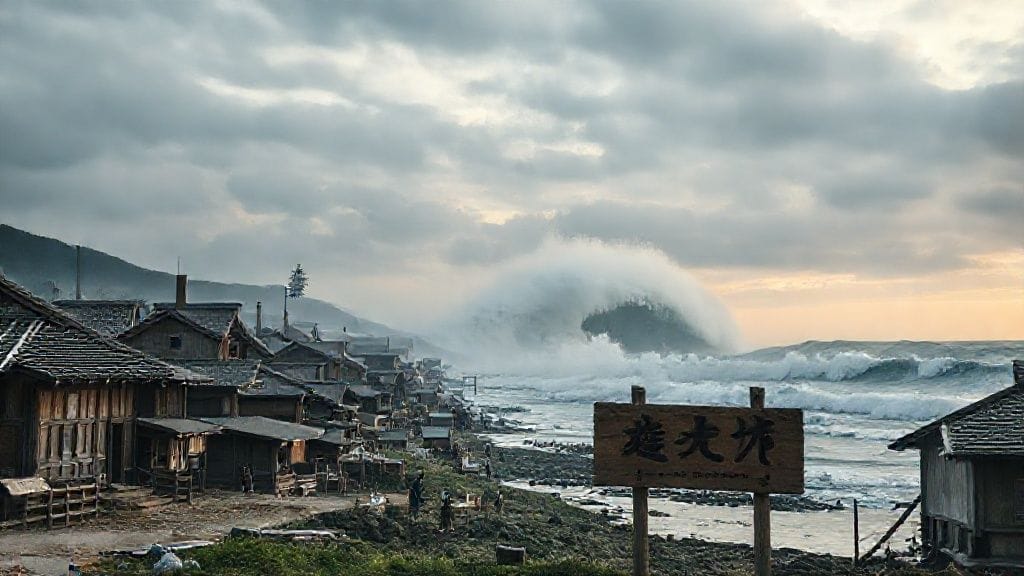
Minutes turned to lifetimes as the first towering wave collided with shorelines. The tsunami was a wall of water kilometers high upon impact—a monstrous, rolling force obliterating everything in its path.
Fishing boats, homes, granaries, and fields were instantly swept away. Entire villages vanished beneath seawater’s cruel embrace. Survivors later recounted scenes of chaos—people desperately fleeing, holding children, and searching for higher ground amid roaring destruction.
The tsunami’s force extended along hundreds of kilometers of coastline from Shikoku’s southern shores through Kii Peninsula and into Tokai regions, an onslaught unlike anything seen before.
The Aftermath: A Nation Reeling from Nature’s Fury
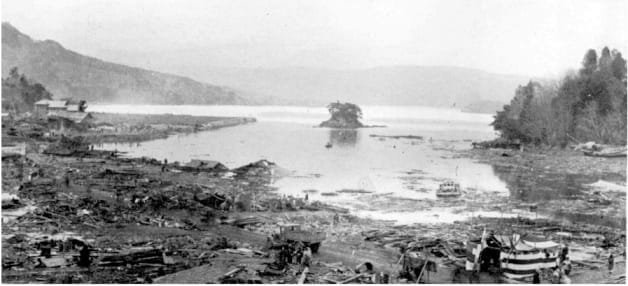
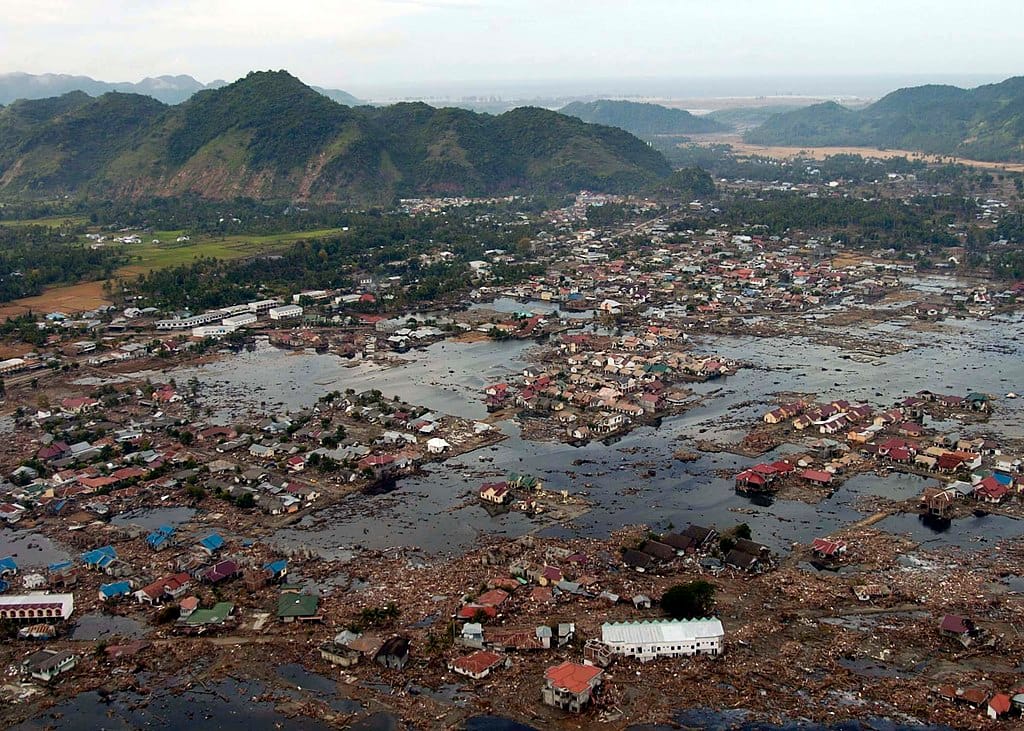
Hours and days after the wave had withdrawn, what remained was a shattered landscape and traumatized communities. Saltwater destruction rendered farmland barren, fishing fleets lost, food supplies compromised. The death toll likely numbered in the thousands, but precise figures have been lost to time.
For a society still recovering from decades of war, the tsunami’s impact struck a psychological as well as physical blow. Homes were gone, loved ones lost, and the once-familiar coast now appeared alien and threatening.
Eyewitness Accounts and Oral Histories
Most details of the Keichō Nankai Tsunami survive through oral tradition and fragments of written chronicles. Village elders passed down stories of the "great wave," of the land swallowed by the sea, and of miraculous escapes.
One story tells of a fisherman who noticed the sea draw back and rushed inland, only moments before the waters returned with lethal force—a tale recounted for generations to explain the need for vigilance and respect toward the sea.
Socioeconomic Impact: From Fishing Villages to Castle Towns
The tsunami disproportionately struck coastal fishing communities, obliterating their livelihoods. Entire economies dependent on the sea faced ruin. Castle towns like Wakayama experienced infrastructural damage but were somewhat shielded by geography and fortification.
However, the interruption in food production and supply chains rippled across regions, threatening wider stability. The shogunate’s ability to respond was tested by the sudden scale of devastation in communities often remote and difficult to access.
Devastation of Infrastructure and Loss of Life
The physical destruction was staggering. Wooden buildings—homes, shops, and boathouses—were ripped apart. Farmlands became saline deserts, and roadways collapsed into the changed terrain.
As many as several thousand lost their lives, although exact numbers remain uncertain. The destruction contributed to famine in subsequent months, compounding the human tragedy.
Religious and Cultural Interpretations of the Disaster
In the 17th century Japanese worldview, natural disasters were often seen as manifestations of divine displeasure or cosmic imbalance. Buddhist temples and Shinto shrines played roles in interpreting and responding to calamities.
Following the tsunami, religious leaders sought to reassure the population, attributing the disaster to spirits or karmic retribution but also emphasizing collective prayer, purification rites, and rebuilding, fostering a spiritual resilience amid ruin.
Government Response: Samurai and Shogunate Reactions
The Tokugawa shogunate’s response was limited by communication challenges and the limits of administration. Samurai officials oversaw relief efforts—distributing rice, overseeing clearing operations, and directing reconstruction.
Nevertheless, the disaster exposed vulnerabilities in governance and underscored the importance of disaster management for future administrations. Contingency plans remained rudimentary, but seeds for later structured responses were planted.
Lessons Learned: Changes in Japanese Disaster Awareness
The 1605 event, along with earlier and later tsunamis, contributed to a slow evolution in how Japanese society perceived natural disasters. Recognition of earthquake and tsunami risks, though still primitive, began embedding itself in local knowledge.
Villages started to adopt cautionary practices—heeding strange sea behaviors or creating areas designated for refuge—early, if incomplete, forms of disaster preparedness.
The Keichō Tsunami in Historical Records and Chronicles
Japanese historians and record keepers such as those chronicling the Keichō era offer fragmented but invaluable accounts of the tsunami. Documents describe the event’s scale and impact, preserving its memory despite the chaos of the times.
These records provide a critical window into historical disaster management and societal resilience in pre-modern Japan.
Geological Evidence Confirming the 1605 Event
Modern geology substantiates the historical tsunami’s existence through sediment deposits along affected coastlines, identifying layers of sand and marine material abruptly overlaying soil from around the early 17th century.
Radiocarbon dating and stratigraphic studies align with written records, confirming a massive tsunami struck in 1605, providing tangible proof of this cataclysm.
The Legacy of the Keichō Nankai Tsunami in Modern Japan
Although centuries have passed, the 1605 tsunami remains an essential chapter in Japan’s long engagement with seismic hazards. It underscores the persistent threat of the Nankai Trough and informs contemporary risk assessment.
Japan’s elaborate modern tsunami warning systems and public education draw on awareness built from such historic events, transforming tragedy into preparedness.
Comparative Analysis with Other Historic Japanese Tsunamis
The 1605 disaster fits within a pattern of large Nankai Trough earthquakes and tsunamis—such as those in 1498, 1707, and more recently in 1946—each event reinforcing the recurring nature of the threat.
Studying these linked events shows the ongoing dialogue between nature and society along Japan’s volatile Pacific edge.
The Silent Threat Lurking Beneath: Understanding Subduction Zones
The geophysical mechanics behind the tsunami reveal the slow but relentless grinding of tectonic plates that build tension over centuries before sudden, catastrophic release.
This knowledge not only deepens respect for Japan’s geologic landscape but also frames the ongoing human challenge: living in harmony with ever-present seismic risks.
Influence on Japanese Art and Literature
Natural disasters have long permeated Japan’s cultural output. The Keichō Tsunami inspired storytelling, poetry, and visual art, capturing themes of impermanence (mujo), human vulnerability, and resilience.
These works reflect society’s efforts to understand and come to terms with nature’s dual role as both provider and destroyer.
Modern Disaster Preparedness Rooted in History
The legacy of 1605 and similar events led to cumulative knowledge that, over centuries, contributed to Japan’s renowned preparedness. Systems for early detection, evacuation routes, and education stem from lessons painfully learned.
In this way, the tsunami serves not only as a memory of loss but a foundation for saving lives in the future.
Remembering 1605: Commemoration and Memory
Local communities along the affected coasts still honor the memory of past tsunamis through rituals and monuments, embedding the 1605 event into collective memory.
Such commemorations serve as poignant reminders—both solemn and instructive—that the sea’s tranquility can mask tremendous power.
Conclusion: A Timeless Lesson from the Depths of the Sea
The Keichō Nankai Tsunami of 1605 stands as a testament to the formidable forces shaping Japan’s destiny. It is a story of earth and water, destruction and survival, despair and ancient resilience.
Beyond the immediate devastation, this event wove itself into Japan’s cultural, geological, and societal fabric—a stark reminder that nature’s power commands respect, humility, and preparation.
In remembering 1605, we honor both those lost and the enduring spirit of life that rebounds from catastrophe, forever teaching humankind how to live alongside the restless planet beneath our feet and seas.
FAQs on the Keichō Nankai Tsunami
Q1: What caused the Keichō Nankai Tsunami in 1605?
A1: The tsunami was caused by a massive earthquake along the Nankai Trough subduction zone, where the Philippine Sea plate slips beneath the Eurasian plate, releasing enormous tectonic stress accumulated over centuries.
Q2: How many people died in the 1605 tsunami?
A2: While exact numbers are unknown, historical records estimate several thousand fatalities along the southern Pacific coast due to the massive waves and subsequent hardships.
Q3: How did the tsunami affect Japan's society and economy?
A3: It devastated coastal fishing communities, destroyed farmlands through saltwater intrusion, damaged infrastructure, and disrupted food supplies, adding strain during a period of political stabilization.
Q4: What was the government’s response after the disaster?
A4: The Tokugawa shogunate mobilized samurai officials to coordinate relief, distribute rice, and oversee rebuilding, though the efforts were limited by technological and communication constraints of the time.
Q5: How is the Keichō tsunami remembered today?
A5: Through local commemorations, oral histories, and its study in geology and history, the event remains a crucial part of Japan’s seismic heritage, highlighting lessons in disaster preparedness.
Q6: What modern implications does the 1605 tsunami have?
A6: It serves as a foundation for understanding seismic risks associated with the Nankai Trough, informing Japan’s advanced tsunami warning systems and disaster mitigation planning.
Q7: Are there geological traces of the tsunami?
A7: Yes, sediment layers rich in marine material found along affected coasts correspond to the early 17th century and validate historical accounts of the tsunami's scale.
Q8: How did the tsunami influence Japanese culture?
A8: The tragedy influenced art, literature, and religious practices, reinforcing cultural themes of impermanence and respect for nature, and shaping how communities interpret natural disasters.