Table of Contents
- The Silent Dawn Before Disaster
- A Tremor Felt Across Borders
- The Moment the Earth Shook: November 12, 2017
- Kermanshah and Sarpol-e Zahab: Cities of Resilience
- The Geological Anatomy of the Earthquake
- The Human Toll: Lives Lost and Shattered
- Emergency Response Under Strain
- Stories of Survival Amidst Ruins
- International Aid and Regional Support
- Iran’s History with Earthquakes: A Tale of Tragedy and Tenacity
- The Political Reverberations of Disaster
- Reconstruction Efforts and Challenges
- Societal Impact: Trauma and Recovery
- Lessons Learned: Preparedness and Infrastructure
- The Earthquake’s Legacy in Memory and Culture
- Scientists’ Insights and Advances Post-2017
- The Role of Media and Communication During Crisis
- Long-Term Economic Consequences
- Community Solidarity and Cultural Heritage Preservation
- The Border Dimension: Impact on Kurdish Communities
- Personal Narratives: Voices from the Rubble
- The Region Today: Reflections Six Years Later
- Conclusion: Beyond the Quake, A Story of Endurance
- FAQs about the Kermanshah Earthquake
- External Resource
- Internal Link
November 12, 2017, began like any other chilly autumn morning in Kermanshah province, nestled in western Iran near its mountainous border with Iraq. Yet, beneath the routine bustle of daily life, the Earth harbored a violent secret — one that would rupture the fragile calm and leave a permanent scar both on the landscape and in the hearts of the people. This is the story of the Kermanshah earthquake, also known as the Sarpol-e Zahab earthquake, a cataclysm that shook a nation and underscored the eternal tension between human fragility and geological fury.
The Silent Dawn Before Disaster
The early hours of November 12 saw the twilight sky begin to brighten over the Zagros Mountains, their jagged outlines casting long shadows. Families prepared for breakfast, children dressed for school, vendors arranged their goods in bustling markets. No one anticipated the earth beneath their feet was poised to betray its centuries-old illusion of stability.
Sarpol-e Zahab, a town straddling the fault lines running through these rugged lands, had been warning signs quietly for months. Minor tremors, almost imperceptible, had stirred unease but failed to trigger alarm. Scientists monitored seismic activity with increasing concern, but to most residents, life went on with the rhythms of tradition and work.
A Tremor Felt Across Borders
At 20:18 local time, the ground convulsed with a force measured at magnitude 7.3 by the US Geological Survey, though Iranian sources later refined it to approximately 7.4. The quake's epicenter lay near the town of Sarpol-e Zahab, unleashing intense shaking felt not just in Kermanshah but far beyond — across the border into Iraqi Kurdistan, and touching parts of Syria and Turkey.
The colossal energy unleashed was a stark reminder that Iran lies on some of the world’s most volatile seismic plates, where the Arabian plate nudges stubbornly against the Eurasian plate. This convergence is a crucible for disasters — a geological pressure cooker where faults snap unpredictably.
The Moment the Earth Shook: November 12, 2017
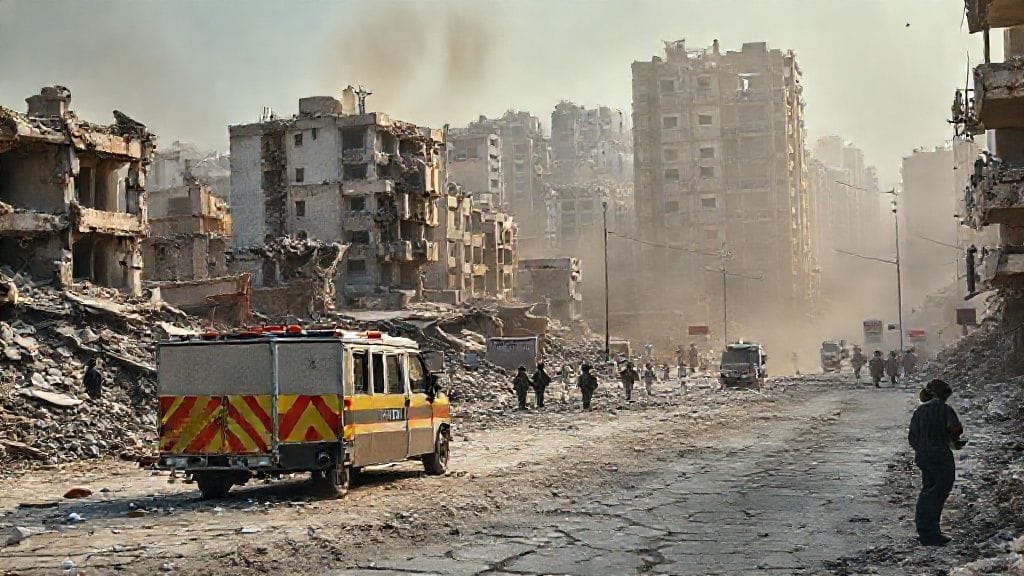
In an instant, years of life and history collapsed. Buildings trembled, walls cracked, and concrete skeletons gave way. The streets filled with terrified cries, dust, and a nightmare of falling bricks and twisted metal. Sarpol-e Zahab’s ancient homes, alongside more modern structures, proved no match for nature's fury.
Hospitals found their corridors and wards disrupted, electricity flickered and died, and communications faltered. The quake was felt for more than a minute in some places — an eternity of terror. The sheer force dislodged landslides in the surrounding mountains, further complicating rescue efforts.
Kermanshah and Sarpol-e Zahab: Cities of Resilience
Kermanshah, a city rich with ancient heritage including sites dating back to the Sasanian Empire, and Sarpol-e Zahab, a smaller but strategically significant town, both bore the brunt of destruction. Sarpol-e Zahab was particularly hard hit; entire neighborhoods were razed. Roads cracked, leaving access routes perilously compromised.
Yet amidst the destruction, a powerful story of resilience emerged. Families huddled under stars, neighbors spilled into the streets, strangers shared limited resources. The social fabric, though stretched thin, often held firm in the face of adversity.
The Geological Anatomy of the Earthquake
This earthquake was not an isolated incident but part of the notorious seismic activity on the Zagros fold and thrust belt. The region’s complex tectonics involve layers of sedimentary rock slowly buckled upward over millions of years.
The 2017 quake originated on a shallow thrust fault, a dangerous phenomenon because shallower quakes tend to cause more intensive shaking at the surface. This explained the widespread devastation over a localized area. Satellite imagery and ground surveys after the event provided critical data for seismologists seeking to understand rupture dynamics and fault behavior.
The Human Toll: Lives Lost and Shattered
Tragically, official death tolls exceeded 600, with thousands more injured — roughly 8,000 people sustained injuries ranging from minor to life-altering. Entire families vanished beneath rubble. Hospitals overflowed; makeshift clinics had to be set up.
Human stories emerged that bring the cold numbers to life. The tale of an elderly couple trapped but rescued after 24 hours, the child born in a field hospital shaken yet alive, the volunteer who braved aftershocks to save neighbors.
Yet the loss extended beyond lives — homes, shops, schools, and sacred spaces were destroyed, scattering communities and disrupting the very essence of daily existence.
Emergency Response Under Strain
Iran’s emergency agencies mobilized rapidly, but the scale of devastation overwhelmed initial efforts. The Iranian Red Crescent (IRC), army units, local volunteers, and international aid groups converged in a race against time.
But heavy rains, landslides, and cold winter temperatures challenged rescue teams. Roads obstructed by debris delayed the arrival of supplies and equipment. Communications blackouts left families in agonizing limbo.
Despite these obstacles, stories of heroic first responders abound — people who refused to leave until the last survivor was found.
Stories of Survival Amidst Ruins
In the aftermath, as desperation gave way to resolve, survivors recounted moments of terror and hope. There was a schoolteacher who guided children to evacuate at the first tremor, a mother who shielded her newborn beneath a broken wall.
Communities improvised shelters from tarps and broken beams, sharing meals and memories as the government scrambled to deliver aid. Social media became a lifeline, letting separated loved ones reconnect, mobilizing donations, and coordinating volunteers.
International Aid and Regional Support
The devastation in Kermanshah reverberated beyond Iran’s borders. Neighboring countries, particularly Iraq’s Kurdistan region, sent assistance swiftly.
United Nations agencies, non-governmental organizations, and international aid coalitions pledged support. Yet political complexities and sanctions complicated some logistics. Still, the solidarity shown underscored shared humanity in the wake of natural catastrophes.
Iran’s History with Earthquakes: A Tale of Tragedy and Tenacity
The 2017 quake was part of a long historical pattern of seismic disasters in Iran. From the 1962 Buin Zahra earthquake to the catastrophic 2003 Bam earthquake, Iran has repeatedly faced nature’s wrath.
Each event reveals a story of vulnerability but also evolving understanding, improved engineering, and cultural coping mechanisms. It spotlights the enduring tension between ancient cities perched atop unstable terrain and modern efforts to coexist with geophysical realities.
The Political Reverberations of Disaster
The earthquake also exposed political fault lines. Criticism rose over building standards and government preparedness. Some local leaders pledged reforms, while others faced accusations of neglect.
The disaster provided a somber backdrop to regional elections and a wrenching reminder of the challenges faced by border provinces often marginalized in national politics.
Reconstruction Efforts and Challenges
Reconstruction has been slow and fraught. Budget constraints, bureaucratic hurdles, and logistical challenges slowed housing projects.
Nevertheless, new structures designed to better withstand shocks began to rise, supported by international expertise. The process has been both a logistical puzzle and a test of communal will.
Societal Impact: Trauma and Recovery
Beyond bricks and mortar lies a more invisible struggle — the psychological scars borne by survivors. PTSD, anxiety, and grief became widespread.
Mental health initiatives, often nascent in Iran’s rural areas, attempted to reach communities struggling to reclaim normalcy. Schools reopened to stability mixed with remembrance. The earthquake forced a reckoning not only with physical devastation but with human resilience and vulnerability.
Lessons Learned: Preparedness and Infrastructure
The Kermanshah earthquake was a harsh teacher on multiple fronts. Building codes, emergency response coordination, public education, and infrastructure reinforcement became top priorities.
Authorities pledged to do more to ensure such a catastrophe would not be compounded by preventable weaknesses. The event ignited new research into seismic risk in the Zagros region.
The Earthquake’s Legacy in Memory and Culture
In the years since, the event has entered local folklore and memorial culture. Monuments arose, commemorations held annually, and stories passed down bear witness to suffering and courage.
Artists, poets, and musicians have interpreted the earthquake’s emotional landscape, turning trauma into creative expressions of survival.
Scientists’ Insights and Advances Post-2017
Seismologists treated the earthquake as a case study, analyzing rupture patterns and aftershock sequences with modern technology. This event enriched regional seismic models and helped refine hazard assessments.
Satellite mapping of fault displacement contributed to global understanding of thrust fault mechanics.
The Role of Media and Communication During Crisis
Traditional and social media played crucial roles in disseminating information, coordinating aid, and shaping public perception. Citizen journalism offered frontline accounts, while official channels struggled to keep pace.
These media shaped narratives—between despair, hope, and political debate—highlighting the power and limits of communication in disaster zones.
Long-Term Economic Consequences
Costs soared into the hundreds of millions of dollars. Crops were destroyed, businesses shuttered, and livelihoods imperiled. Reconstruction injected some stimulus, but poverty and unemployment rose in the short term.
Efforts to rebuild agriculture, small industries, and tourism faced ongoing hurdles.
Community Solidarity and Cultural Heritage Preservation
Despite devastation, communities rallied to rebuild. Ancient cultural sites, some damaged, received restoration attention, emphasizing the connection between identity and place.
Local traditions of mutual aid were vital — communal cooking, shared labor, and cooperative living helped heal societal fractures.
The Border Dimension: Impact on Kurdish Communities
The earthquake struck predominantly Kurdish-inhabited areas, complicating humanitarian access and highlighting ethnic and political considerations.
Cross-border ties meant that impacts reverberated in Iraqi Kurdistan, underscoring shared vulnerabilities and reinforcing bonds, but also stressing the political sensitivities of aid and governance.
Personal Narratives: Voices from the Rubble
Interviews with survivors reveal courage, loss, and hope intertwined. A carpet weaver who lost her shop but found new purpose volunteering. A young man who lost his father but resolved to become a civil engineer dedicated to building safer homes.
These stories humanize statistics, reminding us that history is lived through individual lives.
The Region Today: Reflections Six Years Later
Today, Kermanshah and Sarpol-e Zahab quietly pulse with life’s rhythms. New buildings blend with the ruins; memorials stand alongside markets.
The lessons remain vivid — in city planning debates, in children’s emergency drills, in the collective memory etched into the soul of a region continuously testifying to human endurance.
Conclusion
The Kermanshah earthquake of November 12, 2017, remains etched as a somber chapter in Iran’s long history of seismic tragedies. Yet, it is more than a story of destruction; it is a narrative of survival, resilience, and the ceaseless human spirit’s quest to rise from shattered earth and broken homes.
This calamity challenged not just buildings and infrastructure but the fundamental fabric of society. It compelled communities, governments, and scientists to confront the volatile pulse beneath their feet and to commit to a future where preparedness meets inevitability head-on.
In the rumble of that night, amid the dust and despair, glimmers of hope were born — testimonies that the human story is never solely about cataclysm, but about the enduring courage to rebuild, remember, and dream anew.
FAQs
Q1: What caused the Kermanshah earthquake in 2017?
The earthquake was caused by movement along a shallow thrust fault in the Zagros fold and thrust belt, where the Arabian plate converges with the Eurasian plate. This tectonic activity frequently generates seismic events in western Iran.
Q2: How many people were affected by the earthquake?
Over 600 people died, thousands were injured, and tens of thousands were left homeless or displaced. The region’s infrastructure and vital services suffered severe damage.
Q3: How did emergency responders react to the disaster?
Iranian emergency services, military units, local volunteers, and international aid organizations mobilized rapidly, but faced challenges such as blocked roads, aftershocks, and harsh weather.
Q4: What have been the long-term impacts of the earthquake?
Long-term impacts include economic hardship, psychological trauma, slow reconstruction, and enhanced seismological understanding. It prompted reforms in construction standards and disaster preparedness.
Q5: Why was the earthquake particularly devastating in Kermanshah and Sarpol-e Zahab?
Because the epicenter was close to populated areas and the quake was shallow, shaking was intense. Many buildings were vulnerable due to poor construction or age.
Q6: What role did international aid play?
Neighboring countries and global organizations contributed humanitarian assistance, supplies, and expertise. Regional cooperation was crucial for relief efforts despite political complexities.
Q7: How has the earthquake influenced scientific research?
It provided valuable data on thrust fault mechanics and helped improve seismic hazard models for the Zagros region, informing future risk assessments.
Q8: How is the earthquake remembered today?
Through memorials, cultural expressions, local narratives, and annual commemorations, the event remains a defining moment for affected communities, symbolizing loss and endurance.