Table of Contents
- The Dawn of a New Nation: Iraq’s Admission to the League of Nations
- The Aftermath of World War I and the Fall of the Ottoman Empire
- British Mandate and the Shaping of Modern Iraq
- The Struggle for Iraqi Sovereignty: From Mandate to Independence
- The Role of King Faisal I in Iraqi State-Building
- Nationalist Movements and the Quest for Recognition
- The International Context: The League of Nations and Mandates System
- Geneva, 1932: The Moment of Admission
- The Ceremony of Recognition: Symbolism and Political Weight
- Inside the League: Iraq’s First Steps as a Sovereign Member
- Domestic Reactions: Jubilation, Skepticism, and Political Challenges
- Regional Ripples: Impact on Arab Nationalism and Neighboring States
- The Limits of Independence: Continued British Influence
- Iraq’s Early Foreign Policy and International Presence
- Economic Foundations and the Role of Oil in a New Nation
- Social Transformations: Identity, Ethnicity, and Integration
- The House of Hashim: Monarchy’s Role and Challenges
- The League of Nations’ Legacy and the Seeds of Future Conflict
- Iraq’s Journey Toward Full Sovereignty and the Road Ahead
- Conclusion: The Birth of a Nation in a Complex World
- FAQs about Iraq’s Admission to the League of Nations
- External Resource
- Internal Link
1. The Dawn of a New Nation: Iraq’s Admission to the League of Nations
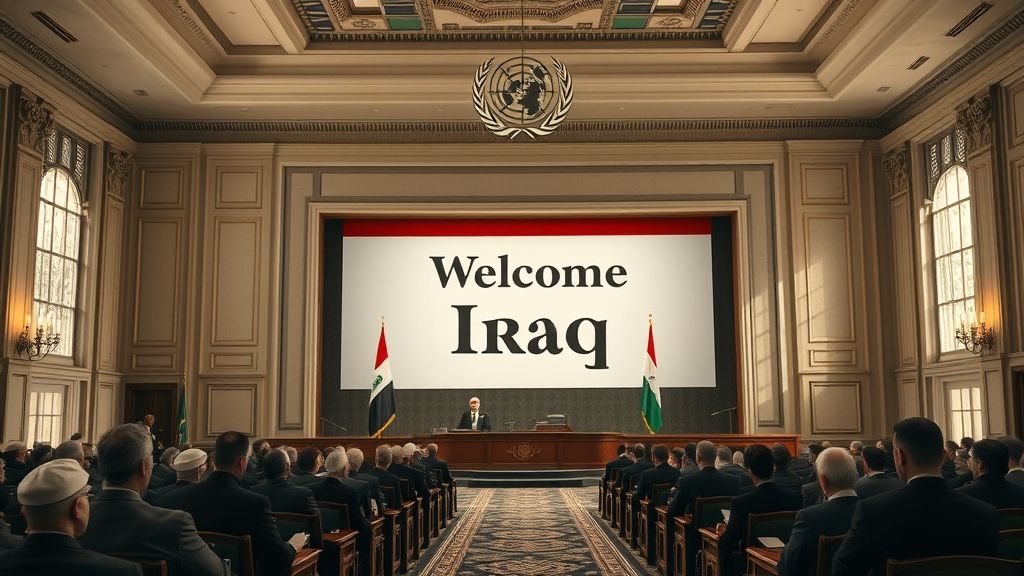
October 3rd, 1932 — Geneva, the seat of international diplomacy, bristled with anticipation beneath a gray autumn sky. Delegates in dark suits milled about the grand halls of the Palais des Nations, clutching papers, exchanging hurried words. Amid the murmurs of political diplomacy, a small nation’s representatives prepared to claim a monumental milestone: the formal admission of the Kingdom of Iraq into the League of Nations.
To many, this moment was more than mere protocol. It was the symbolic birth of modern Iraq, emerging from the tangled ruins of empire and colonial mandates into the community of sovereign states. The admission signaled recognition, a hard-fought acceptance, and a tentative step on a path that would shape the century to come. Yet, beneath the pomp and ceremonial handshakes rippled unease, uncertainty, and the heavy weight of history.
The Kingdom of Iraq’s admission to the League was not just a diplomatic milestone; it was the culmination of decades of turmoil, negotiation, rebellion, and dreams — a testament to the resilience and complexity of a people navigating the twilight of empire and the dawn of self-rule.
2. The Aftermath of World War I and the Fall of the Ottoman Empire
To understand the significance of Iraq’s 1932 admission, we must trace back to the shattered empires of World War I. The Ottoman Empire, which had ruled Mesopotamia for centuries, collapsed under the crushing weight of war and internal dissent. The Treaty of Sèvres in 1920 carved its lands into spheres of influence, thrusting Mesopotamia into the British sphere.
The end of Ottoman rule was less a peaceful transfer of power and more a rupturing wrench of identities, allegiances, and politics. For Mesopotamia, the land that would become Iraq, this was a period marked by chaos and possibility. The British, having captured Baghdad in 1917 during the Mesopotamian Campaign, assumed control, promising reform but inciting resistance.
3. British Mandate and the Shaping of Modern Iraq
Under the League of Nations Mandate system established after the Treaty of Versailles, Britain was given administrative control over the region, known officially as the British Mandate for Mesopotamia. This new authority was anything but neutral. Britain’s primary interest lay in securing strategic and economic assets, particularly the budding oil industry and critical trade routes to India.
Mandate Iraq was carved from three distinct Ottoman provinces—Basra, Baghdad, and Mosul—with diverse ethnicities and sects: Arabs, Kurds, Sunni and Shia Muslims, Christians, and Jews. The British faced the daunting task of creating a cohesive entity out of these disparate peoples, often pursuing divide-and-rule tactics that sowed seeds of long-term discord.
4. The Struggle for Iraqi Sovereignty: From Mandate to Independence
Despite British oversight, Iraqi nationalists grew restless. The 1920 Revolt against British rule revealed early the fractures and passions embedded in Iraq's struggle for independence. It was a broad coalition — tribal leaders, religious clerics, urban intellectuals — unified by a shared desire to break free from foreign control.
The League of Nations mandate, while providing international legality to British administration, was seen as a gilded cage. A decade of negotiations, diplomatic pressure, and intermittent unrest followed. Britain, motivated partly by an evolving global order and partly by domestic political considerations, incrementally loosened the reins.
5. The Role of King Faisal I in Iraqi State-Building
A key figure in Iraq’s nascent statehood was Faisal ibn Hussein, appointed king in 1921 by British mandate authorities but embraced by many nationalists for his Arab lineage and leadership in the 1916 Arab Revolt. Faisal’s reign was a delicate balancing act — he needed British support yet sought legitimacy as Iraq’s sovereign ruler.
Faisal promoted unity and tried to navigate sectarian divides while establishing government institutions, a national army, and administrative frameworks. His vision for Iraq was ambitious but challenged by entrenched tribal loyalties, ethnic differences, and the shadows of foreign oversight.
6. Nationalist Movements and the Quest for Recognition
Throughout the 1920s and early 1930s, nationalist movements in Iraq gained momentum, demanding full sovereignty, constitutional governance, and an end to political dependence on Britain. Newspapers, political parties, and community leaders fueled debates about Iraq’s identity and future.
Not all voices agreed on the vision of Iraq. Ethnic Kurds in the north pressed for autonomy; Shia populations in the south sought greater political inclusion. Yet, the primary rallying cry remained independence — a desire to stand alongside established nations in the League of Nations.
7. The International Context: The League of Nations and Mandates System
The League of Nations was born out of the ashes of World War I, envisioned as a mechanism to prevent future conflicts through diplomacy and cooperation. Its Mandates system was a way to manage former colonies and defeated empires under international supervision, ostensibly guiding territories toward self-governance.
Iraq’s admission to the League represented the very moment the mandated territory transitioned from tutelage to independence — a critical test of the League’s legitimacy and the global commitment to decolonization, even if cautious and limited at this early stage.
8. Geneva, 1932: The Moment of Admission
After years of negotiation, Britain formally terminated its mandate over Iraq on October 3, 1932. The Iraqi delegation, led by Jamil al-Midfai, arrived in Geneva with a mixture of hope and pragmatism, aware that the League’s acceptance was the key to unlocking wider diplomatic recognition.
The session was tense yet ultimately a diplomatic formality. With member states voting overwhelmingly in favor, the Kingdom of Iraq was admitted as the League’s 99th member, symbolizing its entry into the global family of nations.
9. The Ceremony of Recognition: Symbolism and Political Weight
The admission ceremony was a carefully staged event laden with symbolism. Iraqi flags were unfurled alongside those of more powerful states; speeches spoke of friendship, peace, and the promise of nationhood. For many Iraqis watching from afar, it was a moment of pride tinged with caution, a fragile birth amidst geopolitical complexities.
The event carved Iraq’s name into international law and debate. It was hailed as a victory of self-determination, but for British officials, it was the start of a new diplomatic relationship — one still shadowed by economic and military influence.
10. Inside the League: Iraq’s First Steps as a Sovereign Member
Joining the League meant more than diplomatic status. Iraq was expected to participate in committees, conform to international norms, and navigate the subtle diplomacy of smaller powers among global giants.
Iraq’s voice in discussions on disarmament, mandates, and regional security was modest but symbolically important. It was a learning curve that shaped Iraqi leaders’ understanding of international relations and illuminated the contours of sovereignty — rights alongside responsibilities.
11. Domestic Reactions: Jubilation, Skepticism, and Political Challenges
Back home, Iraq’s admission was met with a spectrum of reactions. Urban elites and nationalists celebrated the achievement as a long-awaited affirmation of sovereignty. In contrast, many were skeptical: did true independence exist when British military bases lingered, when economic ties bound Iraq’s fate to foreign powers?
Political factions debated Iraq’s future direction, while the new monarchy faced pressure to widen participation and address social inequalities that had been suppressed but not resolved.
12. Regional Ripples: Impact on Arab Nationalism and Neighboring States
Iraq’s admission was closely watched across the Arab world. It energized regional nationalist movements watching for signs of colonial powers’ retreat and the possibility of Arab self-rule.
Neighbors like Syria, Palestine, and Transjordan — themselves under mandates or in transition — drew inspiration, even as they wrestled with their own challenges. The event marked a subtle shift in Middle Eastern geopolitics, heralding the slow but relentless advance of new nationalisms.
13. The Limits of Independence: Continued British Influence
However, independence was not absolute. Britain retained military bases, control over Iraqi foreign policy in crucial areas, and significant economic interests, particularly oil extraction through the Iraq Petroleum Company.
The Anglo-Iraqi Treaty, renewed in the years following, codified these lingering dependencies. Iraq’s sovereignty was a mosaic — part fully autonomous, part beholden to the former mandatory power.
14. Iraq’s Early Foreign Policy and International Presence
As a League member, Iraq began establishing diplomatic relations with countries beyond Britain, seeking to assert itself as an independent actor. Baghdad dispatched envoys, joined regional conferences, and worked to mediate internal factions through external alliances.
These early efforts planted the seeds of Iraq’s later foreign policy — often balancing between regional integration and great power politics amid the turbulent currents leading to World War II.
15. Economic Foundations and the Role of Oil in a New Nation
Iraq’s economy was—and remains—deeply linked to oil, a resource that had attracted British interest from the early 1920s. The need to develop infrastructure, railways, and oil fields meant that economic independence lagged behind political declarations.
This paradox introduced tensions between nationalist aspirations for control over resources and the economic realities of foreign investment and expertise.
16. Social Transformations: Identity, Ethnicity, and Integration
Iraq’s admission had cultural and social reverberations. The challenge of forging a national identity out of ethnicities—Arabs, Kurds, Assyrians—and religious sectors—Sunni, Shia, Christians—remained central.
Education reforms, language policies, and political representation became arenas where the new nation sought to balance unity and diversity, often encountering friction that would shape future Iraqi history.
17. The House of Hashim: Monarchy’s Role and Challenges
King Faisal’s dynasty symbolized the new Iraq, combining Arab nationalism with monarchical tradition. Yet the monarchy faced many obstacles: managing diverse political elites, tribal leaders, and the emerging call for republicanism.
The royal family walked a tightrope, relying on British backing while striving to foster genuine political legitimacy among Iraqis.
18. The League of Nations’ Legacy and the Seeds of Future Conflict
The League itself was an imperfect institution. Though it symbolized ideals of diplomacy and peace, it struggled to enforce decisions and adequately address colonial legacies.
Iraq’s admission was a hopeful step but foreshadowed future conflicts rooted in unresolved border disputes, minority claims, and global power rivalries that the League would be powerless to prevent.
19. Iraq’s Journey Toward Full Sovereignty and the Road Ahead
October 3, 1932, marked the beginning of Iraq’s status as an internationally recognized state but not the end of its sovereignty journey. The following decades would see coups, revolutions, and further assertion of independence from foreign influence.
The complexities of governance, social cohesion, and resource management would continue to define Iraq’s turbulent path through the 20th century and beyond.
20. Conclusion: The Birth of a Nation in a Complex World
Iraq’s admission to the League of Nations was a milestone cloaked in layers of hope, pragmatism, and ambiguity. It represented the courage of a people asserting their nationhood amid the ruins of empire and the complexities of emerging global order.
Though independence carried imperfections, it set Iraq on a path of self-determination that would resonate far beyond its borders. The story of Iraq in 1932 is a reminder of the difficult birth pangs of modern states, the intricate dance of power and identity, and the enduring quest for sovereignty that shapes our world today.
Conclusion
The admission of the Kingdom of Iraq into the League of Nations on October 3, 1932, was a symbolic and pragmatic turning point in Middle Eastern history. It signaled the formal end of British colonial mandate and the birth of a new independent player on the international stage. Yet the journey was fraught with compromises, contradictions, and lingering influences that would define Iraq's political landscape for decades.
This moment in Geneva was both an end and a beginning — the closing chapter of imperial oversight and the opening verse of Iraqi self-governance. The challenges that followed underscored the complexity of nation-building in a region marked by ethnic diversity, geopolitical rivalries, and the legacy of colonialism.
Ultimately, Iraq’s admission to the League stands as a testament to the resilience of nationalist aspirations and the ways in which international institutions both shape and reflect emerging realities. It invites us to consider the interplay between global diplomacy and local agency, reminding us that the birth of nations is never a simple story but a tapestry woven of many threads — ambition, conflict, hope, and perseverance.
FAQs
Q1: Why was Iraq’s admission to the League of Nations significant?
A1: It marked Iraq’s official recognition as an independent sovereign state by the international community, ending British mandate rule and placing Iraq on equal diplomatic footing with other nations.
Q2: What role did King Faisal I play in Iraq’s independence?
A2: Faisal I was a unifying monarch who helped bridge tribal, religious, and ethnic divides, providing a symbolic and political figurehead for Iraqi nationalism.
Q3: How did Britain influence Iraq after 1932 despite independence?
A3: Britain maintained military bases, controlled key aspects of foreign policy, and retained significant economic interests, particularly in oil, limiting Iraq’s full sovereignty.
Q4: What was the League of Nations Mandate system?
A4: A framework established post-WWI to administer former Ottoman and German colonies, with the stated goal of guiding these territories toward self-governance.
Q5: How did Iraq’s admission impact Arab nationalism?
A5: It inspired other Arab nationalist movements and symbolized a shift away from direct colonial control toward local self-rule in the Middle East.
Q6: Were there internal challenges within Iraq after independence?
A6: Yes, ethnic and sectarian divisions, political factionalism, and questions of identity complicated Iraq’s nation-building efforts.
Q7: What economic challenges did Iraq face post-admission?
A7: Managing oil resources, infrastructure development, and economic dependence on foreign investment were significant challenges in establishing economic sovereignty.
Q8: Did Iraq remain a member of the League until its dissolution?
A8: Iraq remained a member until the League’s dissolution in 1946, after which it joined the newly formed United Nations.