Table of Contents
- The Awakening of a Sleeping Giant: Klyuchevskoy Volcano Erupts
- Kamchatka's Fire-Spitting Colossus: An Introduction to Klyuchevskoy
- Geological Prominence and Volcanic History
- The Calm Before the Storm: Kamchatka Prior to 2013
- Signs and Tremors: Early Warnings of the Eruption
- The First Plume: Klyuchevskoy Speaks in January 2013
- Growing Fury: Escalation of the Volcanic Activity
- Impact on the Local Communities: Fear, Evacuation, and Resilience
- The Beauty and Terror of Lava Flows in Motion
- Ash in the Skies: Aviation Challenges and Environmental Concerns
- Scientific Eyes on Fire: Monitoring and Researching Klyuchevskoy
- Historic Comparisons: The 2013 Eruption Among Kamchatka’s Greatest
- The Role of the Russian Volcanology Institute
- Cultural Reflections: Volcanoes in Kamchatka’s Indigenous Worldview
- Global Reverberations: How Klyuchevskoy’s Fury Reached Beyond Borders
- Lessons Learned: Disaster Preparedness and Environmental Monitoring
- The Aftermath: Landscape Transformation and Ecological Recovery
- Tourism and Volcanic Interest: Danger and Attraction
- Human Stories from the Shadow of Klyuchevskoy
- The 2013 Eruption in International Scientific Discourse
- Media Coverage: Narratives of Nature’s Power
- Klyuchevskoy Today: Activity Post-2013 and Current Status
- The Unending Saga of Kamchatka’s Fire Giants
The Awakening of a Sleeping Giant: Klyuchevskoy Volcano Erupts
Amid the frozen vastness of Russia’s Kamchatka Peninsula, a gargantuan silhouette rises sharply into the sky — formidable and indifferent to the seasons. Klyuchevskoy, the highest active volcano in Eurasia, long dormant but ever watchful, erupted suddenly in January 2013, casting a fiery plume that tore through the bleak winter sky. It was as though the earth itself had drawn a breath and exhaled fire and smoke, announcing its restless power to a world miles away. The eruption’s black ash clouds swallowed the horizon, while rivers of molten rock reshaped the ancient landscape. For the people living in the shadow of this volcanic behemoth, the eruption was a moment of awe, terror, and survival.
Kamchatka's Fire-Spitting Colossus: An Introduction to Klyuchevskoy
Klyuchevskoy stands at 4,750 meters (about 15,584 feet), dominating the volcano-studded Kamchatka Peninsula with a grandeur that has fascinated explorers, scientists, and locals alike for centuries. It belongs to a renowned ring of fire known simply as the Pacific “Ring of Fire,” a chain of intense seismic and volcanic activity encircling the Pacific Ocean. Often called “Klyuchevskaya Sopka,” this stratovolcano is a testament to the earth’s primal forces, known for eruptions that can last months with varied intensity. Its spectacular power has made it a national treasure in Russia and a vital subject for geological research.
Geological Prominence and Volcanic History
Klyuchevskoy formed roughly 6,000 years ago on a tectonic boundary where the Pacific Plate is forcing itself beneath the Eurasian Plate — a process called subduction. This collision creates magma that fuels the frequent eruptions of the peninsula’s many volcanoes. Historically, Klyuchevskoy has erupted more than 100 times since its first recorded eruption in 1697, with several massive and destructive events shaping the landscape and human settlements alike. Its eruptions vary from effusive flows of basaltic lava to violent explosive blasts that send ash columns soaring tens of kilometers into the upper atmosphere.
The Calm Before the Storm: Kamchatka Prior to 2013
For much of the early 21st century, Klyuchevskoy remained relatively quiet, giving scientists a brief lull in monitoring but also leaving communities lulled into a fragile sense of safety. The winter of 2012 was unusually silent, with only low-level seismic activity reported. Yet, beneath the snow and ice, the volcano was awakening, its magma chamber swelling with pressure. In Kamchatka, a land of extremes, this calm belied what was to come.
Signs and Tremors: Early Warnings of the Eruption
In late December 2012 and early January 2013, seismographs stationed around Klyuchevskoy began to detect increasing tremors, both shallow and deep, signaling magma movement. Satellite imagery noted thermal anomalies — hot spots glowing against the cold winter canvas. Local populations near the volcano, though accustomed to nature’s unpredictability, noticed rumblings, ground shaking, and an unsettling sense from the great mountain itself. Scientists watching from afar and near knew these changes indicated that an eruption was imminent.
The First Plume: Klyuchevskoy Speaks in January 2013
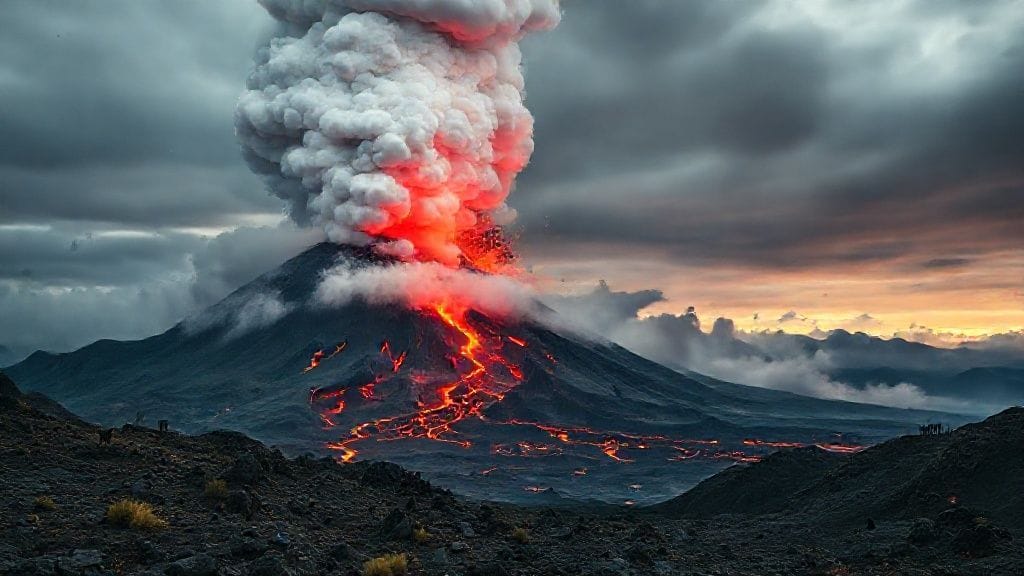
On the frosty morning of January 25th, 2013, Klyuchevskoy erupted violently, propelling ash and smoke more than 6,000 meters high into the atmosphere. The sky above Kamchatka turned a surreal shade of grey, sunlight filtered through a thick veil of pyroclastic fumes. The eruption produced spectacular lava fountains and flowed down its flanks while ash clouds drifted, carried by Siberian winds, threatening air traffic and covering terrain hundreds of kilometers away with volcanic soot.
Growing Fury: Escalation of the Volcanic Activity
Over the following weeks, the volcano maintained a steady outflow of lava, punctuated by explosive bursts. Photographer and volcanologist reports highlighted incandescent lava cascades illuminating the night like fiery rivers, punctuating the desolate landscape with a haunting beauty. Each day, the eruption gained strength, keeping scientists on alert and emergency services busy. The volcanic plume’s ash content was subject to constant monitoring, as its unpredictable shifts threatened aviation routes from Asia to North America.
Impact on the Local Communities: Fear, Evacuation, and Resilience
Despite the remoteness of much of Kamchatka, small towns and indigenous settlements exists within range of the volcano’s wrath. During the eruption, some villages received ash fall and faced water contamination and limited air quality. For many residents, the eruption stirred ancient memories of previous calamitous events. Evacuations were limited but executed under cautious watch. Stories emerged of families huddled indoors, farms covered in volcanic dust, and a remarkable resilience to living alongside a volatile neighbor.
The Beauty and Terror of Lava Flows in Motion
Watching lava flow is mesmerizing — this primal river of molten rock carving through earth and ice alike. The 2013 eruption delivered spectacular lava flows that cooled to form new rock formations, extending Klyuchevskoy’s earthly footprint. Yet, behind this hypnotic scene lurked danger: sudden shifts in lava paths, toxic gases, and the threat of further explosions, reminding witnesses that nature’s beauty can quickly become deadly.
Ash in the Skies: Aviation Challenges and Environmental Concerns
The thick ash clouds cast serious threats to civil and cargo aviation in the North Pacific Air Corridor. Airlines rerouted flights, airports implemented delay protocols, and meteorological offices issued warnings. Ash can damage engines and instruments, turning the eruption into an international concern far beyond Kamchatka’s borders. The environmental fallout was also important, with ash layers contaminating rivers and soils, posing hazards to wildlife and human health alike.
Scientific Eyes on Fire: Monitoring and Researching Klyuchevskoy
Russian volcano observatories, alongside international scientific teams, intensified monitoring using seismographs, satellite data, gas sampling, and visual inspections. These efforts sought to unravel Klyuchevskoy’s patterns and predict its future behavior. The eruption provided a real-time laboratory for volcanologists, offering invaluable data on eruption dynamics, magma composition, and atmospheric impacts.
Historic Comparisons: The 2013 Eruption Among Kamchatka’s Greatest
Though not the most violent ever, the 2013 eruption joined a long lineage of Klyuchevskoy’s spectacular activity, reminiscent of previous eruptions in 1956 and 2005. Comparisons highlighted how eruption styles evolved, and how modern technology enhanced early warning systems to minimize loss of life and infrastructure damage.
The Role of the Russian Volcanology Institute
Institutions like the Kamchatka Volcanic Eruption Response Team and the Institute of Volcanology and Seismology played a key role in observing, documenting, and communicating volcanic activity. Their expertise and rapid response exemplified Russia’s commitment to managing its natural hazards, essential for constructing a safer coexistence with these fiery mountains.
Cultural Reflections: Volcanoes in Kamchatka’s Indigenous Worldview
For the indigenous peoples of Kamchatka — the Itelmens, Koryaks, and Evens — volcanoes are not mere geological phenomena but living spirits embodying creation and destruction. The eruption stirred rites, stories, and community gatherings that blended fear with reverence. Old traditions interlaced with modern science, highlighting the enduring human relationship with the chaotic earth.
Global Reverberations: How Klyuchevskoy’s Fury Reached Beyond Borders
Though far in the Russian Far East, the 2013 eruption sent ripples worldwide. Ash clouds disrupted trans-Pacific air routes, environmental monitors measured atmospheric particles impacting climate models, and volcanologists from Japan to the United States tracked its progression. This event underscored how local natural disasters become challenges of global interest.
Lessons Learned: Disaster Preparedness and Environmental Monitoring
The 2013 eruption sharpened awareness around disaster preparedness in volcanic regions. It emphasized the need for robust communication between scientific institutions and communities, greater investment in monitoring infrastructure, and international collaboration, vital to mitigate damage and save lives during future events.
The Aftermath: Landscape Transformation and Ecological Recovery
Once the eruption subsided, the terrain bore unmistakable scars — new lava fields, ash-blanketed valleys, and reshaped riverbeds. Yet nature’s resilience soon took hold as pioneer plants colonized fresh rock and wildlife adapted to the altered environment. The regeneration process offered crucial insights into volcanic ecosystems and their rhythms of destruction and renewal.
Tourism and Volcanic Interest: Danger and Attraction
Paradoxically, eruptions like Klyuchevskoy’s ignite tourism interest — adventurers, photographers, and scientists flock to witness volcanic spectacles. Careful management was necessary in 2013 to balance fascination with safety, turning Kamchatka into a modern-day arena where nature’s fiercest displays played out under watchful eyes.
Human Stories from the Shadow of Klyuchevskoy
Behind statistics and science lie intimate human tales — a herdsman who lost sheep to ash fall, scientists braving cold nights to monitor eruptions, children watching the glowing mountain from their windows. These stories humanize the magma giant’s wrath, making it a saga of perseverance, fear, and respect.
The 2013 Eruption in International Scientific Discourse
The eruption featured prominently in scientific conferences and publications globally. Data from Klyuchevskoy fed into models of volcanic gas emissions, climate interactions, and eruption forecasting, enriching the broader understanding of volcanic hazards in a changing world.
Media Coverage: Narratives of Nature’s Power
News outlets from Moscow to New York covered the eruption, often blending dramatic imagery with expert commentary. This media attention shaped public perceptions, turning Klyuchevskoy into a symbol of nature’s unpredictable might and the earth’s living heartbeat.
Klyuchevskoy Today: Activity Post-2013 and Current Status
Following the 2013 eruption, Klyuchevskoy experienced intermittent activity. Monitoring continues as the volcano cycles through quiet spells and eruptions, keeping scientists vigilant while allowing residents and visitors alike to live in cautious awe of this towering sentinel.
The Unending Saga of Kamchatka’s Fire Giants
Klyuchevskoy remains one of the planet’s most dynamic volcanoes — a ceaseless storyteller of creation, destruction, and rebirth etched into Kamchatka’s rugged landscape. The 2013 eruption was but one chapter in an ancient saga, destined to continue as long as the earth’s molten heart beats beneath the frozen north.
Conclusion
The eruption of Klyuchevskoy in 2013 was more than a geological event — it was a dramatic intersection of earth’s raw power and human experience. Across the frozen expanse of Kamchatka, fire met ice in a vivid saga of destruction and renewal, reminding humankind of our fragile place on a restless planet. Science, culture, and community intertwined to face the mountain’s fury, illustrating resilience in the shadow of overwhelming natural forces. As Klyuchevskoy continues to evolve, it commands respect not only as a volcano but as a timeless teacher of nature’s grandeur and fragility. The 2013 eruption invites us to witness, learn, and marvel — an immortal flame burning quietly beneath the Russian sky.
FAQs
Q1: What caused the 2013 eruption of Klyuchevskoy volcano?
A1: The eruption was caused by magma rising from deep beneath the Earth's crust due to tectonic activity — specifically the subduction of the Pacific Plate beneath the Eurasian Plate, which generates pressure and melts rock, leading to volcanic eruptions.
Q2: How did the eruption affect local residents near Klyuchevskoy?
A2: While no major casualties were reported, local communities experienced ash fall, air contamination, and disruptions that required precautionary evacuations and adaptations. Life was temporarily altered, with health risks and environmental challenges.
Q3: What makes Klyuchevskoy volcano unique among other volcanoes?
A3: It is the highest active volcano in Eurasia and one of the most active stratovolcanoes on Earth. Its frequent eruptions and large-scale lava flows make it a key subject of volcanology.
Q4: How do scientists monitor Klyuchevskoy’s activity?
A4: Using seismic stations, satellite thermal imaging, gas emission measurements, and ground observations, scientists continuously track signs of eruption to provide warnings and study volcanic processes.
Q5: Did the 2013 eruption impact global air travel?
A5: Yes, ash clouds from the eruption posed risks to aircraft engines, leading to flight route adjustments in the North Pacific, demonstrating the far-reaching effects of volcanic activity.
Q6: What role do indigenous beliefs play in understanding Kamchatka’s volcanoes?
A6: Indigenous peoples traditionally view volcanoes as living entities with spiritual significance, integrating volcano activity into myths and rituals that enrich the cultural response to eruptions.
Q7: How has the landscape changed after the 2013 eruption?
A7: New lava fields and ash deposits reshaped the terrain, killing existing vegetation initially but eventually creating new habitats as nature recovered.
Q8: Is Klyuchevskoy likely to erupt again soon?
A8: Given its history of frequent eruptions, continued activity is expected, though precise predictions on timing remain challenging.

