Table of Contents
- The Awakening of Lassen Peak: A Prelude to Catastrophe
- Geological Roots: Understanding the Volcanic Giant
- The Calm Before the Storm: Early Signs of Volcanic Activity
- May 1915: The Day the Mountain Roared
- The First Eruption: A Fire and Ash Spectacle
- Towns on the Edge: The Human Face of Disaster
- The Aftermath of the Blast: Destruction and Survival
- Nature’s Fury Unleashed: Lava Flows and Mudslides
- Scientific Responses: Early 20th Century Volcanology at Work
- The Role of Park Rangers and Local Observers
- Media Sensation: How the Eruption Captivated the Nation
- Long-Term Environmental Impact: The Shaping of Lassen Volcanic National Park
- The Eruption’s Socioeconomic Toll on Northern California
- Legends and Stories: Cultural Echoes from the Eruption
- The Monitoring of Lassen Peak: The Birth of Modern Volcano Surveillance
- Lessons Learned: Volcanology and Emergency Preparedness after 1915
- Lassen Peak in Modern Memory: Commemorations and Education
- Conclusion: The Enduring Legacy of Lassen’s Fiery Awakening
- FAQs about Lassen Peak Eruption
- External Resource
- Internal Link
The Awakening of Lassen Peak: A Prelude to Catastrophe
In the spring of 1915, a sense of unease stirred in the air near the remote, forested expanses of Northern California. Lassen Peak — a modest volcanic mountain by global standards but formidable in the eyes of locals — had been silent for decades, its snow-capped summit a serene landmark. Yet, beneath that placid snow, the earth throbbed with restless energy, a slow crescendo barely perceptible at first, but steadily growing into a roar that could no longer be ignored.
On a crisp morning in early May, the silence shattered. The sky darkened with ash and dust, and a thunderous explosion echoed through the valleys and pine forests. The mountain had awakened, violently, without warning, reminding humanity once more of nature’s indisputable power.
It was a moment drenched in both awe and dread — a visceral bracing for the unknown. For those who witnessed it, the eruption of Lassen Peak was not just a geological event but a dramatic, emotional turning point that shaped the region and its people forever.
Geological Roots: Understanding the Volcanic Giant
Lassen Peak is part of the Cascade Range, a volcanic arc stretching from northern California to British Columbia, shaped by the subduction of the Juan de Fuca Plate beneath the North American Plate. Unlike the towering Mount St. Helens or the broad shield volcanoes of Hawaii, Lassen’s volcano is a dacitic lava dome—built by thick, viscous lava that piles up near the vent.
Sleepy for decades before 1914, this dormant mountain carried the potent capacity for destruction locked within layers of molten rock, gas, and steam. The magma chamber simmered beneath, slowly gathering strength and pressure in secret. The geological story that led to its eruption was one of immense earth movements, interconnected tectonics, and a simmering energy that geologists had only begun to understand.
The Calm Before the Storm: Early Signs of Volcanic Activity
In the years preceding the catastrophic events of May 1915, scientists and locals noted subtle, disturbing signs. From 1914 onwards, fumaroles—vents releasing steam and gas—started appearing near Lassen’s summit, spewing sulfurous clouds into the cold mountain air. Earthquakes, though minor, shook the ground, unsettling residents and wildlife.
Mountaineers and early park rangers reported strange steam plumes and seismic tremors. Yet, with the limited scientific understanding and technology of the time, many took the phenomena as minor curiosities, perhaps echoes of passing seasons. Few anticipated the unfolding drama, though the mountain’s heartbeat was already growing stronger.
May 1915: The Day the Mountain Roared
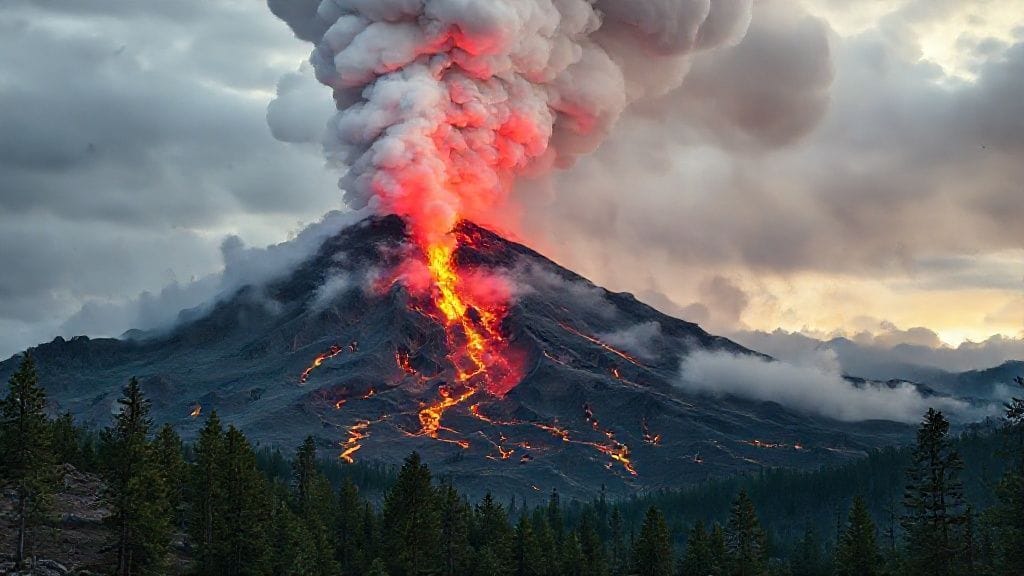
On May 22, 1915, the stillness was torn apart by a sudden and violent blast. Lassen Peak erupted explosively, sending a towering column of ash and volcanic gases miles into the atmosphere. The noise was deafening, described by witnesses as a “roar that could be heard for more than 30 miles.”
Ash fell like snow over the surrounding forests and towns, obscuring the sun and blanketing the land with gray powder. Hot volcanic bombs rained down, igniting fires and wreaking havoc across a wild, rugged landscape. This first eruption was not a singular event, but rather the opening movement of a series of powerful volcanic episodes that would extend into 1917.
The First Eruption: A Fire and Ash Spectacle
What made the 1915 eruption of Lassen Peak extraordinary was its combination of explosive power and devastating pyroclastic activity. Unlike Hawaii’s tranquil lava flows, Lassen’s eruption sent blistering clouds of superheated ash and rock hurtling down its slopes, engulfing everything in their path.
The eruption column’s great height injected volcanic aerosols into the stratosphere, affecting weather patterns temporarily. Forests caught fire from blazing ejecta, and rivers churned with debris, mud, and ash. It was a spectacle both terrifying and mesmerizing—human beings staring at the primal power of the earth, powerless but spellbound.
Towns on the Edge: The Human Face of Disaster
Though the immediate vicinity of Lassen Peak was sparsely populated in 1915, the eruption’s impact rippled outward to communities like Mineral, Hat Creek, and even beyond. Many locals were caught by surprise, and panic swept through towns as ash darkened the skies and tremors rattled the earth.
Family farms found their lands coated in ash, clogging wells and killing crops. Livestock succumbed to falling debris or were displaced by fires. Yet, amid fear and chaos, stories of bravery emerged: neighbors helping each other escape, townsfolk banding together to protect homes and livestock.
The eruption reminded humanity of its fragility on the volatile Earth’s surface, while also revealing a resilience grounded in community and courage.
The Aftermath of the Blast: Destruction and Survival
When the ash cleared, the aftermath was stark. Entire forested slopes had been scorched or buried under volcanic debris. Rivers were clogged with sediment, altering waterways and creating hazards for downstream settlements.
Yet, remarkably, there were no confirmed human fatalities—a testament to the scattered population and timely escapes. Still, the disaster caused immense economic hardship, destroying timber resources, farmlands, and passageways vital to local commerce.
Evacuations, rebuilding efforts, and a profound sense of loss shaped the months that followed. For some, the mountain’s wrath was a nightmare; for others, a sobering lesson in respect for nature’s forces.
Nature’s Fury Unleashed: Lava Flows and Mudslides
Over the following months, Lassen Peak’s activity produced spectacular lava flows that carved new shapes into the mountain’s slopes. Thick, viscous lava, glowing orange-hot, spilled slowly but relentlessly, engulfing forests and transforming the landscape.
Coupled with heavy spring rains, these flows triggered devastating mudslides—lahars—that roared down valleys, sweeping trees, soil, and debris with them. These mudslides reshaped the terrain, blocked rivers, and formed new natural dams.
Volcanic activity did not subside quickly—small eruptions, steam explosions, and shifting ground continued to remind observers that Lassen’s fiery heart was far from cooled.
Scientific Responses: Early 20th Century Volcanology at Work
The eruption of Lassen Peak coincided with a period of burgeoning scientific interest in volcanology. Field researchers, geologists, and government officials seized the opportunity to study an active volcanic event on American soil.
The United States Geological Survey (USGS) dispatched teams to monitor the mountain, record seismic activity, and document lava and ash deposits. These studies provided critical insights into volcanic processes, marking a turning point in how such natural disasters were understood.
Although rudimentary compared to modern standards, the instruments and observations from 1915 laid a foundation for the systematic monitoring of volcanoes in the United States.
The Role of Park Rangers and Local Observers
Local residents and park rangers played indispensable roles during the eruption. Herren Sargent, a ranger stationed at nearby Lassen Volcanic National Park, kept detailed notes and sketches, providing invaluable eyewitness accounts.
Their courage, vigilance, and communication efforts were crucial in alerting communities downwind and coordinating responses. Their story is a testament to the human element in natural catastrophes: the interplay of knowledge, observation, and compassion.
Media Sensation: How the Eruption Captivated the Nation
News of Lassen Peak’s violent awakening spread quickly through newspapers, sparking widespread fascination. Photographs of towering ash clouds and glowing lava streams appeared in magazines and bulletins, feeding the public’s appetite for sensational natural disasters.
The eruption became a symbol of both peril and wonder, capturing imaginations beyond California. Scientists were interviewed, first-hand accounts shared, and the public’s curiosity about volcanoes grew—paving the way for increased interest in geological phenomena.
Long-Term Environmental Impact: The Shaping of Lassen Volcanic National Park
In the years following the eruption, the landscape around Lassen Peak bore dramatic changes. Burned forests slowly gave way to new growth, and the volcanic deposits created distinct geographic features still visible today.
Recognizing the park’s uniqueness and ongoing geological activity, the U.S. government expanded Lassen Volcanic National Park, promoting preservation, scientific study, and public education.
The eruption ultimately transformed the region from a quiet wilderness to a dynamic natural classroom—a living monument to Earth’s restlessness.
The Eruption’s Socioeconomic Toll on Northern California
Beyond environmental damage, the eruption reshaped the economy of Northern California in subtle ways. The logging industry faced setbacks due to destroyed forests, and local agriculture underwent disruptions from ash-covered soils.
Transportation routes were temporarily blocked, commerce slowed, and some residents opted to relocate. Yet, over time, the eruption also drew visitors, scientists, and settlers interested in the mountain’s powerful allure.
This economic flux reflected the complex relationship between nature’s fury and human industry.
Legends and Stories: Cultural Echoes from the Eruption
Indigenous peoples long inhabited lands around Lassen Peak, and their oral histories spoke of mountain spirits and natural cycles of destruction and renewal. The 1915 eruption entered local lore as a dramatic reminder of these ancient forces.
For settlers and later generations, new legends took shape—stories of narrow escapes, heroic efforts, and the mountain’s awe-inspiring roar. These narratives preserved a human connection to the event, keeping memory alive beyond scientific accounts.
The Monitoring of Lassen Peak: The Birth of Modern Volcano Surveillance
The dramatic activity at Lassen Peak served as a catalyst for more systematic monitoring of volcanoes in the United States. Seismic stations were installed, and geological surveys became more frequent and detailed.
This event contributed to the establishment of protocols that would later be used to track eruptions at Mount St. Helens (1980) and other peaks. It marked a shift from reactive observation to proactive surveillance—a legacy saving countless lives.
Lessons Learned: Volcanology and Emergency Preparedness after 1915
Lassen Peak’s eruption underscored critical truths: volcanoes can erupt unpredictably, often with explosive power, and preparation is essential for minimizing human harm.
Emergency communities learned early lessons in evacuation planning, communication methods, and the importance of scientific data in disaster response.
These principles have echoed for more than a century, informing global volcanic risk management.
Lassen Peak in Modern Memory: Commemorations and Education
Today, Lassen Peak stands as a beacon of resilience and renewal. The volcano’s story is taught in schools; its landscape preserved by the National Park Service.
Annual events and interpretive programs commemorate the eruption, connecting generations to the raw drama of 1915. Visitors hike trails once scorched by lava, witness steaming vents, and learn to appreciate both Earth’s power and beauty.
The mountain’s legacy endures—not as a fearsome relic, but a source of inspiration.
Conclusion
The 1915 eruption of Lassen Peak was more than a geological phenomenon; it was a profound moment when nature’s forces laid bare a fundamental truth: the Earth is alive, powerful, and ever-changing. The mountain’s roar echoed not only through the valleys of Northern California but also through the hearts of those who witnessed, survived, and learned.
From the trembling earth beneath us to the ash-filled sky above, Lassen’s eruption taught a lesson of humility, resilience, and reverence. It remains a vivid chapter in the story of human coexistence with the natural world—an enduring reminder that beneath our feet lies a restless planet, capable of destruction yet inspiring through its relentless cycles of rebirth.
FAQs about Lassen Peak Eruption
Q1: What caused the eruption of Lassen Peak in 1915?
A1: The eruption was caused by magma rising from deep within the Earth’s crust as part of the Cascade Range volcanic activity, driven by the subduction of the Juan de Fuca Plate beneath North America.
Q2: Were there any casualties during the eruption?
A2: Remarkably, no confirmed human fatalities occurred due to the eruption, largely because of the sparse population and timely evacuations.
Q3: How long did the volcanic activity last?
A3: The major eruptive phase began in May 1915 and continued with intermittent activity through 1917.
Q4: How did the eruption impact local communities?
A4: It caused property damage, destroyed crops and forests, disrupted transportation, and required some people to relocate, though it also sparked increased scientific and tourist interest.
Q5: What role did the eruption play in the development of volcanology?
A5: Lassen’s activity highlighted the importance of monitoring volcanic activity, helping to establish early protocols for surveillance and study in the U.S.
Q6: Is Lassen Peak still active today?
A6: Yes, Lassen Peak remains an active volcano but is closely monitored; its last minor activity was in the 1920s, and it poses ongoing volcanic risks.
Q7: How does Lassen Peak’s eruption compare to others within the Cascade Range?
A7: Lassen’s eruption was less massive than Mount St. Helens (1980) but highly explosive and powerful for its scale, providing valuable insight into dome-building volcanoes.
Q8: How is the eruption remembered today?
A8: Through preservation efforts, educational programs, and commemorations at Lassen Volcanic National Park, serving both as a historical and natural landmark.

