Table of Contents
- A City at the Crossroads of Power: Rome in the 12th Century
- The Papacy’s Challenge: Struggles for Authority and Reform
- Pope Alexander III: A Man Determined to Reshape the Church
- The Prelude to Lateran III: Seeds of Ecclesiastical Overhaul
- Convening the Council: Rome, March 1179
- The Gathering of Giants: Participants and Political Stakes
- Reasserting Papal Primacy: The Battle for Supremacy over Secular Rulers
- Ecclesiastical Discipline: Reforming the Clergy’s Morals and Lives
- Combating Simony and Clerical Corruption: The Heart of the Reforms
- The Crusade Mandate: Church and War Intertwined
- Marriage Laws and Canonical Regulations: Redefining Christian Society
- The Affirmation of Episcopal Authority: Bishops as Guardians
- Religious Orders and Monastic Life: A Call for Renewal
- Consequences for the Holy Roman Empire and European Monarchies
- The New Canonical Law: Foundations for Future Church Governance
- Immediate Reactions and Opposition: Tensions Beyond Rome
- Long-term Legacy: How Lateran III Shaped the Medieval Church
- Voices from the Past: Chronicles, Letters, and Testimonies
- Lateran III and the Growth of Papal Centralization
- From Rome to the World: The Global Reach of the Council’s Decrees
- The Council’s Place within the Broader Gregorian Reform Movement
- How Lateran III Influenced Later Councils and the Council of Trent
- The Cultural Ripples: Art, Architecture, and Theology after Lateran III
- Reflections on Reform: Lessons from a Pivotal Moment in Ecclesiastical History
- Conclusion: The Enduring Human Story behind Ecclesiastical Transformation
A City at the Crossroads of Power: Rome in the 12th Century
In the spring of 1179, Rome swirled with unease, tension, and anticipation. The city's ancient stones bore witness to power struggles older than memory, but this was no ordinary moment of quiet reflection or festivity. Instead, it teetered on the edge of transformation—the papal seat, then as powerful as any king, prepared to launch reforms that would shake the very foundations of Christendom. The Lateran Hill, overlooking the city’s labyrinthine streets, became the stage for one of the most consequential ecclesiastical councils of the Middle Ages: Lateran III.
The church was not merely a spiritual institution; it was a force deeply entwined with politics, law, and daily life. All eyes were on the papacy, a beacon for Europe’s millions, yet a fragile throne at times, contested by ambitious emperors, rebellious nobles, and even wavering clerics. Rome itself was both cradle and crucible of these tensions.
The Papacy’s Challenge: Struggles for Authority and Reform
The twelfth century was characterized by relentless challenges to ecclesiastical authority. The investiture conflict—where secular rulers clashed with the church over the appointment of bishops—had left scars, and the clergy’s moral failings called for urgent attention. The church was seen by many as mired in corruption, indulgence, and venality. What's more, the increasing power of monarchs demanded the church either bend or fortify itself.
Amidst this turmoil, the papacy sought to reassert supremacy—not merely in faith but across Europe’s political landscape. The Lateran councils had become critical in this endeavor, convening gatherings of bishops, abbots, and lay officials to realign church doctrine, discipline, and governance with the ideals of reform.
Pope Alexander III: A Man Determined to Reshape the Church
Pope Alexander III, who ascended in 1159 under stormy circumstances, emerged as an indomitable figure. His early pontificate was marked by conflict with Emperor Frederick Barbarossa, whose attempts to dominate the papacy had plunged Rome into a series of wars and schisms. Alexander’s resilience and vision shaped his council’s ambitious agenda.
Alexander was more than a reactive leader; he understood that to sustain papal influence, the church needed comprehensive internal reform, strengthening of canonical law, and an unyielding stance against secular encroachment. His call to convene the Third Lateran Council was as much a political maneuver as a spiritual mission.
The Prelude to Lateran III: Seeds of Ecclesiastical Overhaul
The decade leading to 1179 had been a time of intense debate and growing frustration among reform-minded clerics and laity alike. Bishops complained about corrupt priests, simony was rampant, and the laity increasingly demanded moral clarity from their shepherds. The lack of standardized laws governing marriage, clerical conduct, and ecclesiastical appointments exacerbated confusion.
Tensions with Frederick Barbarossa remained a backdrop, with the emperor intermittently challenging Alexander’s authority and supporting antipopes. The Lateran Council was, therefore, not only a moment for reform but a statement of defiance—an assertion that the church’s divine mission transcended earthly rulers.
Convening the Council: Rome, March 1179
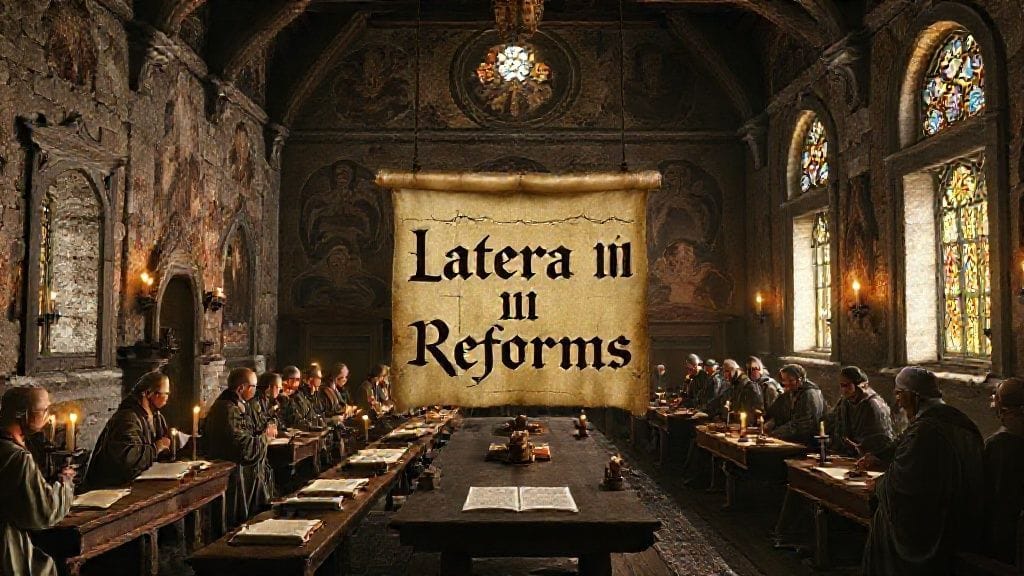
On a cold morning in March 1179, cardinals, bishops, abbots, deans, and representatives of secular powers began to arrive at the Lateran Basilica, the ancient cathedral of the bishop of Rome. Rome buzzed with rumors, the streets thronged with citizens eager to witness this gathering that many hoped would signal a new dawn.
The council was carefully orchestrated, blending solemn liturgies with intense discussion. For weeks, decrees were debated in candlelit chambers; alliances were forged and tested; old wounds reopened.
The Gathering of Giants: Participants and Political Stakes
Representatives came from across Christendom: from the fragmented kingdom of England to the duchies of France, the kingdoms of the Iberian Peninsula, the principalities of Germany, and the Holy Land, still reeling from ongoing Crusades. Each delegation carried with it the hopes, fears, and political calculations of their realms.
Some viewed the council as an opportunity to curb an overreaching papacy, others to consolidate church discipline and reinforce spiritual authority. For many, it was a delicate dance between submission and defiance.
Reasserting Papal Primacy: The Battle for Supremacy over Secular Rulers
One of the council’s most fiery debates hinged on the control of appointments and investiture. The decrees issued jaw-droppingly affirmed the exclusive right of the pope to appoint bishops and clerics, directly challenging emperors and kings who had long asserted influence over these choices.
“The church shall not be subject to any earthly power but the supreme pontiff,” Alexander declared with forceful conviction. This was a bold slap across the face of Frederick Barbarossa, yet it galvanized reformers and clerics who sought a purer, centralized church.
Ecclesiastical Discipline: Reforming the Clergy’s Morals and Lives
The council didn’t remain confined to political power plays. It tackled, with uncompromising rigor, the moral decay among clergy. Decrees condemned simony—the buying and selling of sacred offices—as an abomination to God.
Clerics were ordered to abandon concubinage, drunkenness, gambling, and other vices that had sullied the church’s reputation. Education and proper conduct were mandated as cornerstones of the priestly vocation.
Combating Simony and Clerical Corruption: The Heart of the Reforms
Perhaps the most dramatic and vital set of reforms targeted simony, a scourge blamed for many of the church’s ills. By outlawing the practice and instituting harsh penalties, Lateran III struck at the financial motivations that had undermined pastoral integrity.
Church property was expropriated from illicit holders, and mechanisms for investigation and discipline strengthened. This signaled to Europe’s clergy that personal greed would no longer be tolerated at the expense of the faithful.
The Crusade Mandate: Church and War Intertwined
The shadow of the Crusades loomed large. The council reinforced papal calls for renewed crusading zeal—urging rulers and nobles to take up the cross with greater fervor. In doing so, Lateran III linked spiritual reform with the military defense and expansion of Christendom.
Legislation encouraged funding, recruitment, and moral justification for these often brutal campaigns. It was a potent blend of faith, politics, and violence, emblematic of the era’s complexities.
Marriage Laws and Canonical Regulations: Redefining Christian Society
Beyond clerical discipline, the council addressed lay concerns, particularly marriage. Rules were tightened on consanguinity (blood relations) to prevent unlawful unions and scandals. The church declared itself the guardian of marital sanctity, rejecting secular interference.
This reshaping of family law held enormous significance, setting precedents that influenced European society’s moral structure for centuries.
The Affirmation of Episcopal Authority: Bishops as Guardians
Bishops emerged from Lateran III with renewed authority and responsibilities. They were enjoined to visit their dioceses regularly, oversee clergy conduct, and ensure obedience to canon law. The council thus strengthened the hierarchical backbone of the church.
It reinforced the episcopate as the crucial link between Rome and local communities, ensuring that reform was not merely a decree from afar but lived reality.
Religious Orders and Monastic Life: A Call for Renewal
The council also extended its reach to monastic communities and emerging religious orders, encouraging stricter adherence to rules and spiritual dedication. This nurtured the flowering of movements such as the Cistercians and Premonstratensians—vital in revitalizing medieval spirituality.
Consequences for the Holy Roman Empire and European Monarchies
The decrees were not received softly by secular rulers. Frederick Barbarossa, in particular, perceived these reforms as a direct assault on imperial rights. Yet, the council’s moral authority gradually curbed aristocratic interference in church affairs.
Kings and nobles began to negotiate their relationship with Rome anew, weighing religious authority against political autonomy. This tension would shape centuries of European history.
The New Canonical Law: Foundations for Future Church Governance
Lateran III’s decrees were formally codified into canonical law, providing clearer frameworks for church governance, clerical behavior, and ecclesiastical jurisdiction. This body of law became a vital foundation for subsequent councils and the development of Western canon law.
Immediate Reactions and Opposition: Tensions Beyond Rome
News of the council’s decisions spread quickly—garnering support among reformers but igniting fierce opposition among corrupt clergy and some secular powers. Episodes of violence, discord, and schisms punctuated the years following.
Even within Rome, factions resisted the new discipline, highlighting how reform is never a smooth journey.
Long-term Legacy: How Lateran III Shaped the Medieval Church
Over decades, the reforms passed at Lateran III reshaped the medieval church’s identity. By restoring papal primacy, disciplining the clergy, and defining church law, the council cemented the institution’s spiritual and temporal power.
Its impact echoed into the Renaissance and beyond, influencing social order, legal traditions, and political relations.
Voices from the Past: Chronicles, Letters, and Testimonies
Chroniclers like Romuald of Salerno and letters from church officials provide a vivid window into the council’s atmosphere—combining awe, conflict, zeal, and conviction. These documents humanize the event, revealing hopes and fears of those who lived it.
Lateran III and the Growth of Papal Centralization
The council marked a decisive step in the centralization of papal power, solidifying the pope’s role as Europe’s supreme spiritual leader. This centralization would be both a source of strength and controversy in subsequent centuries.
From Rome to the World: The Global Reach of the Council’s Decrees
Though centered in Rome, Lateran III’s decrees were enforced across the European continent and even touched missionary efforts beyond. The council was a beacon of church order in an increasingly complex medieval world.
The Council’s Place within the Broader Gregorian Reform Movement
Lateran III was a critical chapter in the ongoing Gregorian reform that began in the 11th century—continuing efforts to purify and empower the church against laxity and secular domination.
How Lateran III Influenced Later Councils and the Council of Trent
The legacies of Lateran III flowed forward, informing the councils of Lyons, Vienne, and ultimately the monumental Council of Trent, which tackled reform anew in the 16th century.
The Cultural Ripples: Art, Architecture, and Theology after Lateran III
The reform era inspired new theological perspectives, artworks, and church constructions, symbolizing the renewal of faith and order at a troubled time.
Reflections on Reform: Lessons from a Pivotal Moment in Ecclesiastical History
Lateran III reminds us that reform is an arduous process—fraught with conflict but fueled by human aspiration for justice, integrity, and meaning.
Conclusion
Lateran III was more than a council; it was a moment when the medieval church sought to reclaim its soul amid stormy seas of political ambition, moral decay, and spiritual yearning. Pope Alexander III’s firm hand and vision rallied a fractured institution toward order, discipline, and clearer purpose.
The reforms enacted reverberated through centuries, redefining the role of clergy and laity, the relationship between church and state, and the very fabric of European civilization. Yet, beneath the grand decrees lay human stories of struggle, hope, and perseverance—a testament to the enduring power of faith tempered by reform.
As we look back, Lateran III offers a vivid, compelling window onto a world negotiating the clash of tradition and change—an eternal tale as relevant now as it was then.
FAQs
1. What were the main causes behind the Lateran III reforms?
The reforms primarily arose from widespread clerical corruption, simony, political struggles between church and secular rulers, and a need to reassert papal authority to maintain the church’s spiritual and temporal influence.
2. Who was Pope Alexander III, and what role did he play?
Alexander III was the pope who convened the Lateran III Council. His leadership was pivotal in defining the council’s agenda, strengthening papal primacy, and pushing through reforms amidst fierce political conflict, particularly with Emperor Frederick Barbarossa.
3. How did Lateran III affect the relationship between the papacy and European monarchs?
The council decisively asserted the pope’s exclusive rights in ecclesiastical appointments, challenging monarchal influence. This led to tensions but ultimately reinforced the church’s independence in spiritual matters vis-à-vis kings and emperors.
4. What was the significance of the council’s stance against simony?
By condemning simony, Lateran III struck at the financial exploitation of church offices, aiming to restore clerical integrity and ensure that spiritual offices were not sold for personal gain, a major step toward moral renewal.
5. How did Lateran III influence the Crusades?
The council reinforced the pope’s call for renewed crusade efforts, linking church reform with military campaigns to defend and expand Christendom, thus intertwining faith and war in medieval geopolitics.
6. In what ways did Lateran III reshape canonical law?
The council codified clearer rules governing clergy conduct, church governance, marriage, and lay interaction with the church, forming a foundational body of law that influenced Western canon law for centuries.
7. What were some immediate reactions to the council’s decrees?
While reformers praised the new discipline and clarity, many corrupt clergy and some secular rulers opposed the changes, leading to tension, resistance, and occasional conflict both within and beyond Rome.
8. Why is Lateran III considered a turning point in church history?
It marked decisive papal centralization, ecclesiastical discipline, and legal codification, laying crucial groundwork for the medieval church’s structure and its complex relationship with emerging nation-states.

