Table of Contents
- The Fateful Day: January 18, 474, Constantinople Awakens to Uncertainty
- Leo I: The Man Behind the Imperial Purple
- The Byzantine Empire on the Eve of Transition
- A Reign Marked by Turmoil and Transformation
- Leo I’s Ambitions: Defending and Reshaping the Empire
- The End Approaches: Leo’s Final Hours and Political Maneuvers
- Constantinople’s Reaction: Mourning an Emperor
- The Palace Intrigue: Power Struggles Behind the Scenes
- The Rise of Leo II: A Child on the Throne
- The Role of Aspar and the Germanic Influence
- The Military Foundations: How Leo I Reorganized the Army
- Religious Policies and Relations with the Church
- The Economic Climate at the Time of Leo’s Death
- The Legacy of Leo I: Foundations That Shaped the Empire’s Future
- Transition and Turmoil: The Aftermath in Constantinople
- Historical Perspectives on Leo I’s Death
- Symbolism and Mythologizing the Last Moments of Leo I
- How Leo I’s Reign Influenced Later Byzantine Emperors
- The Cultural Imprint: Art, Architecture, and Literature Under Leo I
- The Broader Geopolitical Context: The Eastern Mediterranean in the Mid-5th Century
- The Memory of Leo I in Byzantine Chronicles
- The Human Side: Anecdotes and Personalities Around the Emperor’s Death
- Conclusion: The Passing of a Titan and the Dawn of a New Era
- Frequently Asked Questions (FAQs)
- External Resource
- Internal Link
The Fateful Day: January 18, 474, Constantinople Awakens to Uncertainty
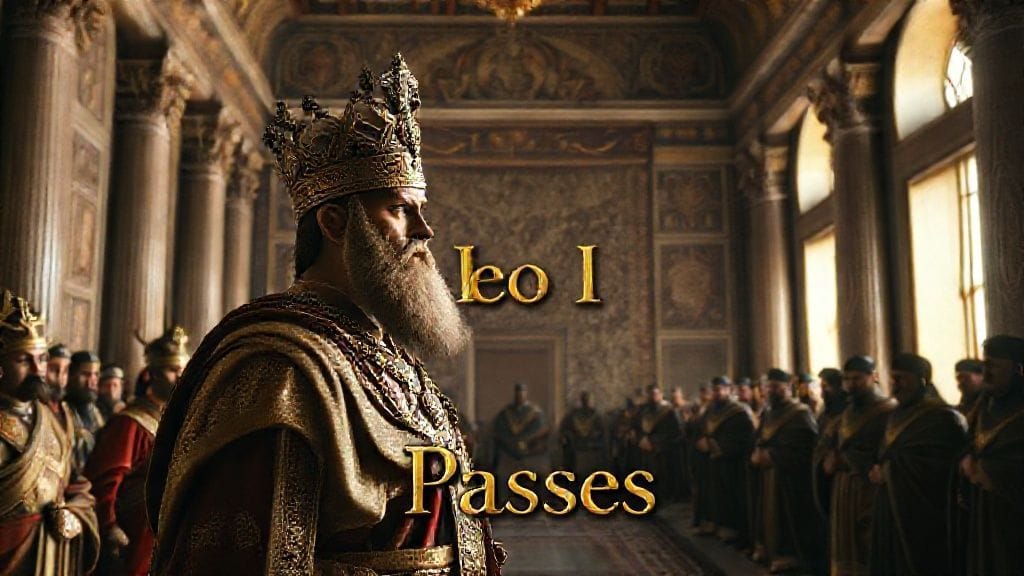
The chill of mid-January settled over Constantinople, the imperial city reverberating with a strange hush. In the labyrinthine corridors of the Great Palace, an emperor breathed his last. Leo I, known as "the Thracian," who had ruled the Byzantine Empire for nearly two decades, passed away on the 18th of January, 474. It was a moment heavy with uncertainty, shadowed by the fraught legacy of a leader who had both stabilized and unsettled the empire. The streets of Constantinople teemed with whispers — a city balanced precariously between the fading embers of the old Roman grandeur and the emerging forces that would shape the Byzantine world for centuries to come.
Yet, beyond the spectacle of death lay an intricate web of power, fear, and hope. Leo's passing was not merely the fall of a man; it heralded a turning point from which the fate of an empire would pivot. His successor, Leo II, a mere child, was thrust upon the throne — a fragile seedling amid a forest of political wolves.
Leo I: The Man Behind the Imperial Purple
Born Arius on the icy steppes of Thrace around 401 AD, Leo I's ascent from obscure origins to the august position of Emperor of the East is one of those rare, almost cinematic, tales of social mobility in Late Antiquity. Hailing from humble beginnings, Leo’s rise was primarily due to his military prowess and his close ties with the influential general Aspar, himself a figure of Germanic heritage.
Leo was crowned emperor in 457—a dark cloud looming over a decaying empire. What set him apart was his ability to navigate the treacherous waters of an empire riddled with internal factions, external threats, and religious tensions. Unlike many predecessors who were puppets of powerful generals, Leo carved a distinct identity, promulgating policies aimed at restoring the glory and autonomy of Constantinople.
The Byzantine Empire on the Eve of Transition
In 474, the Eastern Roman Empire—soon to be known simply as the Byzantine Empire—was a patchwork of survival and ambition. The Western Roman Empire had teetered on the brink of collapse, already fragmented and weakened by barbarian invasions. Constantinople, the imperial jewel, was both a beacon and a bastion, but its political undercurrents were volatile.
The Huns, Vandals, Ostrogoths, and other “barbarian” peoples pressed relentlessly on the empire’s borders, while internal dissent festered. Emperors before Leo had been unable to reconcile the traditional Roman heritage with the demands of a new multipolar world of shifting alliances and cultural fusion.
A Reign Marked by Turmoil and Transformation
Leo I’s twenty-year reign was a crucible of change. His tenure was defined by both military campaigns to secure borders, particularly against the Vandals and Ostrogoths, and deft political maneuvering to thwart the influence of powerful generals like Aspar. Leo managed to curtail Aspar’s dominance and wrest control of the military and political apparatus, an act that reasserted imperial authority.
He also sought to solidify the religious unity of the empire by championing Chalcedonian Christianity, positioning himself as a defender of orthodoxy against paganism and various Christian heresies. This religious policy ultimately shaped Byzantine identity for centuries.
Leo I’s Ambitions: Defending and Reshaping the Empire
Far from a passive ruler, Leo undertook several initiatives to strengthen the Empire's military, administrative capacity, and diplomatic posture. His organization of the Byzantine army centralized military command and enhanced efficiency. Notably, he sought to build alliances through marriage, including tying his daughter Ariadne to Zeno, an Isaurian general.
His policies, however, were not without controversy. The increased influence of Isaurians, combined with his attempts to diminish the traditional Germanic aristocracy around the army, sowed distrust among the elites. Still, Leo’s vision was one aimed not merely at survival but at restoring the Empire’s dignity.
The End Approaches: Leo’s Final Hours and Political Maneuvers
As January 474 unfolded, Leo I lay dying after a long illness. His final hours were punctuated by vital decisions—especially the elevation of his grandson, Leo II, as co-emperor. This choice was significant: Leo II, son of Ariadne and Zeno, symbolized a new dynastic direction away from the old guard’s influence.
Contemporary chroniclers note the palpable tension in the palace. The dying emperor’s mind was on the succession, knowing that political turbulence could soon follow. Leo I’s death was both an end and a prologue.
Constantinople’s Reaction: Mourning an Emperor
The city’s response was a mixture of genuine sorrow, anxiety, and opportunism. Citizens gathered in tribute, mourning the end of an era. The Great Palace and the Hippodrome hosted solemn ceremonies, vivid in their pageantry and reflection of imperial majesty.
Yet, no less real was the undercurrent of fear—what would the next days bring? Leo’s death exposed the fragility of imperial power and the potential for chaos. The populace awaited the coronation of Leo II with held breaths.
The Palace Intrigue: Power Struggles Behind the Scenes
Behind the solemn public displays, shadowy political machinations roiled. The Germanic general Aspar had been sidelined, but his influence lingered. Meanwhile, the Isaurian faction, bolstered by Zeno’s position as father to Leo II, gained ground.
Court eunuchs, bureaucrats, military commanders, and aristocrats jockeyed for proximity to power. The dynamics of the Great Palace resembled a living chessboard, with lethal consequences for missteps.
The Rise of Leo II: A Child on the Throne
At barely seven years old, Leo II was proclaimed co-emperor alongside his grandfather. His youth and inexperience meant that real authority would fall into the hands of regents and advisors — tragedy or opportunity depending on one’s vantage point.
The symbolism of a child-emperor stoked both hope for a new beginning and fears of weak leadership. Zeno’s position as father and military leader immediately elevated his status, setting the stage for his own subsequent ascendancy to the throne.
The Role of Aspar and the Germanic Influence
Aspar, magister militum and the empire’s erstwhile kingmaker, represented the lingering influence of barbarian elites in Constantinople. His Germanic heritage and Arian Christian faith alarmed many in the predominantly Chalcedonian Orthodox court.
Throughout Leo’s reign, Aspar was simultaneously powerful and sidelined, his eventual assassination in 471 revealing the violent stakes of imperial politics. By the time of Leo I’s death, his faction was weakened, clearing the path for the Isaurians.
The Military Foundations: How Leo I Reorganized the Army
One of Leo’s most enduring legacies was his overhaul of the military apparatus. He introduced reforms to create a more professional, less Germanic-dependent army, incorporating Isaurian troops whose loyalty was personally tied to the emperor.
He also reinforced the Danube frontier and stabilized relations with key barbarian groups through treaties and payments. The army under Leo was a reflection of his pragmatic vision—a blend of Roman tradition and new ethnic realities.
Religious Policies and Relations with the Church
Leo I worked closely with the Patriarchs of Constantinople and Rome to enforce Chalcedonian orthodoxy, contesting monophysite and pagan influences. His patronage of church councils and charitable works earned him the title “Leo the Great” among some later sources.
Yet religious tensions lurked beneath the surface—the empire was a complicated tapestry of beliefs and identities, and Leo’s religious policies contributed to future schisms and conflicts.
The Economic Climate at the Time of Leo’s Death
Despite military and religious preoccupations, the economic health of the empire was vital. Constantinople remained a key trade hub between East and West, but challenges persisted: heavy taxation, currency fluctuations, and disruptions due to conflicts.
Leo’s reign had seen some fiscal stabilization measures, but social inequalities and urban pressures hinted at vulnerabilities that would test his successors.
The Legacy of Leo I: Foundations That Shaped the Empire’s Future
Reflecting on Leo’s death invites recognition of his complex legacy. His successful assertion of imperial authority over the military aristocracy shifted power dynamics crucial to the endurance of the Byzantine Empire.
Furthermore, his religious and administrative policies shaped Byzantine identity in ways that resonated for centuries. Leo’s rule was a bridge from classical Roman traditions toward the medieval Byzantine world.
Transition and Turmoil: The Aftermath in Constantinople
Following Leo’s death, the empire experienced a delicate interregnum. Leo II’s brief reign was marked by regency and constant jockeying for power. Ultimately, Zeno's accession as sole emperor signified continuity and change—a new phase in Byzantine history.
The transition period included coups, revolts, and diplomatic challenges that tested the stability Leo had labored to build.
Historical Perspectives on Leo I’s Death
Historians through the ages have cast Leo I in varying lights: as a steadfast defender of the empire, a pragmatic reformer, or a man caught by the immense pressures of his time.
Contemporary chroniclers provide valuable, if partisan, insights, while modern scholarship situates his death as a pivotal moment on the cusp between Rome’s twilight and Byzantium’s dawn.
Symbolism and Mythologizing the Last Moments of Leo I
The death of an emperor always invites myth. Accounts speak of visions, last words, and symbolic acts. Leo’s passing came to carry layered meanings in Byzantine collective memory—a symbol of the frailty and grandeur of imperial power.
His image was immortalized in art and coins, ensuring that despite death, his legacy remained alive in the empire’s heart.
How Leo I’s Reign Influenced Later Byzantine Emperors
The foundations laid by Leo I—centralized military authority, dynastic marriage policies, and religious orthodoxy—became reference points for future emperors.
His successor Zeno, Justinian I, and many others built upon Leo’s model of imperial sovereignty in a time steeped in instability.
The Cultural Imprint: Art, Architecture, and Literature Under Leo I
Though overshadowed by later centuries, Leo’s era saw significant artistic and architectural endeavors in Constantinople. Churches were rebuilt or expanded, mosaics commissioned, and literary works produced that echoed imperial ideology.
This cultural flowering intertwined with political and spiritual ambitions, reflecting the complex identity of the empire.
The Broader Geopolitical Context: The Eastern Mediterranean in the Mid-5th Century
Leo’s death came at a time when the Eastern Mediterranean was a chessboard of competing powers: the Vandals in North Africa, Ostrogoths in Italy, Persians to the East, and emerging tribal confederations.
Constantinople’s survival depended on deft diplomacy and military strength—pressures that weighed heavily on the empire’s leadership.
The Memory of Leo I in Byzantine Chronicles
Byzantine historians such as John Malalas and Theophanes preserved varied accounts of Leo’s life and death. Their chronicles provide narrative richness but reveal the ideological battles shaping historical memory.
The emperor’s death was captured as both an end of an era and a harbinger of transformation.
The Human Side: Anecdotes and Personalities Around the Emperor’s Death
Behind the august façade stood individuals of flesh and blood: Leo’s wife Verina, daughter Ariadne, the fearful courtiers, and soldiers who lamented their sovereign’s passing.
Personal letters, later stories, and court gossip shed light on emotions, fears, and hopes swirling around the palace during this critical moment.
Conclusion
The death of Leo I on January 18, 474, was not merely the close of a chapter but the prelude to a transformation that would reverberate throughout Byzantine history. From his humble Thracian origins to the grandeur and complexity of his reign, Leo’s life encapsulated the struggles of an empire at once ancient and evolving.
His passing sent a ripple through Constantinople's gilded halls and bustling streets—hope intertwined with apprehension, legacy with uncertainty. Yet from this moment of transition emerged the contours of a Byzantine world poised on resilience and reinvention. The child emperor Leo II, surrounded by palace intrigue and ambition, symbolized a fragile but enduring flame of imperial continuity.
In the grand mosaic of history, Leo I’s death marked the twilight of one age and the dawn of another—an eternal testament to the impermanence and glory of empire.
Frequently Asked Questions (FAQs)
Q1: What were the primary causes of Leo I’s death?
A1: Leo I died after a prolonged illness. While contemporary sources do not specify the exact cause, it is believed that his health had declined due to old age and the stresses of ruling an empire in constant turmoil.
Q2: How did Leo I’s death affect the political stability of the Byzantine Empire?
A2: The death precipitated a fragile transition. His grandson Leo II ascended as child-emperor, resulting in regency struggles and increased influence of Zeno, setting the stage for future power conflicts.
Q3: Who were the key figures involved in the succession after Leo I?
A3: Ariadne (Leo’s daughter), Zeno (Isaurian general and Leo II’s father), and the sidelined but influential Germanic aristocracy, including remnants of Aspar’s faction, played prominent roles.
Q4: What was the significance of Leo I’s military reforms?
A4: Leo’s reorganization centralized command, reduced reliance on unruly Germanic mercenaries, and integrated Isaurian troops, which altered the empire’s internal power dynamics.
Q5: How was Leo I remembered in later Byzantine tradition?
A5: He was seen as a great stabilizer and restorer, often depicted as a pragmatic and disciplined emperor who set foundations for future Byzantine resilience and identity.
Q6: Why was Leo II’s reign so short?
A6: Leo II died unexpectedly young in 474-475, likely from natural causes or illness, which ended his brief joint reign and allowed Zeno to take full control.
Q7: What role did religion play during Leo I’s time?
A7: Religion was central; Leo I was an ardent supporter of Chalcedonian Christianity, using religious authority to unify and legitimize his rule amid doctrinal conflicts.
Q8: How did Leo I’s death impact Constantinople’s citizens?
A8: It caused widespread mourning mixed with anxiety about political instability. Public ceremonies reflected respect, but fears of palace intrigue and external threats loomed.