Table of Contents
- Dawn of an Empire’s March: The Prelude to Lisbon’s Fall
- The Winds of War: Europe on the Brink in 1807
- Napoleon’s Grand Strategy: Control of the Iberian Peninsula
- Portugal’s Reluctant Path: Diplomacy and Defiance
- Junot’s Legion: The General and His Army
- November 30, 1807: Dawn Breaks Over Lisbon
- The French Entry: Soldiers, Civilians, and the City's Pulse
- The Portuguese Court’s Flight: Royalty in Exile
- The Occupation Begins: Life Under French Rule
- Resistance and Resentment: Seeds of Rebellion
- British Naval Maneuvers: The Shadow of Wellington
- The Peninsular War Ignites: Portugal as a Battleground
- The Human Cost: Civilians, Soldiers, and the Tide of War
- Junot’s Administration: Governance and Oppression
- Lisbon’s Cultural Pulse: Art, Society, and Change
- From Occupation to Liberation: The End of French Rule
- Portugal’s Transformation: Nationalism and Modern Identity
- The Global Ripples: How Lisbon’s Fall Shaped Europe
- Memory and Myth: Lisbon’s Legacy in Portuguese History
- Conclusion: The Eternal City Under Siege and Rise
Dawn of an Empire’s March: The Prelude to Lisbon’s Fall
November 30, 1807, began with a muted chill lingering over the Tagus River, the morning mist weaving between the boats docked along Lisbon’s bustling waterfront. The city hummed with its usual cadence — merchants calling out prices, clergy intoning prayers, children darting through narrow alleyways. Yet beneath the layers of everyday life, an undercurrent of anxiety gripped the air, as if Lisbon itself sensed the storm approaching.
From the top of São Jorge Castle, one could glimpse the glittering roofs of the city stretching towards the Atlantic, a beautiful metropolis steeped in centuries of maritime glory and imperial splendor. But on this morning, this jewel of the Lusitanian crown found itself vulnerable—its gates poised to surrender not to natural elements, but to the iron will of an invader: Jean-Andoche Junot and the French army under Napoleon Bonaparte’s command.
The capture of Lisbon was not merely a military conquest. It was the turning point of an imperial chess game that would reshape the Iberian Peninsula and reverberate across Europe. To understand this moment—June 30, 1807, the dawn when French troops entered Lisbon—one must step back into the maelstrom of Napoleonic ambition and the fragile diplomacy of Portugal, a small kingdom caught in the jaws of history’s great unfolding drama.
The Winds of War: Europe on the Brink in 1807
The early 19th century was a tempest of ideological upheaval and territorial realignments that shook the continent. Since the French Revolution had shattered the ancien régime, Europe’s monarchies eyed the rising power of France with suspicion and hostility. Napoleon Bonaparte, the Corsican prodigy, had harnessed the energies unleashed by revolution into a juggernaut expanding French hegemony. By 1807, his armies had swept across much of Germany, the Low Countries, and Italy, pushing into the very heart of the continent, systematically dismantling coalitions opposed to the French Republic turned Empire.
Portugal found itself between a rock and a hard place. A long-time ally of Britain, the kingdom had maintained close economic and diplomatic ties across the sea. Yet Napoleon’s Continental System—a blockade designed to suffocate British trade—threatened to strangle Portugal’s lifelines. Refusing to comply meant French wrath. Submitting risked British abandonment.
Europe teetered on the edge. Treaties were signed and broken; spies threaded through courts; armies marched in circular dances. In this deadly game, Lisbon was the prize that, if held by Napoleon, would close the Western gate to British influence and secure the Iberian Peninsula.
Napoleon’s Grand Strategy: Control of the Iberian Peninsula
Napoleon’s designs on Iberia were as much about geography as glory. Spain and Portugal formed the westernmost bulwark against French domination. Controlling Lisbon meant denying the Royal Navy a crucial foothold and consolidating economic pressure on London.
To this end, the Treaty of Fontainebleau, signed in October 1807, gave a faint legitimacy to France’s planned intervention in Portugal—ostensibly to “enforce” the Continental System. Behind the diplomatic veil, however, Napoleon plotted to subjugate Portugal and manipulate Spain, installing puppet regimes and extending his grip.
The French army, led by General Jean-Andoche Junot, was tasked with executing the plan. Junot was a competent and ambitious military man, a veteran of campaigns across Europe. But this mission was fraught with challenges: treacherous terrain, uncertain allies, and a population historically resistant to foreign rule.
Portugal’s Reluctant Path: Diplomacy and Defiance
Lisbon’s rulers faced agonizing choices throughout 1807. The young Prince Regent João, advising from the court, was torn between honoring alliances and preserving the nation. British naval protection was sporadic, and the Portuguese army ill-prepared to counter the might of the Grande Armée.
Attempts at negotiation and delay staved off immediate crisis but could not stop the inevitable. Reports of French troops massing near the border spread unease. Merchant families contemplated exile; clergy prepared their sermons; the city’s streets filled with whispers of war.
The Portuguese government made a fateful decision: to flee. The royal family and court packed ships bound for Brazil, the jewel of their New World empire. This exodus was unprecedented—a monarch fleeing Europe into exile—shattering centuries of tradition and leaving Lisbon defenseless.
Junot’s Legion: The General and His Army
Junot’s forces numbered approximately 25,000 men—experienced, disciplined, and charged with a clear mandate. As they crossed the Minho River entering Portuguese soil, their advance was swift but met with pockets of resistance. Nevertheless, Portuguese military coordination was fragile, and morale low.
Junot was known for his strict discipline and esprit de corps but also his political naïveté. Behind the scenes, conflicts simmered between his officers and Napoleonic agents seeking to impose new laws and customs alien to the Portuguese populace.
The French marched with a sense of destiny—this campaign was their ticket to glory. Yet, as historian Charles Esdaile observed, “Junot’s army was triumphant but unsupported; a conqueror without a people.”
November 30, 1807: Dawn Breaks Over Lisbon
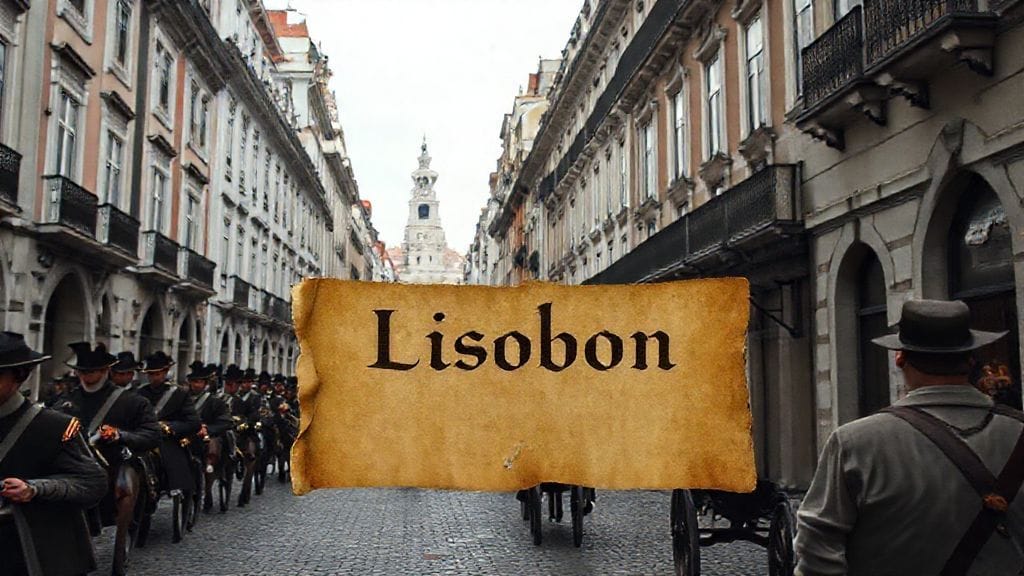
On the last day of November, the French army entered Lisbon through the northern gate. The city’s defense forces were largely withdrawn, and the population braced itself between fear and defiance. The streets echoed with a strange stillness interlaced with murmurs and the ominous clatter of cavalry.
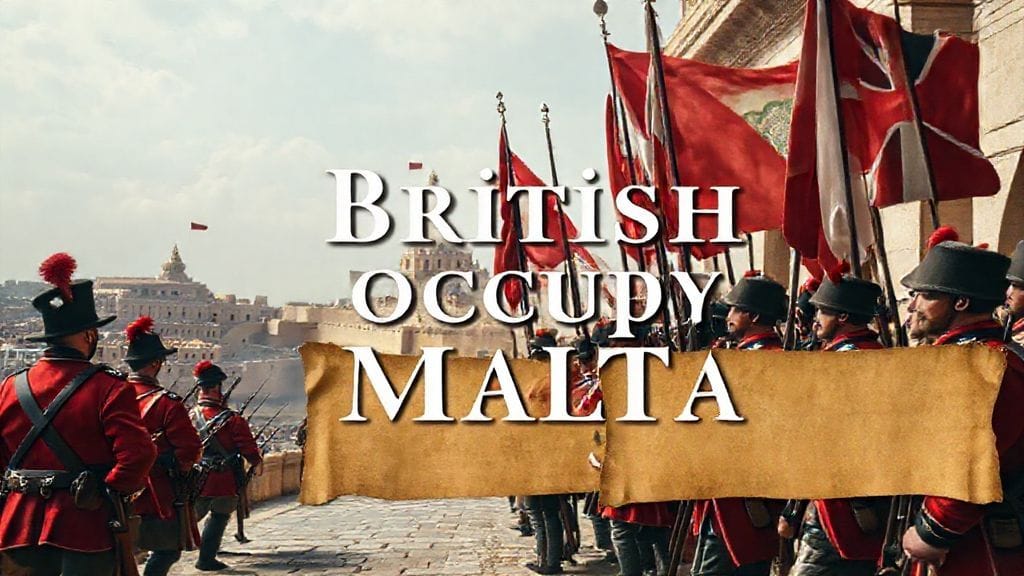
Junot’s troops marched under the tricolor, banners fluttering but faces tired from the long campaign. Civilians watched silently, some veiled with suspicion, others curious or resigned.
The entrance was relatively peaceful, avoiding the destruction often brought by sieges. However, the symbolism was immense: the capital of Portugal, sovereign for centuries, now standing under foreign military occupation.
The French Entry: Soldiers, Civilians, and the City's Pulse
The occupation changed Lisbon overnight. French troops established headquarters in palaces and public buildings. Barracks sprang up in convents; shops shuttered or transformed to serve the occupiers.
Yet life went on. Farmers brought goods to markets, children played in courtyards, and artists sketched the scene. The city became a stage where culture and conflict intertwined.
For some, it was an era of opportunity—French officers mingled with nobles, introducing new fashions and ideas. For many, it was a time of sorrow and loss, homes pillaged, livelihoods disrupted.
The Portuguese Court’s Flight: Royalty in Exile
The flight of Queen Maria I and Prince Regent João to Brazil was one of history’s dramatic royal exoduses. Under cover of darkness and British naval escort, the court embarked on November 29, narrowly preceding the French arrival.
Settling in Rio de Janeiro, the royal family transformed the colonial capital into the de facto Portuguese seat of power. This move had profound implications: Brazil’s status elevated, Portugal weakened, and European geopolitics shifted.
Lisbon felt the void of absent sovereignty, its fate tied to distant continents even as French boots trod its cobblestones.
The Occupation Begins: Life Under French Rule
Administration under Junot aimed to impose Napoleonic order—improving infrastructure, modernizing laws, and enforcing economic blockades. However, the French command often clashed with local traditions and clergy, igniting tensions.
Taxes increased to support the occupation army; censorship tightened; the Inquisition’s shadows lingered in a tangled dance between old and new regimes.
Despite attempts to win hearts, the occupation was often resented. Acts of sabotage, passive resistance, and subversion became daily challenges.
Resistance and Resentment: Seeds of Rebellion
The French presence awakened nationalist sentiments. Secret societies, guerrilla fighters (“guerrillas”), and intellectuals began organizing. Despite risks, the Portuguese population refused to submit quietly.
Local priests preached defiance; merchants funded insurgents; rural bands struck at supply lines.
Naval skirmishes and British support emboldened resistance. The occupation was a spark that ignited a broader Peninsular uprising, turning Portugal and Spain into a theater of relentless conflict.
British Naval Maneuvers: The Shadow of Wellington
While Lisbon suffered occupation, the British Royal Navy patrolled the coasts, supporting Portuguese resistance and disrupting French supply chains. Admiral Lord Wellington, dispatched in 1808, would become the scourge of Napoleon’s forces.
Britain’s involvement transformed the conflict from mere occupation to strategic warfare. Lisbon, though under French control, was a crucial node in a larger contest—one where the tide would eventually turn.
The Peninsular War Ignites: Portugal as a Battleground
The capture of Lisbon marked the beginning of a brutal, protracted conflict known as the Peninsular War (1807-1814). Portugal became a landscape of battles, sieges, and shifting allegiances.
Junot’s army fought hard but faced increasing resistance and British-led offensives. The war drained resources, devastated towns, and displaced thousands.
Yet it was also a crucible for Portuguese nationalism and allied cooperation that would reshape European balance.
The Human Cost: Civilians, Soldiers, and the Tide of War
Behind battles and strategies lay the tragic toll. Civilians suffered famine, disease, and violence. Families were torn apart; monasteries and homes destroyed; economies shattered.
Soldiers on both sides endured harsh conditions, hunger, and relentless combat. Letters home told of fear, courage, and despair.
Lisbon’s population, once vibrant, was caught in a historical storm that altered the city’s soul.
Junot’s Administration: Governance and Oppression
Junot tried to assert control with a mix of reforms and repression. He introduced Napoleonic codes, attempted to reform taxation, and cracked down on dissent.
But corruption, mismanagement, and local hostility hindered his efforts. The occupation bred inefficiency and resentment.
Historians often depict Junot as a tragic figure—caught between loyalty to Napoleon and the impossible task of ruling a hostile city.
Lisbon’s Cultural Pulse: Art, Society, and Change
Despite occupation, Lisbon remained a cultural hub. The arts adapted, reflecting both sorrow and resilience. Painters captured scenes of occupation; writers debated liberty and empire.
Social clubs, cafés, and salons became subtle arenas of discourse and resistance. The fusion of French and Portuguese influences left lasting impressions on architecture, cuisine, and society.
From Occupation to Liberation: The End of French Rule
By 1808, British-Portuguese forces launched decisive campaigns. The Battle of Vimeiro and subsequent treaties forced the French to withdraw.
Junot departed in disgrace, retreating to France. Lisbon breathed a collective sigh of relief but faced the challenges of post-war rebuilding.
The liberation marked a turning point—not just military but psychological—the beginning of Portugal’s modern renaissance.
Portugal’s Transformation: Nationalism and Modern Identity
The occupation and war forged a stronger Portuguese identity rooted in resistance and self-determination.
The royal court’s presence in Brazil had unintended effects, accelerating colonial independence movements but also modernizing governance.
Lisbon emerged transformed—scarred but more aware of its place in a changing world.
The Global Ripples: How Lisbon’s Fall Shaped Europe
Lisbon’s capture and the ensuing Peninsular War drew in Britain and Spain, weakening Napoleon’s forces and contributing to his eventual downfall.
The conflict demonstrated the limits of imperial overreach and the power of popular resistance.
It also shifted alliances and trade routes, with repercussions that echoed across the Atlantic and Asia, reshaping the 19th-century order.
Memory and Myth: Lisbon’s Legacy in Portuguese History
Today, the French occupation is remembered with a mixture of pride and pain.
Lisbon’s liberation is celebrated as a symbol of resilience against tyranny. Monuments and literature keep alive the stories of courage.
The episode shaped national narratives of sovereignty, resistance, and the cost of freedom.
Conclusion: The Eternal City Under Siege and Rise
Lisbon’s capture by Junot’s French troops on November 30, 1807, was a watershed moment etched deep in history. It marked the collision between imperial ambition and an ancient city’s spirit. From the fogged banks of the Tagus to the far reaches of the Portuguese empire, the event was a catalyst—for war, exile, resistance, and transformation.
But beyond the battles and politics lies the human story: of a city caught in the crossfire, its people enduring occupation’s hardships, yet refusing to surrender their identity. Lisbon’s fall was not an end but a beginning—a painful crucible from which a modern Portugal emerged, scarred but sovereign.
In remembering this chapter, we are reminded how history’s grand movements touch individual lives and how even in the darkest moments, resilience and hope endure.
FAQs
Q1: Why did Napoleon want to capture Lisbon in 1807?
Napoleon aimed to control the Iberian Peninsula to enforce the Continental System, weakening Britain by cutting off its trade routes. Lisbon was strategically vital as a naval port and gateway to the Atlantic.
Q2: How did the Portuguese royal family react to the French invasion?
They chose to flee Lisbon, embarking on a dramatic exile to Brazil to preserve the monarchy and continue governance from there, leaving Lisbon vulnerable to French occupation.
Q3: Who was Jean-Andoche Junot, and what role did he play?
Junot was the French general leading the invading army into Portugal. He commanded the forces that entered Lisbon and governed the city during the early French occupation.
Q4: What impact did the French occupation have on Lisbon’s population?
The occupation brought economic hardship, repression, and social disruption. It also sparked nationalistic resistance and inspired the beginnings of organized guerrilla warfare.
Q5: How did the British intervene during the occupation?
The British Royal Navy supported Portuguese resistance, disrupted French supply lines, and landed troops under Wellington to fight the Peninsular War, ultimately driving the French out.
Q6: What was the Peninsular War, and why is it significant?
It was a major conflict from 1807 to 1814 involving France, Britain, Spain, and Portugal. The war drained French resources and significantly contributed to the decline of Napoleon's empire.
Q7: How did Lisbon’s occupation influence Portugal’s national identity?
The shared suffering and resistance forged a stronger sense of nationalism, emphasizing sovereignty and resilience, which influenced Portugal’s development in the 19th century.
Q8: How is this event remembered in Portuguese history today?
It is regarded as a pivotal moment of foreign domination and national resistance, commemorated in culture and memory as a testament to Lisbon’s and Portugal’s enduring spirit.