Table of Contents
- The Morning of November 1, 1755: A City Awakened
- The Calm Before the Disaster: Lisbon on All Saints’ Day
- The First Tremor: Earthquake Strikes Without Warning
- Streets Transformed: From Vibrant City to Cracked Ruins
- The Tsunami’s Arrival: The Atlantic at its Deadliest
- Fires Consume What the Earth and Sea Did Not Destroy
- The Human Toll: Mourning and Despair in the Aftermath
- Philosophers and Clergy Confront the Catastrophe
- The Role of King Joseph I: Leadership in Crisis
- Rebuilding from Ashes: The Marquis of Pombal’s Vision
- Scientific Inquiry Ignited: Seismology’s Early Steps
- Global Reverberations: Impact on European Thought and Politics
- The Tsunami Beyond Portugal: Waves That Reshaped the Atlantic
- Oral Histories and Survivor Accounts: Voices from the Past
- The Lisbon Tsunami in Art and Literature: Memory Immortalized
- Lessons Learned: The Catastrophe’s Legacy on Disaster Preparedness
- Modern Understanding of the 1755 Event: Geology and Beyond
- Commemorations and Memorials: Remembering Lisbon’s Darkest Day
- What If? Speculations on Alternate Histories
- Conclusion: The Enduring Echo of Lisbon’s Forgotten Ocean
- FAQs
- External Resource
- Internal Link
The Morning of November 1, 1755: A City Awakened
The dawn of November 1, 1755, in Lisbon was gentle yet pregnant with portent. On All Saints’ Day, with churches preparing to welcome throngs of faithful honoring departed souls, the city stirred from the haze of early morning mist. Candles flickered behind stained glass, and markets began to hum. But beneath the cobbled streets and serene facades, the restless earth was already whispering its dreadful secret. Hidden from the eyes of worried citizens and pious families, the Atlantic girdled its sinews, waiting to unleash a fury that would forever alter the city's fate.
Few could have imagined that the calm, sacred morning would be cleaved in two by an event so devastating it would become a symbol of nature's overpowering rage. Within moments, the known world for Lisbon—the Portugal jewel—would unravel in a cruel, synchronous orchestrated dance of earth, sea, and fire.
The Calm Before the Disaster: Lisbon on All Saints’ Day
All Saints’ Day, or Dia de Todos os Santos, held a sacrosanct place in the hearts of Lisbon’s inhabitants, a day when families huddled in communal spaces, churches filled with prayers and chants, and the air tinged with a solemn reverence. It was a time of remembrance and spiritual contemplation, a pause in the relentless hustle of the bustling capital.
Lisbon circa 1755 was a cosmopolitan hub, its streets peppered with merchants, sailors, clergy, and nobles from across Europe and beyond. The city thrived under the reign of King Joseph I and the ambitious stewardship of his Prime Minister, Sebastião José de Carvalho e Melo, better known as the Marquis of Pombal.
Yet beneath this façade of stability and prosperity lay fault lines—both literal and metaphorical. The Iberian Peninsula was no stranger to seismic rumblings, but the scale about to unfold was unprecedented.
The First Tremor: Earthquake Strikes Without Warning
At precisely around 9:40 a.m., the earth beneath Lisbon convulsed violently. What began as subtle tremblings rapidly escalated into a monstrous earthquake, shaking the city for nearly six minutes—an eternity of trembling cataclysm. Unlike modern times when seismographs register such moments, the citizens’ eyewitness accounts painted a nightmarish tableau of crumbling buildings, cracked roads spilling dust and chunks of masonry, and panicked crowds scrambling for safety.
The quake's magnitude, modern scientists estimate, ranged between 8.5 to 9.0 on the moment magnitude scale, making it one of the most powerful ever recorded in European history. But the devastating power came not just from raw force but the trifecta of disasters soon to follow.
Streets Transformed: From Vibrant City to Cracked Ruins
The once-glorious neighborhoods of Baixa, the downtown district of Lisbon, were reduced to rubble. Historical buildings, churches, and magnificent palaces stood no chance against the relentless shaking. Roof tiles cascaded to the streets, entire walls capsized, homes swallowed by yawning fissures.
Eyewitness Diogo de Mendonça Corte-Real wrote in his official report: “…the houses all fell one upon another as if chips were thrown from a thrown dice, terrifying the living.” This desolation was more than physical destruction; it was the fracturing of a daily normalcy that no citizen could reconcile.
Still dazed and trembling from the earth’s initial upheaval, the people were about to face an even darker adversary.
The Tsunami’s Arrival: The Atlantic at its Deadliest
No sooner had the earthquake ceased than the sea, just beyond Lisbon’s harbor, began withdrawing alarmingly, an ominous silence marking the prelude of disaster—what fishermen and sailors had long known as a sure sign of a tsunami.
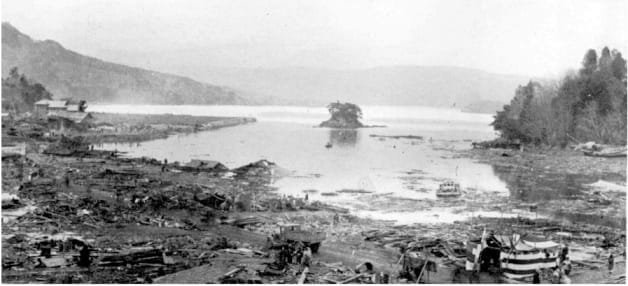
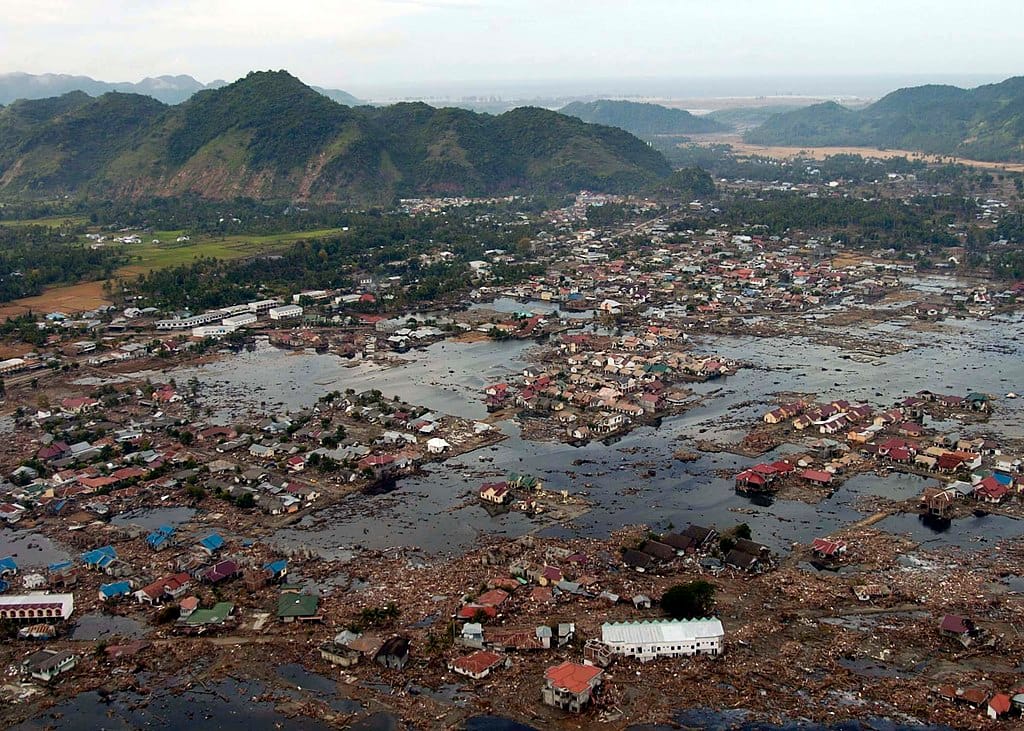
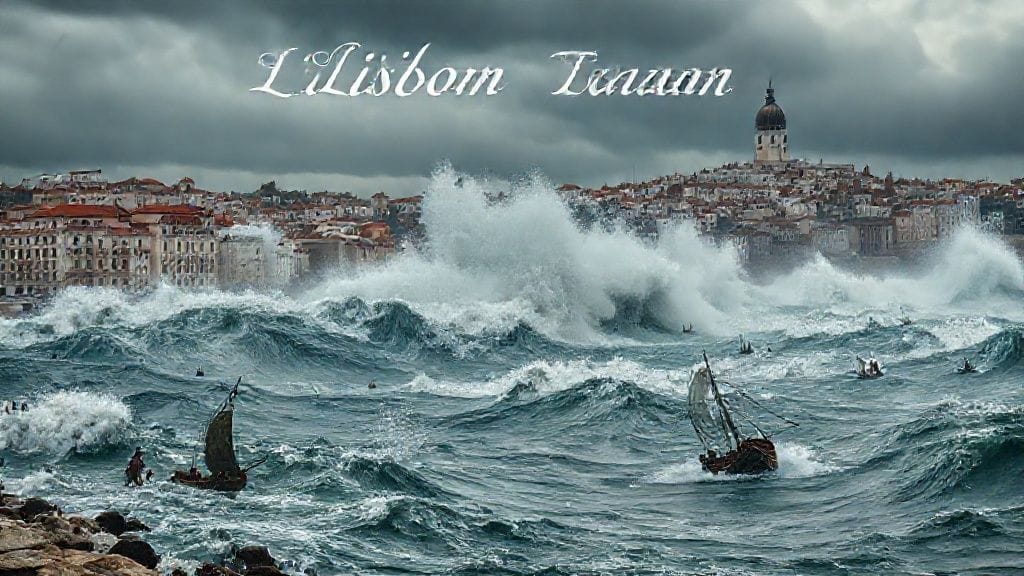
Minutes passed before great towering waves, some estimated to reach over 20 meters in height, surged onto the shores, swallowing docks, ships, and the waterfront. The Atlantic’s brutal embrace surged mercilessly into the city’s lowest quarters, tearing through what the earthquake had yet to claim.
Stories abound of terrified residents fleeing upward onto hills, some overwhelmed by the receding water before the tsunami’s crushing return. The Madalena and Ribeira district, closest to the Tagus River estuary, was utterly swallowed by the wrath of the ocean.
The tsunami was not confined to Lisbon alone. Reports described waves smashing across the coasts of Morocco, Spain, and as far as the Caribbean, signaling a disaster of extraordinary geographic breadth.
Fires Consume What the Earth and Sea Did Not Destroy
If the Earth and ocean were nature’s first assaults, fire was the malevolent specter completing Lisbon’s devastation. In the chaos, countless candles, lamps, and cooking hearths ignited fires that spread with alarming rapidity through the city’s devastation.
With much of the water infrastructure destroyed or inaccessible due to flooding, firefighters and citizens could do little. The flames devoured wooden structures, churches, and public buildings alike, creating a choking haze that blotted out the sun.
The Marquis of Pombal later reported that the fire raged for days, obliterating even those survivors left physically intact by the earthquake and tsunami. The triple catastrophe reduced Lisbon to an apocalyptic wasteland—smoldering, shattered, and drowned.
The Human Toll: Mourning and Despair in the Aftermath
Estimates of casualties vary, but historians generally agree that between 30,000 and 50,000 people perished—an unthinkable percentage of Lisbon’s population at the time. The loss was not only numerical; families were broken, entire social classes devastated, and a city’s spirit crushed.
Churches overflowing with the dead and displaced replaced places of worship. The city rose from agony, but the psychological trauma would linger for generations.
Emigrants, merchants, survivors, and foreign dignitaries recorded tales of loss, despair, but also remarkable courage. One Portuguese noblewoman recounted: “In the midst of terror, neighbors lifted each other from rubble with hands trembling but resolute.”
Philosophers and Clergy Confront the Catastrophe
The Lisbon catastrophe posed troubling questions—why did such a divine city suffer so deeply on a sacred day? Was it God’s wrath, an innocent test, or a meaningless explosion of nature’s chaos?
Philosophers such as Voltaire seized upon the event to question religious orthodoxy. In his Candide, Voltaire’s satirical reflection on the Lisbon earthquake challenged ideas of a benevolent God governing a perfect world.
Conversely, many clergy saw it as a divine punishment for sins, amplifying calls for repentance and moral reform. The debate would echo through Europe, reshaping theology and philosophy.
The Role of King Joseph I: Leadership in Crisis
King Joseph I, often described as marked by fear following the disaster, notably retreated to the relatively untouched hills of Ajuda. Yet his government, under the prime leadership of the Marquis of Pombal, acted swiftly and decisively.
Pombal imposed martial law, coordinated rescue and rebuilding efforts, and famously declared, “Bury the dead and heal the living,” reflecting his pragmatic focus on recovery rather than superstition.
The administration’s measures to restore order were critical in stabilizing Lisbon amidst chaos and helped shape modern governance approaches to disaster management.
Rebuilding from Ashes: The Marquis of Pombal’s Vision
The reconstruction of Lisbon became an ambitious urban and engineering project, led by the visionary Marquis of Pombal. He conceptualized the Baixa Pombalina, a redesigned downtown district featuring innovative anti-seismic architecture—wooden frameworks within masonry designed to endure shaking.
Grid-like streets replaced the medieval labyrinth, wide avenues allowed for better evacuation, and public squares were expanded.
This holistic vision transformed Lisbon into one of Europe’s earliest examples of enlightened urban planning, marrying resilience with aesthetic.
Scientific Inquiry Ignited: Seismology’s Early Steps
The 1755 Lisbon earthquake galvanized early scientists and thinkers to study seismic phenomena rigorously. Researchers collected data from across Europe, analyzing aftershocks, tsunami patterns, and geological formations.
It spurred the beginnings of seismology and seismic risk awareness, planting seeds for future understanding that remain foundational today.
One pioneering figure, José Acosta, urged the careful observation of natural clues, a call that resonates with modern disaster science.
Global Reverberations: Impact on European Thought and Politics
Beyond Portugal’s borders, the disaster shook governments and intellectuals. European monarchies alerted their subjects to new risks. Cartographers revised maps to account for geological faults, while thinkers debated the role of fate, nature, and divine will.
Some historians link the tragedy to shifts in Enlightenment thinking, inspiring secularism and promoting scientific explanations over purely religious ones.
The shockwaves ebbed through art, literature, philosophy, and governance, making the Lisbon tsunami a catalyst far broader than its immediate destruction.
The Tsunami Beyond Portugal: Waves That Reshaped the Atlantic
The tsunami itself was monstrous, radiating powerfully beyond the Portuguese coastline. Islands in the Azores, Madeira, and parts of Morocco reported waves destroying settlements; transatlantic ships documented unusual swells, suggesting an ocean-wide disturbance.
Researchers today consider the 1755 event as among the greatest tsunami-forming earthquakes in the Atlantic basin’s recorded history.
This unmatched reach reaffirmed the interconnectivity of oceanic systems and inspired later international dialogues on ocean monitoring.
Oral Histories and Survivor Accounts: Voices from the Past
Among the tragedies, personal narratives became touchstones of human resilience. Survivors recounted narrow escapes, moments of frantic decision, and loss of loved ones.
A sailor described from a ship in the harbor watching “the city fall as if swallowed by a monstrous beast.” Another, a nun, detailed hastening to save sacred relics as cathedral walls crumbled.
These stories, recorded across generations, provide a poignant tapestry of humanity confronting unimaginable devastation.
The Lisbon Tsunami in Art and Literature: Memory Immortalized
Artists and writers memorialized the disaster with somber works, capturing both the literal ruins and the existential questions it posed.
Paintings depicted fiery skies, collapsed colonnades, or the terror-stricken city under stormy seas. Literary works debated fate and fortune, weaving the catastrophe into Europe’s cultural fabric.
Today, these artistic legacies serve as both historical testimony and meditations on human vulnerability.
Lessons Learned: The Catastrophe’s Legacy on Disaster Preparedness
Lisbon’s anguish yielded new appreciation for disaster readiness. The urban redesign incorporated seismic safety; fire brigades were organized more professionally; early warning concepts began to percolate.
Though technology was limited, the event’s memory urged gradual development of risk mitigation, influencing subsequent policies worldwide.
It remains a powerful lesson in harmonizing human ambition with natural forces.
Modern Understanding of the 1755 Event: Geology and Beyond
Contemporary science identifies the earthquake as linked to tectonic movements along the Azores-Gibraltar fault zone. Modern seismic modeling helps reconstruct wave heights, fault slips, and aftershock dynamics.
Studying it informs modern hazard assessments for Portugal and Atlantic coasts, emphasizing preparedness’s ongoing necessity.
Intriguingly, the event reminds us that even centuries-old catastrophes continue to teach new truths about Earth’s restless nature.
Commemorations and Memorials: Remembering Lisbon’s Darkest Day
Lisbon marks November 1 as a day of remembrance. Memorials, plaques, and ceremonies honor those lost and highlight resilience narrative.
Museums showcase artifacts and interdisciplinary exhibits, inviting reflection on human frailty and courage.
Such commemorations bridge past and present, ensuring that history’s sobering lessons endure.
What If? Speculations on Alternate Histories
What if the earthquake had struck differently — at night, or farther inland? What if Pombal had not acted decisively? What if early warning systems had existed?
Historians and writers speculate how Portugal’s cultural and political landscapes might have dramatically diverged, or how European Enlightenment momentum could have altered.
Questions like these invite us to appreciate history’s delicate balances.
Conclusion: The Enduring Echo of Lisbon’s Forgotten Ocean
The Lisbon tsunami of 1755 was more than an isolated natural disaster; it was a crucible in which human civilization confronted nature’s raw power and sought new meaning. Amid flickering flames and drowned streets, lives were lost, but ideas were born — ideas about vulnerability, knowledge, faith, and renewal.
It is incredible to consider that a single morning, from sacred observance to staggering catastrophe, could reshape cities, nations, and philosophies. But such is the fragile beauty of history: born from the ashes of despair, cultivating the seeds of human endurance.
Lisbon’s tragedy remains etched not only in stone and story but in the enduring consciousness of a world forever reminded that beneath the waves and earth, a deeper narrative of survival and hope persists.
FAQs
Q1: What caused the 1755 Lisbon earthquake and tsunami?
A1: The disaster was caused by a massive slip along the Azores-Gibraltar tectonic fault zone, triggering both a powerful earthquake and the resulting tsunami.
Q2: How many people died in the disaster?
A2: Estimates vary but generally range between 30,000 and 50,000 fatalities, making it one of the deadliest earthquakes in history.
Q3: How did the Marquis of Pombal respond to the catastrophe?
A3: He took swift leadership, enforcing order, organizing relief, and implementing innovative urban reconstruction plans to make Lisbon resilient to future quakes.
Q4: What impact did the event have on European philosophy?
A4: The disaster fueled debates about the nature of God, destiny, and scientific reasoning, influencing Enlightenment thinkers like Voltaire.
Q5: Did the tsunami affect regions outside Portugal?
A5: Yes, waves reached the coasts of Spain, Morocco, and even distant Atlantic territories, demonstrating the event’s wide geographic impact.
Q6: How is the 1755 earthquake studied today?
A6: Using geological, seismological, and historical data, scientists reconstruct the event to better understand seismic risks and behaviors.
Q7: How is the disaster commemorated today?
A7: Lisbon holds memorial ceremonies, maintains museums, and educates the public about the event’s historical and cultural significance.
Q8: What lessons does the Lisbon tsunami hold for modern disaster preparedness?
A8: It highlights the importance of early warning, resilient infrastructure, coordinated response, and public education in mitigating natural disasters.